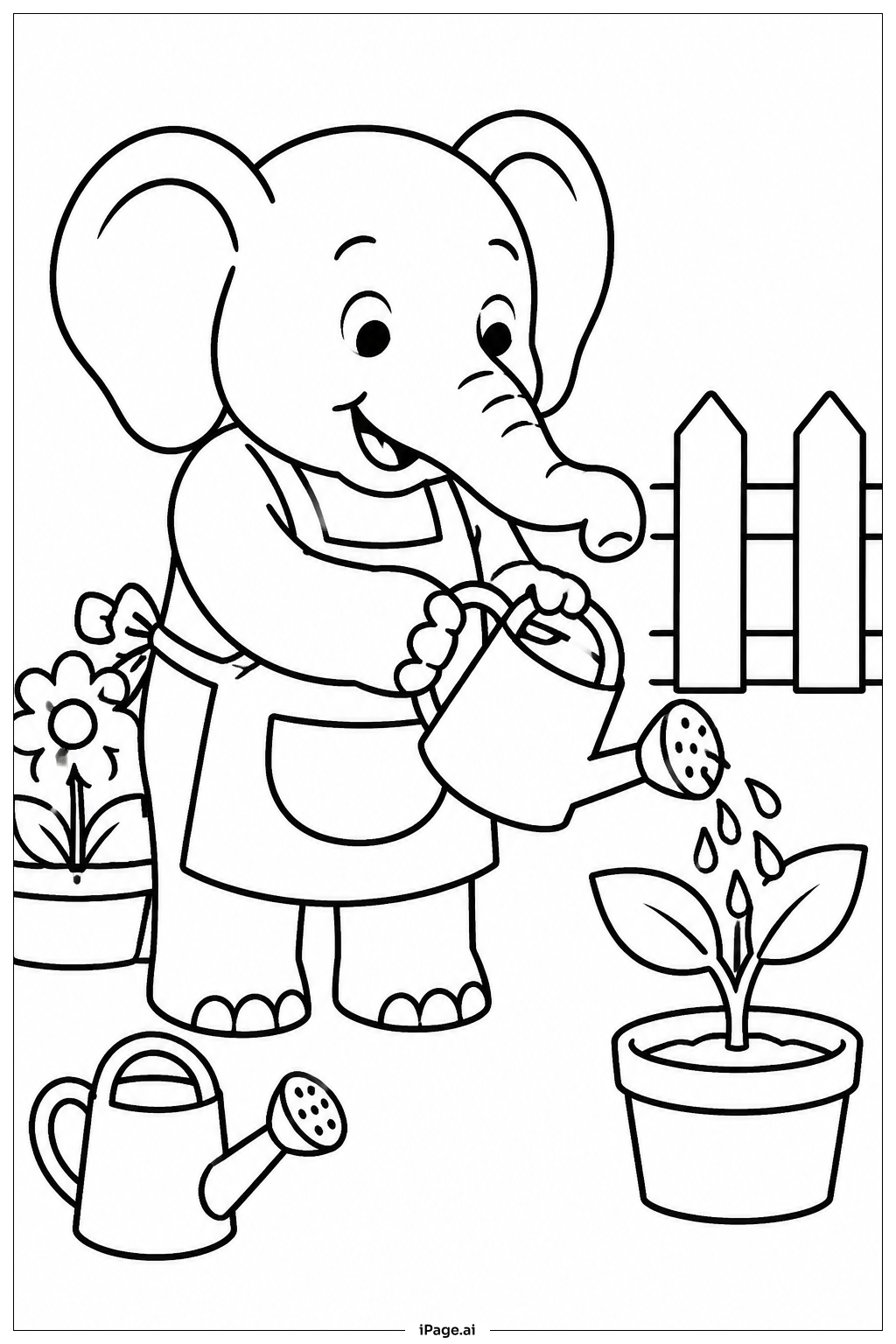
Coloring tips: How to color Elephant Gardening coloring page well?
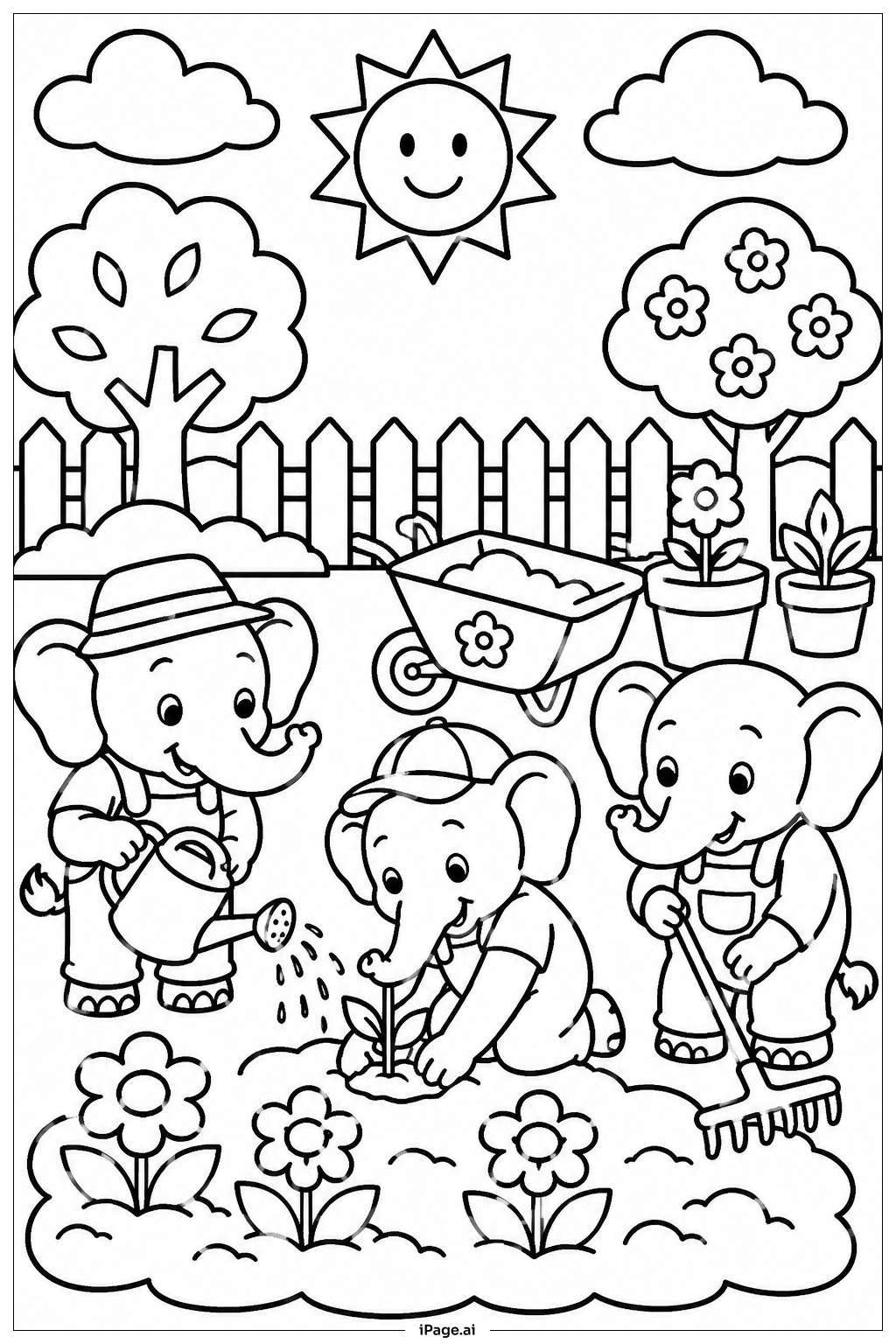
Start with the elephant's body using a light gray. You can add a slightly darker gray for the wrinkles and skin folds to give it depth. Use bright, cheerful colors for the flowers — try yellow and orange for the sunflowers, pink and red for the tulips, and green for all the leaves and stems. The watering can looks great in blue or red. Color the butterfly with vibrant shades like purple, orange, or yellow to make it pop. For the flower pots, use earthy tones like terracotta brown or warm orange. The background can be filled with a soft sky blue or a gentle pastel green to create a fresh garden atmosphere. Don't be afraid to mix colors and experiment — this is your garden, so make it as colorful as you like!
Coloring challenges: Which parts are difficult to color and need attention for Elephant Gardening coloring page?
Coloring this image is a fun challenge, but there are a few tricky parts to watch out for:
• **Elephant's skin texture:** The elephant has many wrinkles and skin folds across its body. Staying within these small, curved lines while using shading to show depth can be difficult, especially for younger colorists. Try using a lighter base color first, then gently layer a darker shade into the fold lines.
• **Small flower details:** The garden is filled with flowers of different shapes and sizes. Each petal, leaf, and stem is its own separate section. Coloring these tiny areas neatly without going outside the lines requires patience and a fine-tipped coloring tool like a colored pencil or thin marker.
• **The watering can and garden tools:** These objects have small highlights, curved surfaces, and overlapping parts. Keeping the colors clean and distinct between the can, the water stream, and the surrounding flowers takes careful attention.
• **The butterfly's wings:** Butterfly wings often have symmetrical patterns with multiple small sections. Matching colors on both sides evenly while staying inside the fine lines is a fun but careful task, especially for beginners.
• **Balancing the overall color palette:** With so many elements — the elephant, flowers, pots, tools, and background — it can be tricky to choose colors that all work well together without the image looking too busy or clashing. Planning your color choices before you start can really help the final result look harmonious and beautiful.
Benefits of coloring books: Advantages of drawing Elephant Gardening coloring page
Coloring this Elephant Gardening page offers a wonderful mix of fun and learning for kids of all ages.
**Builds focus and patience:** The many small details in the flowers, pots, and elephant's skin encourage children to slow down, concentrate, and work carefully — great habits for school and everyday life.
**Sparks creativity:** Choosing colors for the flowers, butterfly, and garden tools lets kids express their own imagination. There are no wrong answers, so every child creates something unique.
**Teaches about nature:** The garden setting introduces children to flowers, plants, and gardening in a playful way. It can spark curiosity about how plants grow and the importance of caring for nature.
**Develops fine motor skills:** Coloring within the detailed lines of petals, leaves, and the elephant's wrinkles helps strengthen hand-eye coordination and pencil control — skills that support writing and drawing.
**Promotes emotional well-being:** The cheerful, friendly elephant creates a positive and calming mood. Coloring is a relaxing activity that helps reduce stress and gives children a sense of accomplishment when they finish their artwork.
This page is a perfect blend of creativity, learning, and joy!