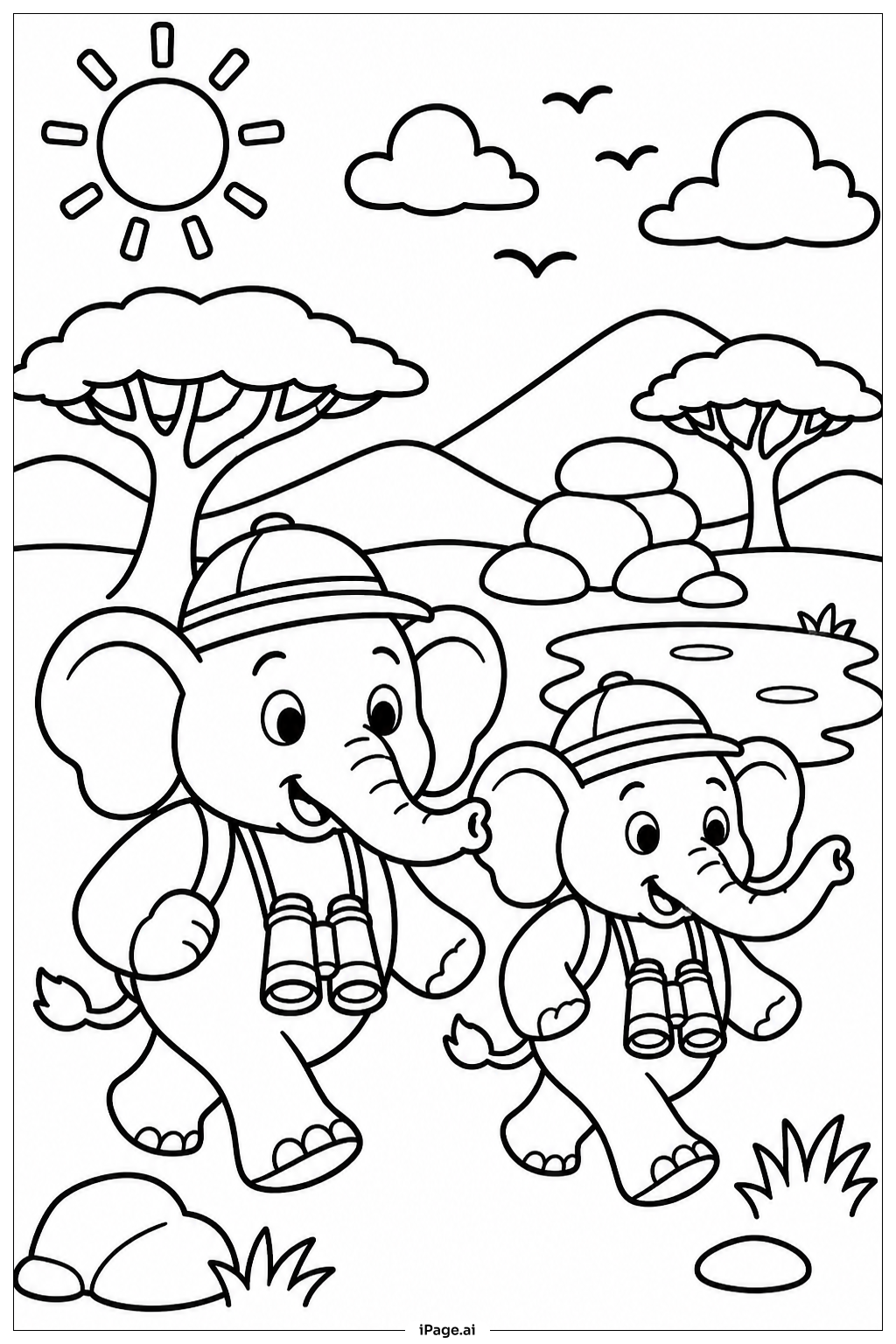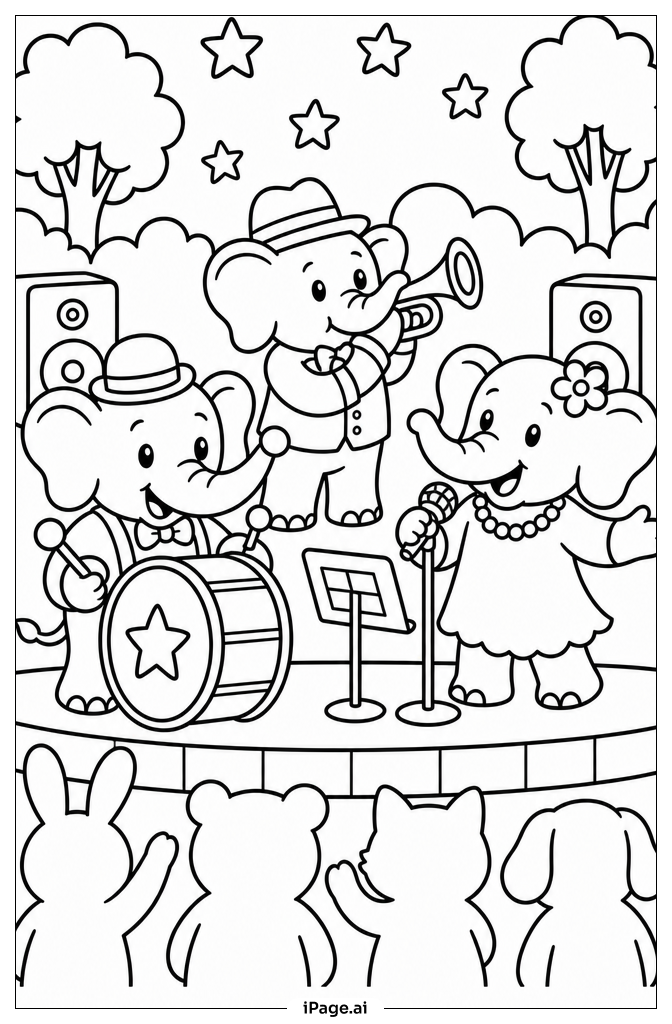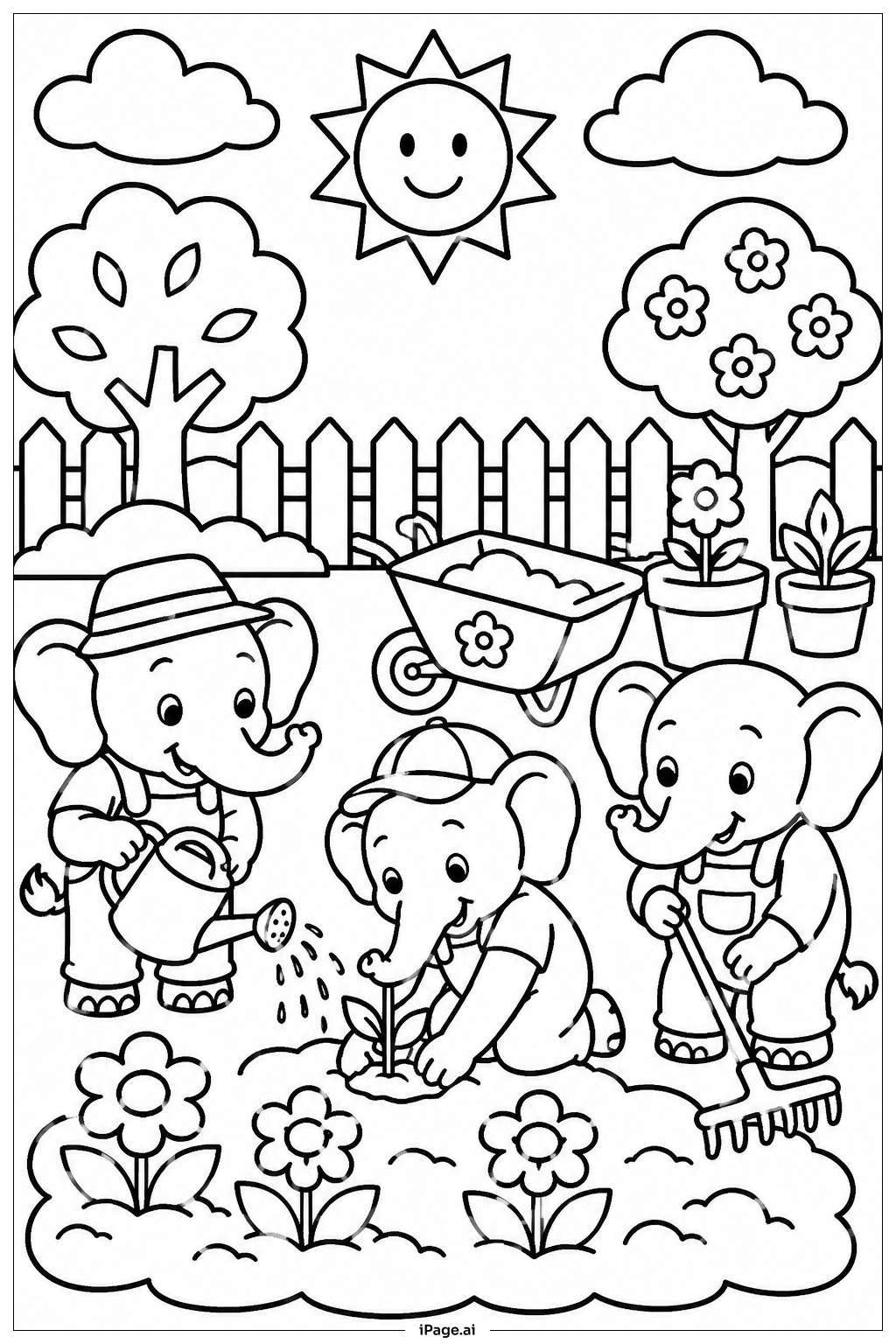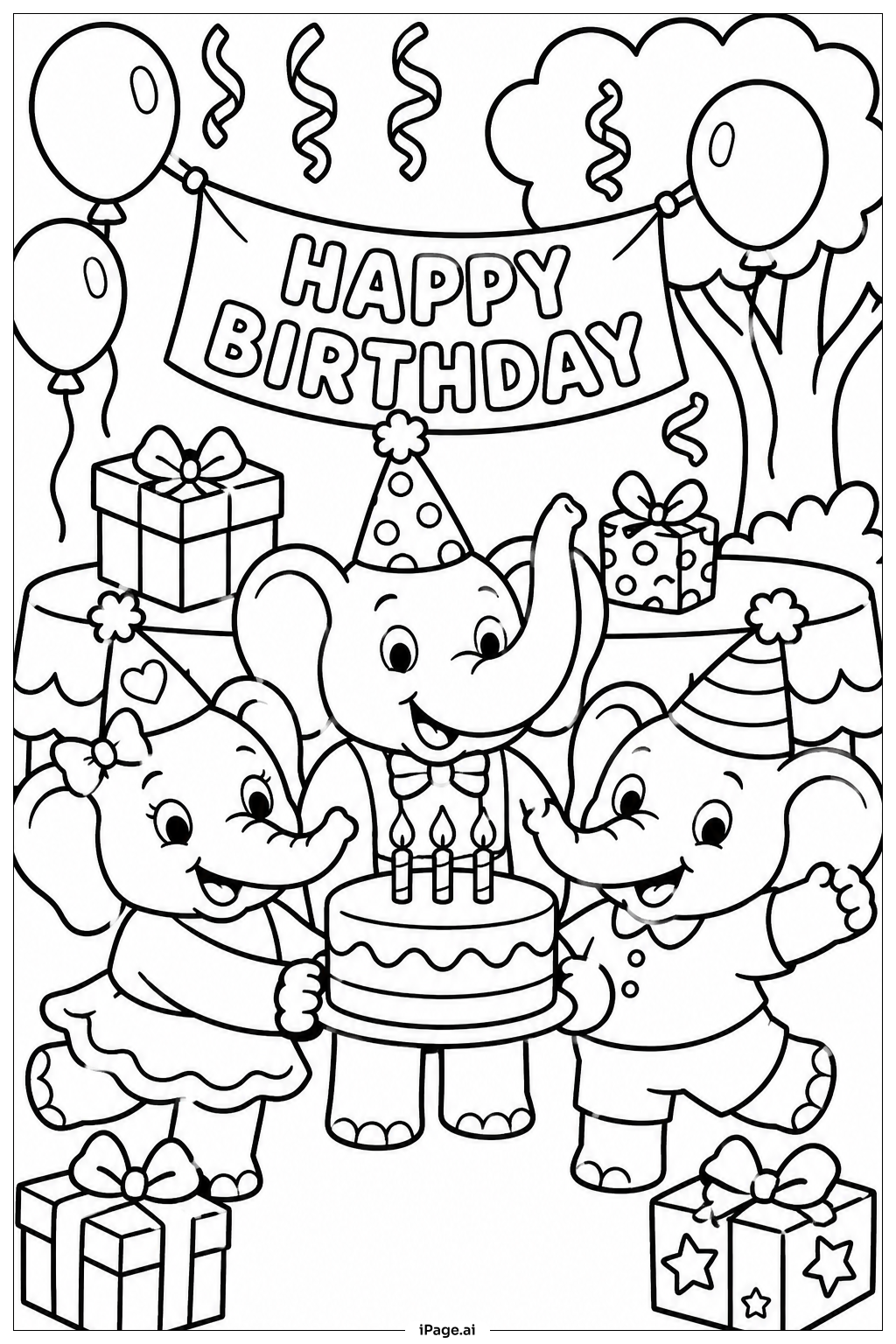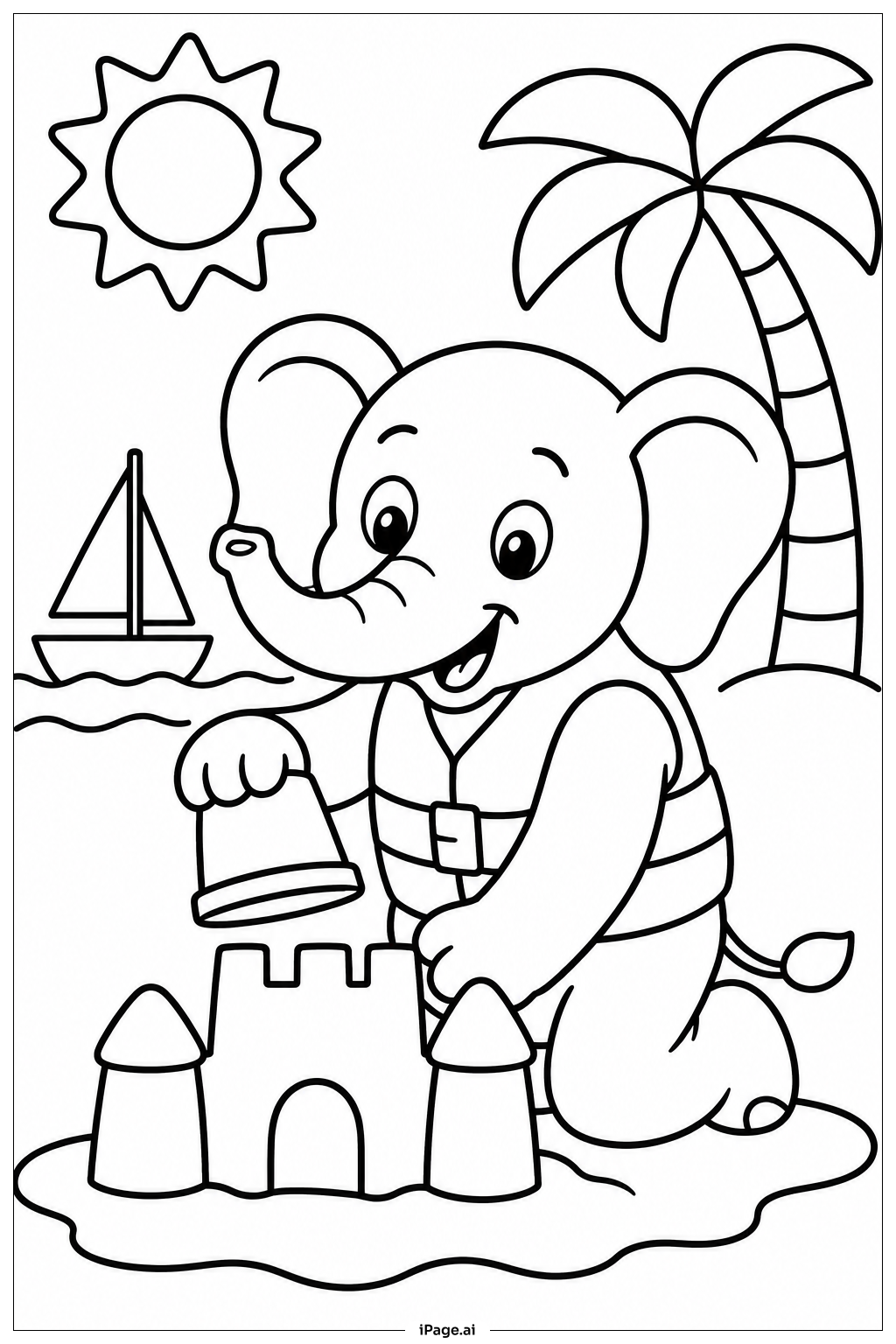
Coloring tips: How to color Elephant At The Beach coloring page well?
Start with the elephant's body using a light gray. You can add a slightly darker gray for shading on the legs, ears, and belly to give it a rounded, three-dimensional look. Color the sunglasses with a bright color like red, blue, or yellow to make them pop. Use warm sandy yellow or tan for the beach. The ocean can be colored in shades of blue and turquoise — lighter near the shore and deeper blue farther out. Color the sky light blue and add soft yellow or orange tones near the sun. Use bright, fun colors for the beach ball, and try pink, orange, or purple for the seashells and starfish. The palm tree trunks can be brown, with bright green leaves. Feel free to mix bold and pastel colors to make the whole scene feel warm, sunny, and full of summer fun!
Coloring challenges: Which parts are difficult to color and need attention for Elephant At The Beach coloring page?
Coloring this beach scene is a fun challenge with a few tricky areas to watch out for:
• **The Elephant's Body:** The elephant has large, curved surfaces that can be hard to shade evenly. Getting a smooth, consistent gray across the body, ears, and trunk takes patience. Try using light, circular strokes and layering colors gradually to avoid streaks or uneven patches.
• **The Ocean Waves:** Waves have flowing, irregular shapes that require blending multiple shades of blue and turquoise. Keeping the transitions smooth — from light foam near the shore to deeper blue farther out — can be difficult, especially for younger colorists. Using at least two or three shades of blue will help create a realistic water effect.
• **Small Details Like Seashells and Starfish:** These tiny elements have intricate patterns and textures. Staying within the lines on small shapes requires a sharp pencil or fine-tipped marker. It can be easy to accidentally color outside the edges, so take your time with these details.
• **The Sunglasses:** The lenses and frames are small and close together on the elephant's face. Coloring them neatly without smudging onto the surrounding skin area requires careful, precise work — especially if using markers or paint.
• **Balancing the Overall Color Palette:** With so many elements in the scene — sky, ocean, sand, elephant, and accessories — choosing colors that look good together without clashing can be a creative challenge. Planning your color choices before you start can help the whole image feel balanced and harmonious.
Benefits of coloring books: Advantages of drawing Elephant At The Beach coloring page
Coloring this fun elephant beach scene offers a wide range of benefits for kids and beginners alike.
**Creativity and Self-Expression:** Choosing colors for the ocean, sky, elephant, and beach accessories encourages kids to make their own creative decisions and express their personal style.
**Fine Motor Skills:** Carefully coloring within the lines — especially around small details like seashells, sunglasses, and the starfish — helps strengthen hand muscles and improve pencil control, which supports handwriting development.
**Focus and Patience:** Working through a detailed scene like this builds concentration. Kids learn to slow down, pay attention to small areas, and complete a task step by step.
**Color Theory Awareness:** Blending shades for the ocean or shading the elephant's body introduces children to basic color concepts like light and shadow, warm and cool tones, and color harmony — all in a playful, low-pressure way.
**Emotional Well-Being:** The cheerful, sunny beach theme creates a positive, relaxing experience. Coloring is a calming activity that can reduce stress and boost mood, making it a great creative outlet after a busy day.
**Nature and Animal Appreciation:** The tropical setting sparks curiosity about elephants, ocean life, and beach ecosystems, making this page both educational and entertaining.