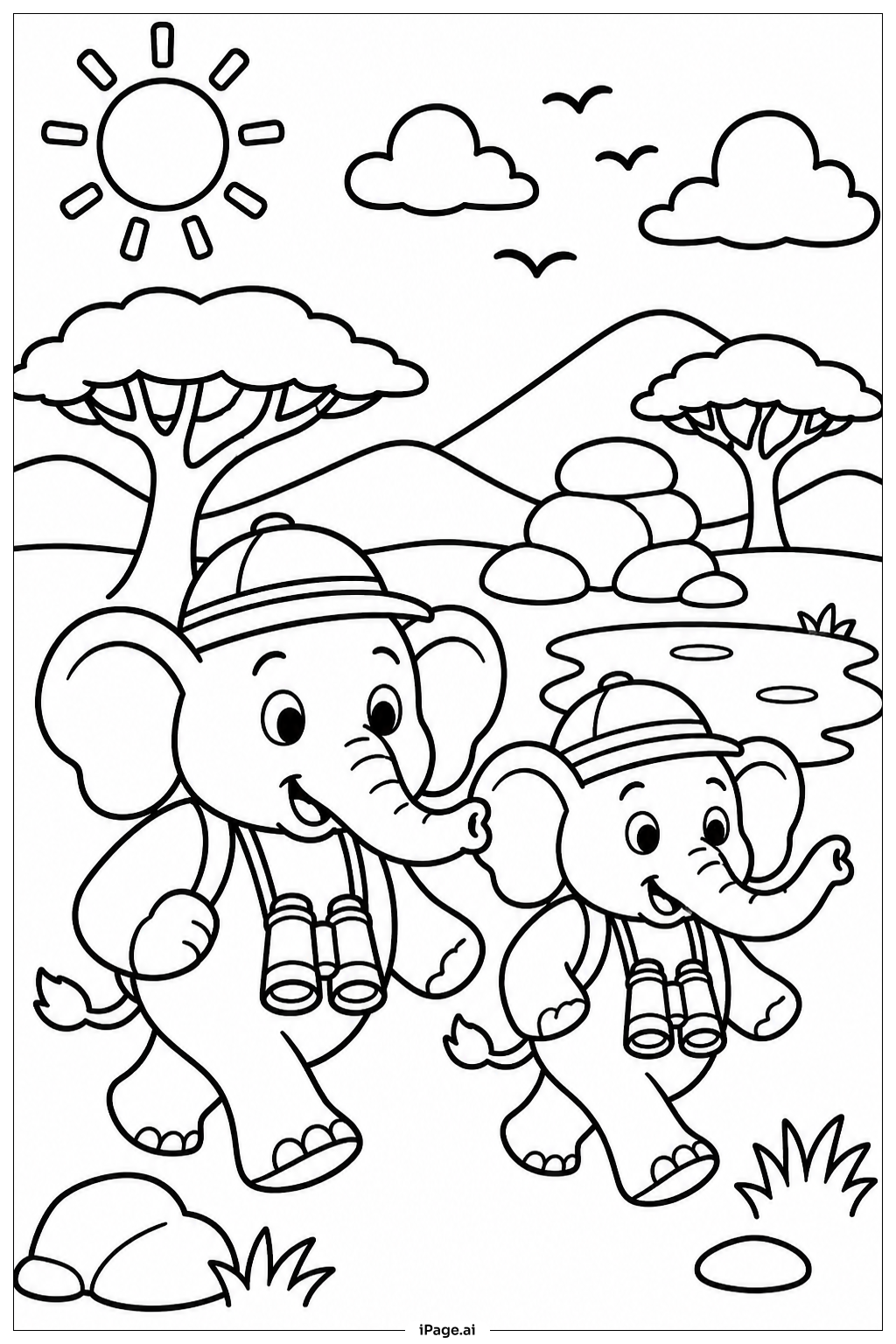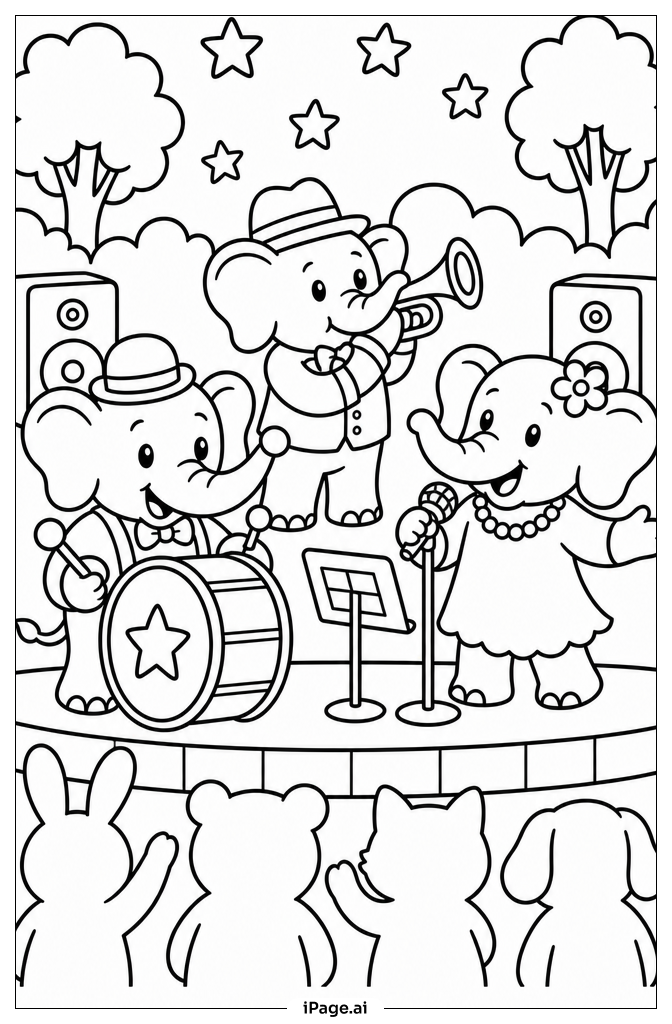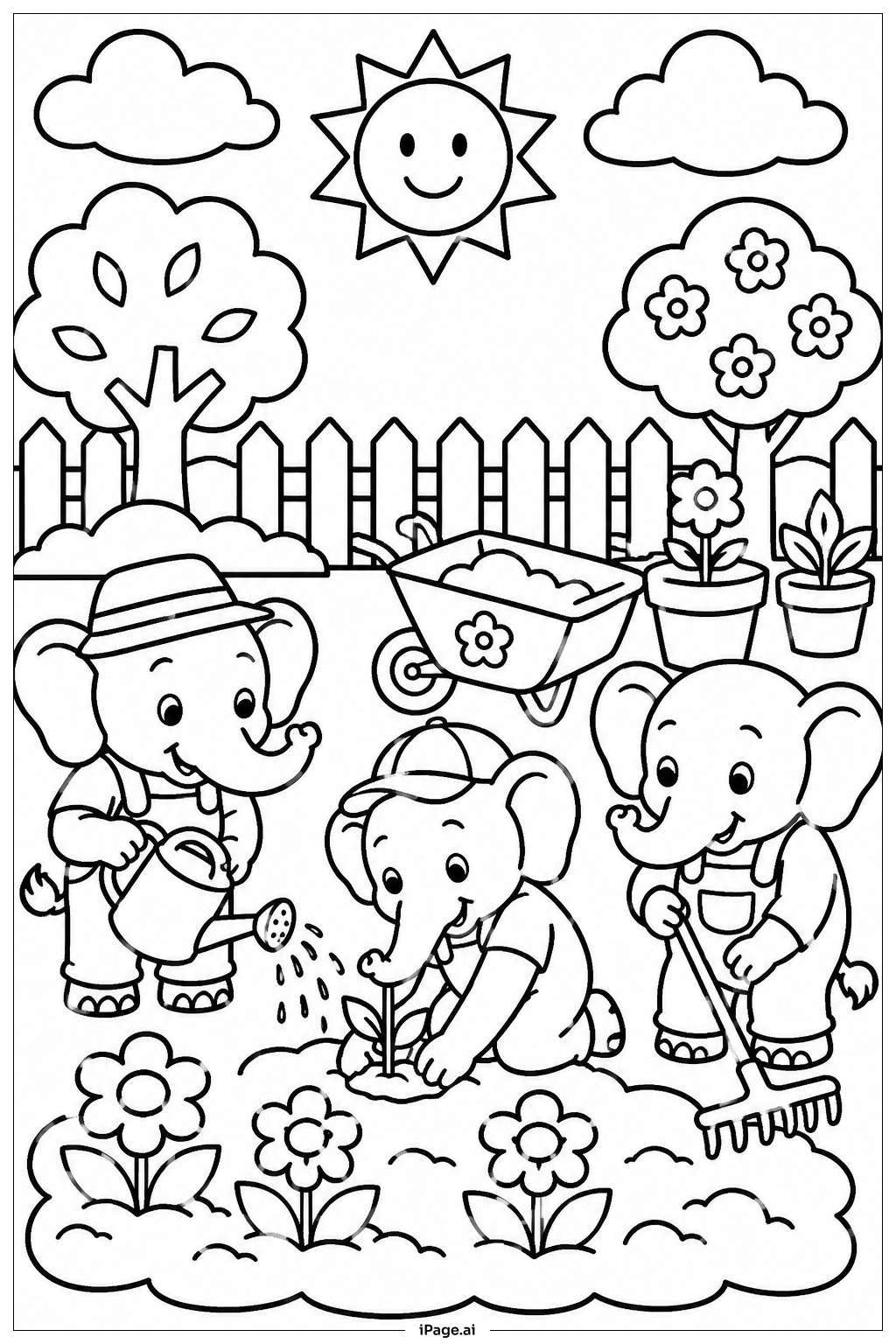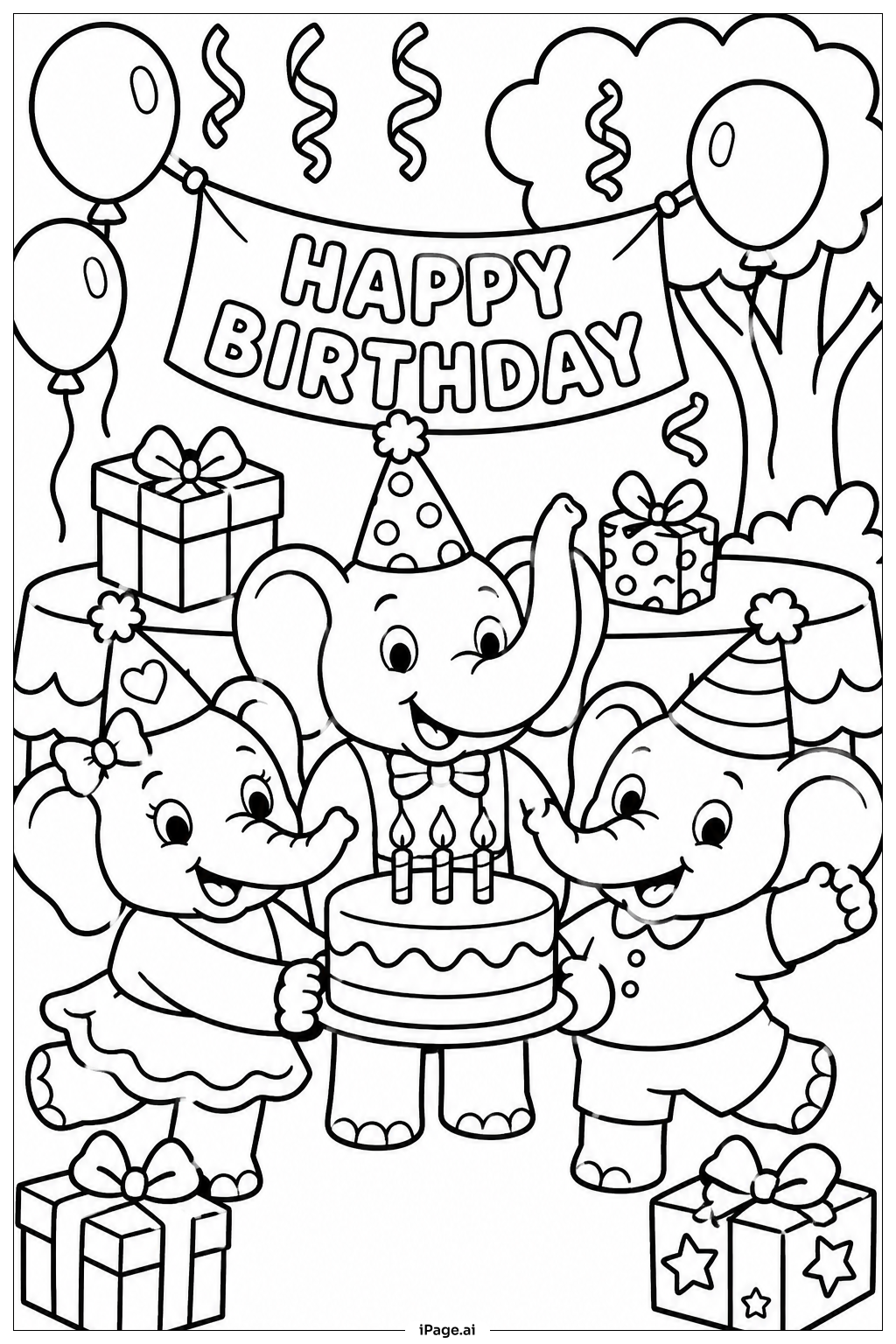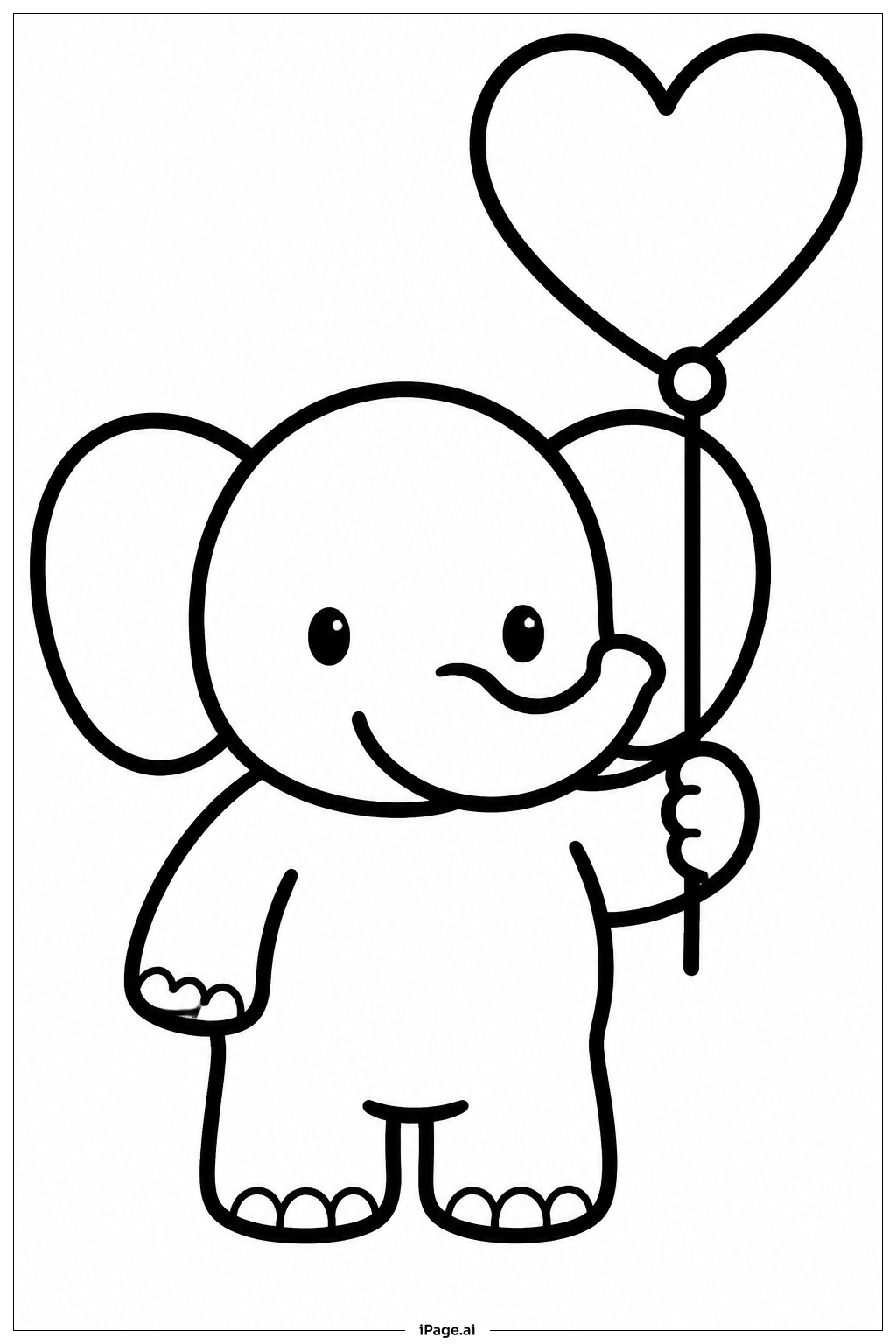
Coloring tips: How to color Baby Elephant coloring page well?
Start with the elephant's body using a light gray. You can mix in a little blue or purple to make it look soft and gentle. Use a slightly darker gray for the wrinkle lines and skin folds to add depth and texture. The large ears can be colored with a warm pink or peach on the inside to show the delicate inner skin. The eyes can be filled with dark brown or black, with a tiny white dot to make them look bright and alive. For the toenails, try a soft cream or light beige. If you want to make the picture more fun, add a colorful background — a sunny savanna, a green jungle, or a bright blue sky with fluffy clouds. You can even add flowers or grass around the elephant's feet. Use crayons, colored pencils, or watercolors — all work great for this image!
Coloring challenges: Which parts are difficult to color and need attention for Baby Elephant coloring page?
Coloring this baby elephant image is a fun challenge, but there are a few tricky parts to watch out for:
• **Skin Texture and Wrinkles:** The elephant's body has many small wrinkle lines drawn across it. Coloring around these lines neatly without going over them takes patience and a steady hand. Using a sharp colored pencil tip helps you stay inside the fine details and keep the texture looking realistic.
• **Shading the Round Body:** The baby elephant's body is plump and rounded. To make it look three-dimensional, you need to apply darker shading on the sides and under the belly, and keep the top areas lighter. Blending two shades of gray smoothly can be difficult, especially for younger colorists who are still learning gradient techniques.
• **The Large Ears:** The ears are wide and have both an outer and inner section. The inner ear needs a different, warmer color like pink or peach, while the outer ear stays gray. Keeping the two color zones clean and separate without smudging across the outline requires careful attention and a fine-tipped tool.
• **The Curved Trunk:** The trunk curves and narrows toward the tip. Coloring along its length evenly, while following the wrinkle lines that run across it, can be fiddly. It is easy to accidentally color outside the lines on the narrow tip section.
• **Small Details Like Eyes and Toenails:** The eyes and toenails are tiny areas that need precise coloring. Using a very fine-tipped pen or a sharpened pencil is the best way to fill these small spaces neatly without spilling color into the surrounding areas.
Benefits of coloring books: Advantages of drawing Baby Elephant coloring page
Coloring this baby elephant page offers many wonderful benefits for kids and beginners alike.
**Builds Fine Motor Skills:** Carefully coloring inside the wrinkle lines and small details helps children develop hand control and pencil grip, which are important skills for writing and drawing.
**Encourages Creativity:** Choosing colors for the elephant's skin, ears, and background sparks imagination. There is no single right answer — kids can create a realistic elephant or a magical rainbow one!
**Teaches Focus and Patience:** Staying inside the lines and blending colors smoothly requires concentration. This gentle practice helps children build the ability to focus on a task from start to finish.
**Introduces Nature and Animals:** Coloring a baby elephant is a fun way to learn about one of the world's most beloved animals. It can spark curiosity about elephants, their habitats, and how we can protect them.
**Provides Emotional Comfort:** The cute and friendly design of the baby elephant creates a calming, joyful experience. Coloring is a great way for children to relax, reduce stress, and express their feelings in a positive way.
Overall, this page is a perfect blend of fun and learning for children of all ages.