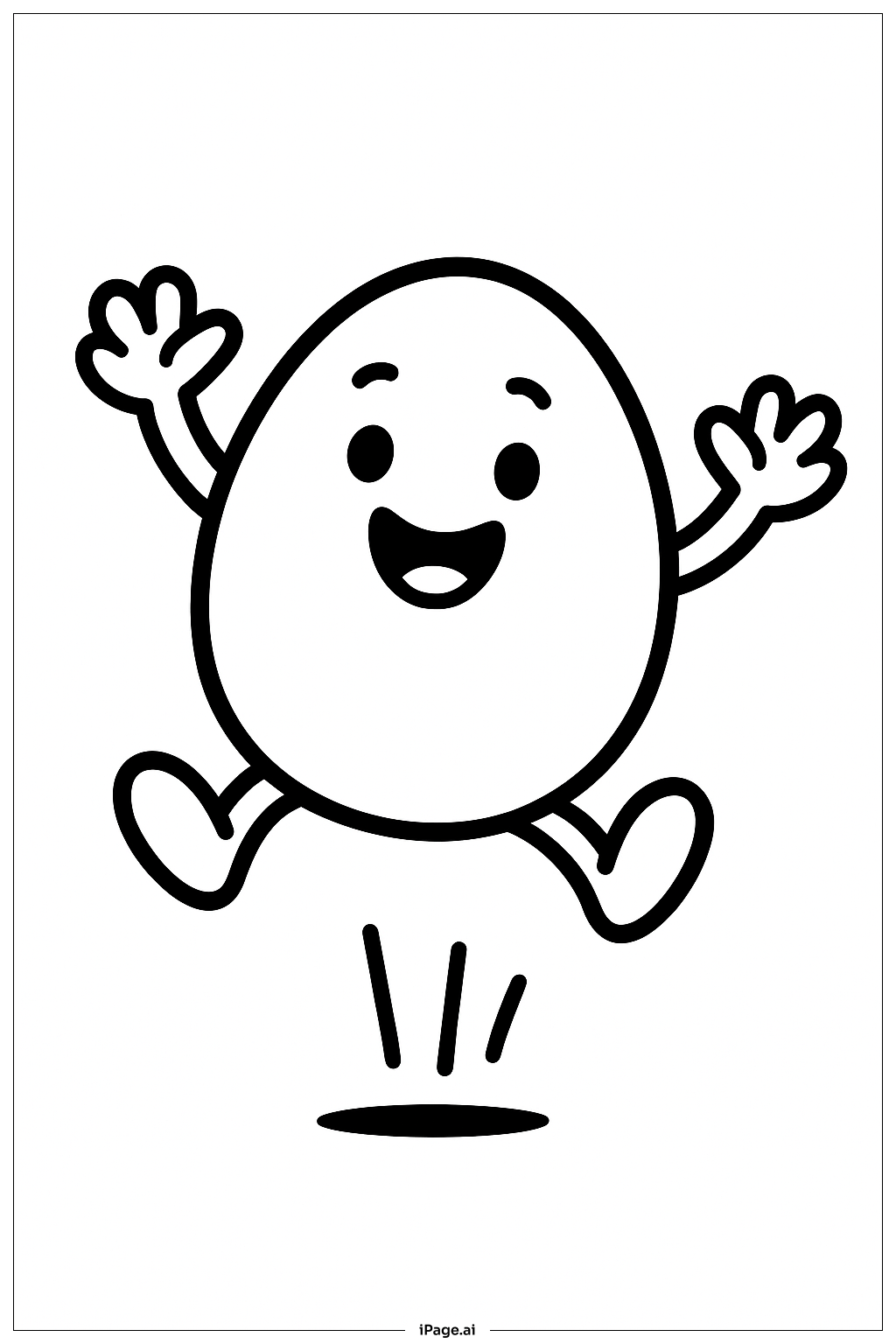
Coloring tips: How to color Jumping Egg coloring page well?
Start with the egg body using soft yellows, creams, or whites to create that classic egg appearance. You could also get creative with pastel colors like light pink, baby blue, or mint green for a fun twist. For the facial features, use warm pink or rosy tones for the cheeks, bright black or dark brown for the eyes, and a cheerful red or pink for the smiling mouth. The legs and arms can be colored in a complementary shade, perhaps a slightly darker cream or tan. Consider adding subtle shading along one side of the egg body to give it dimension and roundness. The motion lines can be left white or colored with light blue or gray to emphasize movement. A simple background with grass green at the bottom or a sunny yellow sky would complete the scene beautifully.
Coloring challenges: Which parts are difficult to color and need attention for Jumping Egg coloring page?
• Smooth Gradient Shading: Creating a smooth, rounded appearance on the egg body requires careful blending and gradual color transitions. Young colorists may find it challenging to achieve even coverage on the large curved surface without visible streaks or patches, especially when trying to add dimensional shading to make the egg look three-dimensional rather than flat.
• Facial Feature Precision: The small facial elements like eyes, cheeks, and mouth require steady hand control and precision coloring within tiny spaces. Children may struggle to keep colors inside the boundaries of these delicate features, particularly when switching between different colors for each element without smudging or overlapping into adjacent areas.
• Motion Line Effects: The speed lines or motion marks that indicate jumping action are thin and require careful attention. Deciding whether to color them or leave them blank, and if coloring, maintaining consistent light pressure to keep them subtle rather than overpowering, can be tricky for younger artists who are still developing fine motor control.
• Leg and Arm Definition: The limbs, especially where they connect to the body and at the joints showing the bent jumping position, contain smaller sections that need different shading to show depth and movement. Maintaining proportion and ensuring these areas do not blend together requires focus and planning about color choices and application technique.
Benefits of coloring books: Advantages of drawing Jumping Egg coloring page
Coloring this energetic Jumping Egg helps children develop essential fine motor skills through controlled movements within defined spaces. The combination of large areas like the egg body and smaller details like facial features provides varied practice levels that build hand-eye coordination and pencil control. The joyful, animated character encourages emotional connection and creative expression, allowing young artists to explore color choices that reflect their own mood and imagination. The simple yet dynamic design teaches basic concepts of movement and expression in art, helping children understand how posture and facial features convey feelings. This activity promotes patience and focus as children work to complete each section thoughtfully. The rewarding result of bringing this cheerful character to life boosts confidence and provides a sense of accomplishment, encouraging continued artistic exploration and self-expression.