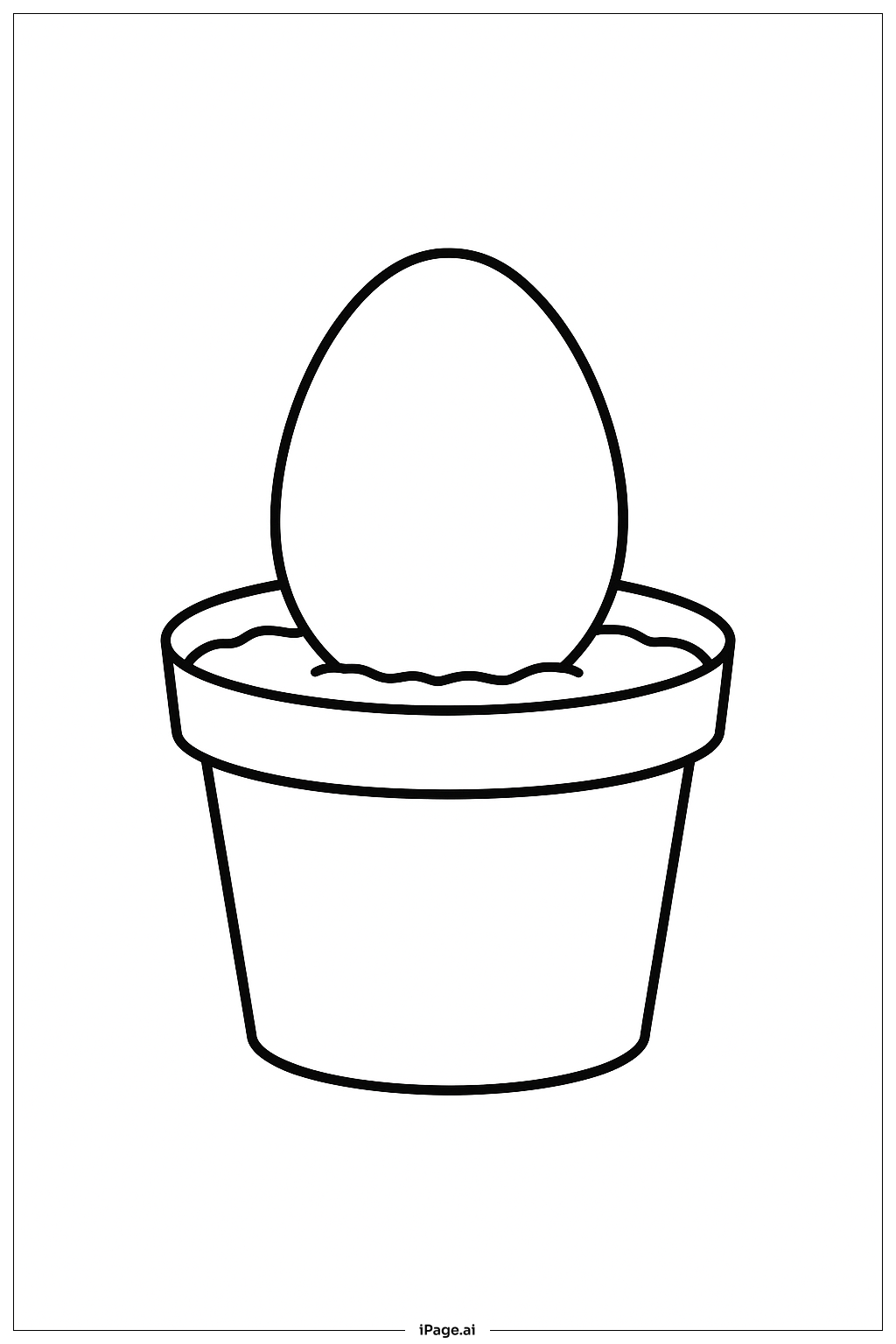
Coloring tips: How to color Egg In Potted Plant coloring page well?
For the terracotta pot, use warm reddish-brown or orange tones to capture that classic clay appearance. The soil can be colored in rich browns, with darker shades for depth and lighter tans for texture variation. The egg offers wonderful possibilities: try a soft cream or pale beige base with darker brown or gray speckles scattered across its surface. For the sprouting plant, use fresh greens—bright lime green for new leaves and deeper forest green for more mature foliage. Consider adding subtle yellow-green highlights where sunlight might touch the leaves. The scattered soil particles can be colored in various brown shades to create dimension. You might add a light blue or gray shadow beneath the pot to ground the scene. For a creative twist, consider making the egg a robin's egg blue or adding more decorative patterns to make it truly special.
Coloring challenges: Which parts are difficult to color and need attention for Egg In Potted Plant coloring page?
• Speckled Egg Texture: Creating the natural speckled pattern on the egg requires patience and careful dotting with markers or colored pencils. Young colorists may find it challenging to make the speckles look random and natural rather than too uniform. The trick is varying the size and spacing of the dots while keeping them concentrated enough to create that authentic speckled appearance. Using a fine-tipped marker or sharpened pencil helps achieve realistic results.
• Soil Texture and Depth: The dirt in the pot needs multiple brown shades to look three-dimensional and realistic. Blending different browns—from dark chocolate to light tan—creates depth and texture. Children may struggle with layering colors to show that some soil is in shadow while other areas catch light. The grainy, crumbly texture of soil requires small strokes or stippling techniques that demand fine motor control and patience.
• Leaf Shading and Dimension: The plant leaves need careful color variation to appear three-dimensional rather than flat. Adding darker green along the leaf edges and veins while keeping centers lighter creates natural depth. Young artists often color leaves in solid green, missing the opportunity to show how light plays across the surface. Understanding where to place highlights and shadows on each leaf requires observation skills and color blending ability.
• Pot Surface Texture: The terracotta pot has subtle texture lines and curves that need thoughtful coloring to appear round and realistic. Creating the appearance of clay material requires using slightly different shades of orange-brown and following the contour lines. The rim needs to look like it curves away from view, which means using lighter colors on top surfaces and darker shades underneath.
Benefits of coloring books: Advantages of drawing Egg In Potted Plant coloring page
Coloring this egg and plant scene helps children develop fine motor skills through the detailed work required for speckles and soil texture. The various elements—smooth egg surface, grainy soil, delicate leaves, and curved pot—offer opportunities to practice different coloring techniques like dotting, stippling, and gradient shading. This image encourages observation of nature and how different materials and textures look in real life. The whimsical combination sparks creative thinking about gardens, growth, and unexpected surprises. Children can practice color mixing and blending to create realistic browns and greens. The moderate complexity makes it suitable for various age groups: younger children can enjoy simple solid coloring while older kids can challenge themselves with advanced shading and texture techniques. This nature-themed image also provides a calming, focused activity that promotes concentration and patience while celebrating the beauty of plants and natural elements.