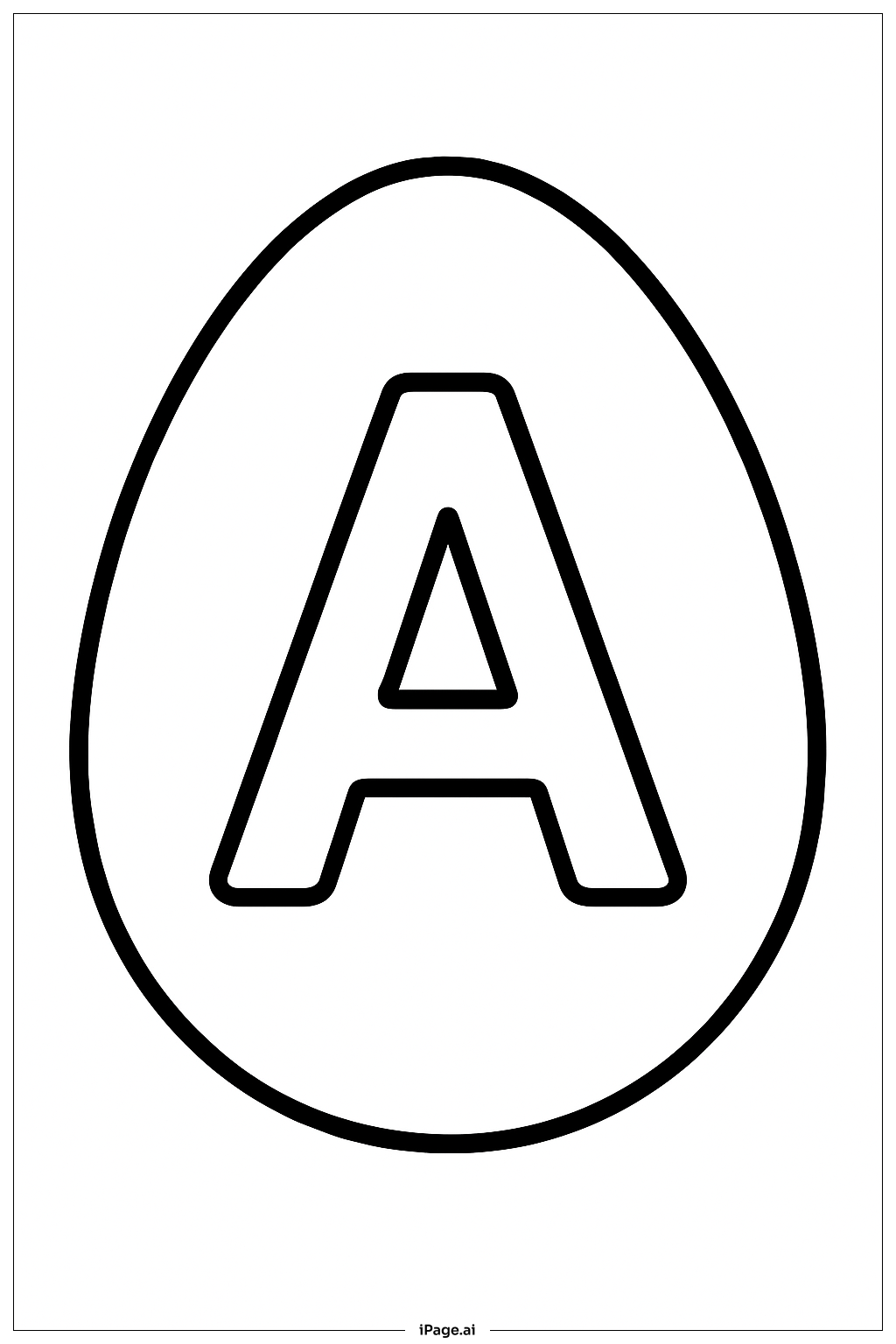
Coloring tips: How to color Alphabet Egg A coloring page well?
Start by coloring the letter "A" in the center of the egg. Use a bold, bright color like red, blue, or yellow so it stands out from the rest of the design. Next, pick a main color for the egg's background — pastel shades like light pink, lavender, or mint green work beautifully for an Easter feel. Color each pattern section in a different shade to create contrast and visual interest. Use warm colors like orange and yellow for the floral shapes, and cool tones like blue or purple for the stripes and dots. Try to keep neighboring sections in contrasting colors so the details stay visible and vibrant. For a fun, festive look, mix bright colors freely. For a calmer result, stick to soft pastels throughout. There are no strict rules — let your creativity lead the way!
Coloring challenges: Which parts are difficult to color and need attention for Alphabet Egg A coloring page?
• Coloring the Letter "A": The letter "A" sits in the middle of the egg and needs to stand out clearly. Staying neatly inside the letter's outlines can be tricky, especially around the triangular inner space and the crossbar. Use a fine-tipped coloring tool for best results and take your time with the edges.
• Small Decorative Details: The egg surface includes tiny dots, small floral shapes, and thin curved lines. These small elements require careful coloring to avoid accidentally going outside the lines. A sharp colored pencil or a fine marker is strongly recommended for these areas.
• Pattern Separation and Contrast: The egg features many different pattern sections placed close together. Choosing colors that are different enough from each other is important so each section looks distinct. If two neighboring sections share a similar shade, the design can look flat and lose its visual impact.
• Background and Foreground Balance: Balancing the color of the egg's background with the colors used for the patterns and the letter can be challenging. If the background color is too dark or too bold, it may overpower the letter "A" and the smaller details. Lighter background tones generally work better for keeping the overall design clear and readable.
• Consistent Color Flow: Keeping a consistent color theme across the whole egg without making it look too busy or too plain requires planning. It helps to choose two or three main colors before starting and use their lighter and darker shades throughout the design.
Benefits of coloring books: Advantages of drawing Alphabet Egg A coloring page
Coloring this Alphabet Egg A page brings together learning and creativity in a fun and engaging way. For young children, seeing and coloring the letter "A" helps reinforce alphabet recognition and early literacy skills. The act of staying within the lines builds fine motor control and improves hand-eye coordination, which are important skills for writing and everyday tasks.
The decorative egg design encourages children to make color choices, helping them develop decision-making skills and creative confidence. Experimenting with different color combinations also nurtures an early appreciation for art and design.
For older children and adults, the detailed patterns on the egg provide a satisfying coloring challenge that promotes focus and mindfulness. Spending time on a coloring activity like this is a great way to unwind and reduce stress after a busy day.
The Easter egg theme also makes this page a wonderful seasonal activity that can spark conversations about traditions and celebrations. Whether colored solo or as a group activity, this page is a simple and joyful way to combine learning, creativity, and relaxation for colorists of all ages.