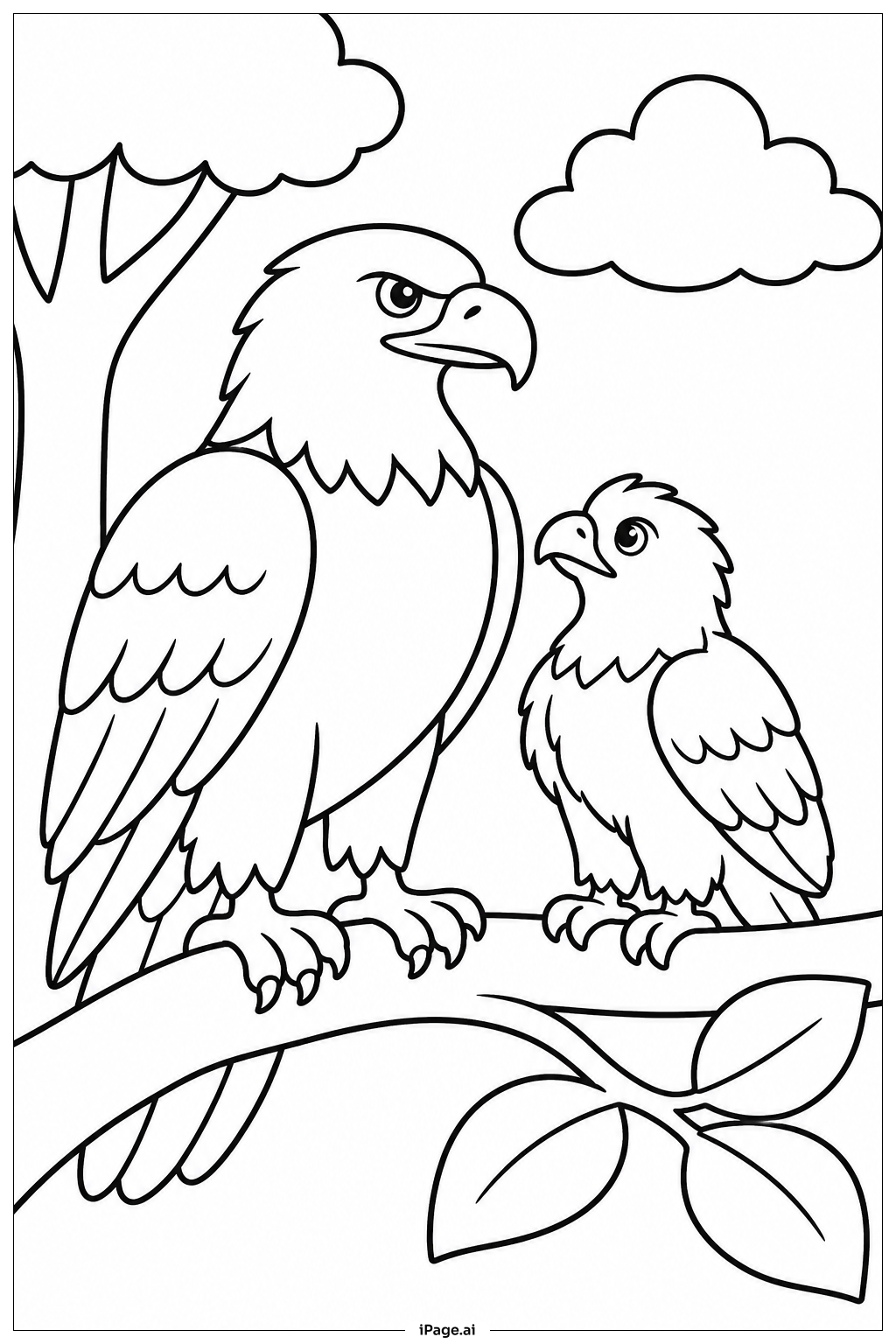
Coloring tips: How to color Eagle With Young coloring page well?
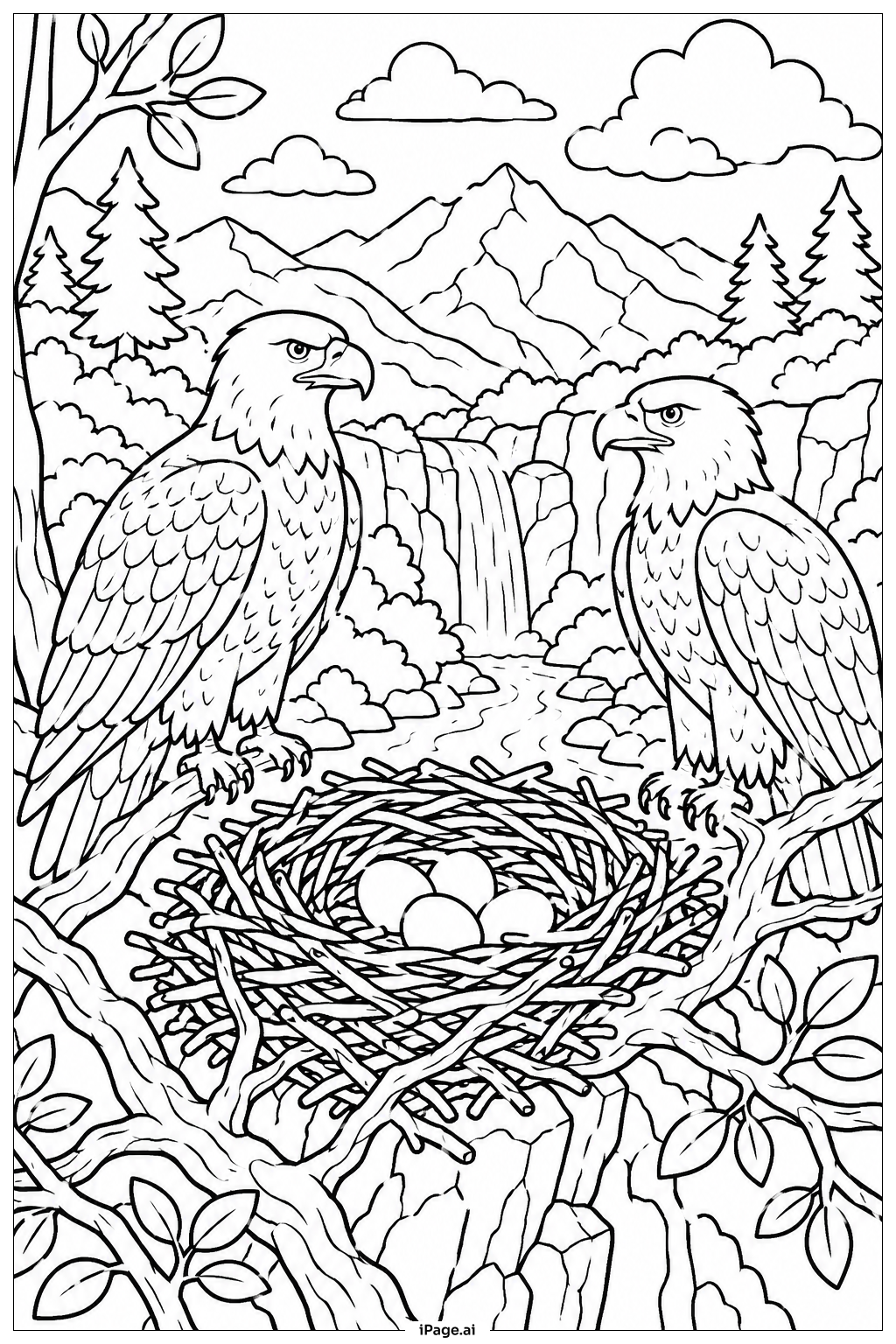
Start with the adult eagle's body. Use rich golden brown and dark brown for the wings and back. Color the head and tail feathers bright white to capture the bald eagle look. Use a bold yellow-orange for the beak and talons. For the eaglets, use light gray, soft cream, and pale brown to show their fluffy down feathers. Their beaks can be a softer yellow. Color the nest using several shades of brown and tan to show the different twigs and layers. Add green and dark blue-green for leaves and trees in the background. Use light blue or soft purple for a sky peeking through. Try blending colors gently to give the feathers a natural, layered feel.
Coloring challenges: Which parts are difficult to color and need attention for Eagle With Young coloring page?
• Eagle Feather Layering: The adult eagle has many overlapping feathers on its wings and body. Each layer needs a slightly different shade of brown to look realistic. It can be hard to stay within the small feather sections and blend the tones smoothly without making the whole wing look flat or muddy.
• Eaglet Down Texture: The young eaglets are covered in soft, fluffy down feathers that look very different from adult feathers. Capturing this soft, wispy texture with colored pencils or crayons takes patience. Using very light pressure and short, gentle strokes helps, but it is tricky for younger colorists.
• Nest Detail and Depth: The nest is made of dozens of overlapping twigs, sticks, and fibers. Using only one shade of brown will make it look dull. To give the nest a realistic, three-dimensional feel, you need to use at least three to four different brown and tan shades, adding darker tones in the shadows and lighter tones where the light hits.
• Contrasting the White Head: The adult eagle's white head and tail must stay clean and bright. If surrounding dark colors bleed into these areas, the contrast is lost. Coloring carefully around the edges or leaving those sections uncolored while finishing nearby areas requires a steady hand.
• Background Balance: The trees and mountain shapes in the background should not overpower the eagles in the foreground. Keeping background colors soft and cool while using warmer, richer tones on the eagles helps create depth, but finding the right balance can be challenging.
Benefits of coloring books: Advantages of drawing Eagle With Young coloring page
Coloring this Eagle With Young page offers a wonderful range of benefits for kids and beginners alike. Working through the detailed feathers and nest structure builds fine motor skills and hand control, which supports handwriting and other daily tasks. Choosing colors for the eagle family encourages creative thinking and helps children learn about real bird colors and nature. Focusing on the intricate details of the nest and feathers naturally trains concentration and patience, skills that carry over into school and everyday life. The image also sparks curiosity about eagles and wildlife, making it a great starting point for conversations about animals, family bonds, and the natural world. Completing a detailed scene like this gives children a real sense of accomplishment and pride in their work. It is also a calm, screen-free activity that helps reduce stress and anxiety, letting kids unwind while still staying mentally engaged. Whether done alone or with family, this page makes for a rewarding and enriching creative experience.