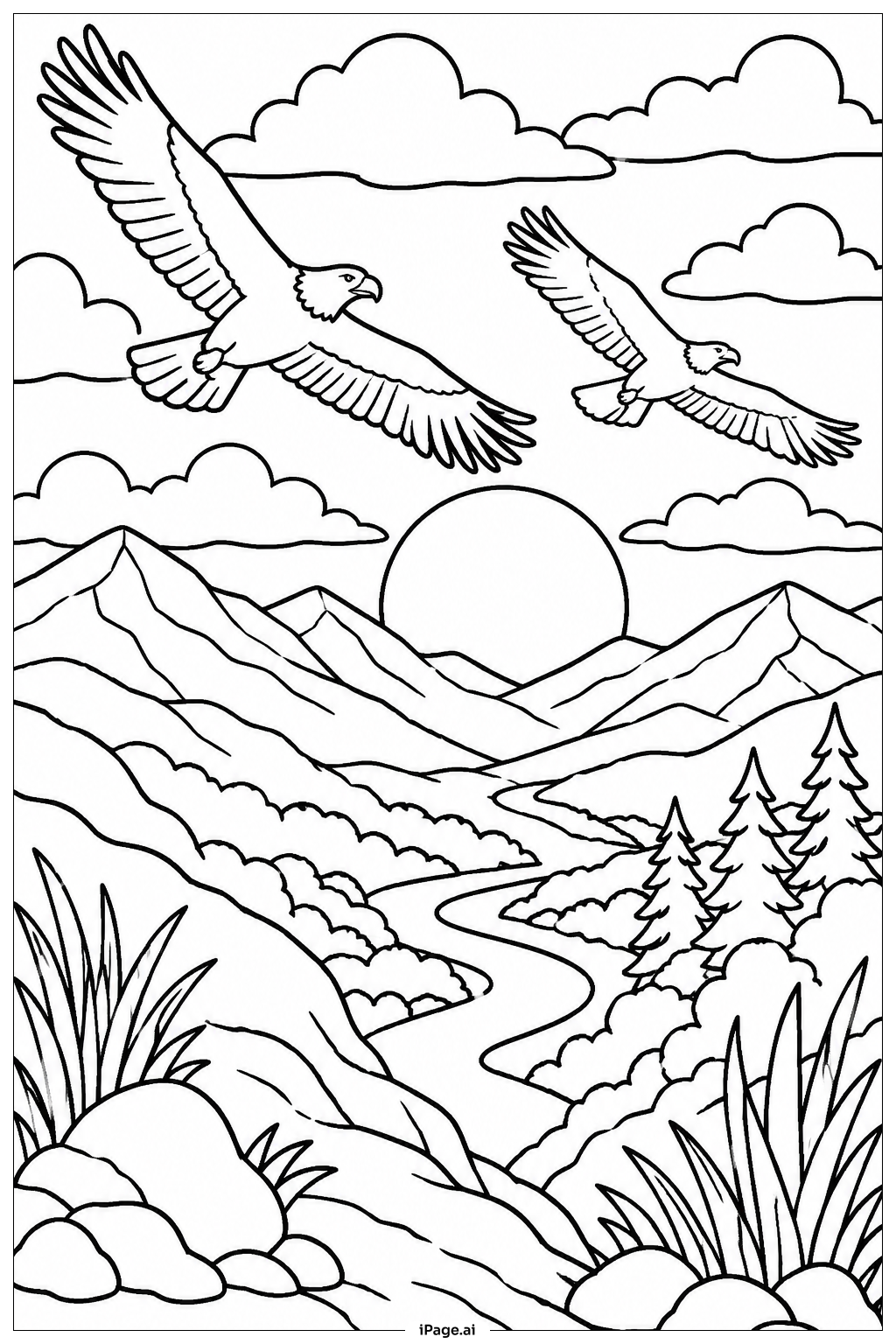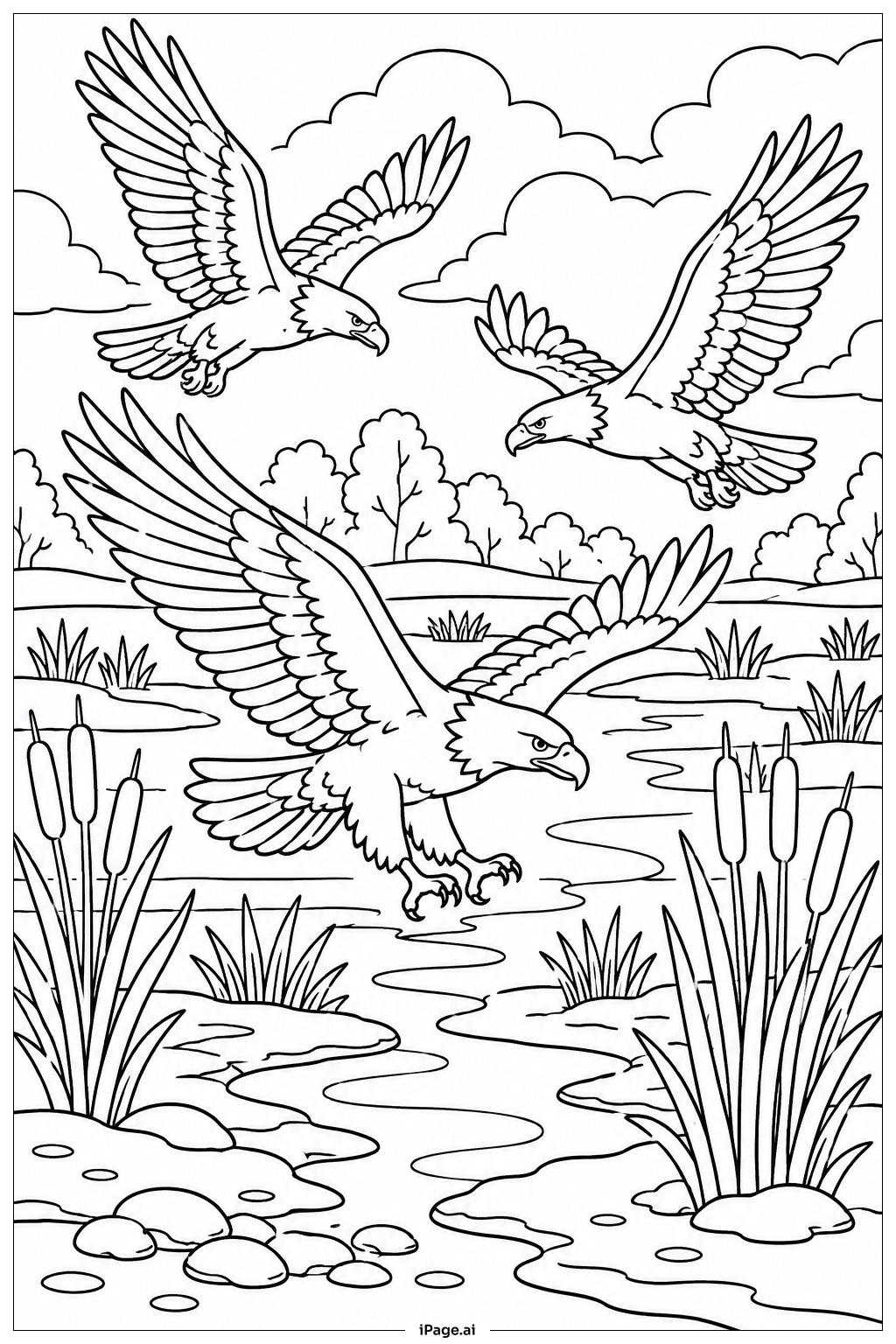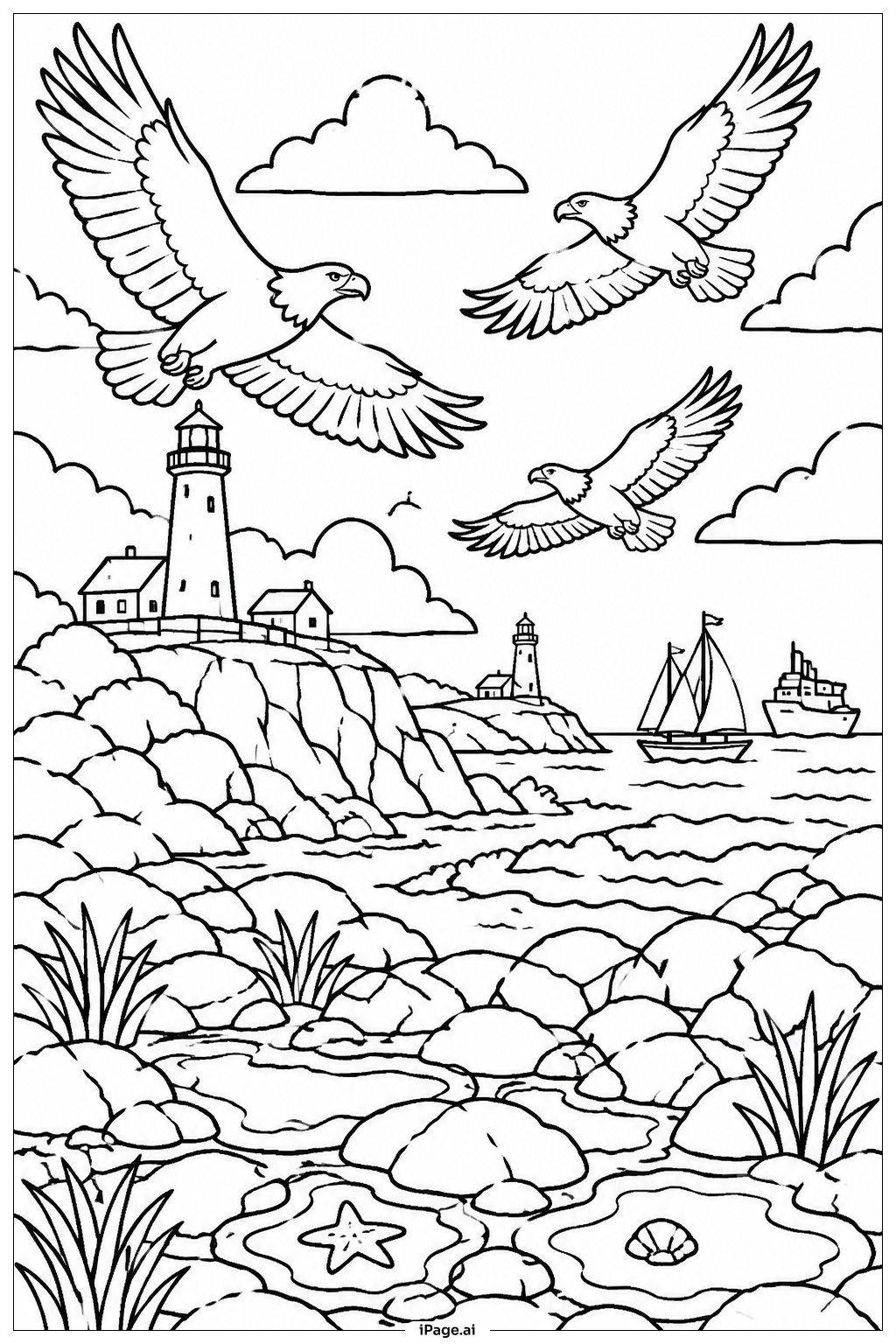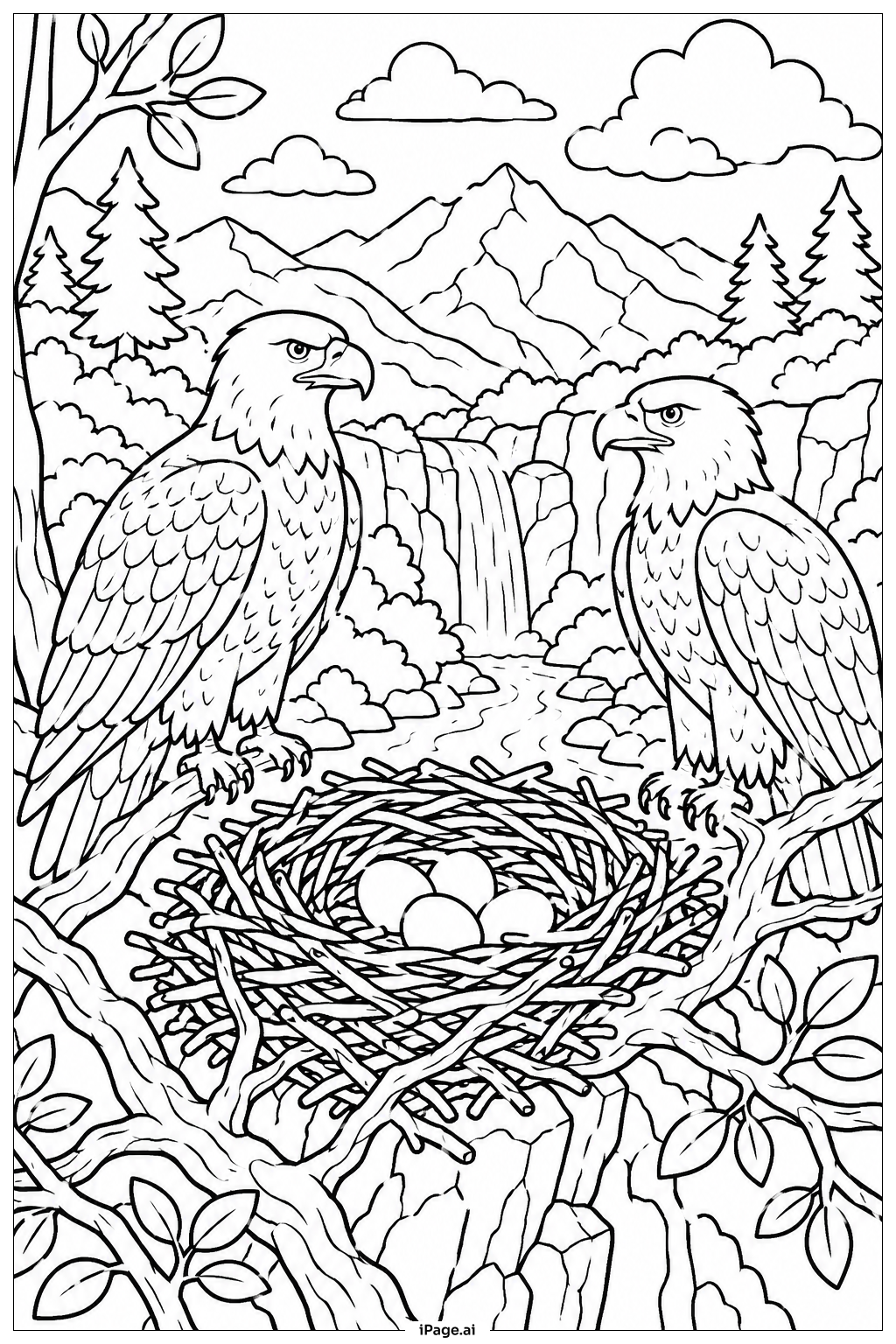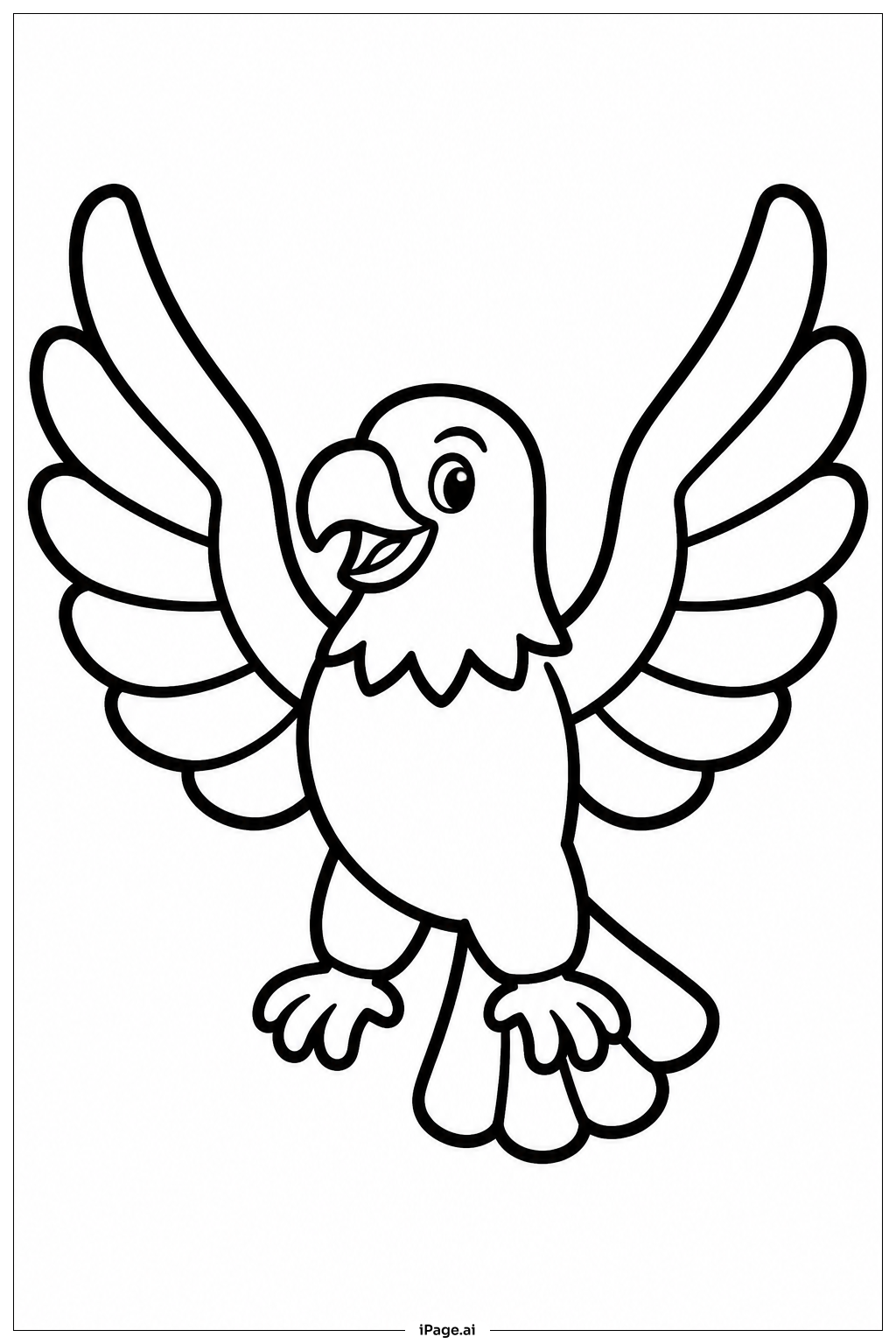
Coloring tips: How to color Eagle Wings Up coloring page well?
Start with the eagle's head and tail feathers using white or very light gray to keep those areas bright and clean. Use dark brown and deep black for the large wing feathers, layering the colors from the tips inward to create a natural gradient. Add a warm golden yellow to the beak and talons for a bold, realistic look. For the chest and body feathers, try a medium brown with lighter highlights to show texture and depth. Use a soft gray for shading under the wings and along the feather edges. Kids can keep it simple with flat brown and white, while older colorists can try blending multiple shades to bring the eagle to life. Adding a light blue background can make the eagle stand out beautifully.
Coloring challenges: Which parts are difficult to color and need attention for Eagle Wings Up coloring page?
• Wing Feather Layering: The raised wings contain dozens of individual feathers arranged in overlapping rows. Each feather has its own shape and direction. Coloring them neatly without smudging into neighboring feathers takes patience and a fine-tipped tool. Keeping consistent color values across so many small sections can be tricky, especially where light and shadow meet at the fold of the wing.
• Shading the Body and Chest: The eagle's chest and body have thick, rounded feathers that need shading to look three-dimensional. Flat color will make this area look dull. Blending from darker brown at the edges to lighter tones in the center helps, but achieving a smooth transition without streaks requires practice and the right tools.
• Beak and Talon Detail: The beak is curved and has a sharp point, while the talons are long and hooked. These small areas need precise coloring to stay within the lines. Using too much color in these tight spots can muddy the detail. A sharp pencil or fine marker works best here to keep the golden yellow clean and accurate.
• Feather Tip Contrast: The tips of the wing feathers are often darker than the base. Creating this natural contrast while keeping each tip sharp and defined is a real challenge. If the colors blend too much, the tips lose definition and the wing looks flat instead of dynamic.
• Overall Color Harmony: Balancing dark browns, blacks, whites, and yellows across the whole image without any one area looking too heavy or too light requires stepping back often to check the overall composition. This is especially important for younger colorists who may focus too much on one section at a time.
Benefits of coloring books: Advantages of drawing Eagle Wings Up coloring page
Coloring this eagle with wings raised high is a wonderful activity for children and young artists. It helps build fine motor skills as kids carefully fill in feathers, talons, and detailed wing patterns. Staying within the lines and handling small sections trains hand steadiness and pencil control, which also supports better handwriting.
This image encourages focus and patience. Because the eagle has so many feathers and detailed parts, kids learn to slow down and work carefully through each section. This kind of focused activity can be calming and help reduce stress or restless energy.
Choosing colors for the eagle sparks creativity and imagination. Kids learn about color mixing, shading, and contrast as they decide how to make the wings look real or add their own artistic flair with bold, unexpected colors.
Learning about eagles through coloring also builds a natural connection to wildlife and nature. Kids become curious about how eagles look, move, and live, which can inspire further reading and learning about animals and the natural world.
Finally, finishing the page gives children a strong sense of pride and accomplishment. Displaying their completed eagle artwork encourages confidence and a love for creative expression that carries into many areas of life.