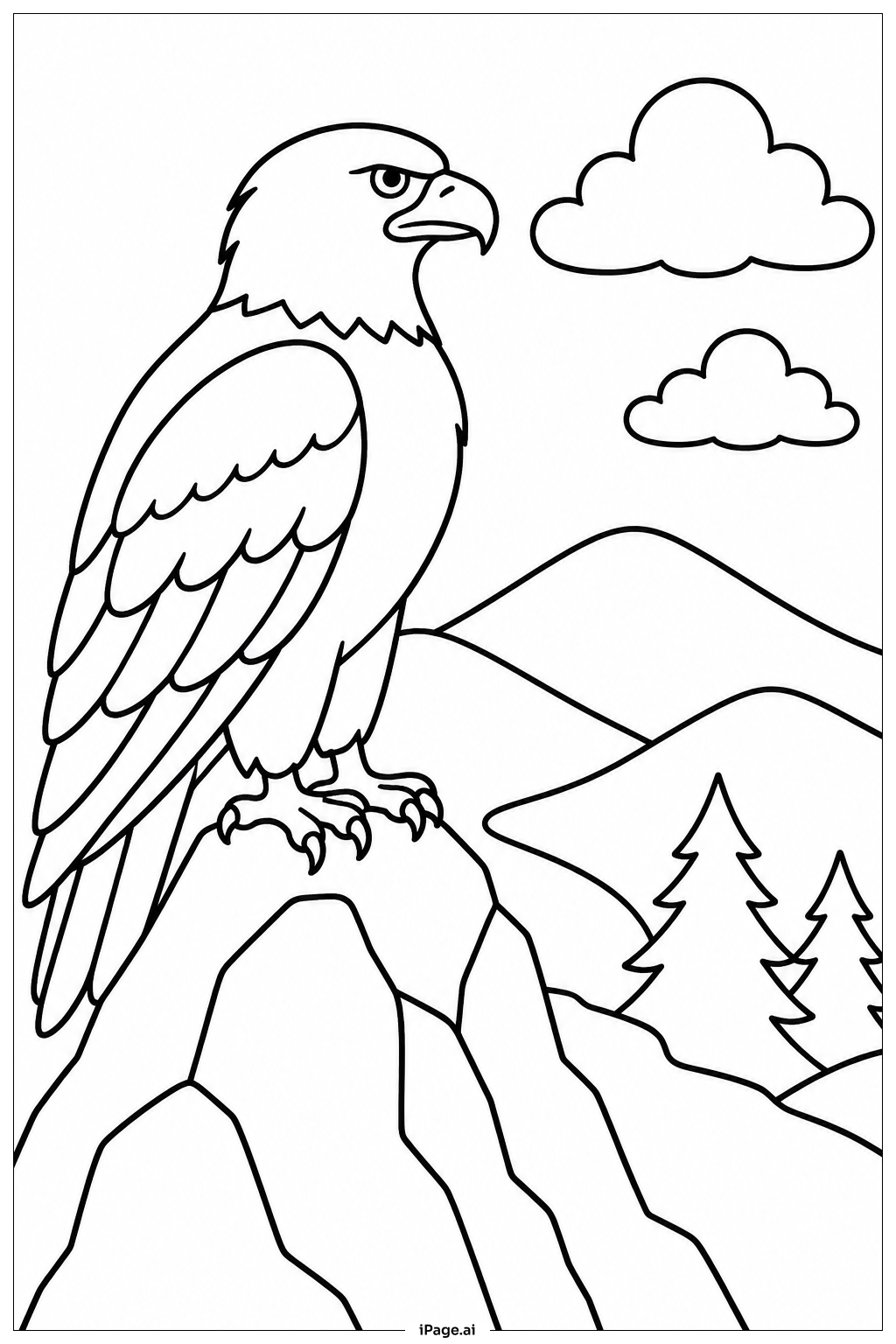
Coloring tips: How to color Eagle Watching Valley coloring page well?
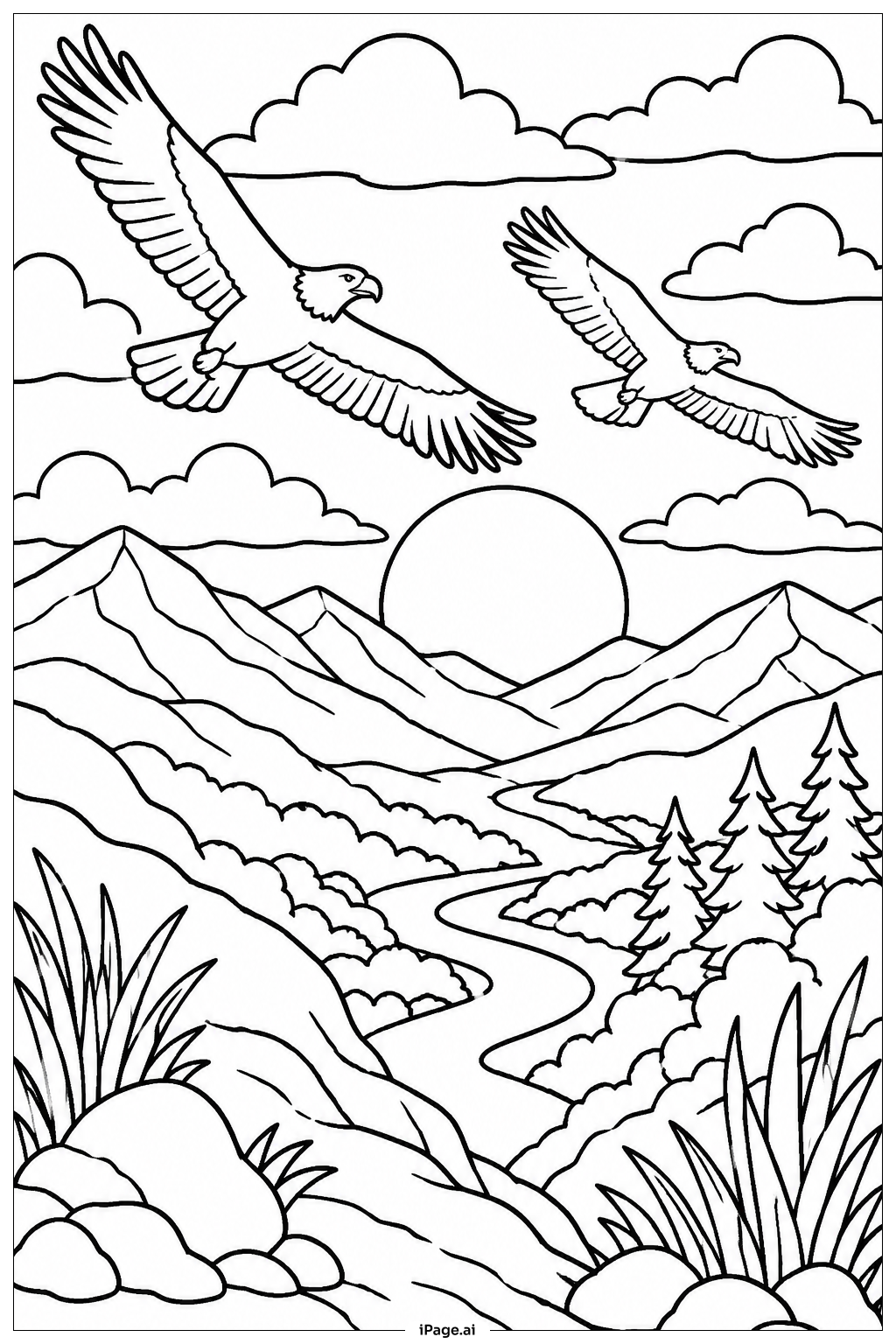
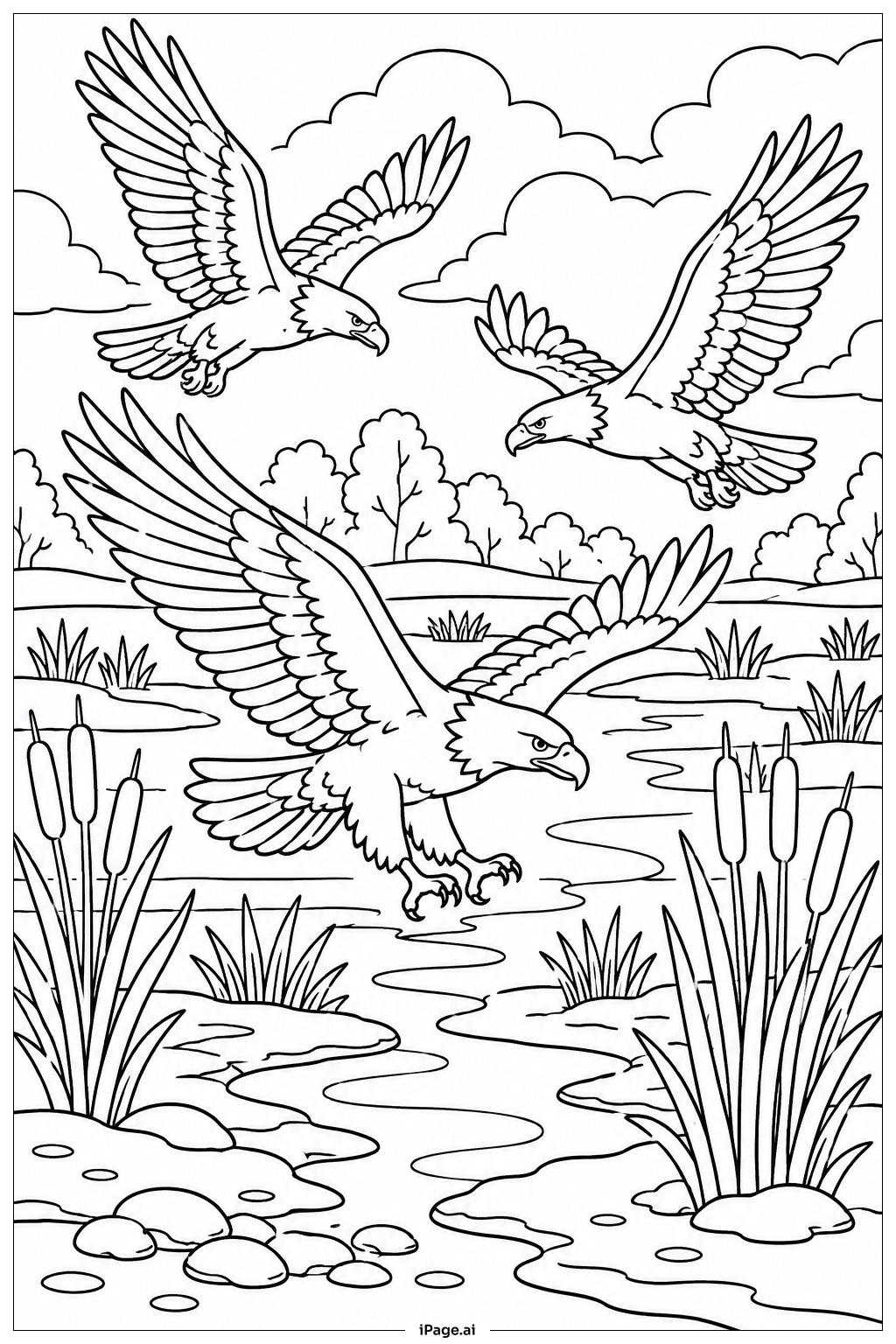
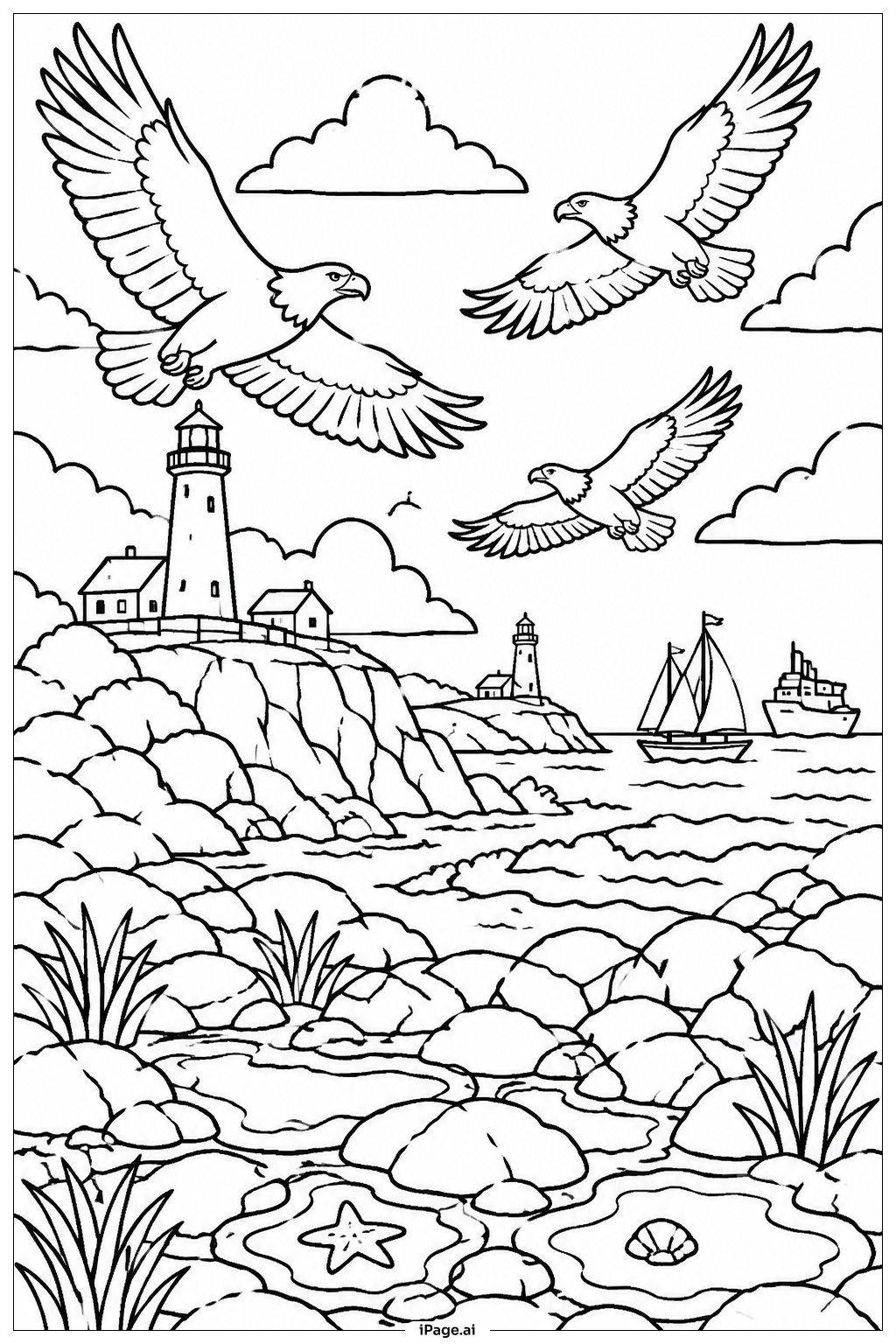
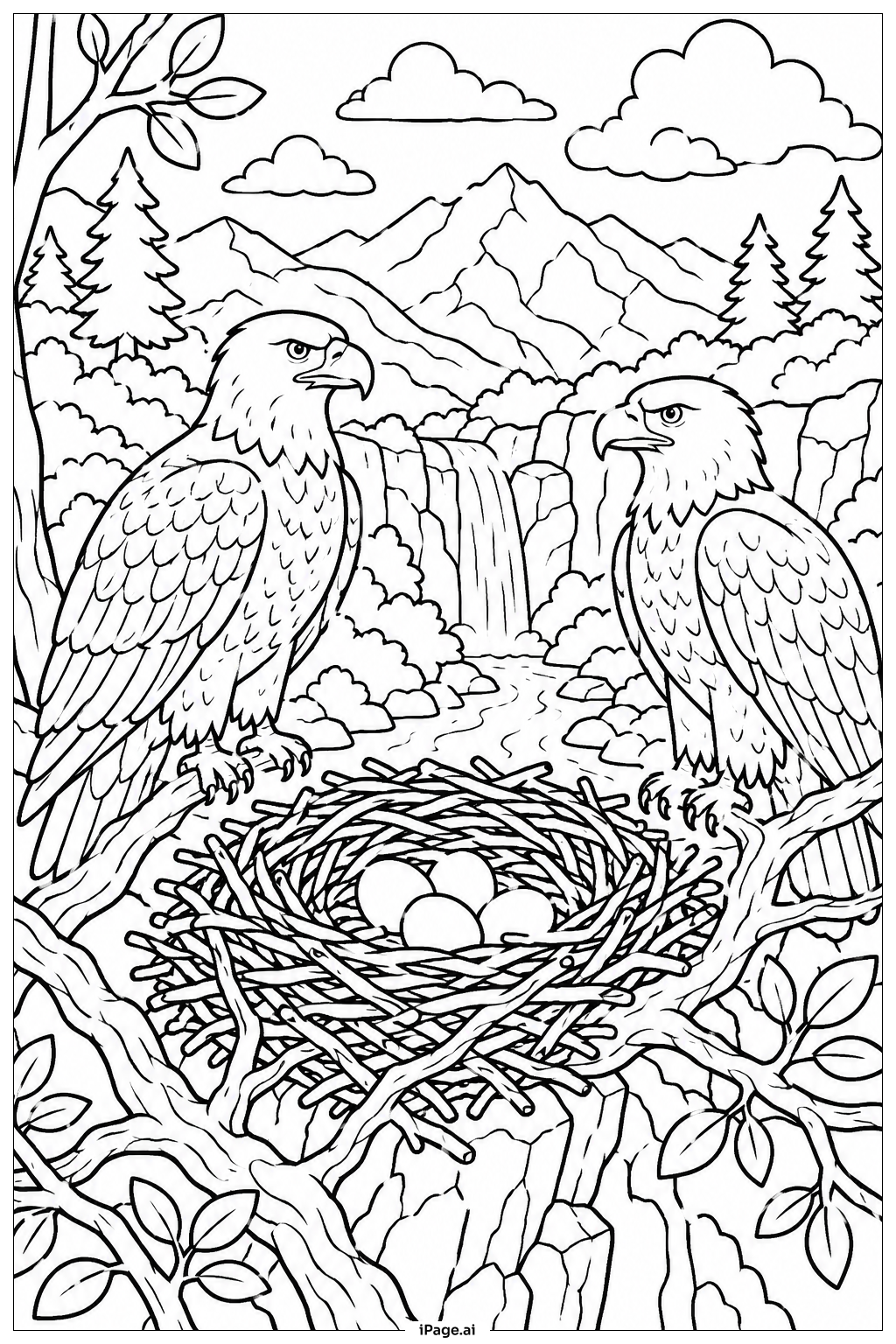
Start with the eagle's body before moving to the background. Use warm brown and golden yellow tones for the eagle's feathers. Make the head and tail feathers bright white if you want a bald eagle look. Use a bold yellow or orange for the beak and talons. For the rocky perch, try shades of gray and light brown. Color the valley in soft greens and earthy browns to show rolling hills and trees. Use a gentle blue-green for the winding river. Fill the sky with light blue, and add white or soft purple for the clouds. You can blend darker shades at the edges of the sky to give it depth. Use darker greens in the distance to make the valley look deep and wide. Take your time with the eagle's chest feathers — layering light and dark brown tones will make them look real and full of texture.
Coloring challenges: Which parts are difficult to color and need attention for Eagle Watching Valley coloring page?
• Eagle Feather Layering: The eagle's body is covered in dozens of overlapping feathers, each with its own shape and direction. Coloring them one by one while keeping the tones consistent is a real challenge. You need to switch between light and dark browns carefully to show depth without making the feathers look flat or muddy.
• Beak and Talon Details: The curved beak and sharp talons are small but important parts of the image. These areas require a steady hand and a fine-tipped tool to stay within the lines. Using the wrong shade here can make the eagle look less lifelike, so choosing a strong yellow-orange tone and applying it neatly matters a lot.
• Rocky Texture on the Perch: The rock surface under the eagle's talons has an uneven, rough texture with cracks and shadows. Blending multiple shades of gray and brown to make the rock look three-dimensional takes patience. Too much of one color can flatten the surface and remove the natural feel of stone.
• Valley Depth and Distance: The valley in the background includes layers of hills, trees, a river, and open land all at different distances. Showing depth through color — using lighter, cooler tones in the far distance and richer, darker greens up close — is a technique that takes practice and careful planning before you begin coloring.
• Sky Gradients and Clouds: A wide open sky with clouds can be tricky to color smoothly. Getting a clean gradient from deeper blue at the top to lighter blue near the horizon, while keeping the clouds soft and natural-looking without harsh outlines, requires a light touch and good blending skills.
Benefits of coloring books: Advantages of drawing Eagle Watching Valley coloring page
Coloring this Eagle Watching Valley image offers many wonderful benefits for kids and adults alike. For younger children, tracing the eagle's feathers and the shapes of the valley helps build fine motor skills and hand-eye coordination. Choosing colors for the sky, hills, and river also encourages creative thinking and decision-making in a fun, low-pressure way.
For older kids and teens, the detailed feather patterns and layered background provide a satisfying challenge that builds focus and patience. Completing a complex image like this gives a real sense of accomplishment and boosts self-confidence.
For adults, coloring this peaceful scene can be a great way to relax and unwind. The calm, natural setting of an eagle overlooking a wide valley makes it easy to slow down and enjoy a quiet, mindful activity. It can help reduce stress and bring a sense of calm after a busy day.
Learning about the eagle and its habitat through the image also sparks curiosity about nature and wildlife. Overall, this coloring page is a wonderful mix of creativity, skill-building, and relaxation for colorists of all ages.