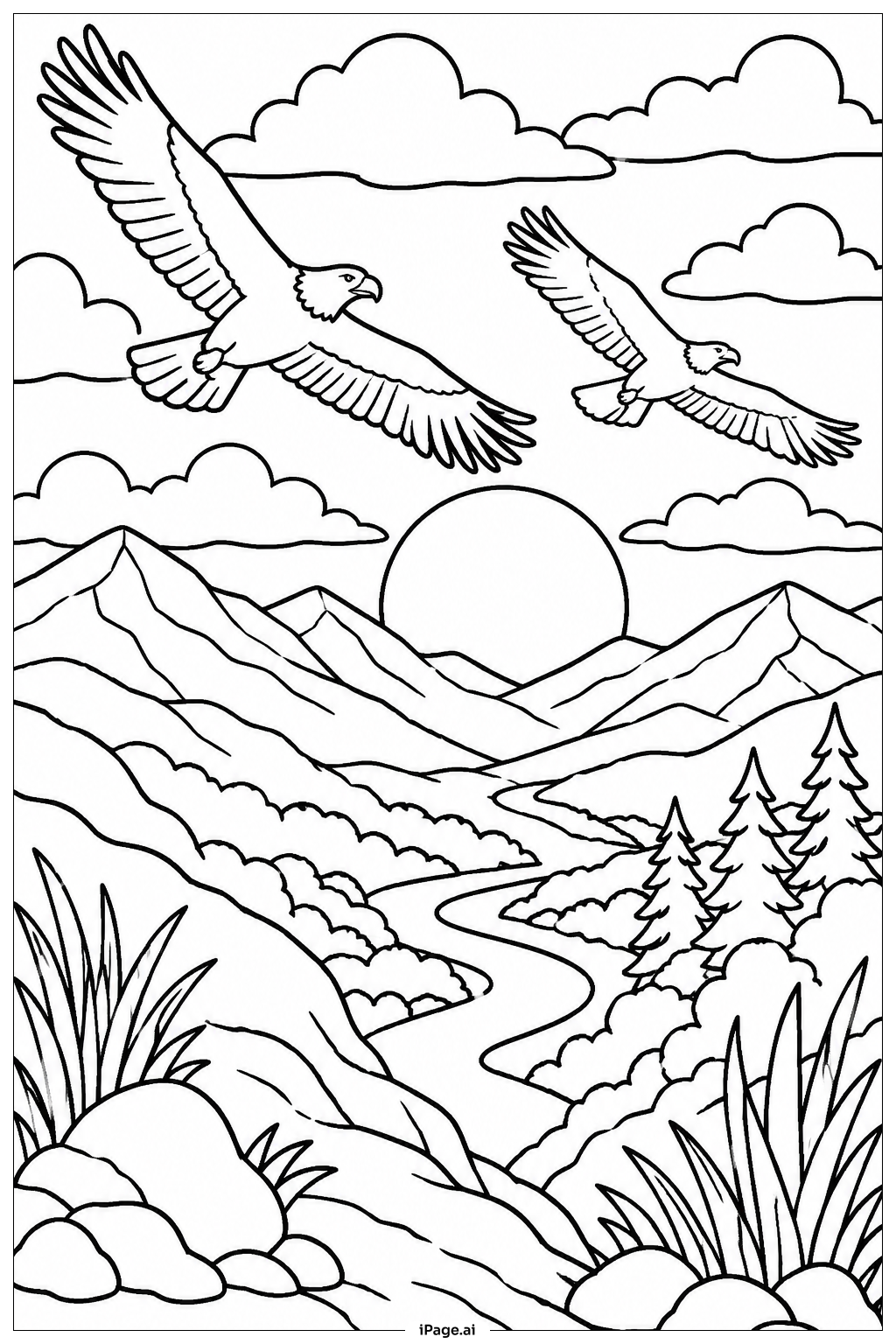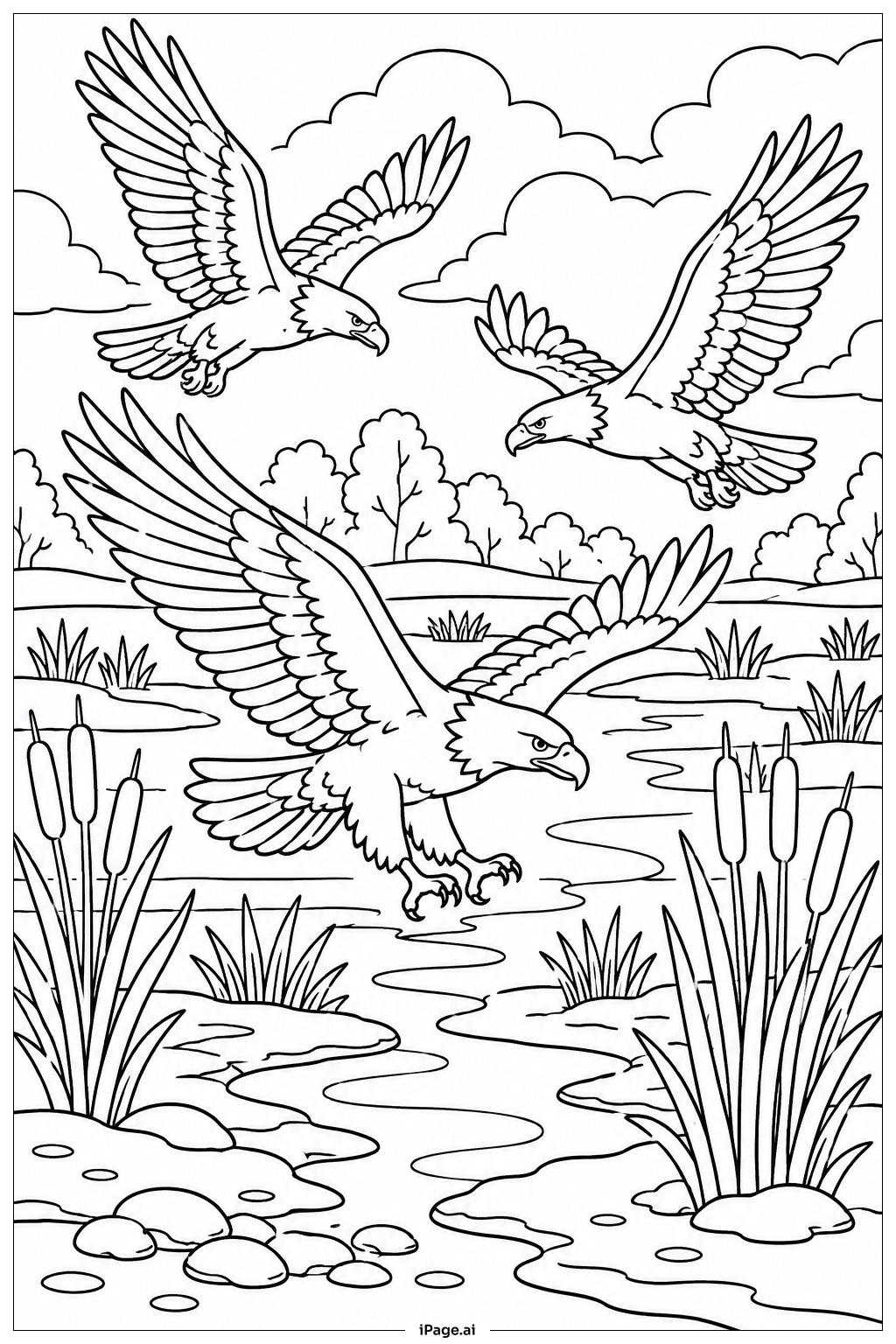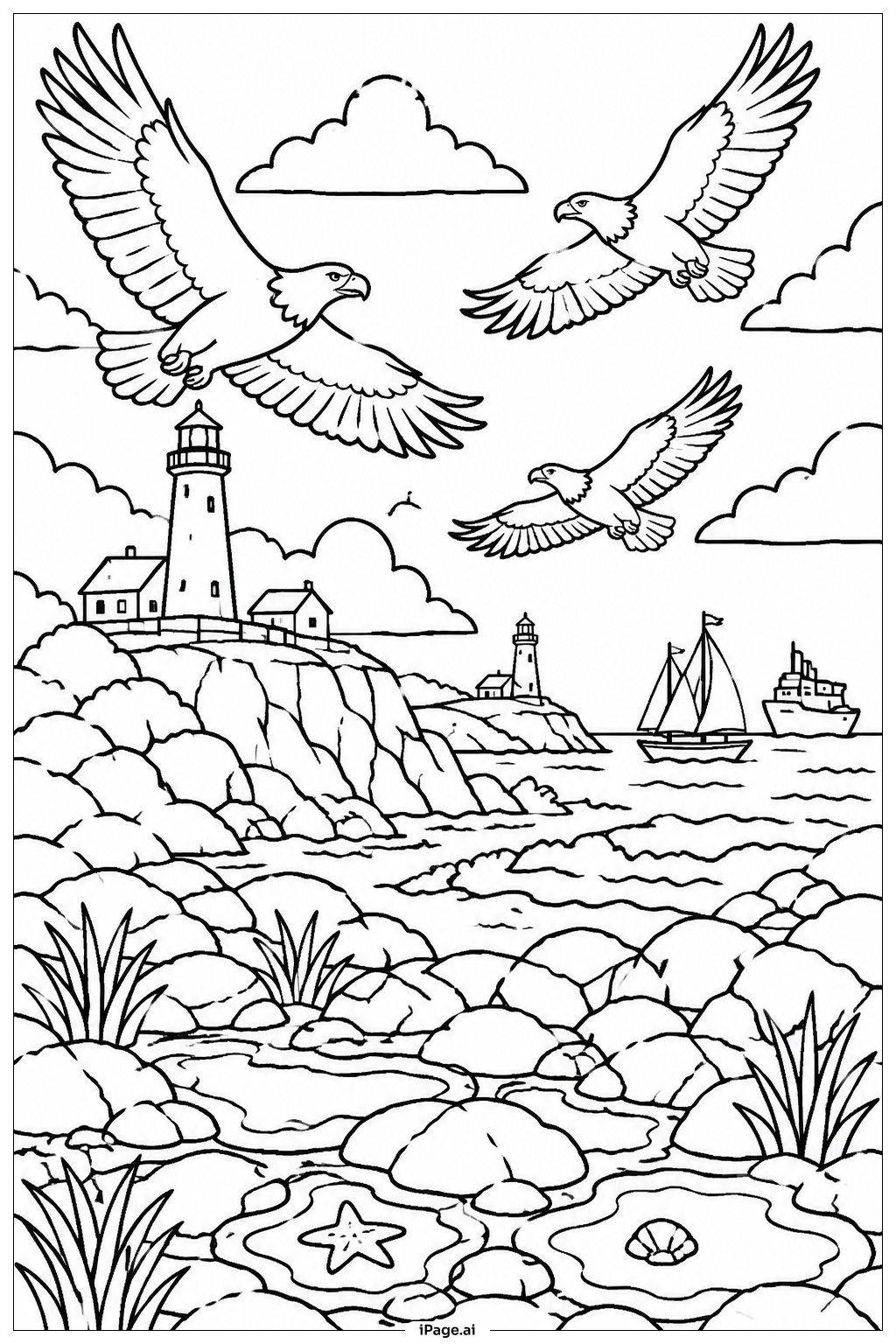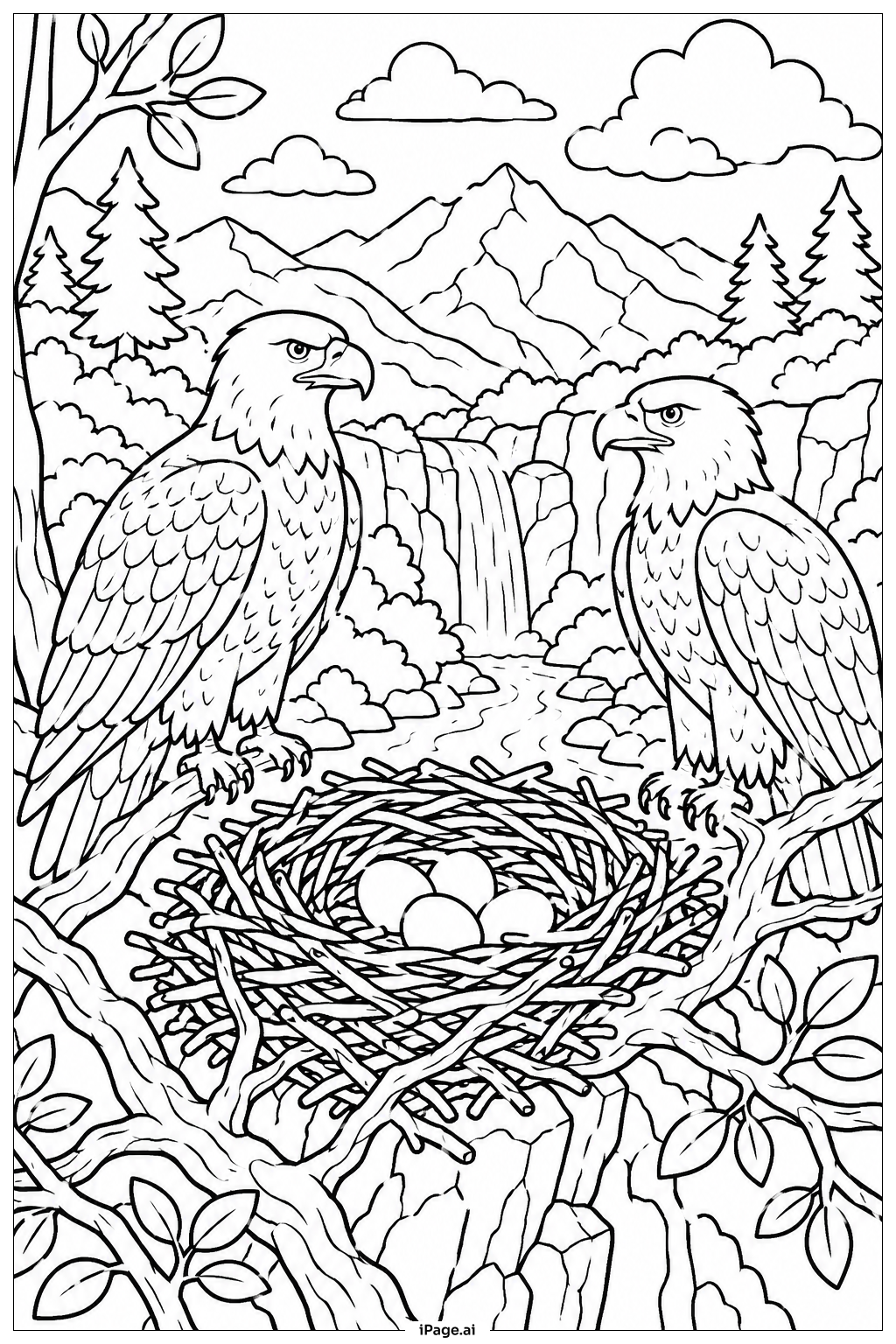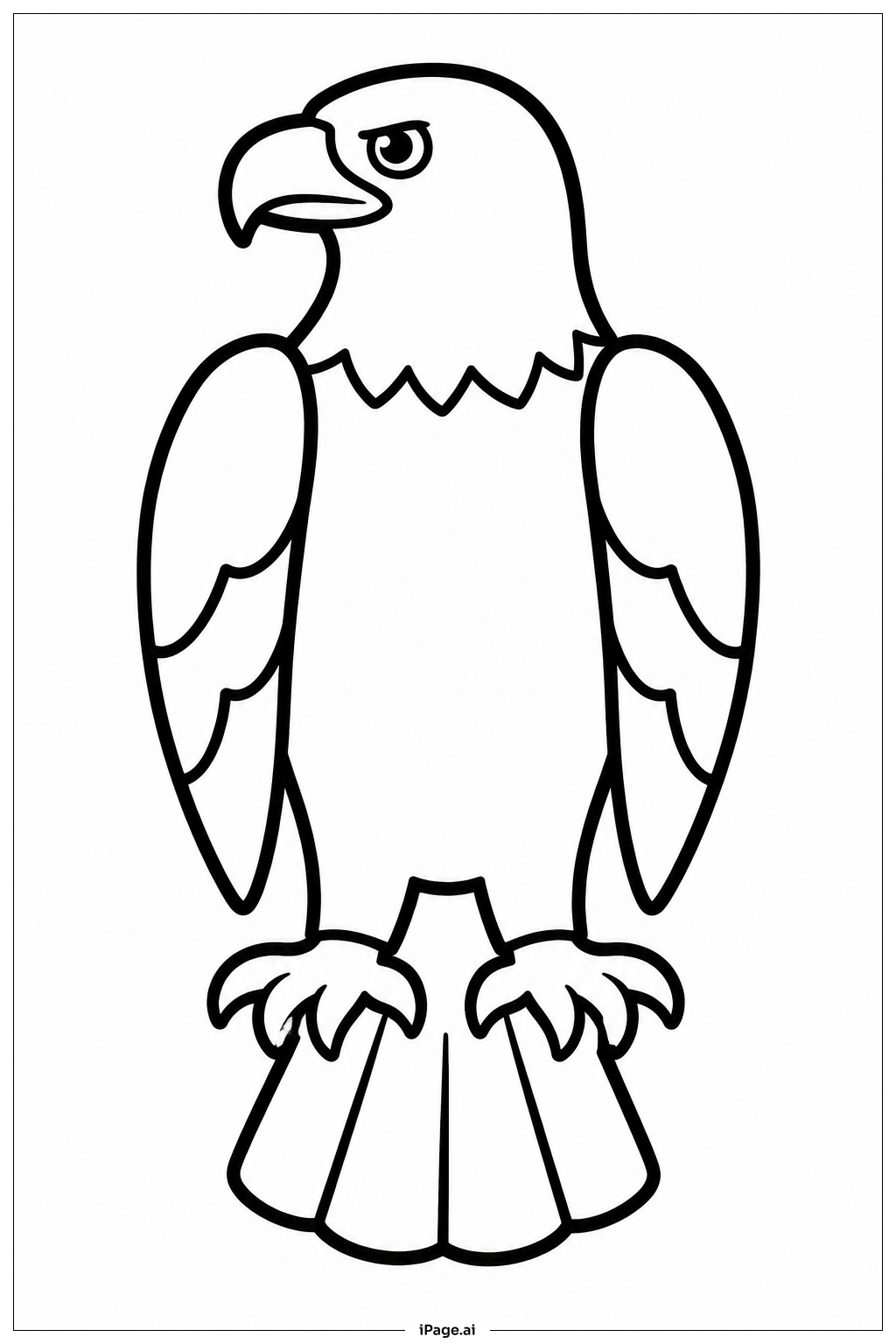
Coloring tips: How to color Eagle Standing Pose coloring page well?
Start with the head and tail feathers. If you want a Bald Eagle look, color these areas white. Use golden yellow or orange for the sharp beak and the sturdy talons. For the body and wings, use rich dark brown shades. Add lighter tan or cream tones to the chest feathers for depth and contrast. Try mixing two shades of brown on the wings to show the layers of feathers. Use gray or light blue for the background to make the eagle stand out. Take your time on the eye — color it bright yellow with a small dark pupil in the center. This small detail brings the whole image to life. Children can keep colors simple and bold, while older colorists can blend tones for a more realistic result. Have fun and make your eagle unique!
Coloring challenges: Which parts are difficult to color and need attention for Eagle Standing Pose coloring page?
• Feather Layering: The eagle's wings and body are covered in many overlapping feathers. Coloring each layer separately takes patience. Younger colorists may find it hard to stay inside the small feather shapes. Try coloring one row of feathers at a time and use short, careful strokes to fill each one neatly.
• Beak and Talon Details: The curved beak and scaled talons have small, defined sections that require precision. These areas are narrow and easy to color outside of. Use a sharpened pencil or a fine-tipped marker to fill these parts carefully without smudging nearby areas.
• Eye Accuracy: The eagle's eye is small but very important. It needs a bright base color like yellow or gold, with a dark pupil placed exactly in the center. Getting this balance right can be tricky, especially for younger children. A steady hand and a fine tool are helpful here.
• Shading and Depth on the Body: The chest and body feathers curve and overlap, which means flat coloring may look dull. Adding light and shadow requires using at least two tones of the same color. This technique can be challenging for beginners but makes the eagle look much more realistic and three-dimensional.
• Contrast Between Dark and Light Areas: A Bald Eagle has a strong contrast between its white head and dark brown body. Keeping these zones clean and separate without the colors bleeding into each other is a common challenge. Take care near the border where the two color areas meet.
Benefits of coloring books: Advantages of drawing Eagle Standing Pose coloring page
Coloring this eagle image offers many wonderful benefits for kids and beginners alike. Working on the detailed feathers helps improve fine motor skills and hand control. Staying inside small shapes trains the fingers and builds precision over time. This is great practice for writing and drawing too.
Choosing colors for the eagle encourages creativity and decision-making. Kids learn to think about which colors look good together and how to use shading to show depth. This builds early art skills in a fun and stress-free way.
Focusing on a detailed image like this also helps children practice patience and concentration. Completing one section at a time teaches them to work steadily toward a goal, which is a valuable life skill.
Coloring is also a calming activity. It reduces stress and gives kids a quiet, enjoyable way to express themselves. Finishing the page gives a real sense of accomplishment and boosts confidence.
Learning about the eagle while coloring adds an educational layer. Children become curious about this powerful bird — its habitat, its features, and why it is a symbol of strength. Art and nature learning come together in a simple and joyful way.