Coloring tips: How to color Eagle Riverside coloring page well?
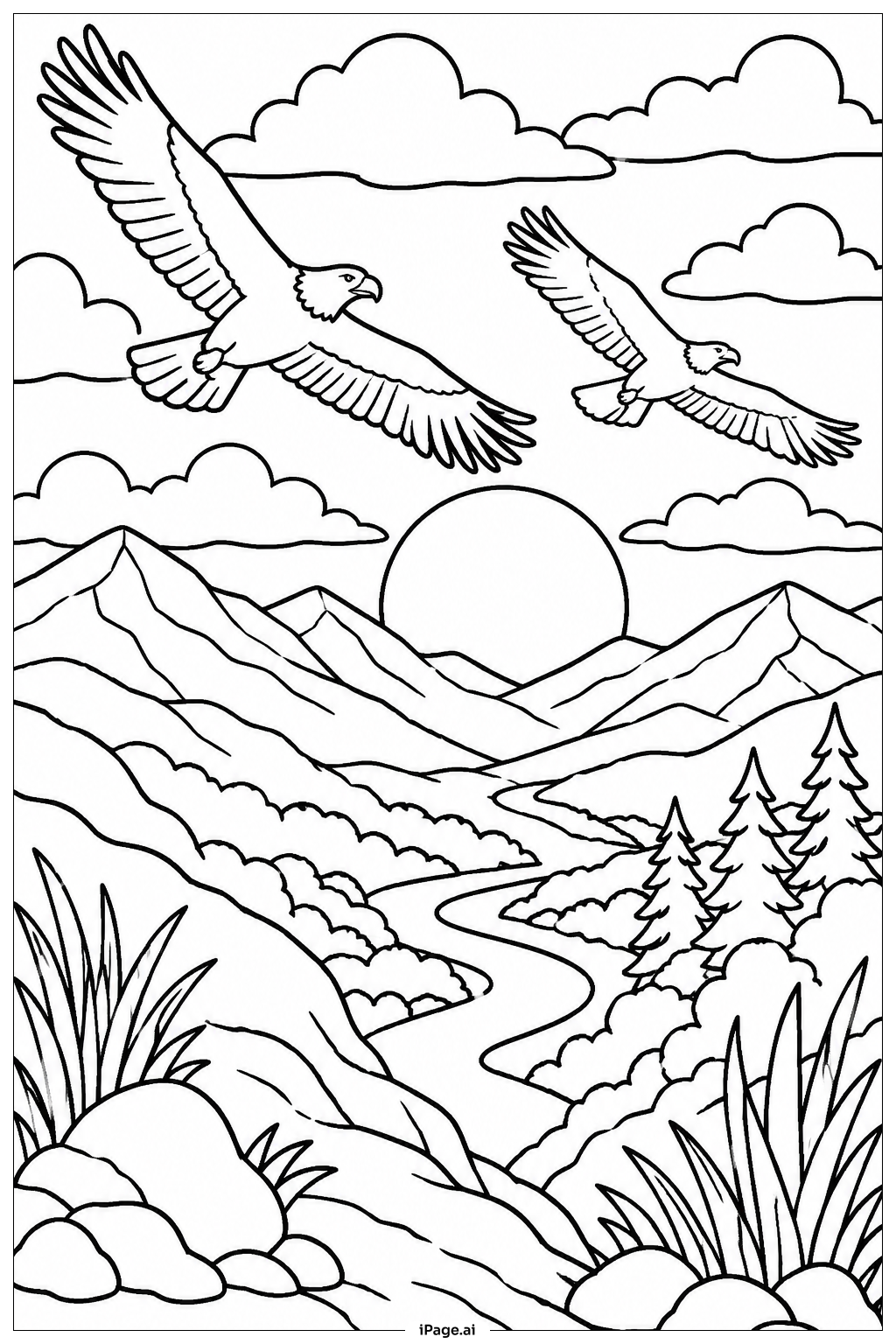
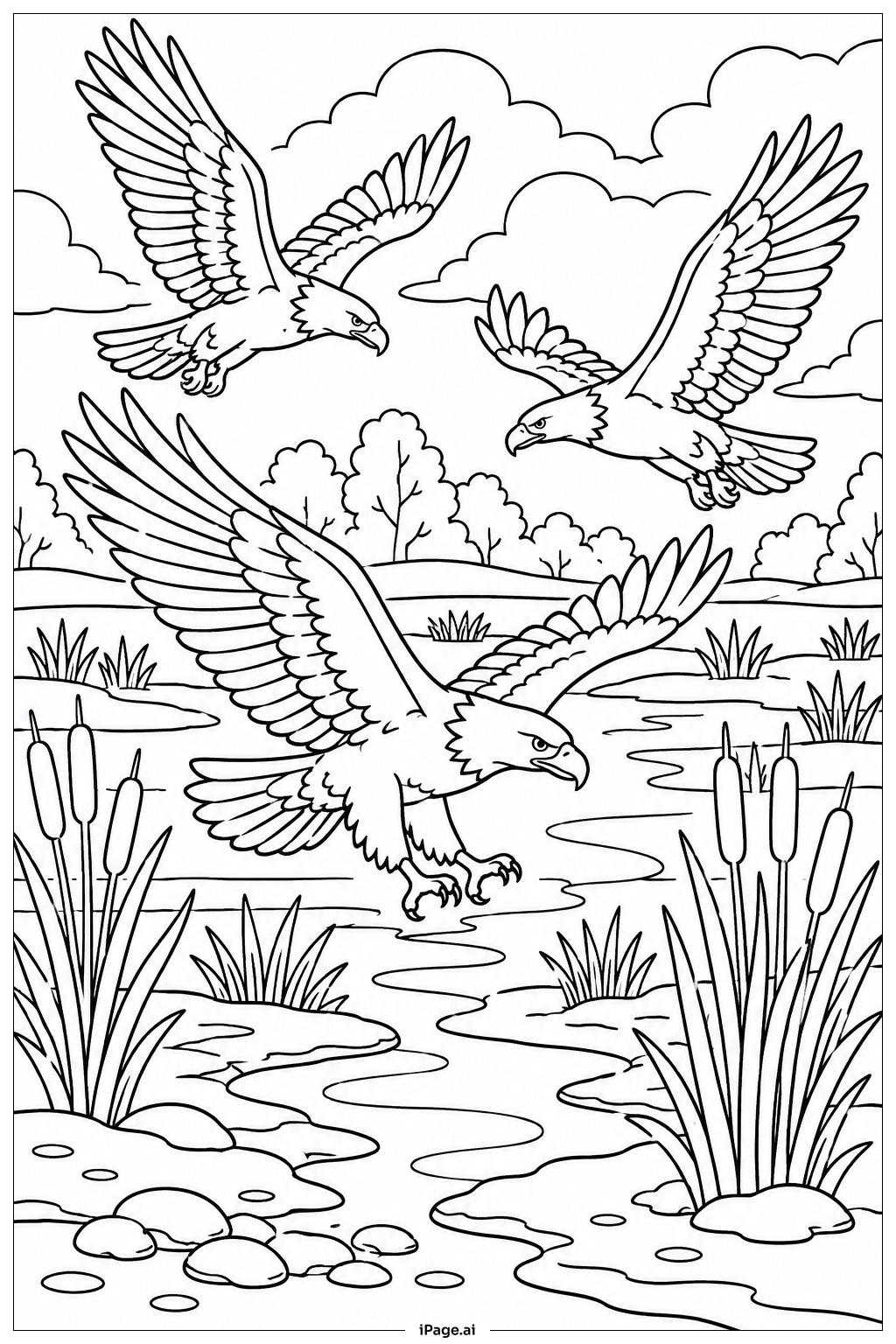
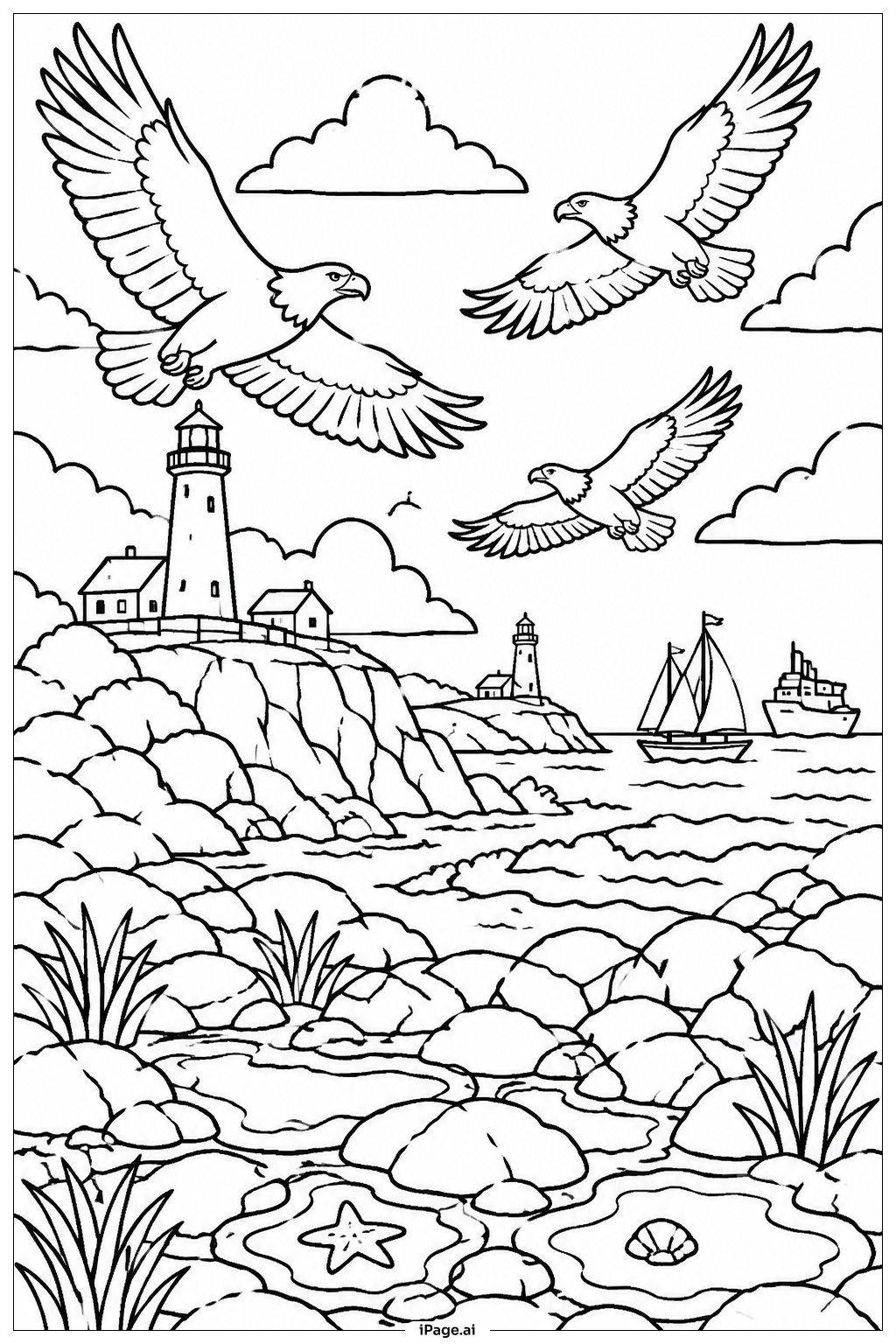
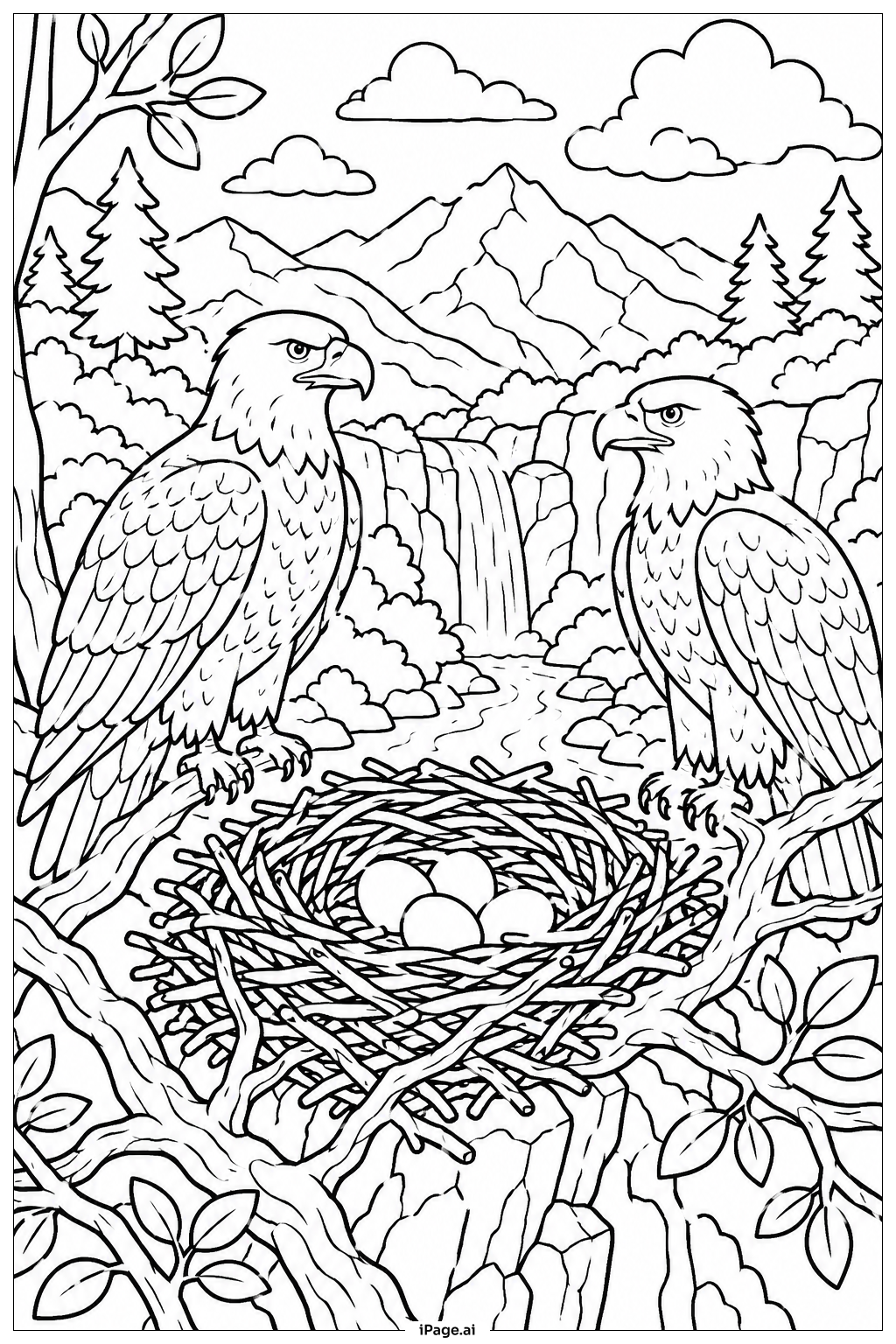
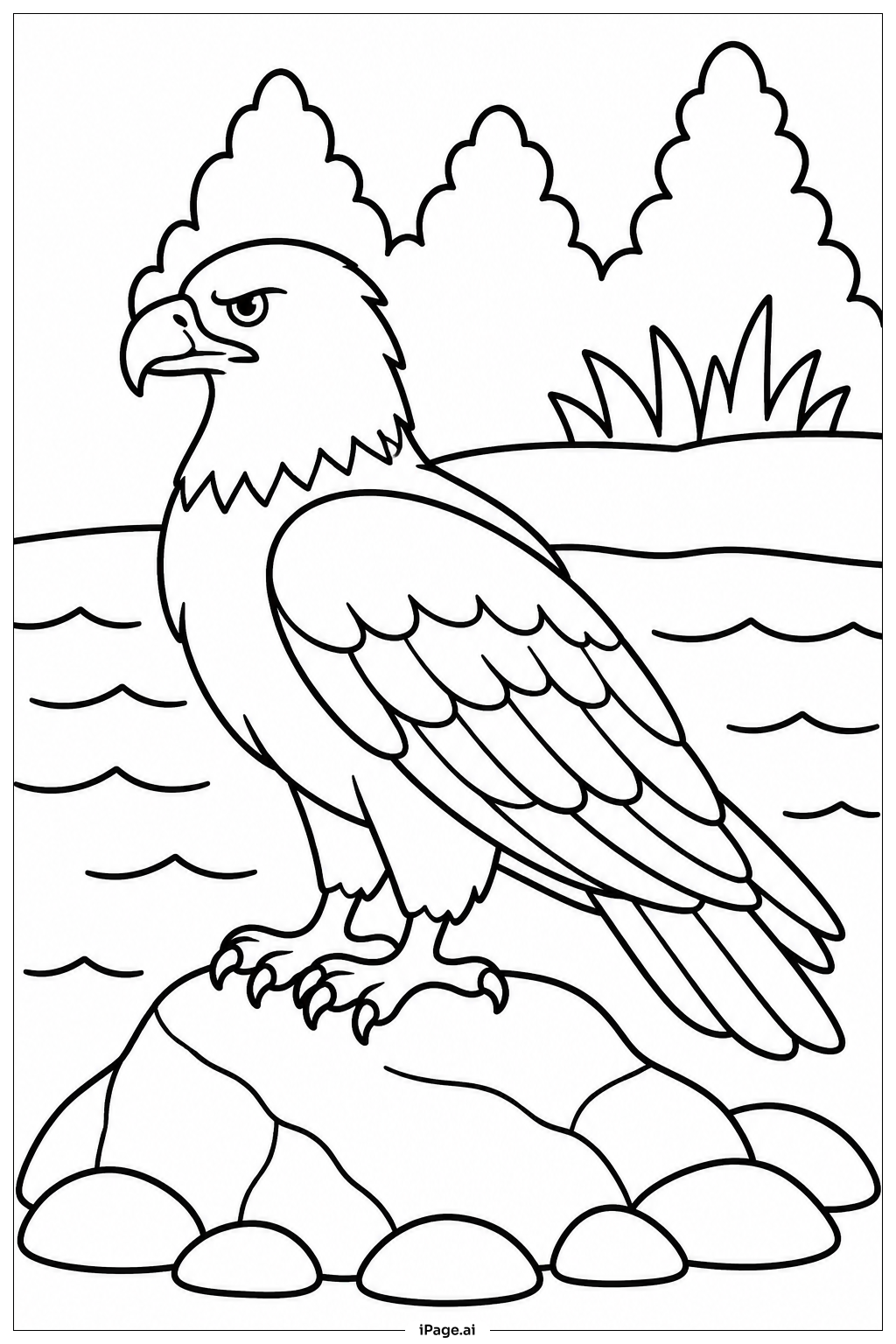
To bring this Eagle Riverside scene to life, use rich browns and golden yellows for the eagle’s feathers. Add white around its head and tail to highlight its noble look. Color the river with different shades of blue and green to show clear water flowing smoothly. Use soft greens and browns for the trees and grass along the riverbank. You can add some light gray or tan to the rocks near the water. Try blending colors softly on the water to make it look reflective. Bright blue skies or warm sunset shades can enhance the background. Don’t forget to add small touches of shadow to give the eagle and nature more depth and realism while coloring.
Coloring challenges: Which parts are difficult to color and need attention for Eagle Riverside coloring page?
• Eagle Feathers Detail: The feathers have many small, sharp lines that need careful coloring to keep the texture clear and natural-looking. Staying within the lines and blending colors smoothly can be challenging.
• Water Flow: Coloring the river to look like flowing water requires gradual changes in blues and greens. It can be difficult to create the right sense of movement and reflection without mixing colors too harshly.
• Background Trees and Grass: The fine leaf patterns and tall grasses are delicate and might be hard to color neatly without crossing lines. Layering different greens to add variety can be tricky.
• Rocks and Riverbank Texture: The rocks have uneven shapes and shading areas. Getting the light and shadow right to keep them realistic takes patience and skill.
• Balance of Light and Shadow: Since the scene has natural lighting, it’s important to add subtle shadows under the eagle and on the riverbank. This requires careful color choices and may be difficult for younger colorers to manage.
Benefits of coloring books: Advantages of drawing Eagle Riverside coloring page
Coloring this Eagle Riverside image helps improve focus and fine motor skills as kids carefully fill in detailed areas like feathers and foliage. It encourages creativity by allowing them to choose natural colors and experiment with blending for water and shadows. The scene offers a learning opportunity about nature, wildlife, and riverside ecosystems, inspiring curiosity. Coloring the eagle also builds patience and concentration because of the detailed patterns. Overall, it’s a relaxing and engaging activity that brings appreciation for the beauty of animals and their environment.