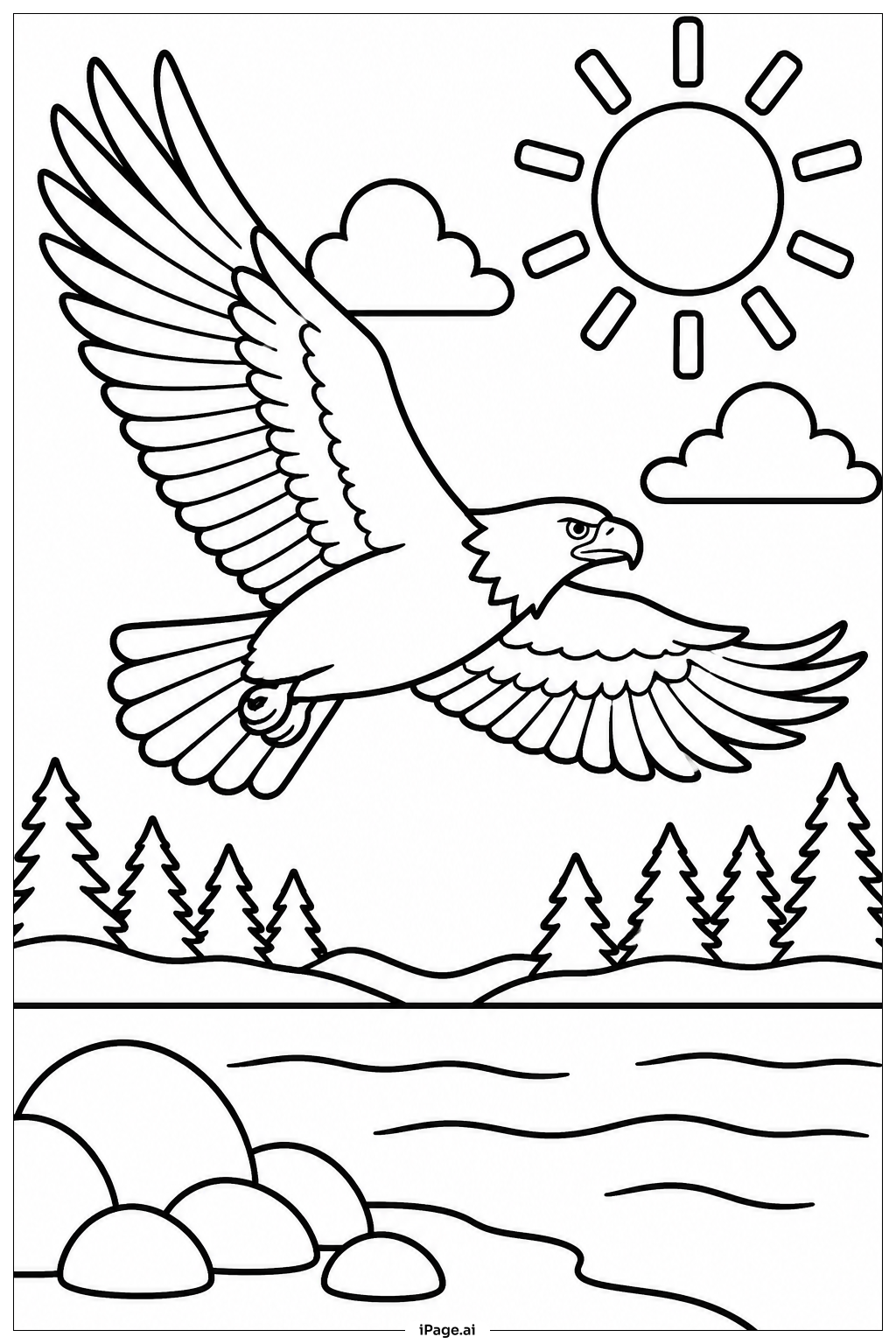
Coloring tips: How to color Eagle Over Lake coloring page well?
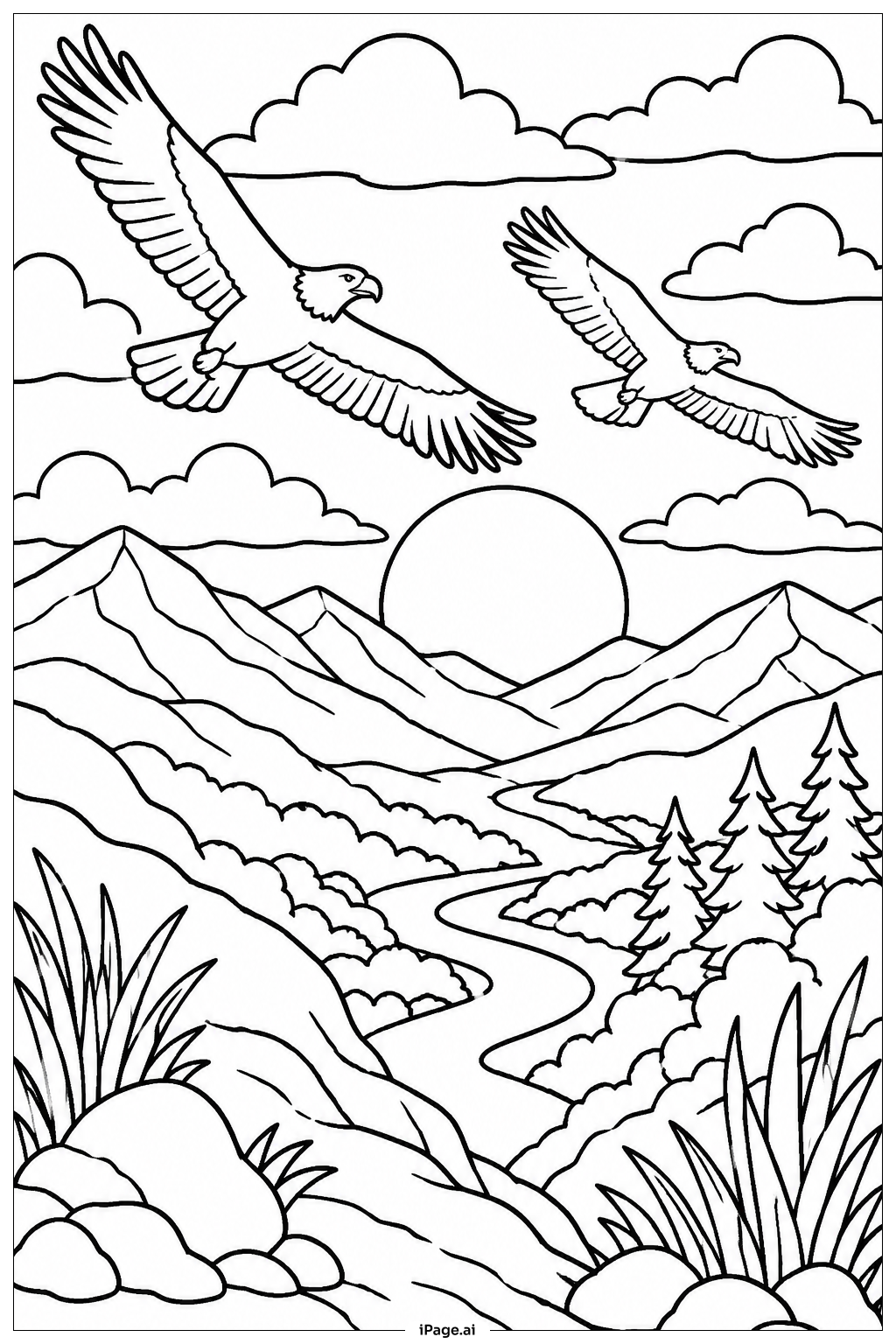
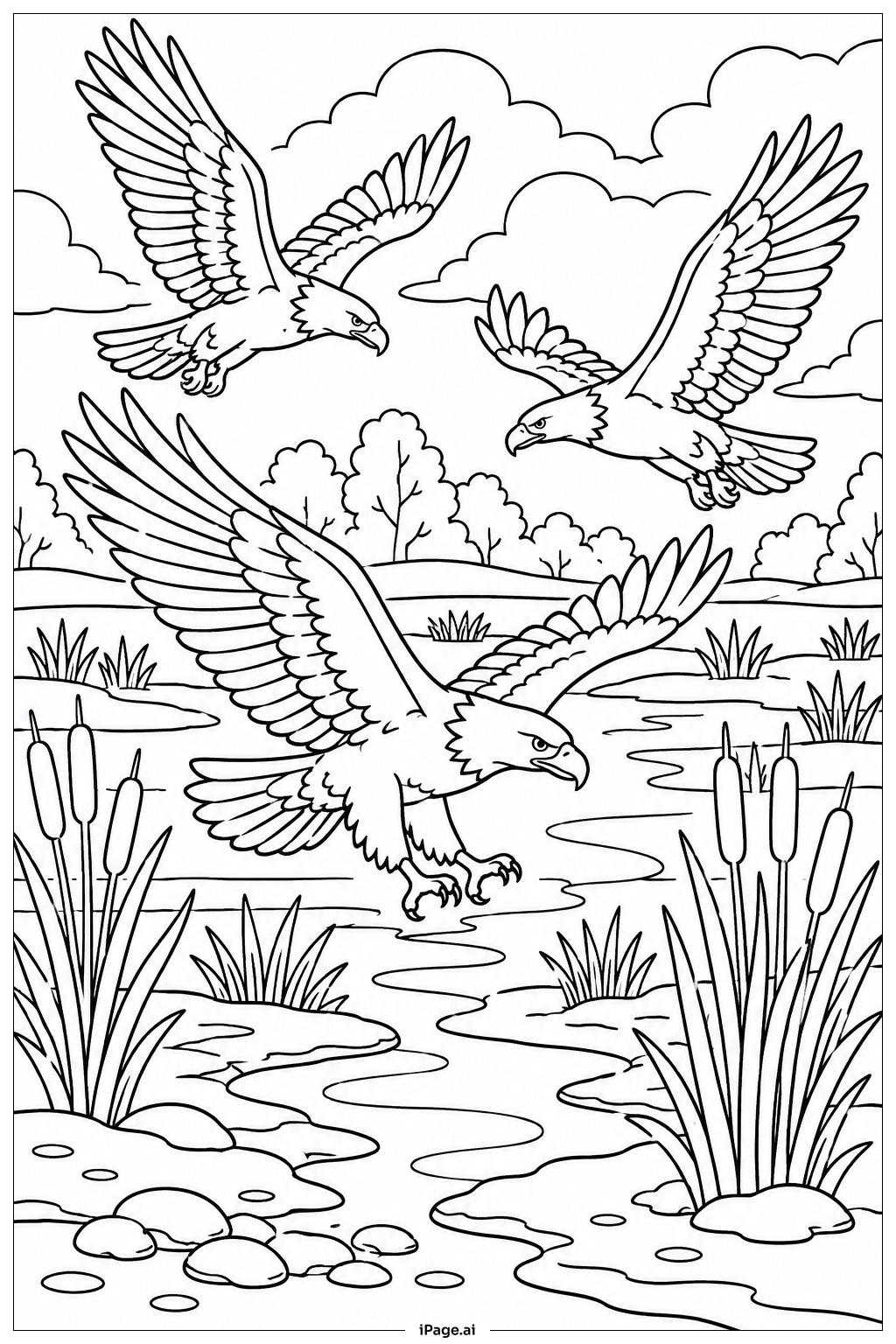
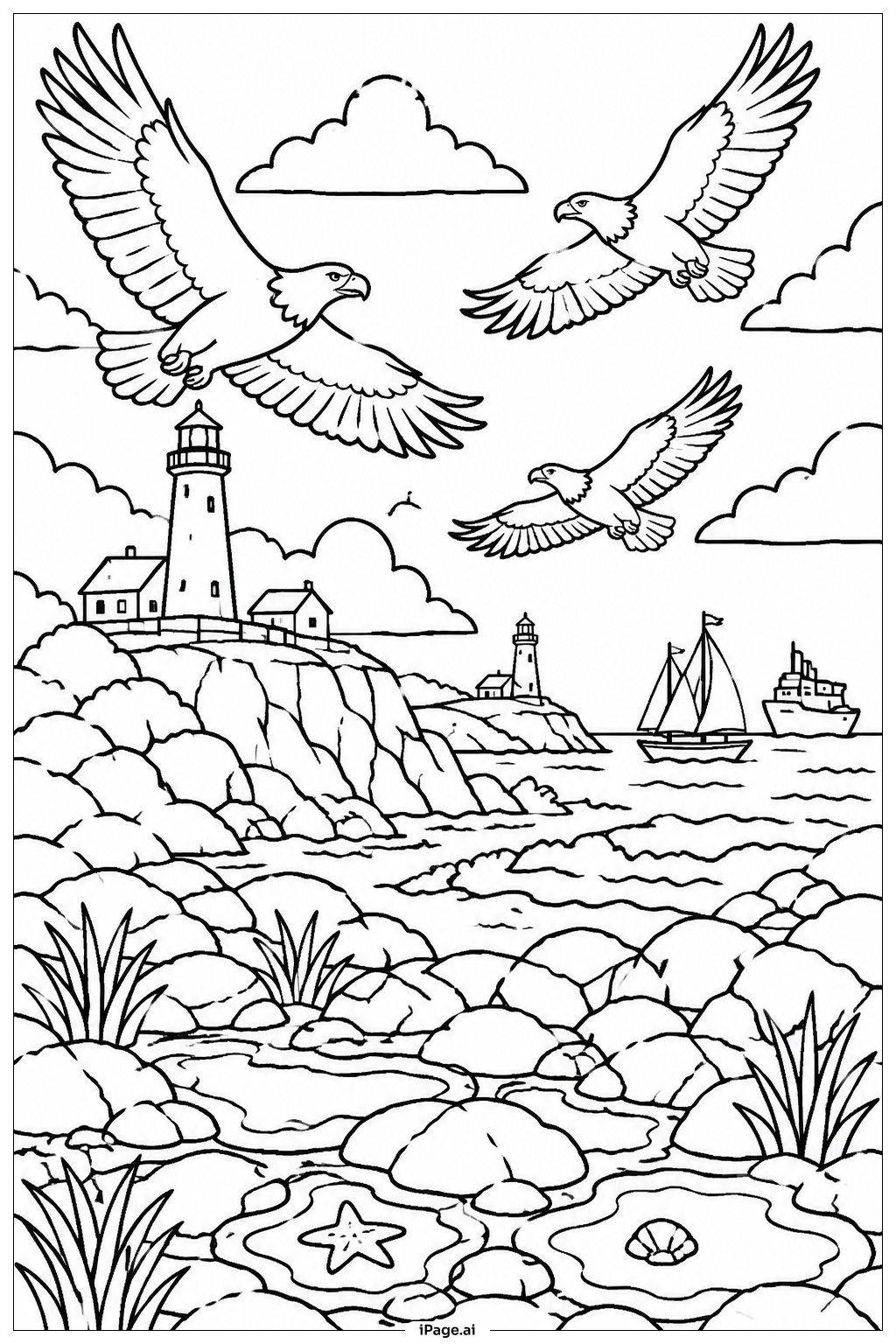
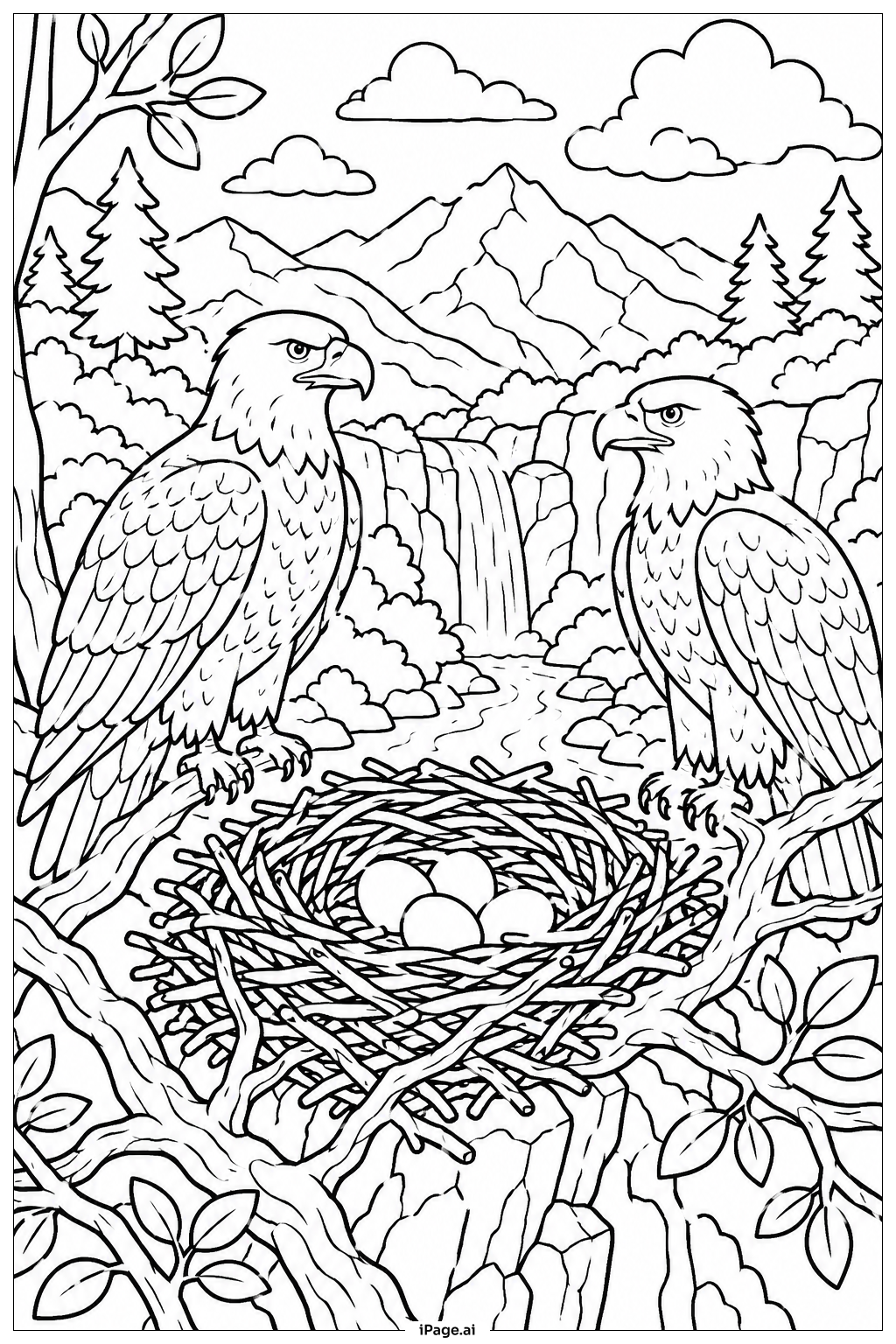
Start with the eagle's body. Use dark brown for the wings and back. Color the head and tail feathers bright white to show the bald eagle's classic look. Use a bold yellow for the beak and talons. For the lake, try light blue or aqua tones. Add soft white streaks to show gentle ripples on the water. The sky can be a pale blue with hints of white for clouds. Color the distant trees with shades of green, and use gray or blue-purple for the far-off hills. To make the eagle stand out, keep the background colors soft and light. Use deeper shades near the center of the lake to suggest depth. You can add a warm orange or golden glow near the horizon to give the scene a sunrise or sunset feeling. This image works great with colored pencils, crayons, or watercolor paints. Take your time with the feathers and enjoy bringing this majestic bird to life!
Coloring challenges: Which parts are difficult to color and need attention for Eagle Over Lake coloring page?
• Wing Feather Details: The eagle's wings are large and filled with many individual feathers. Each feather has its own shape and shading. Coloring them neatly without making the wings look flat is a real challenge. You need to layer different shades of brown and dark gray to give the feathers a natural, layered look. Take it slow and work section by section.
• White and Dark Contrast: Bald eagles have a striking contrast between their dark brown body and their pure white head and tail. Keeping the white areas clean while adding subtle shading to show form can be tricky, especially for younger colorists. Use very light gray or leave those areas mostly white with just a touch of color at the edges.
• Water Reflection and Texture: The lake surface needs to look like real water. Creating the illusion of ripples and soft reflections using color alone takes patience. Blending light and medium blues with gentle white streaks can help, but it requires a steady hand and careful blending.
• Background Depth: The distant trees and hills need to feel far away. This means using lighter, less saturated colors for the background compared to the foreground. Getting this sense of depth right requires understanding how colors change with distance, which can be a new concept for younger children.
• Small Details on the Eagle's Face: The beak, eyes, and feet are small but important. These areas need precise coloring with yellow, orange, and black. Staying within the lines on such tiny features can be difficult, especially for kids who are still developing their fine motor skills.
Benefits of coloring books: Advantages of drawing Eagle Over Lake coloring page
Coloring this Eagle Over Lake image offers many wonderful benefits for kids and young learners. First, it helps build focus and patience. The detailed feathers and wide background encourage children to slow down and pay careful attention to their work. Second, it strengthens fine motor skills. Carefully coloring the eagle's feathers, beak, and talons helps develop hand strength and pencil control, which are important for writing and other tasks. Third, it sparks creativity. Choosing colors for the sky, water, and landscape lets children express their own ideas about how nature looks. There is no single right answer, which builds confidence and imagination. Fourth, it teaches children about nature and wildlife. While coloring, kids naturally learn about bald eagles, their habitat, and the beauty of lakes and open skies. This can inspire curiosity about animals and the environment. Fifth, coloring is calming and relaxing. It gives children a quiet, screen-free activity that reduces stress and promotes mindfulness. Overall, this image makes coloring both fun and educational, giving kids a meaningful and rewarding creative experience.