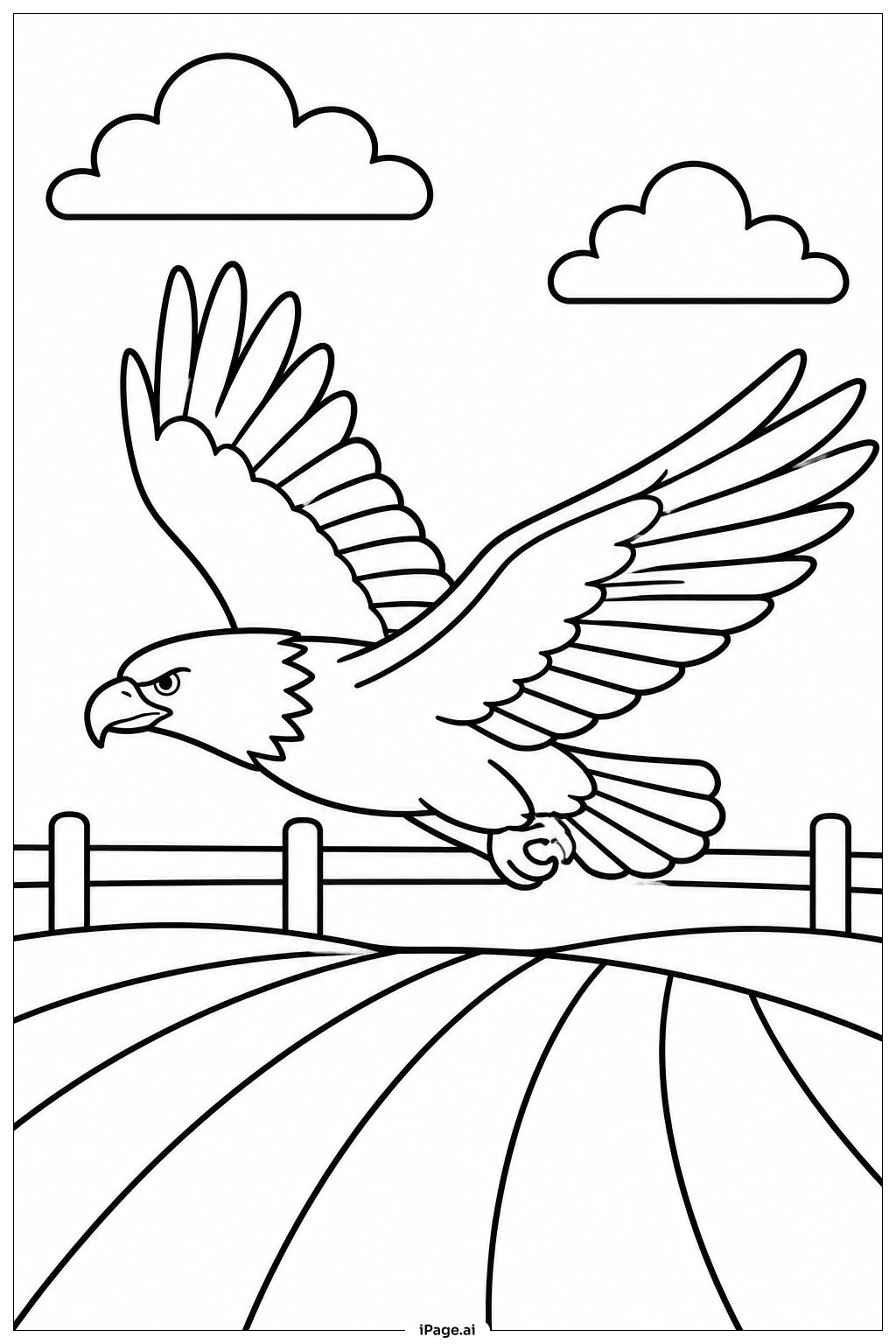
Coloring tips: How to color Eagle Over Field coloring page well?
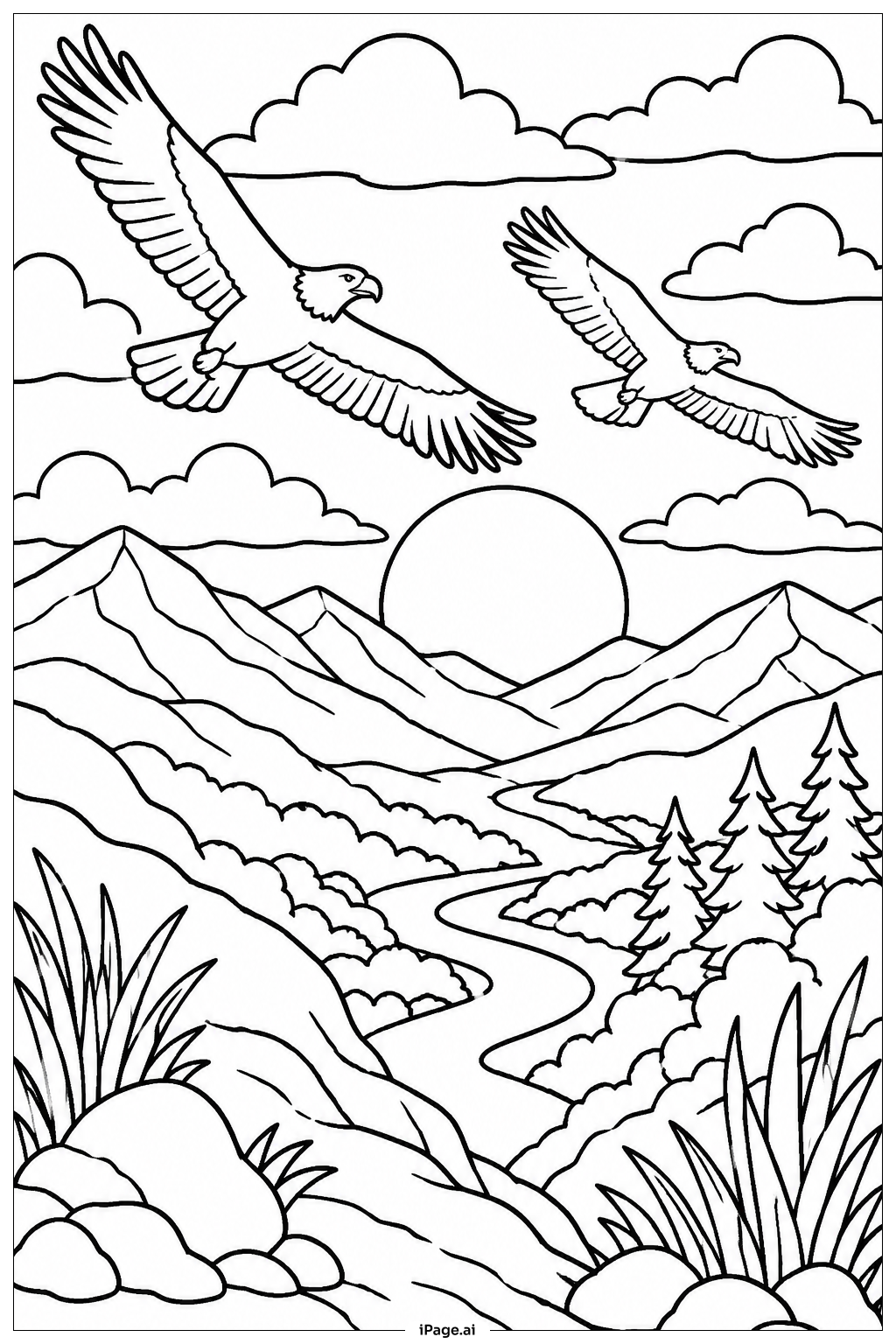
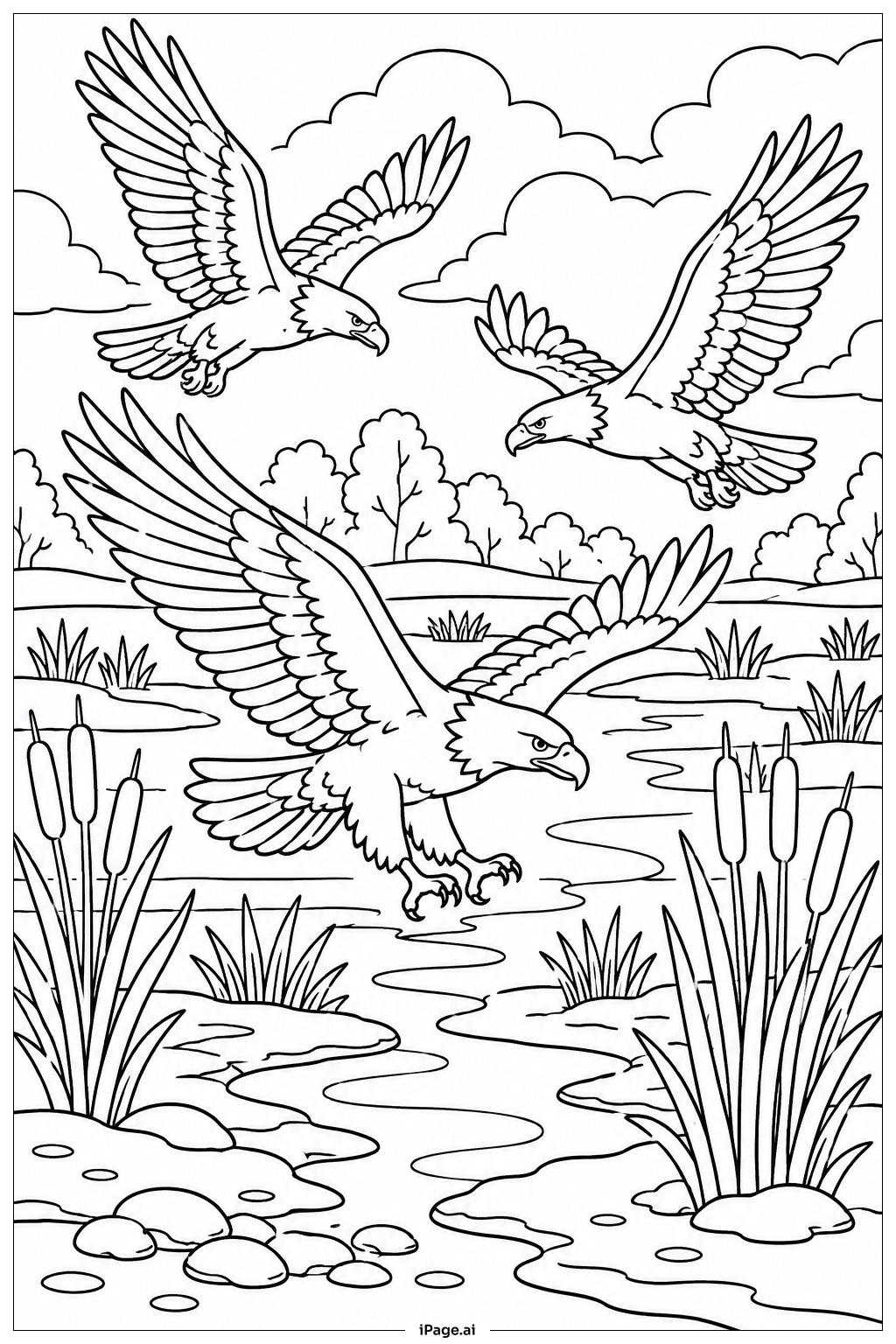
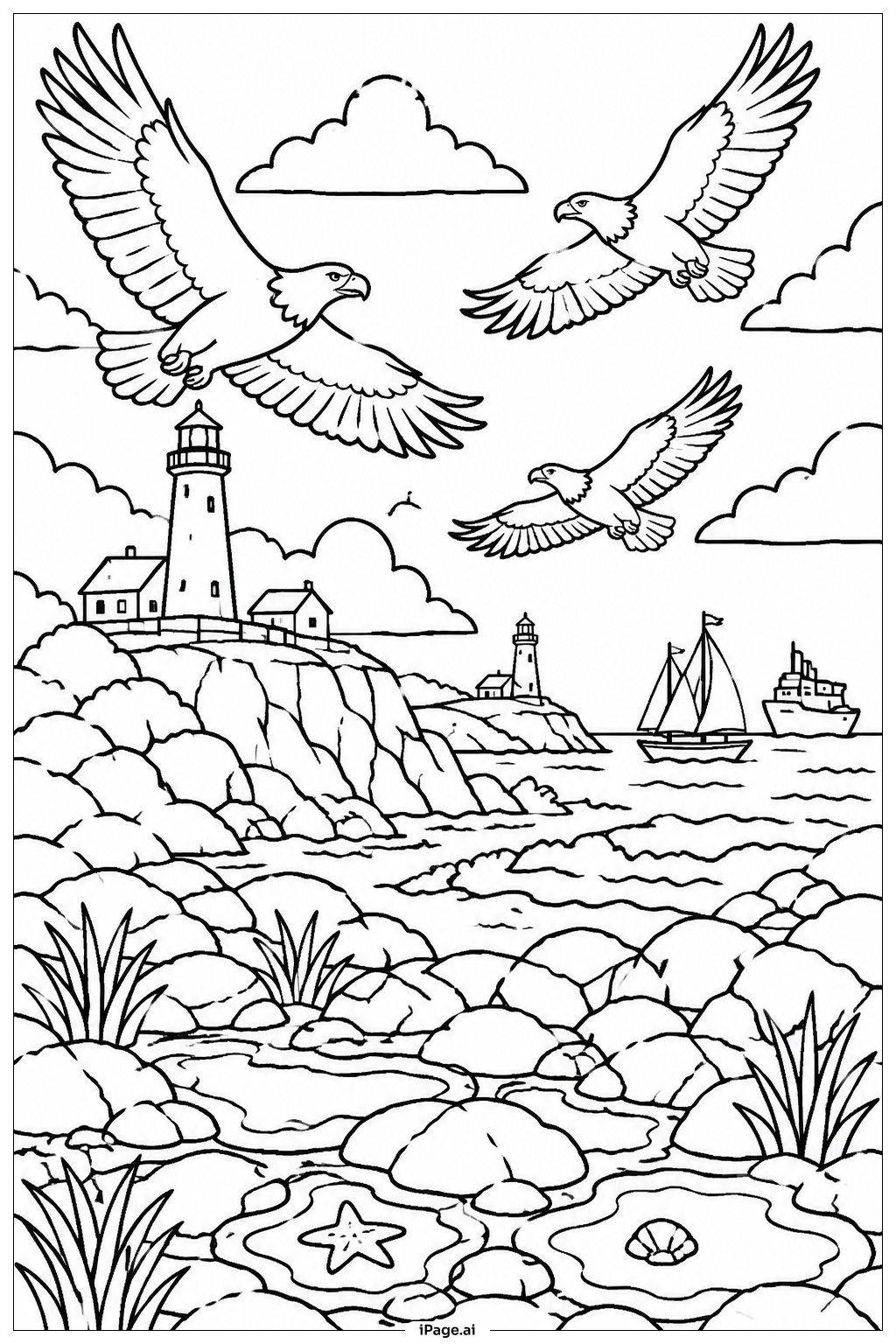
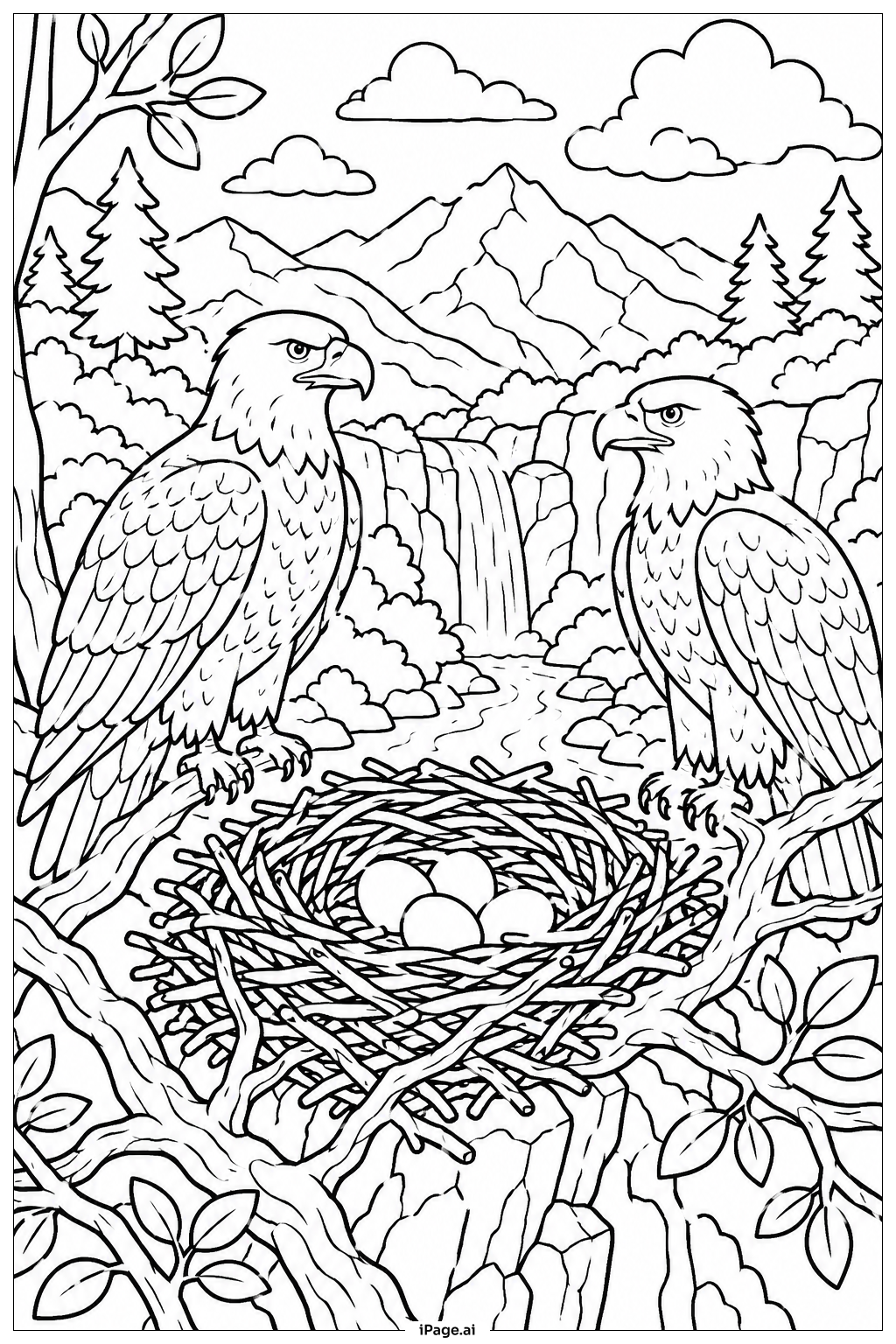
Start with the eagle's body. Use dark brown for the back, wings, and tail feathers. Add a bright white for the head and neck area to create the classic bald eagle look. Use a bold yellow or orange for the beak and talons — these areas will really stand out. For the feathers, layer light brown and golden tan shades to show depth and texture. Try darker shades at the tips of the wings and lighter shades near the center. For the field below, use several shades of green — bright green for lush grass and olive green for shadowed areas. Add a soft yellow-green for sunlit patches. Color the sky in light blue, and blend in some white or pale gray for clouds. Keep the background soft so the eagle stays the focus. Use darker shades under the wings to create a sense of shadow and make the eagle look three-dimensional.
Coloring challenges: Which parts are difficult to color and need attention for Eagle Over Field coloring page?
• Feather Layering: The eagle's wings are covered in many overlapping feathers, each with its own shape and shading. Coloring each feather individually takes patience. You need to follow the direction of each feather and use slightly different shades to keep them looking natural. Blending brown, tan, and dark gray without making the wings look flat is the main challenge here.
• Black and White Contrast on the Head: Bald eagles have a stark white head and a dark brown body. Getting this contrast right without the colors bleeding into each other requires a steady hand. The boundary between the white neck and dark body needs clean, careful work, especially around the throat and upper chest where the two tones meet.
• Talons and Beak Detail: The sharp, curved talons and hooked beak are small but important. They need a strong yellow or orange base with darker shading along the edges to look realistic. These areas are small and detailed, making them tricky to color neatly without going outside the lines.
• Background Depth and Distance: The open field and sky need to look like they stretch far into the distance. This means using lighter, cooler colors for things far away and richer, deeper colors for things close up. Creating this sense of depth — called perspective — can be difficult, especially for younger colorists.
• Balancing the Overall Composition: Because the eagle is the main subject, the background must not compete with it visually. Keeping the sky and field soft and muted while the eagle remains bold and detailed requires careful color choices throughout the whole image.
Benefits of coloring books: Advantages of drawing Eagle Over Field coloring page
Coloring this eagle image offers many wonderful benefits for kids and young learners. First, it builds focus and concentration. Staying inside the lines and working on detailed feathers trains the brain to pay close attention — a skill that helps in school and everyday life. Second, it sparks creativity. Choosing colors for the sky, field, and eagle encourages kids to think creatively and make their own artistic decisions. There is no single right answer, which makes the process fun and personal. Third, it teaches about nature. As children color the eagle, they learn what this powerful bird looks like — its white head, brown wings, yellow beak, and sharp talons. This builds early science knowledge in an engaging way. Fourth, it supports fine motor skills. Holding crayons or colored pencils and carefully filling in small areas strengthens the hand muscles children need for writing. Fifth, it is calming and relaxing. The quiet, focused activity of coloring helps reduce stress and anxiety, making it a great way to unwind after a busy day. Overall, this image is both educational and enjoyable for children of all ages.