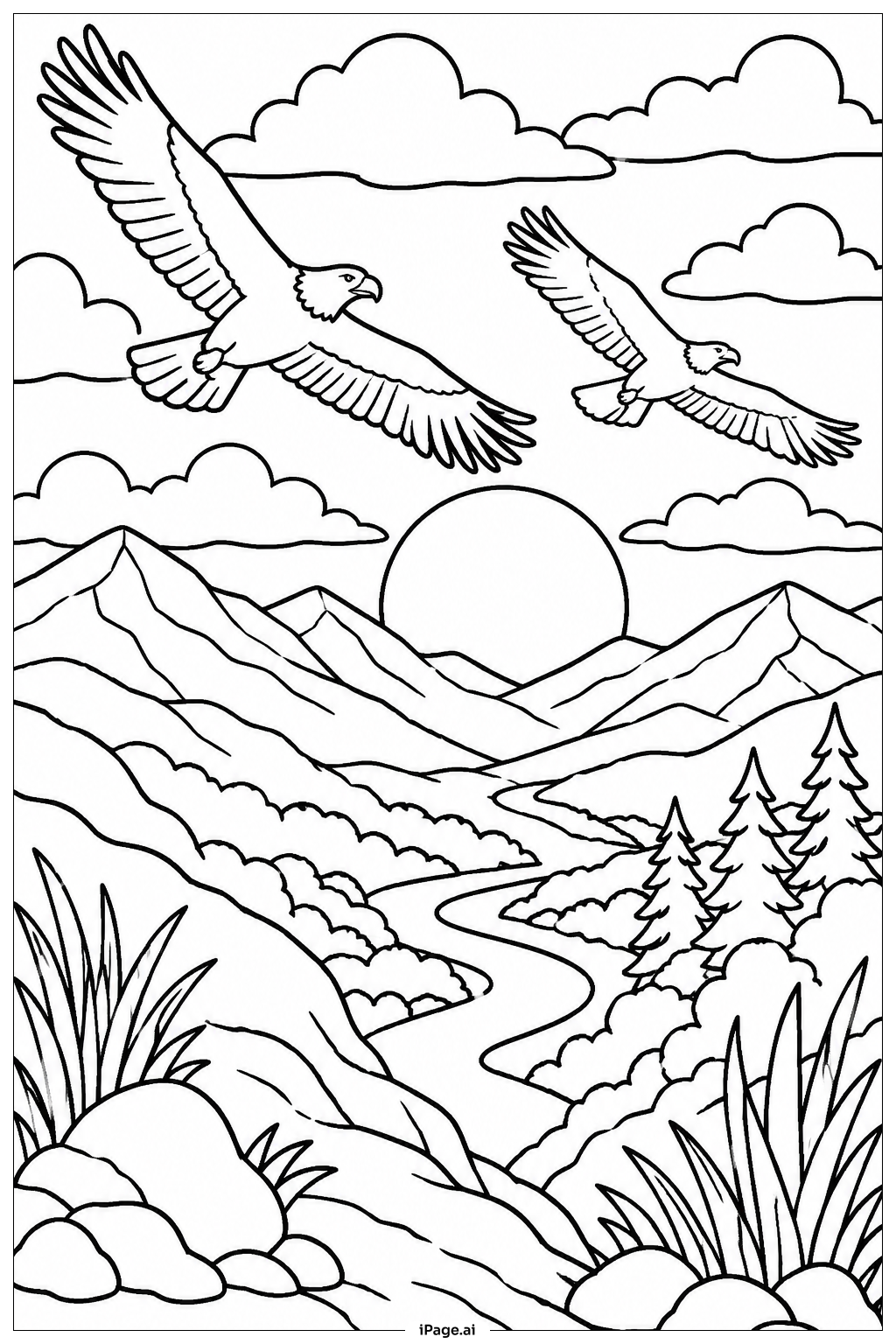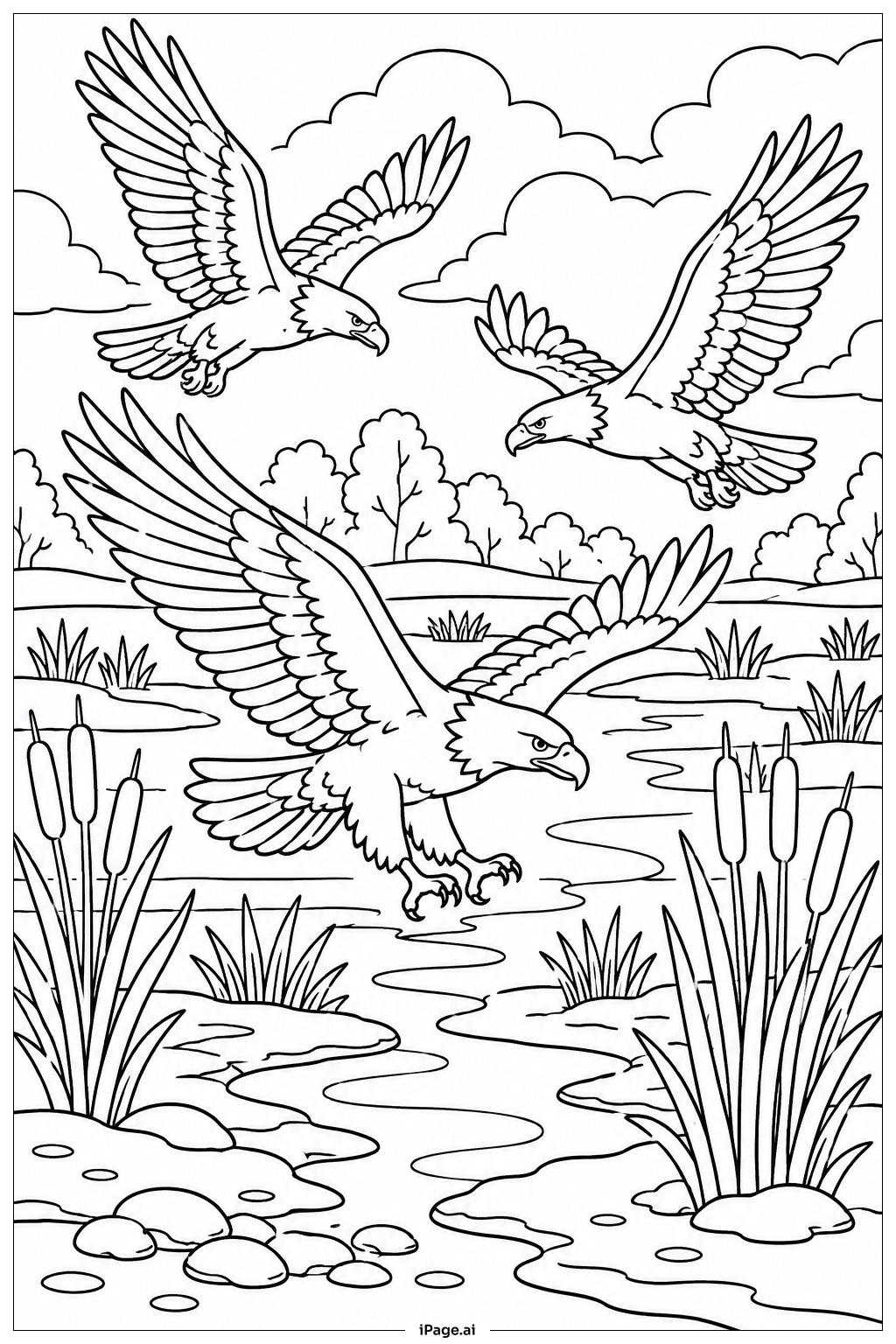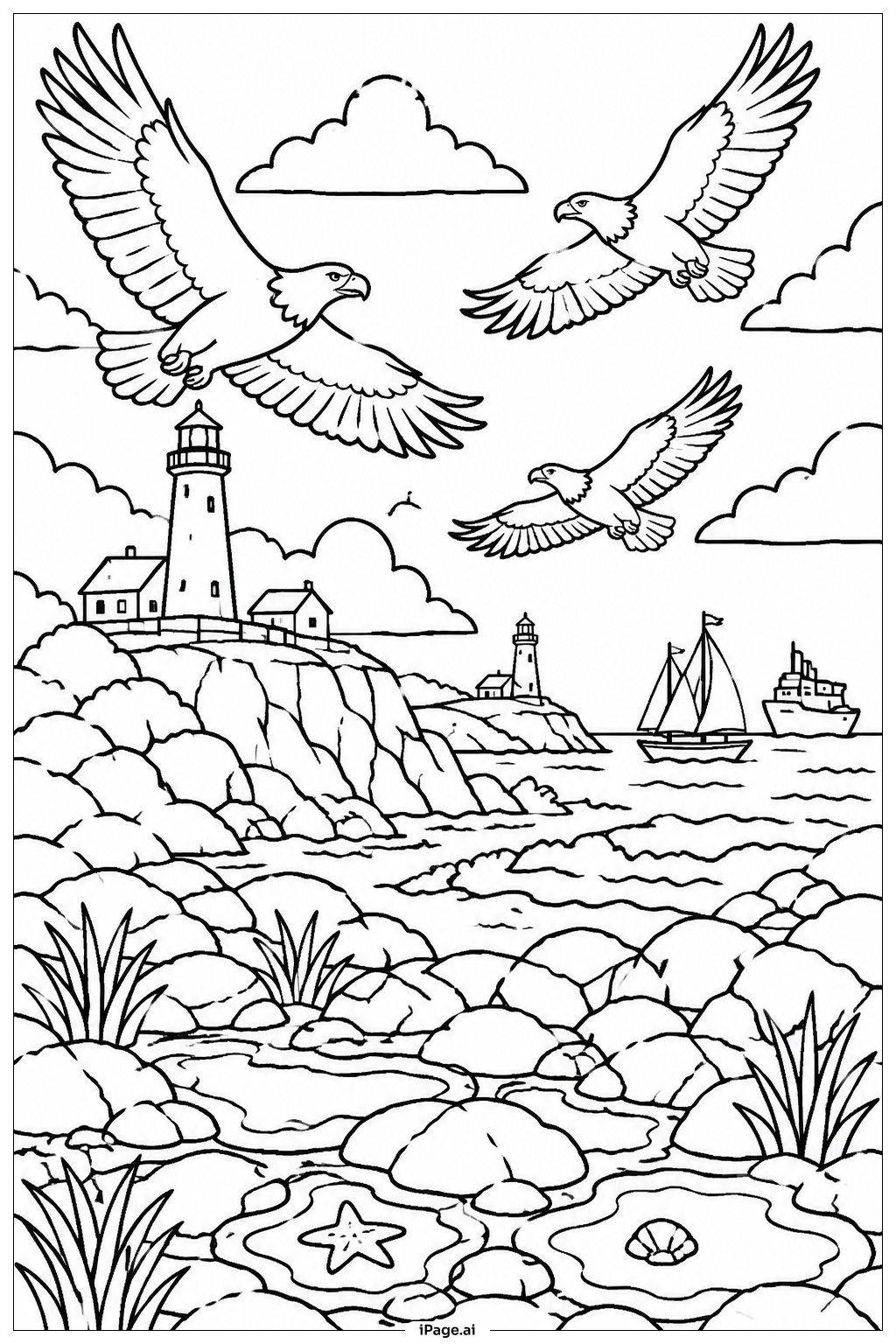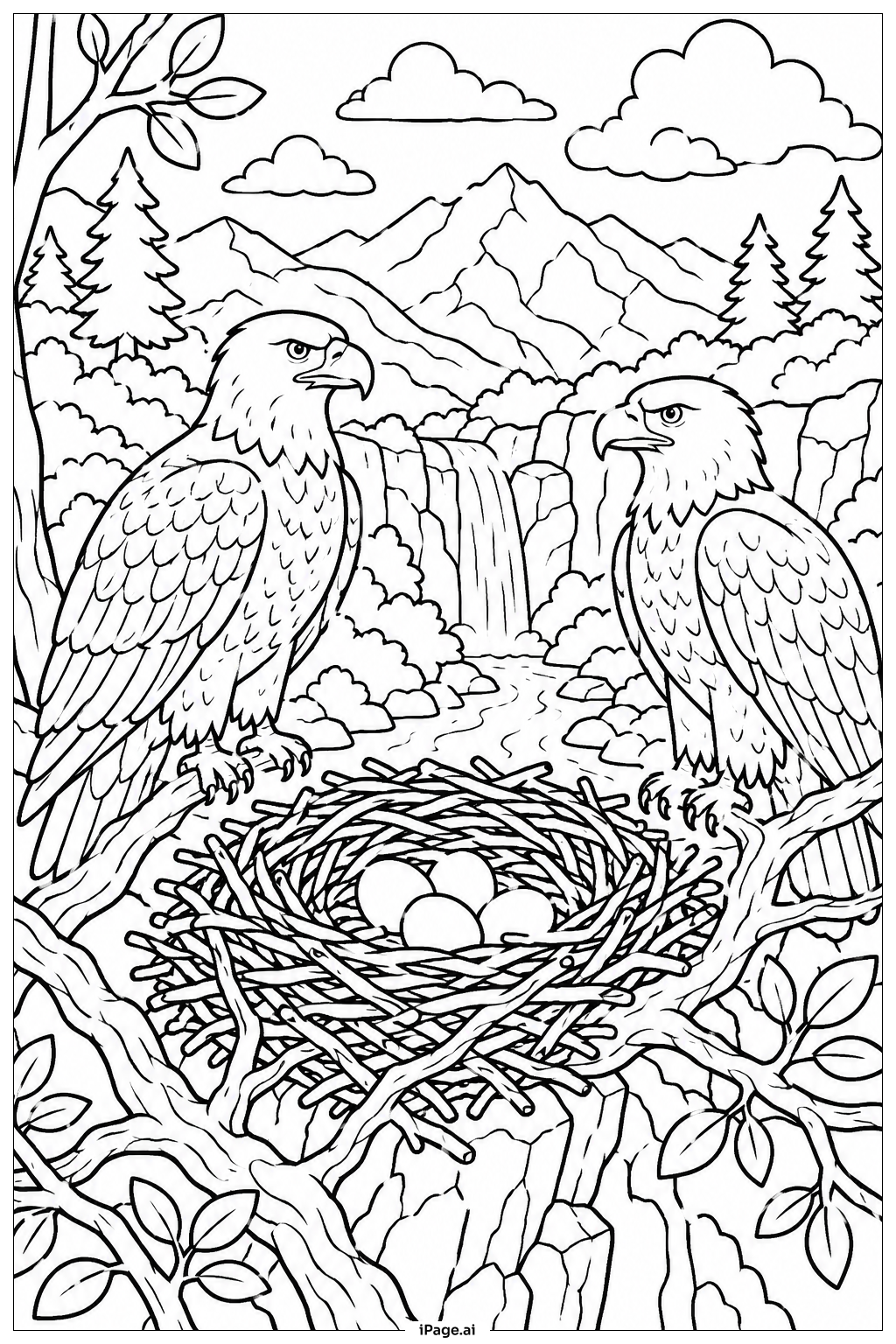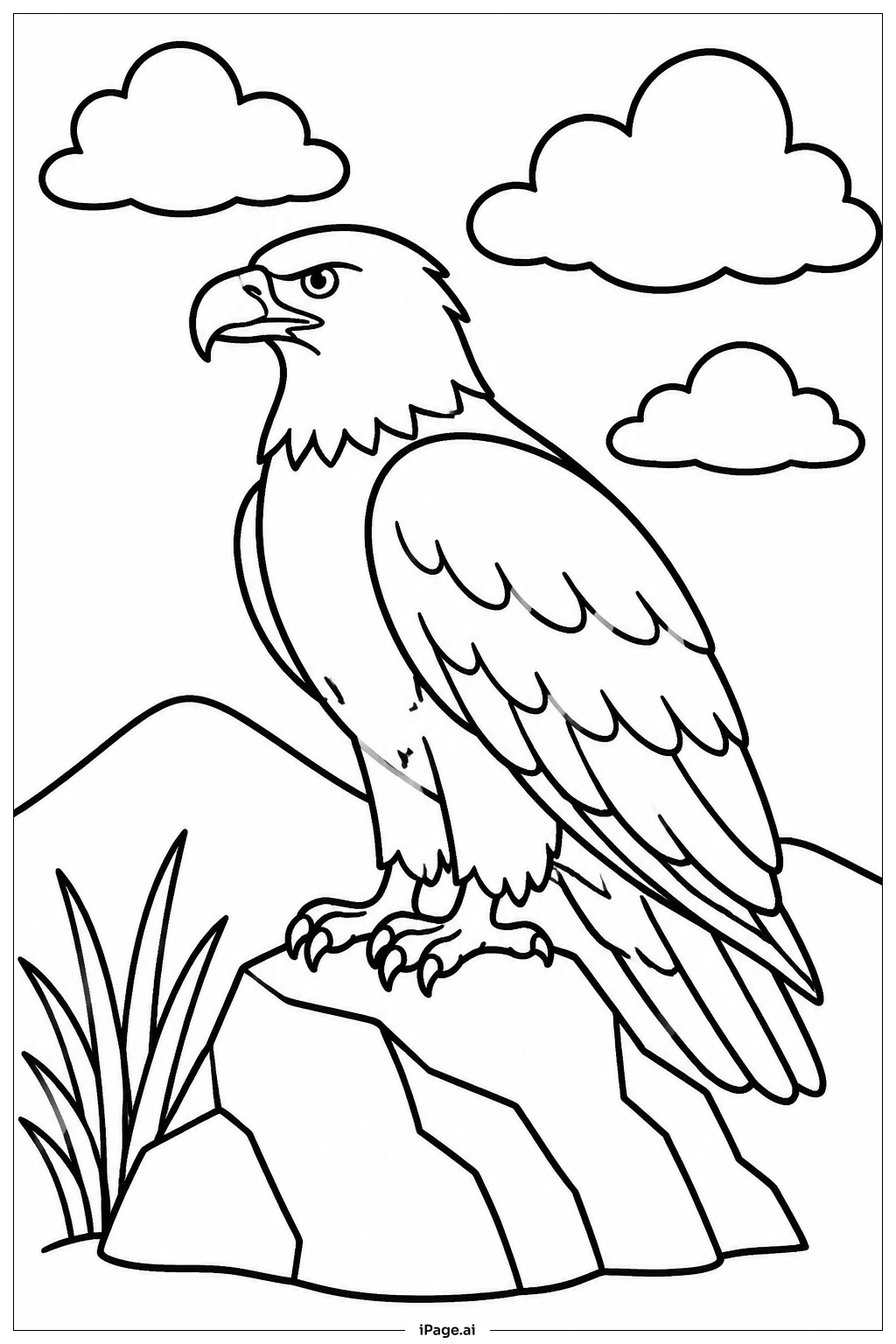
Coloring tips: How to color Eagle On Rock coloring page well?
Start with the eagle's head and neck. Use white or light cream for the head feathers if you want a bald eagle look. Color the beak and talons bright yellow or golden orange. For the body and wing feathers, use dark brown as the main color. Add lighter brown or tan on the edges of each feather to show depth and texture. Use a slightly lighter shade on the chest area for contrast. The eyes can be yellow with a small dark pupil to make them look sharp and alert. For the rock, use shades of gray, tan, or brown. Add darker gray in the cracks and crevices to make the rock look rough and real. You can blend light and dark colors to give the rock a natural stone texture. Try adding a soft blue or white background to make the eagle stand out. Take your time with the feathers — coloring each one carefully will make your finished picture look amazing!
Coloring challenges: Which parts are difficult to color and need attention for Eagle On Rock coloring page?
• Layered Feather Details: The eagle's wings and body are covered in many overlapping feathers. Each feather has its own shape and edge. Coloring them one by one takes patience. You need to switch between light and dark shades carefully to show depth without making the feathers look flat or blended together.
• Feather Texture Variation: Different parts of the eagle have different feather types. The head feathers are short and smooth. The wing feathers are long and layered. The chest feathers are soft and fluffy. Using the right coloring technique for each area is tricky and requires attention to detail.
• Beak and Talon Shading: The curved beak and sharp talons are small but important parts of the image. They need precise coloring with smooth gradients from light to dark. Getting the shading right in such small areas can be difficult, especially for younger or less experienced colorists.
• Rock Surface Texture: The rock has many irregular cracks, bumps, and uneven surfaces. Recreating a realistic stone look means using multiple shades of gray or brown. You need to carefully darken the deep cracks and keep the raised areas lighter. Blending these tones smoothly without overworking the surface is a real challenge.
• Overall Contrast and Balance: Making the eagle stand out clearly from the rock beneath it is important. If both the eagle and rock are colored in similar dark tones, the image can look muddy. Balancing the light and dark values across the whole picture while keeping each element distinct requires thoughtful color planning from start to finish.
Benefits of coloring books: Advantages of drawing Eagle On Rock coloring page
Coloring this eagle on a rock image offers many wonderful benefits for children and beginners alike. First, it helps improve focus and concentration. The detailed feathers and rocky textures require careful attention, which trains the mind to stay on task. Second, it builds fine motor skills. Carefully filling in small feather shapes and narrow cracks in the rock helps strengthen hand control and pencil grip, which is great for young learners. Third, it encourages creativity. Choosing colors for the eagle and rock lets kids express themselves freely. There is no single right answer — every child can create a unique version. Fourth, it teaches patience. A detailed image like this cannot be rushed. Working through each section slowly teaches kids the value of taking their time to do something well. Fifth, it introduces children to the natural world. Learning about eagles while coloring sparks curiosity about birds, wildlife, and nature. It can inspire kids to explore and appreciate animals and the environment around them. Overall, coloring this image is a fun, calming, and educational activity that supports both creative and cognitive development in a meaningful way.