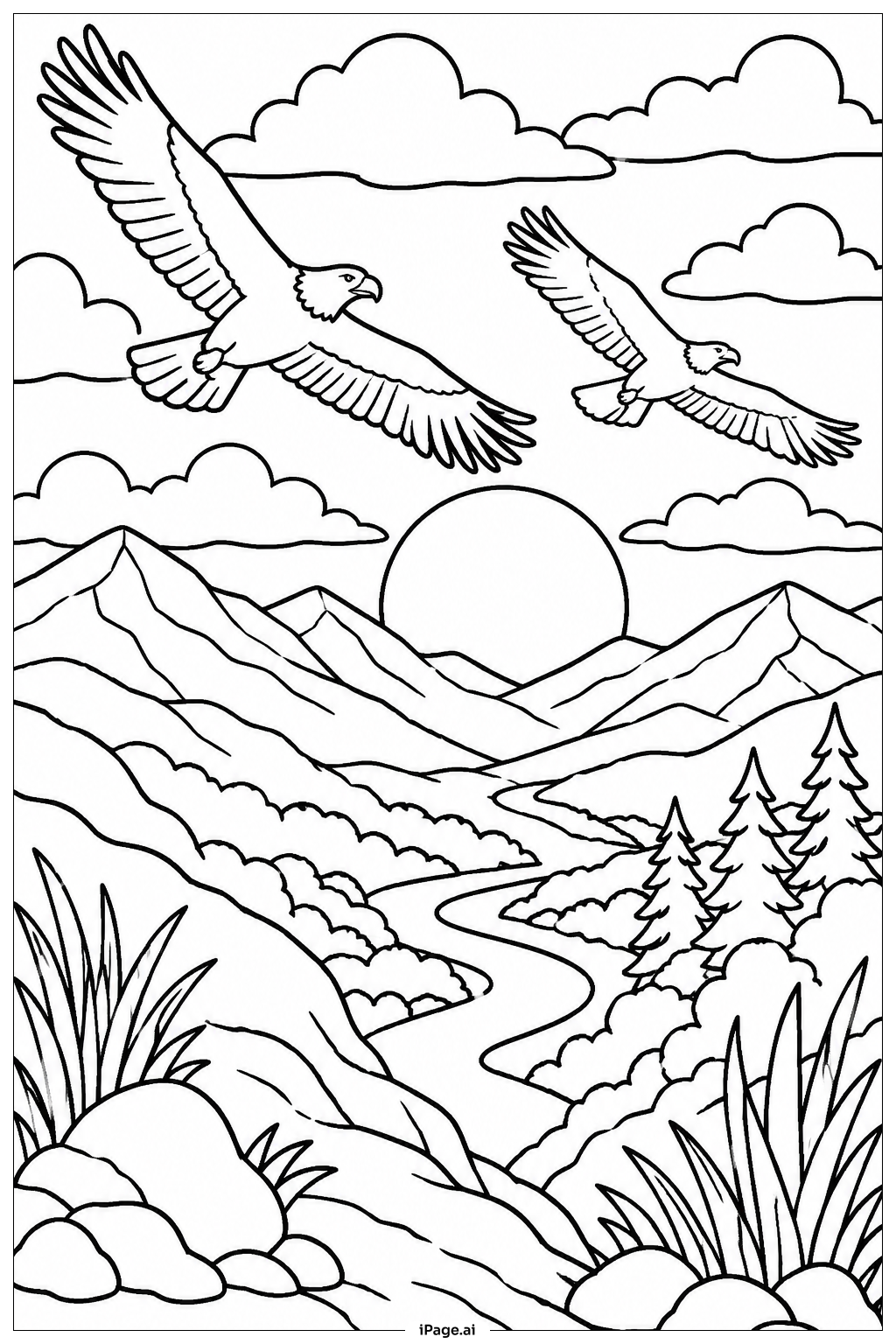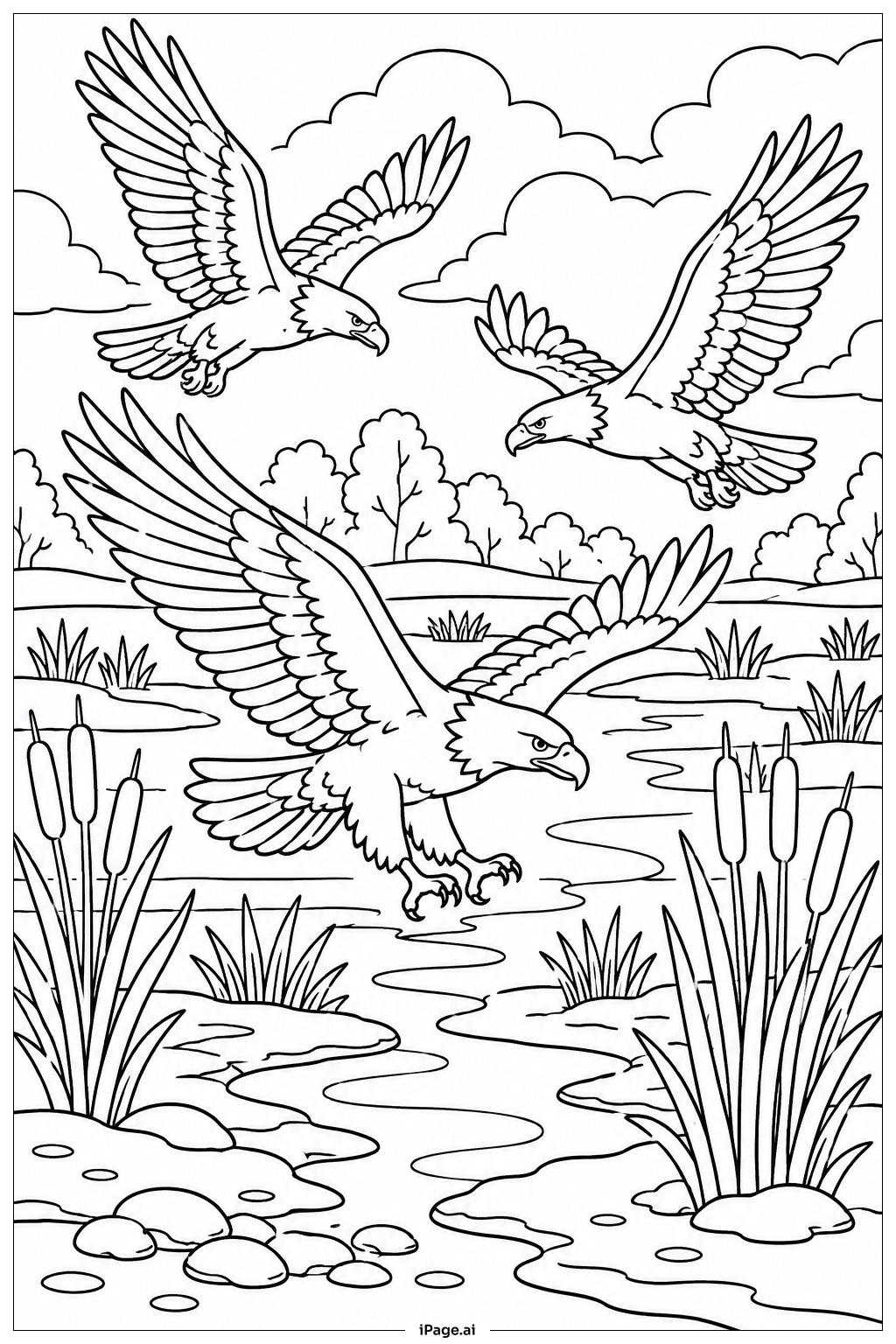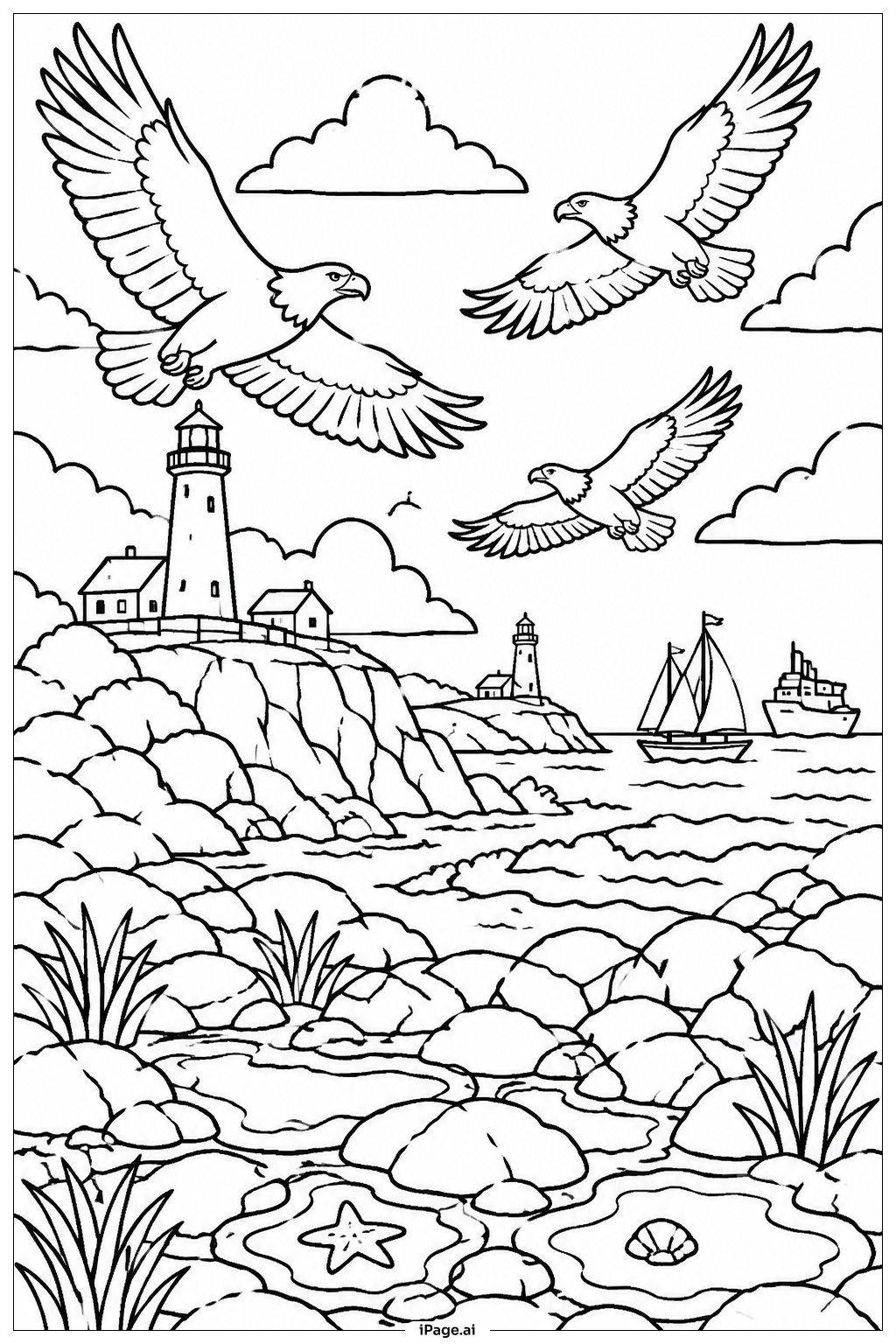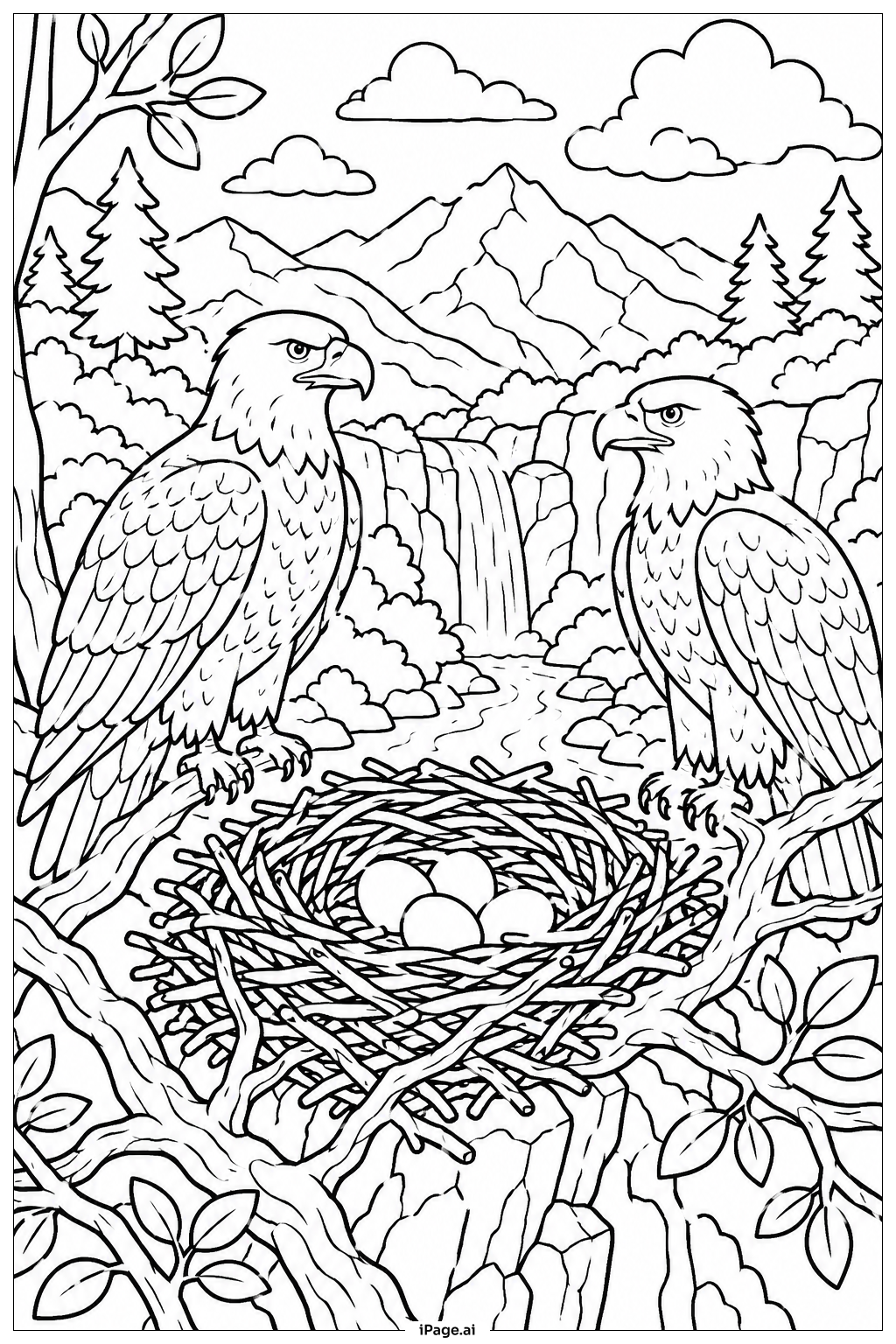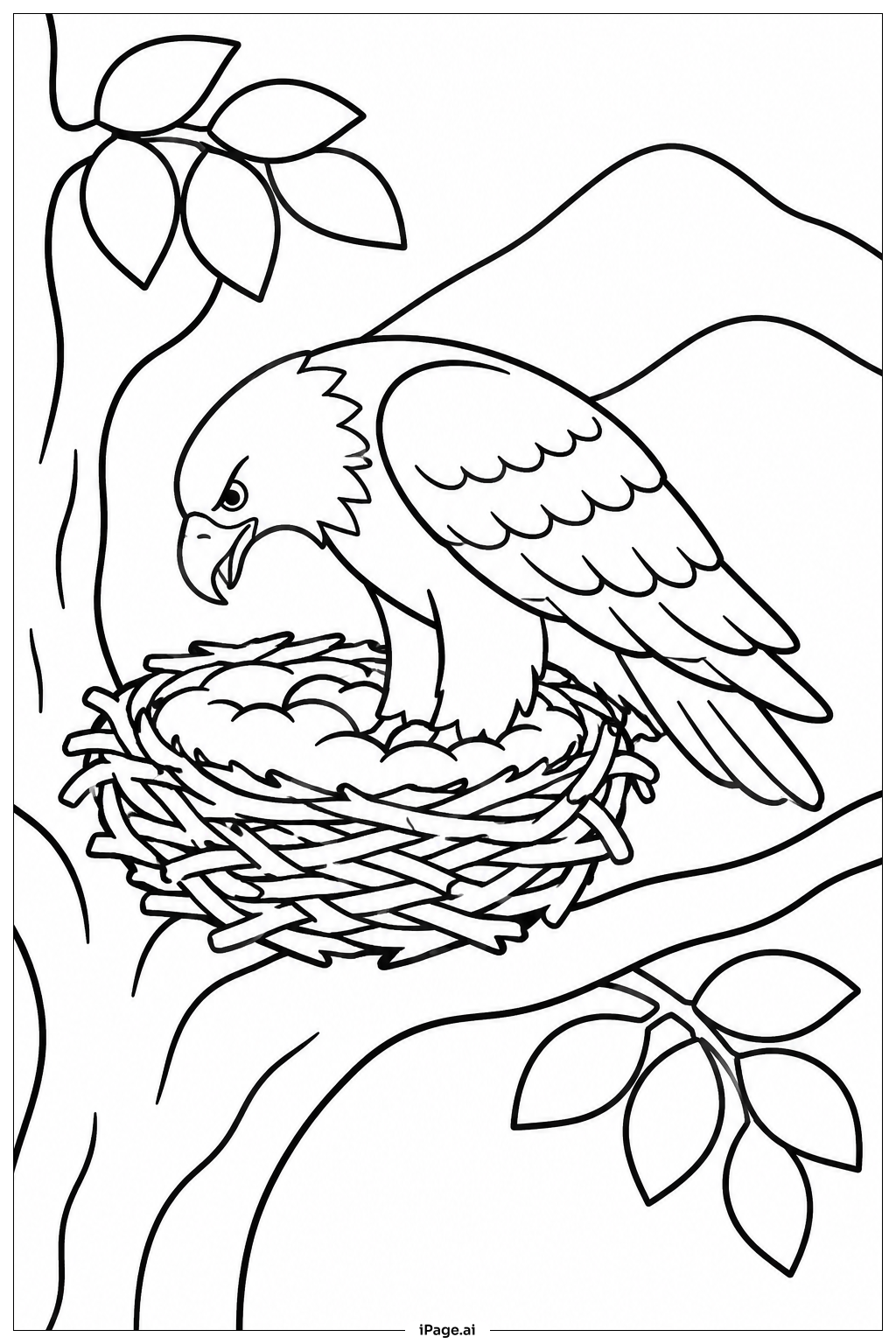
Coloring tips: How to color Eagle Nesting Branch coloring page well?
Start with the eagle's head using shades of white and light brown for a bald eagle look, or golden brown for a golden eagle. Color the beak bright yellow with gray shadows. Use dark brown or black for the body feathers, adding lighter browns for depth and dimension. The wing feathers can be layered with multiple brown tones, from chocolate to tan, creating a natural gradient. Add white tips to the tail feathers if depicting a bald eagle. For the talons, use yellow-gold with gray accents for the scales. Color the branch in various browns, from light tan to deep walnut, adding gray highlights for aged wood texture. Consider adding green moss spots or subtle orange lichen patches on the branch for extra realism and natural beauty.
Coloring challenges: Which parts are difficult to color and need attention for Eagle Nesting Branch coloring page?
• Feather Layering and Texture: The eagle's plumage contains hundreds of individual feathers that overlap in complex patterns across the wings, body, and tail. Each feather has a distinct shape and direction, requiring careful attention to create realistic depth. You will need to use multiple shades of brown and maintain consistent light direction to show how feathers layer over one another. The challenge is keeping each feather distinct while blending them into a cohesive whole, especially where the wing feathers fan out in different directions.
• Fine Detail Work Around Eyes and Beak: The eagle's facial features demand precision coloring, particularly around the piercing eyes and sharp beak. The eye area includes small feather patterns that radiate outward, requiring steady hand control with fine-tipped coloring tools. The beak has curves and shadows that need careful shading to appear three-dimensional. The small scales and textures around the cere (the fleshy area above the beak) add another layer of intricate detail work.
• Talon and Branch Texture Contrast: The eagle's talons feature overlapping scales that wrap around the branch in a gripping position, creating multiple small sections that need individual attention. The branch itself has bark texture with cracks, grooves, and natural wood grain patterns running in various directions. Balancing these two detailed textures while maintaining visual separation between the yellow-toned talons and brown-toned wood requires thoughtful color choices and shading techniques.
• Creating Depth and Dimension: This image presents the challenge of making a flat drawing appear three-dimensional through coloring alone. The eagle's rounded body shape, curved wings, and the cylindrical branch all need highlights and shadows placed correctly to suggest form. You must decide on a consistent light source and apply darker tones to recessed areas while keeping raised surfaces lighter, all while working within the intricate line work of feathers and bark.
Benefits of coloring books: Advantages of drawing Eagle Nesting Branch coloring page
Coloring this eagle nesting branch page offers excellent opportunities for developing fine motor skills and hand-eye coordination through its detailed feather patterns and intricate textures. The complex design encourages patience and focus, helping children and adults alike practice concentration for extended periods. Working with the natural color palette of browns, yellows, and earth tones teaches color blending and shading techniques that create realistic wildlife art. This image provides a wonderful introduction to bird anatomy and nature appreciation, sparking curiosity about eagles and their habitats. The meditative process of carefully coloring each feather section reduces stress and promotes relaxation. Completing this detailed page builds confidence and provides a strong sense of accomplishment. It also encourages decision-making skills as colorists choose their approach to textures and shading, fostering creativity within a nature-based framework.