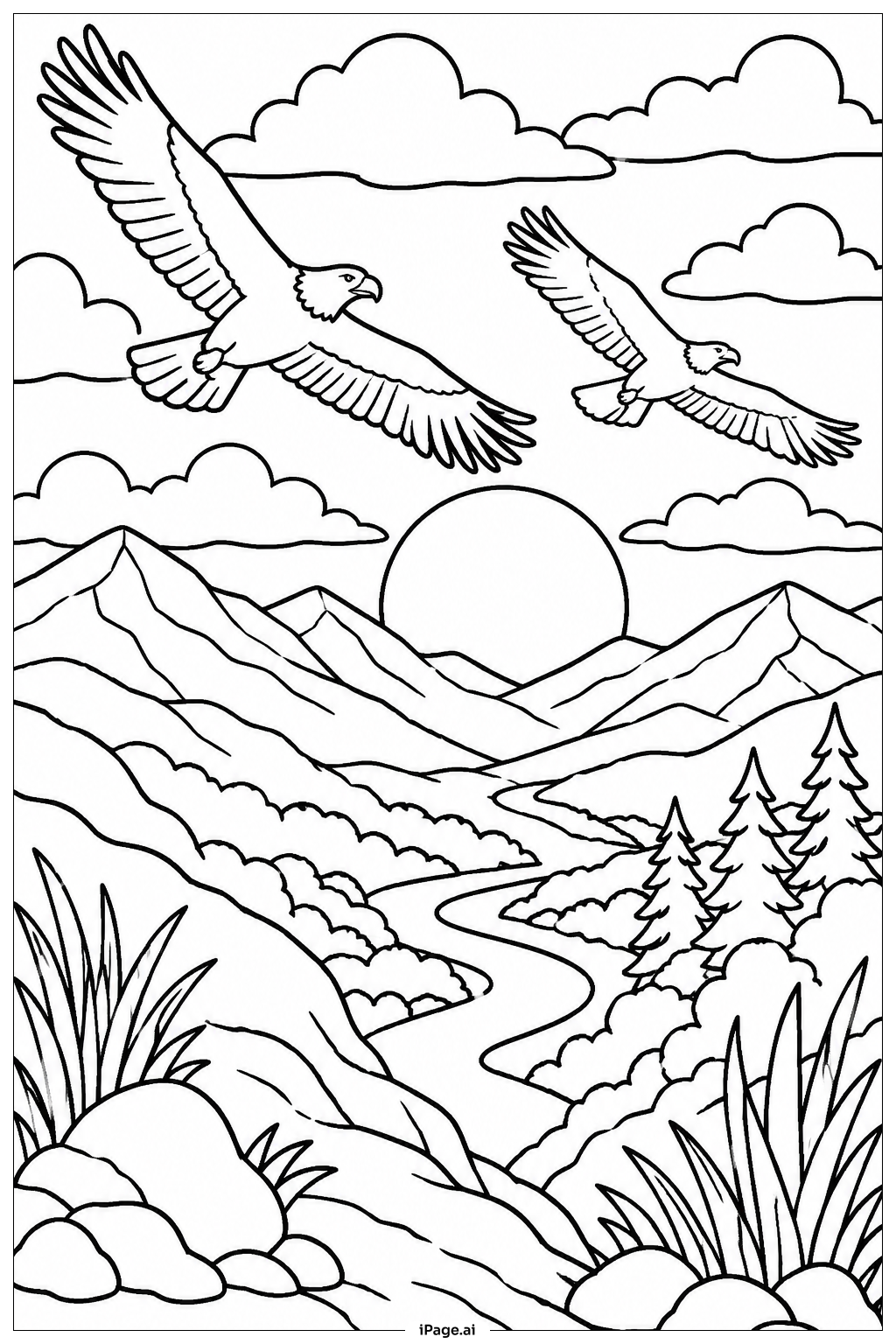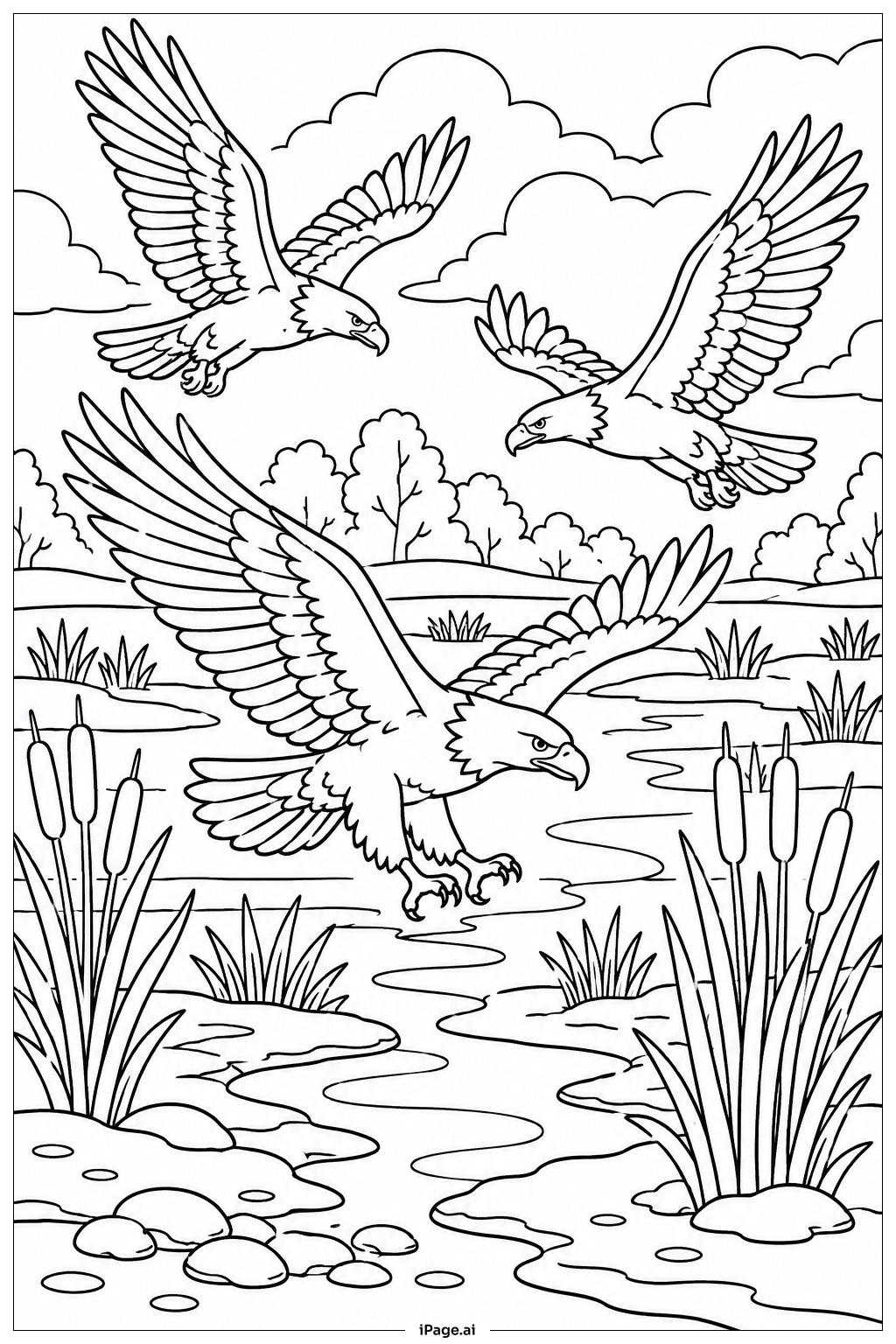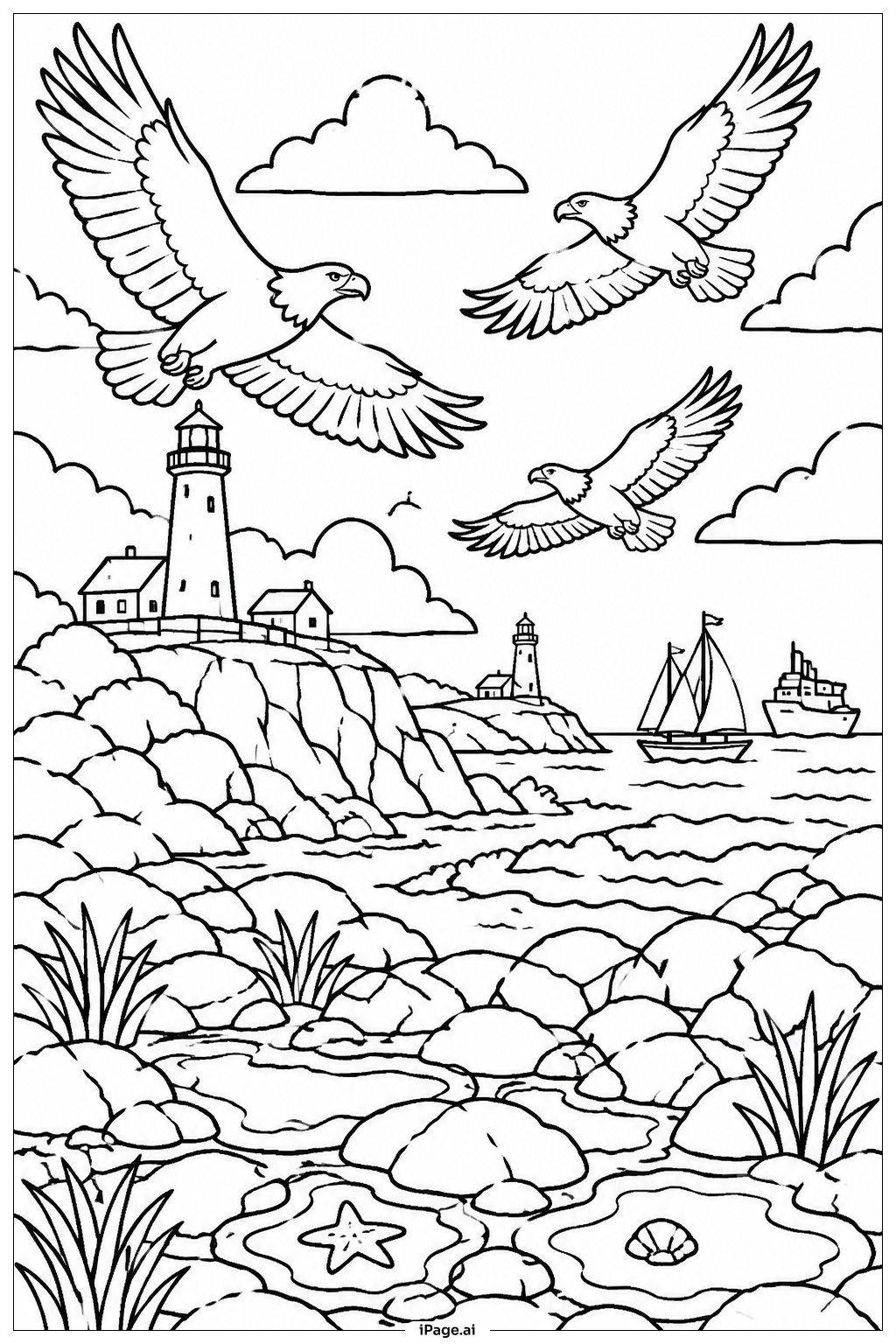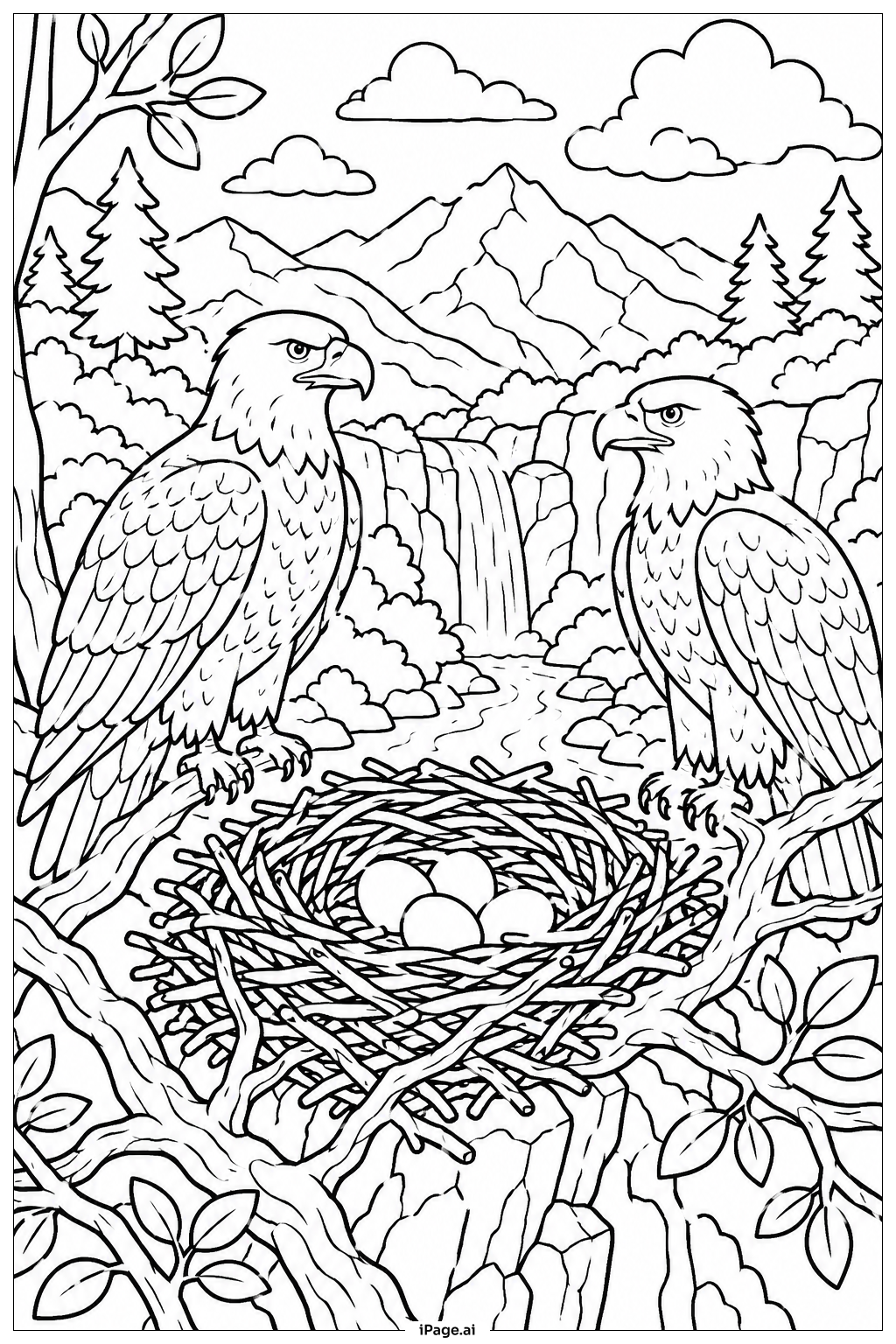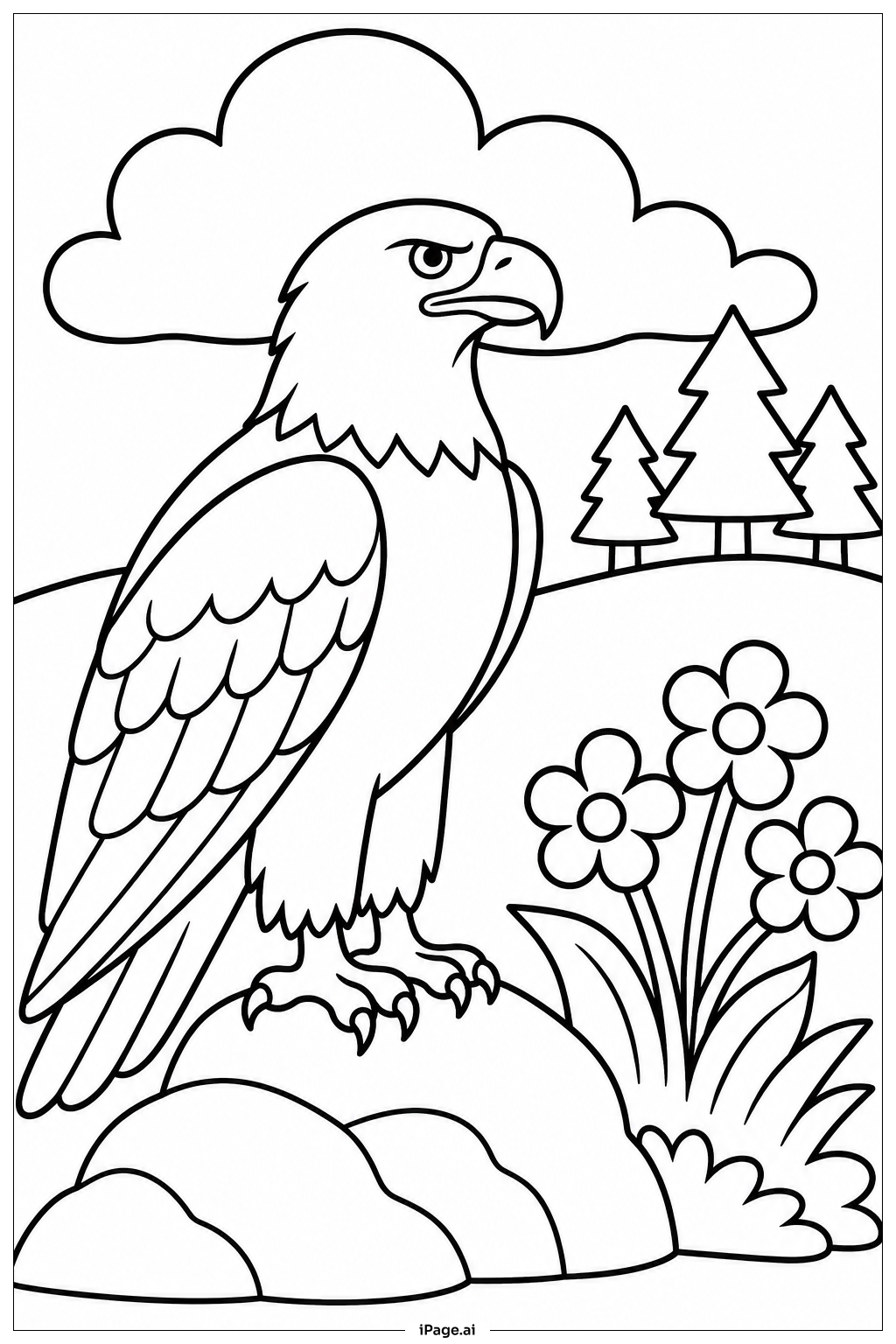
Coloring tips: How to color Eagle Meadow Watch coloring page well?
Start with the eagle's body. Use dark brown for the back and wings, and white or cream for the head and tail if coloring a bald eagle. Add golden yellow to the beak and talons to make them stand out. Use lighter brown and tan shades for the chest feathers to give depth. For the meadow, use bright and light greens for the grass. Add small touches of yellow, purple, or white for the wildflowers near the eagle's feet. The background hills can be soft green or blue-green. Use a pale blue or light yellow for the sky to keep the eagle as the center of attention. Try blending two shades of the same color to make the feathers look more realistic. Take your time with the feather details — they make the eagle look truly alive.
Coloring challenges: Which parts are difficult to color and need attention for Eagle Meadow Watch coloring page?
• Layered Feather Texture: The eagle's body is covered in many overlapping feathers, each with its own shape and direction. Coloring each feather individually takes patience and a steady hand. Using two or three shades of brown helps create a natural, layered look, but it can be tricky to blend them smoothly without making the feathers look muddy or flat.
• Beak and Talon Details: The hooked beak and sharp talons are small but important features. They require careful coloring with a fine-tipped tool to stay within the narrow lines. Using golden yellow or orange-yellow gives them the right look, but applying too much color at once can cause the details to disappear.
• Head and Tail Contrast: If this is a bald eagle, the white head and tail must be clearly separated from the dark brown body. Keeping white areas clean while adding shading around them is a real challenge, especially for younger colorists. Light gray shading around the edges of the white areas can help define the shape without losing the brightness.
• Grass and Wildflower Foreground: The ground around the eagle's talons has grass blades and small flowers with fine lines. Coloring these without accidentally going over the eagle's feet or mixing the greens together can be difficult. Using different shades of green and small strokes that follow the direction of the grass blades will give the best result.
• Background Depth and Balance: The rolling hills and trees in the background need to stay lighter than the foreground so the eagle remains the focal point. Choosing colors that are too bright or too dark for the background can make the scene feel crowded and draw attention away from the eagle.
Benefits of coloring books: Advantages of drawing Eagle Meadow Watch coloring page
Coloring this Eagle Meadow Watch page offers many wonderful benefits for kids and young artists. Working on the eagle's detailed feathers helps build fine motor skills and improves hand-eye coordination. Staying inside the lines and choosing the right colors encourages focus and patience, which are great habits to develop early.
This image also sparks curiosity about nature and wildlife. Children learn about eagles — their habitat, their powerful features, and their role in the wild — simply by spending time coloring the page. It is a fun and quiet way to explore the natural world.
Choosing colors and deciding how to shade the feathers, grass, and sky builds creative thinking and decision-making. There is no single right answer, so every child creates something unique. This freedom boosts confidence and encourages self-expression.
For older children, the challenge of blending colors and creating realistic textures can feel very rewarding when finished. Completing a detailed page like this gives a strong sense of accomplishment. Whether coloring alone or with friends, this page makes for a calm, enjoyable, and enriching activity that connects art with a love of nature.