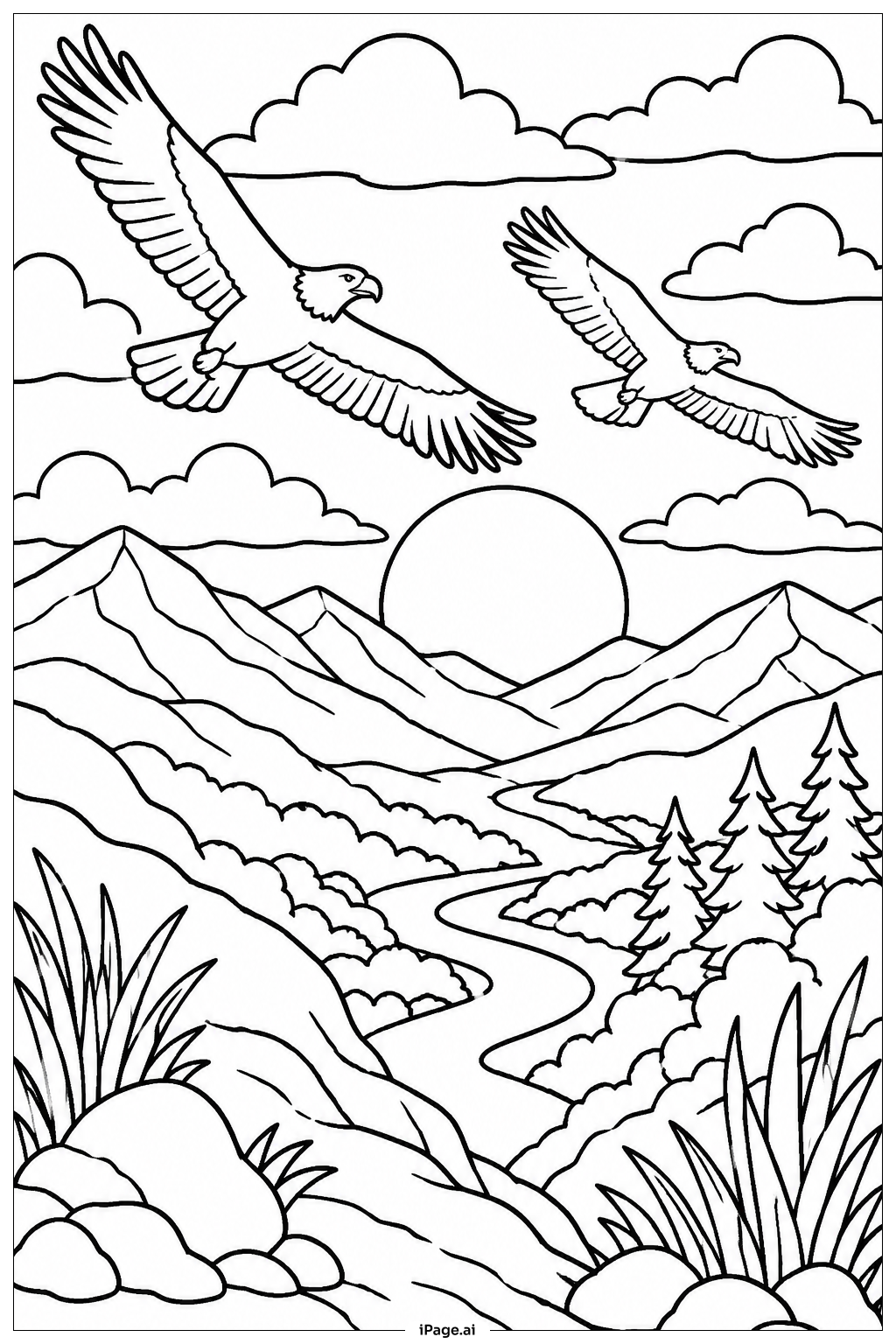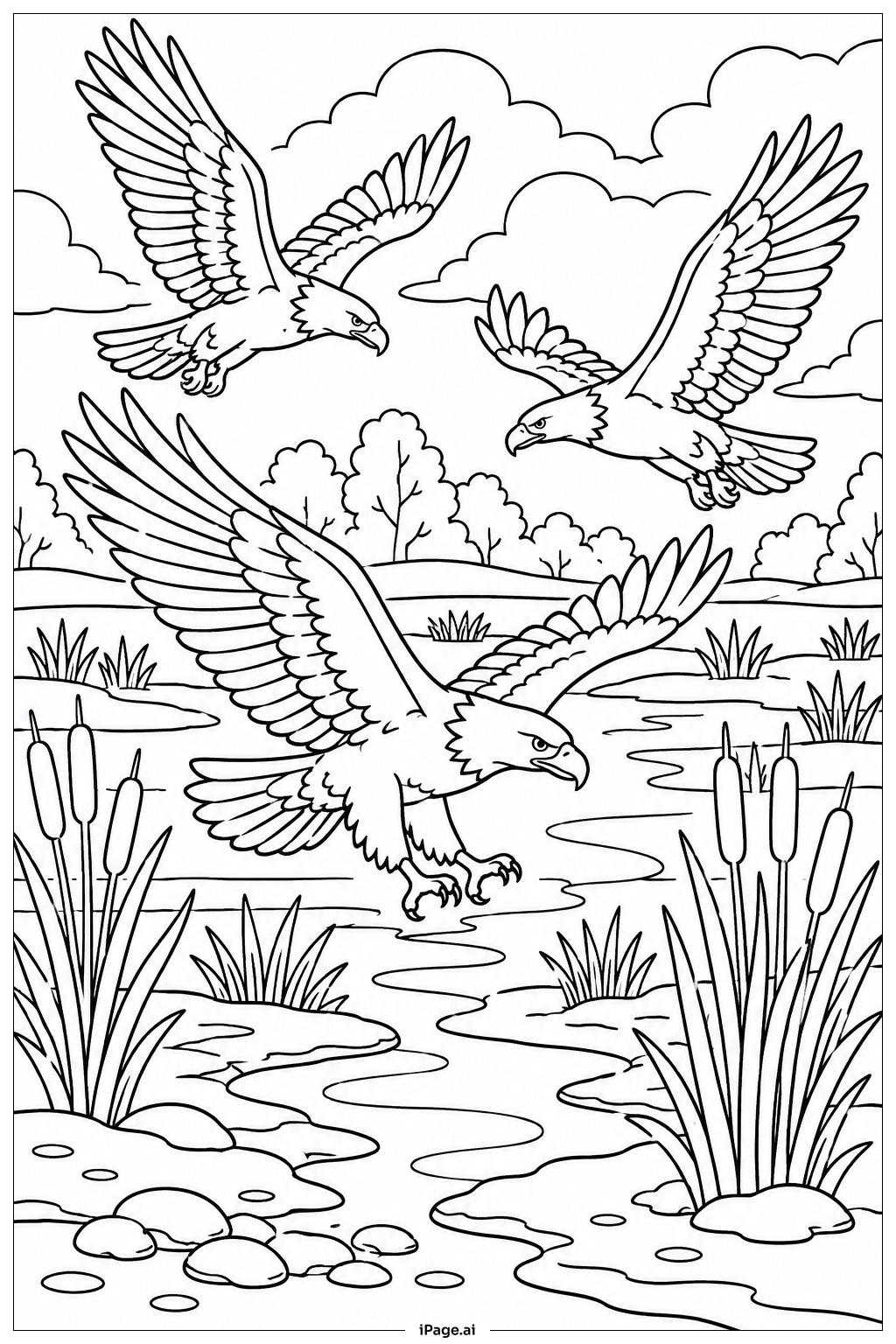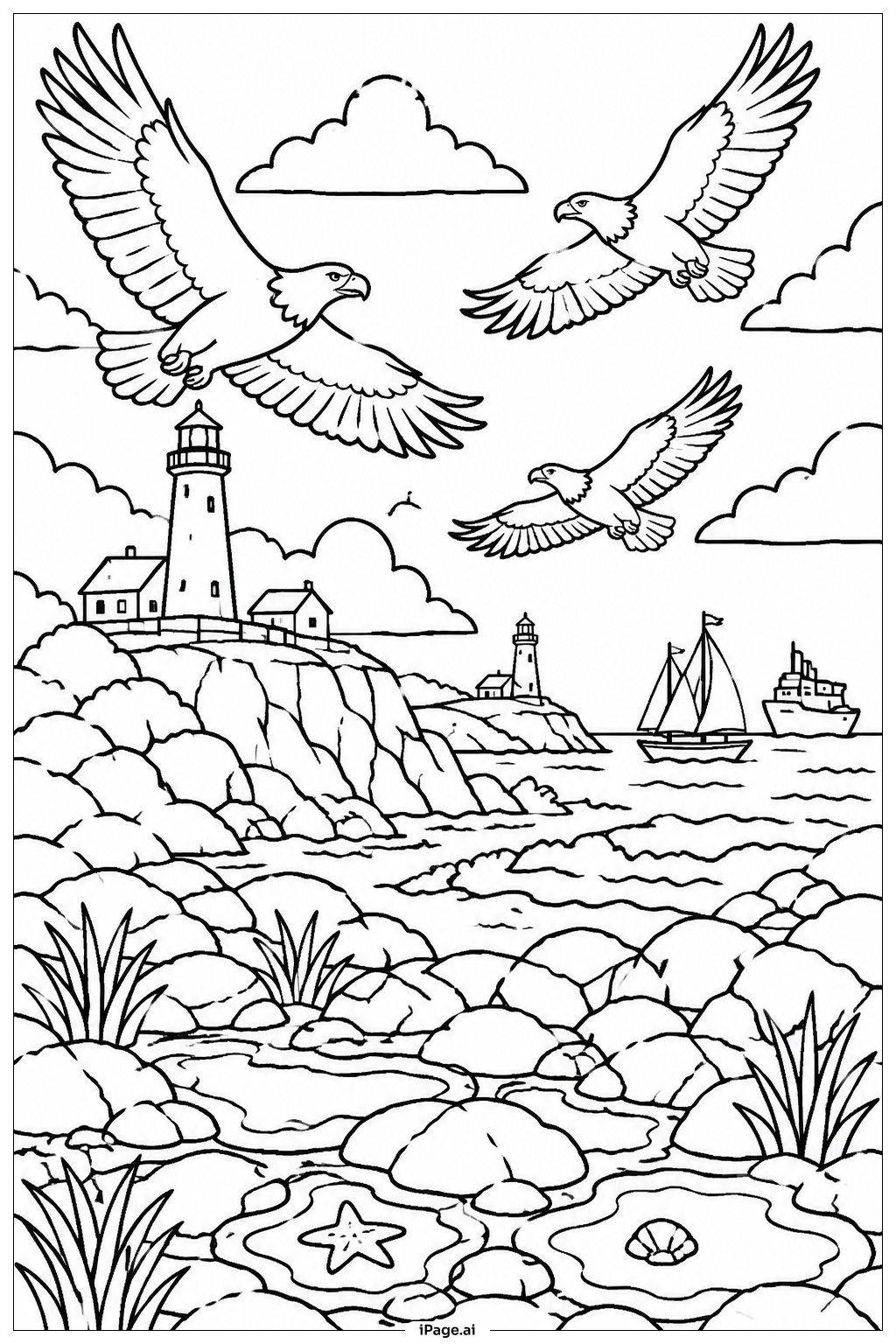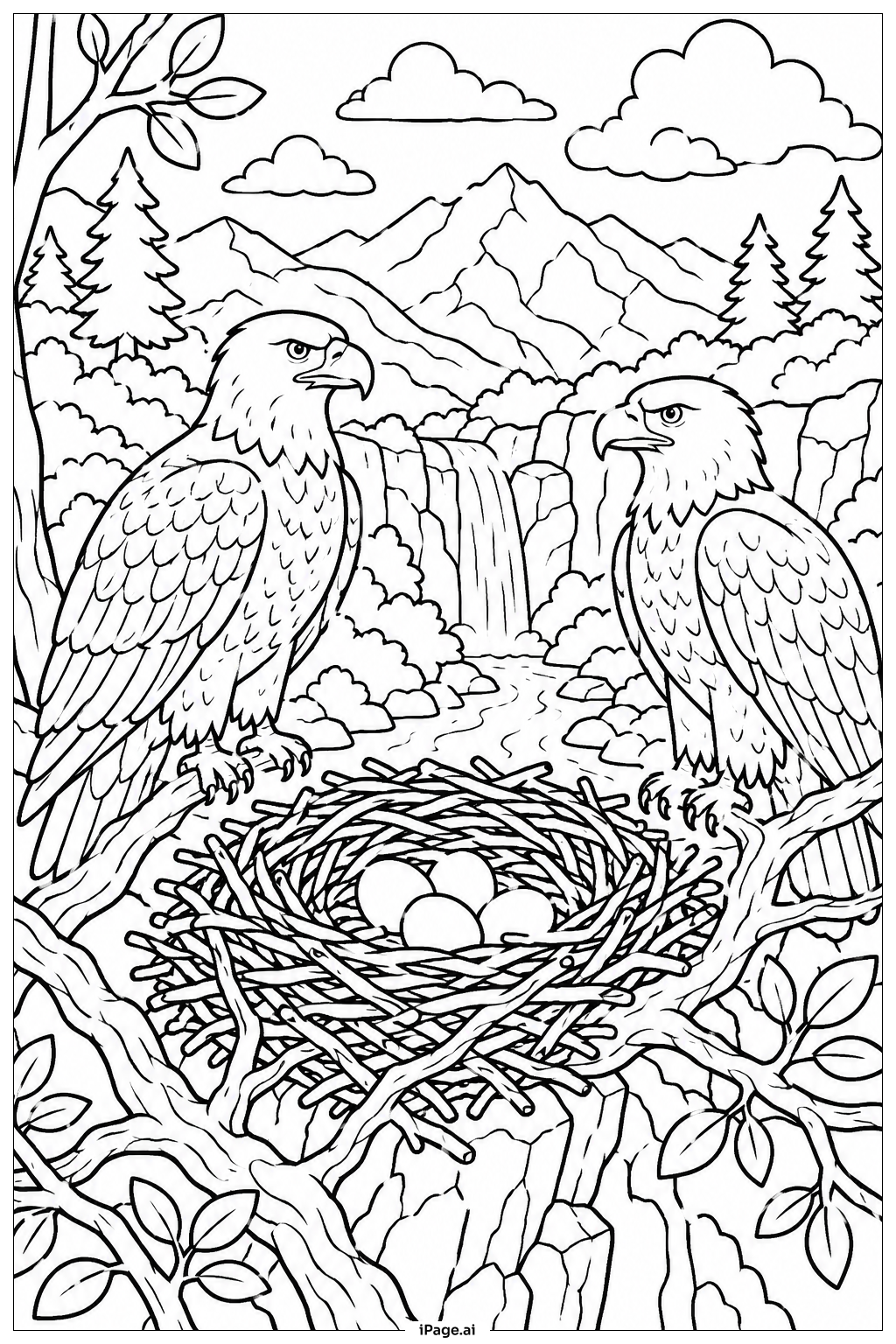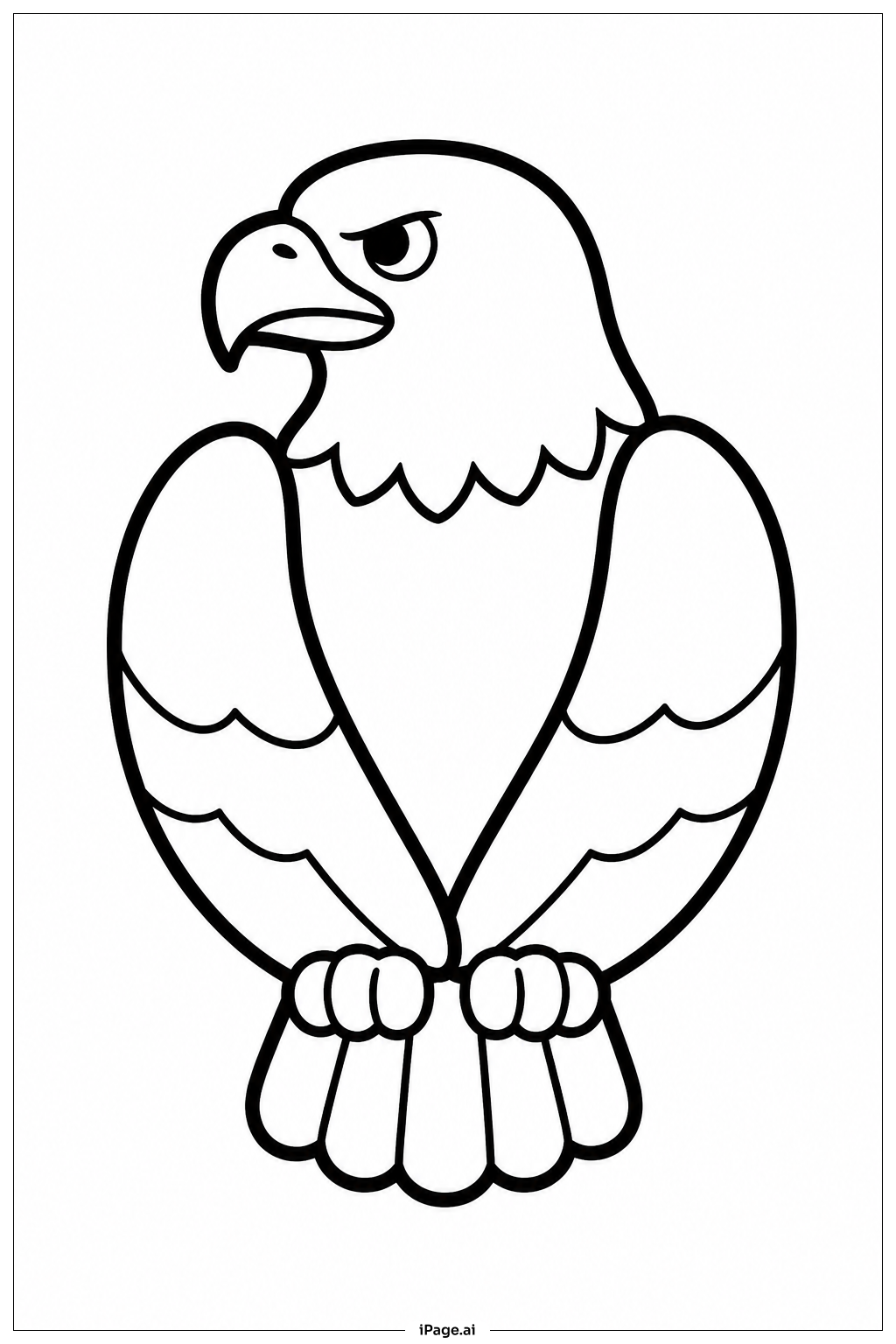
Coloring tips: How to color Eagle Curled Wings coloring page well?
Start with the eagle's head. Use a bright white or cream color for the crown and face if it is a bald eagle. The beak and feet look great in golden yellow or orange. For the body feathers, use rich dark brown tones. Add lighter brown or tan shading on the chest. The wing feathers can be a mix of dark brown and medium brown to show depth. Try using short, gentle strokes along each feather to make them look more natural. The talons can be colored in a pale yellow or light gold. For the background, a soft blue sky or light grey will help the eagle stand out. Use darker shades near the edges of the wings to add shadow and volume. Keep the eye sharp by coloring it bright yellow with a small dark pupil. This will bring the eagle to life and make your coloring page look amazing.
Coloring challenges: Which parts are difficult to color and need attention for Eagle Curled Wings coloring page?
• Complex Feather Layering: The eagle's curled wings contain dozens of overlapping feathers, each with its own unique shape and outline. Coloring each feather individually without smudging into neighboring ones requires careful control and patience. Young colorists may find it hard to stay within the fine lines that separate each feather layer.
• Blending Brown Tones: Eagles are naturally colored in multiple shades of brown, from very dark chocolate brown to warm tan and cream. Achieving a realistic and smooth transition between these tones is challenging. Using only one flat brown color can make the wings look dull and lifeless. Learning to layer and blend different shades takes practice.
• Sharp Details on the Face: The eagle's beak, eyes, and facial feathers are small and tightly packed. The beak has a curved tip that requires precise coloring to avoid going outside the lines. The eye needs careful attention so the bright iris and dark pupil are clearly defined and do not blend together.
• Talon Precision: The talons are made up of curved, narrow shapes that can be tricky to fill in neatly. Each claw has a slightly different angle and curve. Using a fine-tipped colored pencil or marker is recommended to color these sections cleanly.
• Wing Symmetry and Shading: Even though the wings are curled, maintaining a balanced look between both sides can be difficult. Applying consistent shading to suggest the rounded form of the curled wings while keeping both sides visually even is a challenge that requires planning ahead before applying color.
Benefits of coloring books: Advantages of drawing Eagle Curled Wings coloring page
Coloring this eagle with curled wings offers many wonderful benefits for children and beginners alike. First, it helps improve fine motor skills. Carefully filling in the many small feather sections trains hand steadiness and pencil control. This is great for young children who are still developing coordination.
Second, it builds focus and patience. The detailed feather patterns require slow, careful attention. Sitting with this image and working through each section helps children practice staying focused on one task at a time.
Third, it sparks creativity. Choosing colors for the feathers, beak, talons, and background encourages creative thinking. Children can color realistically or use their imagination to create a fantasy eagle in any color they like.
Fourth, it teaches kids about nature. Eagles are real and fascinating birds. Coloring one up close helps children notice details about bird anatomy, such as the shape of feathers, talons, and beaks, in a hands-on and enjoyable way.
Finally, completing this coloring page gives a strong sense of accomplishment. When children finish a complex image like this, they feel proud and confident. That positive feeling encourages them to keep creating and trying new artistic challenges.