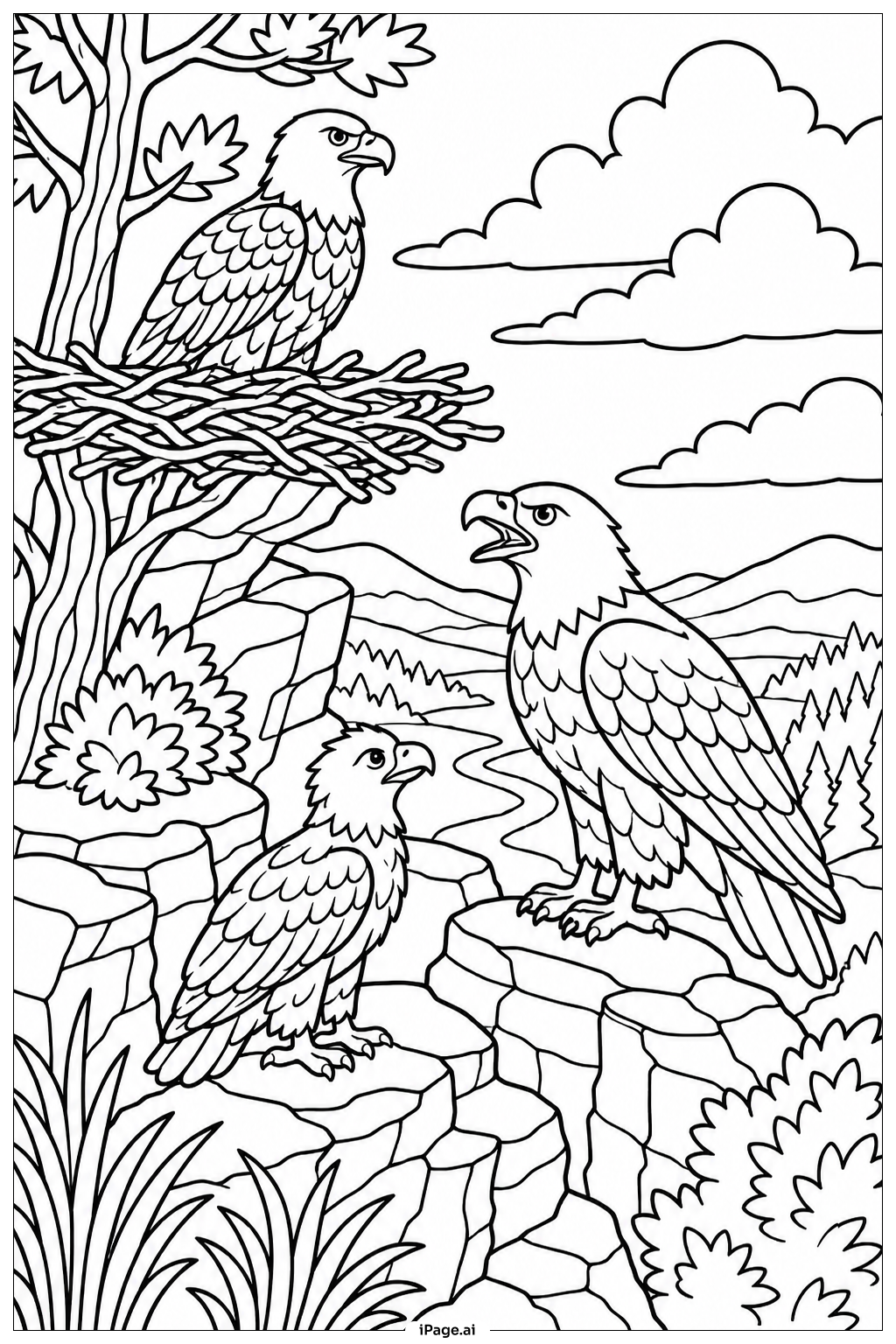
Coloring tips: How to color Eagle Cliff Family coloring page well?
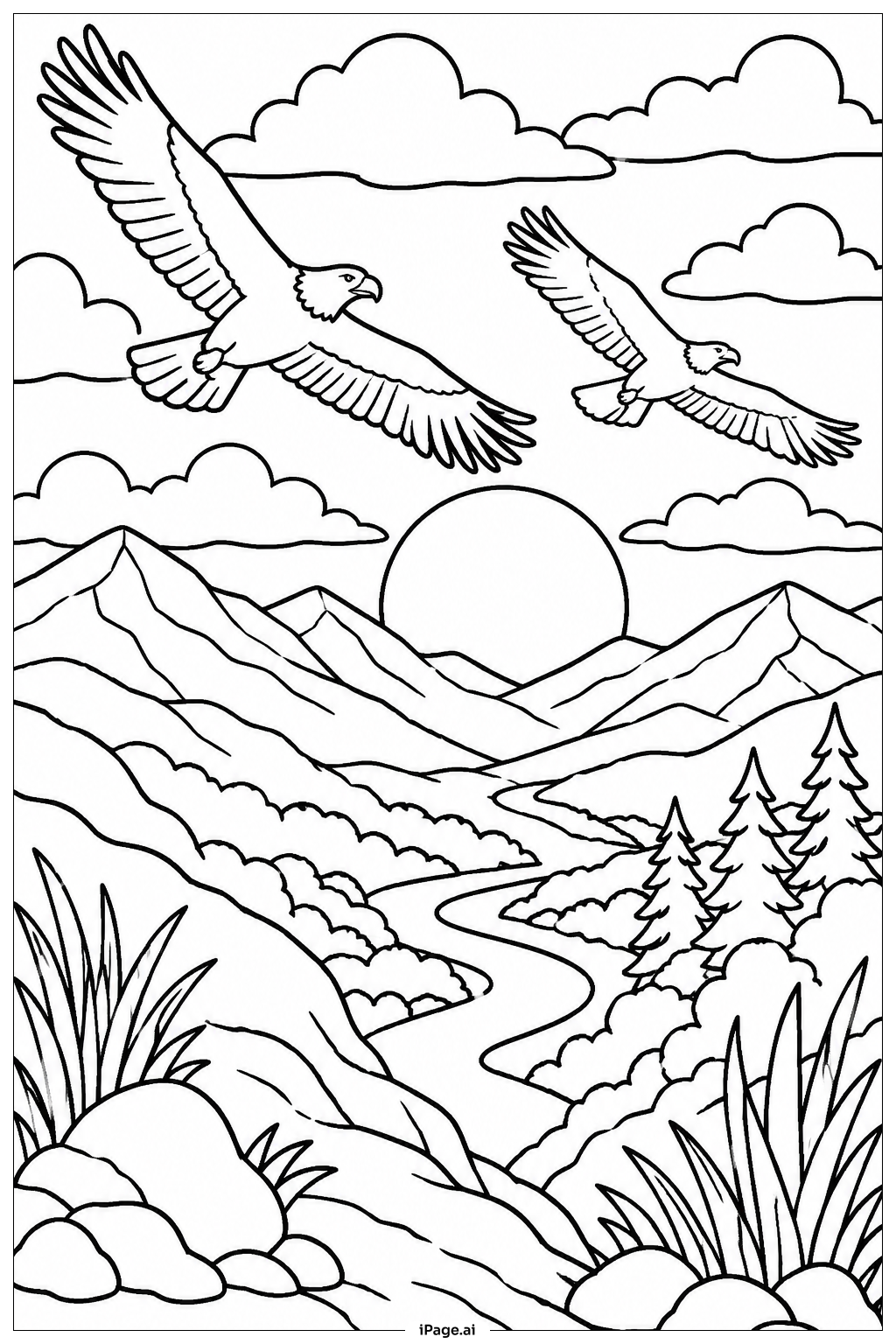
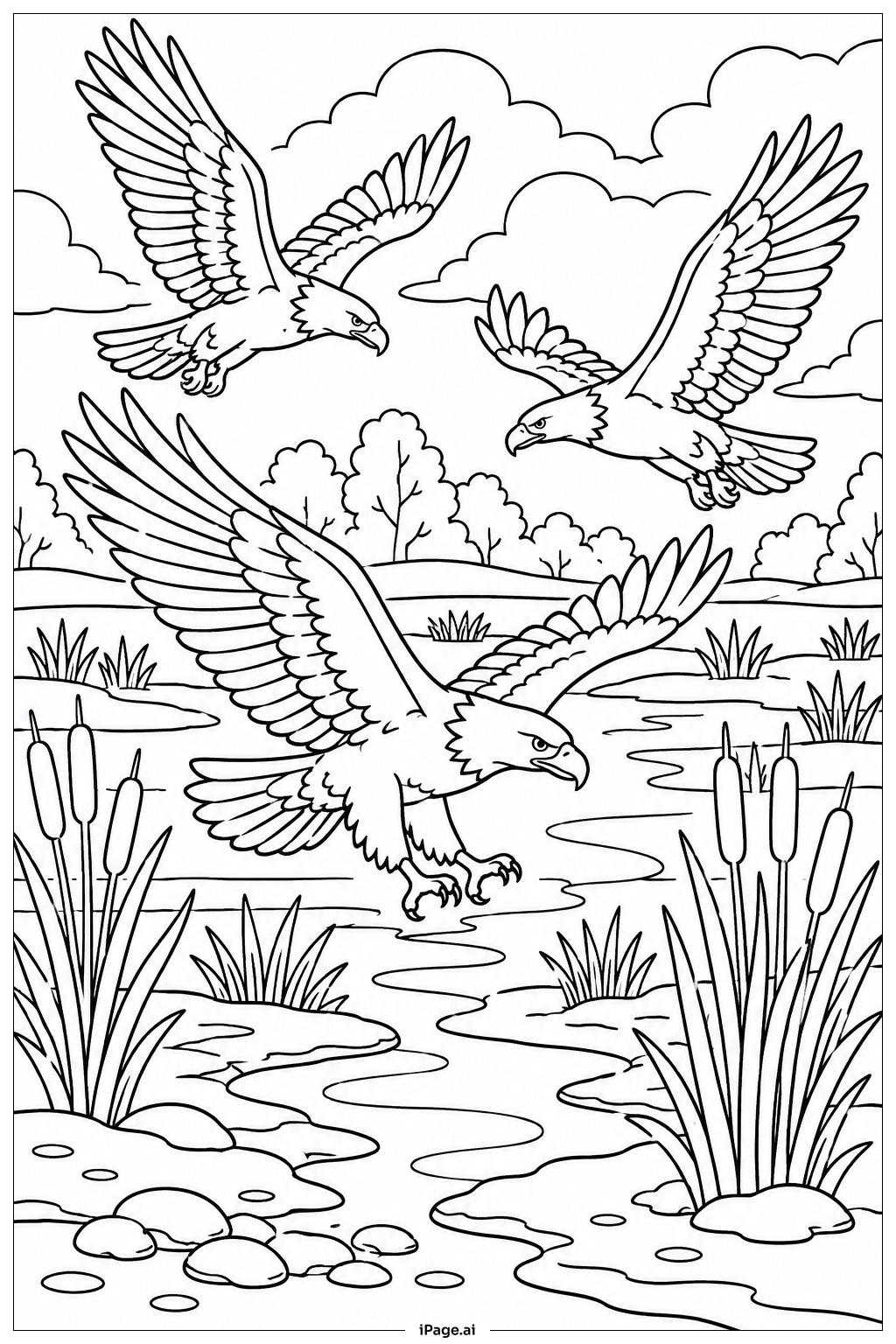
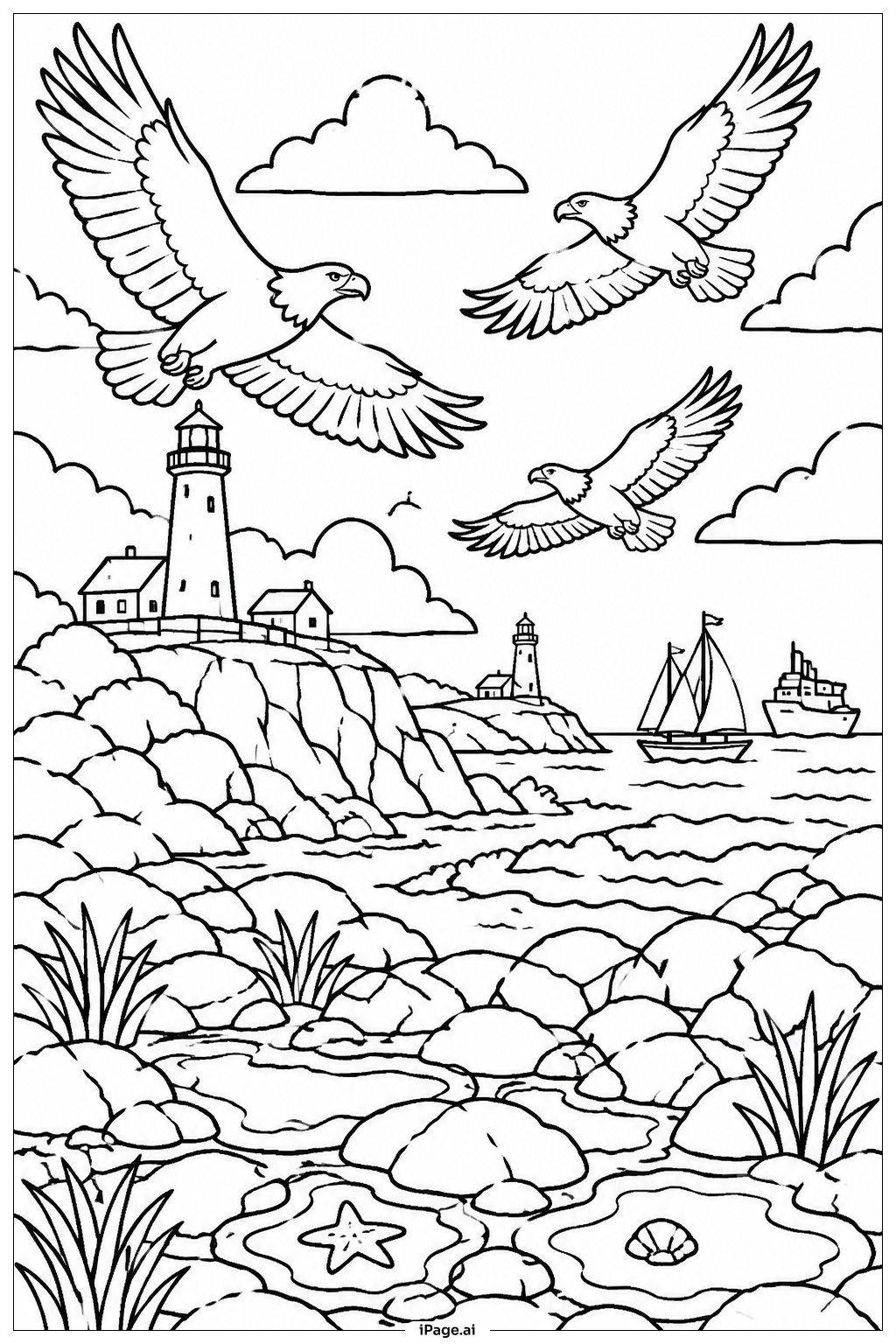
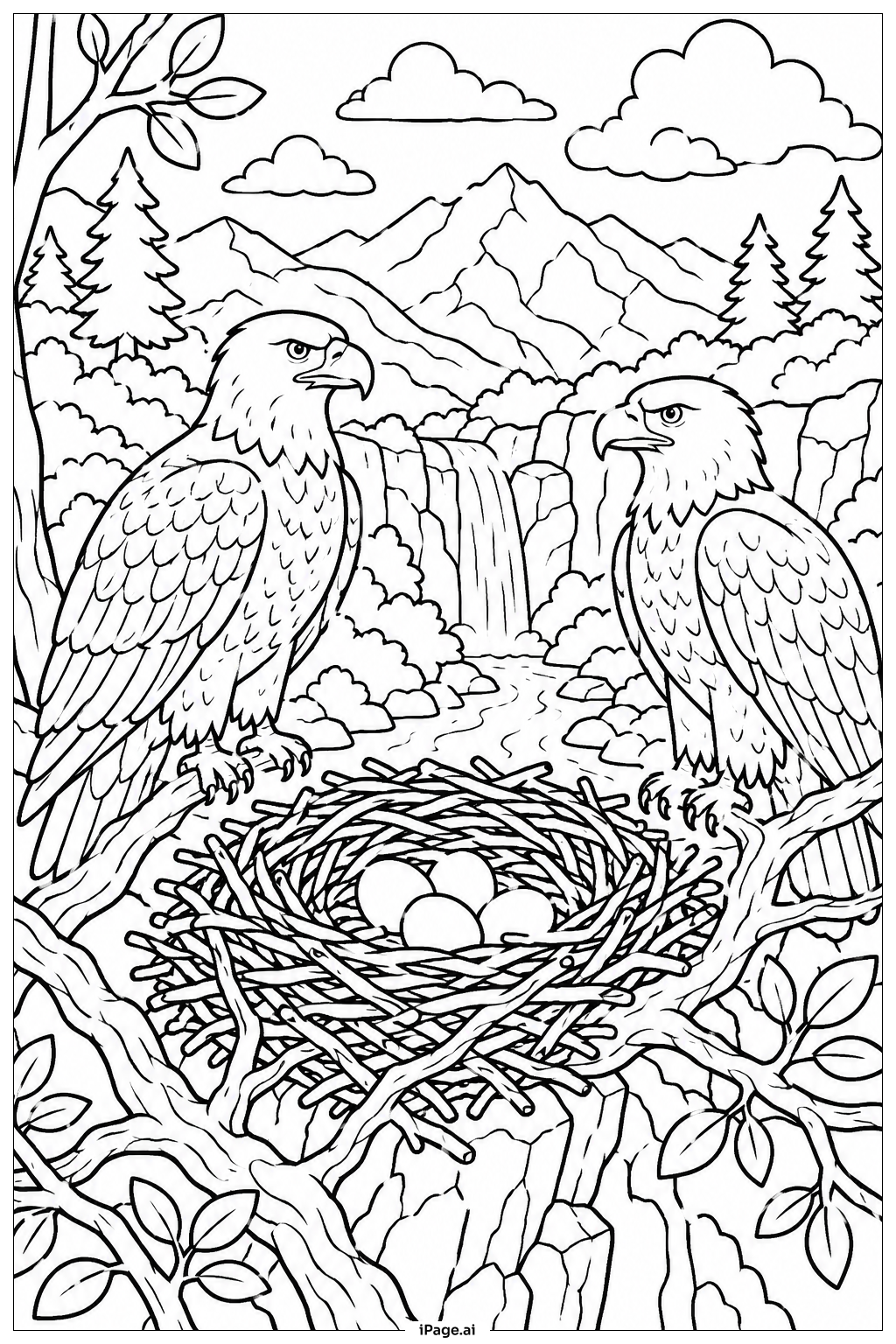
Start with the sky in the background. Use light blue and soft white for a wide, open feel. Add pale gray or lavender to the clouds for depth. Color the mountains in shades of blue-gray and green. Use dark green and brown for the pine trees below the cliff. For the cliff rocks, try warm grays, tans, and rust-brown tones to show rough texture. The adult eagles look great in deep brown and dark chocolate for the body feathers, with a bold white head and tail if they are bald eagles. Use bright yellow for the beaks and talons. The eaglets can be colored in fluffy gray-brown to show their soft, young feathers. Add a little shadow under the wings and around the rocks to give the scene a three-dimensional look. Take your time with the feathers — layering light and dark shades makes them look real and beautiful.
Coloring challenges: Which parts are difficult to color and need attention for Eagle Cliff Family coloring page?
• Eagle Feather Layering: The adult eagles have many overlapping feathers across their wings, back, and chest. Each layer needs a slightly different shade of brown to look natural. Keeping the transitions smooth without making the feathers look flat is a real challenge, especially in smaller areas near the neck and tail.
• Eaglet Texture: The young eaglets are covered in soft, fluffy down feathers. Capturing that light, wispy texture is tricky. Using short, gentle strokes with gray and tan helps, but it takes patience to avoid coloring them too dark or too solid, which would lose the soft baby-bird effect.
• Cliff Rock Detail: The rocky cliff has many cracks, ridges, and uneven surfaces. Coloring these realistically means using multiple shades of gray, brown, and tan while leaving some areas lighter to suggest where light hits the rock. It is easy to over-color and lose the sense of texture.
• Background Depth: The background includes sky, clouds, distant mountains, and trees. Getting the sense of distance right means using lighter, cooler colors far away and richer, deeper colors closer to the foreground. Blending these zones smoothly without harsh lines is one of the trickier parts of this scene.
• Small Accent Details: The eagles' sharp beaks, bright eyes, and strong talons are small but important. These tiny details need careful, steady hand control. Using a fine-tipped tool and taking your time helps make these features stand out without accidentally coloring outside the lines.
Benefits of coloring books: Advantages of drawing Eagle Cliff Family coloring page
Coloring the Eagle Cliff Family page offers a wonderful mix of fun and learning for kids and adults alike. Working through the detailed feathers and rocky cliff helps build focus and patience — skills that are useful far beyond art. Children practice fine motor control as they carefully stay within small, intricate lines, strengthening the hand-eye coordination they need for writing and other daily tasks. Choosing colors for the sky, mountains, rocks, and eagles also sparks creativity and encourages kids to think about what looks natural and beautiful together. Learning about eagle colors and habitats through coloring is a gentle, engaging way to connect with nature and wildlife. For older kids and adults, the layering of feather tones and rock textures offers a satisfying artistic challenge that builds shading and blending skills. The scene also opens great conversations about eagles — where they live, how they raise their young, and why they are symbols of strength and freedom. Best of all, finishing a detailed page like this gives a real sense of pride and accomplishment. Coloring is also a calming, screen-free activity that helps reduce stress and encourages mindfulness for all ages.