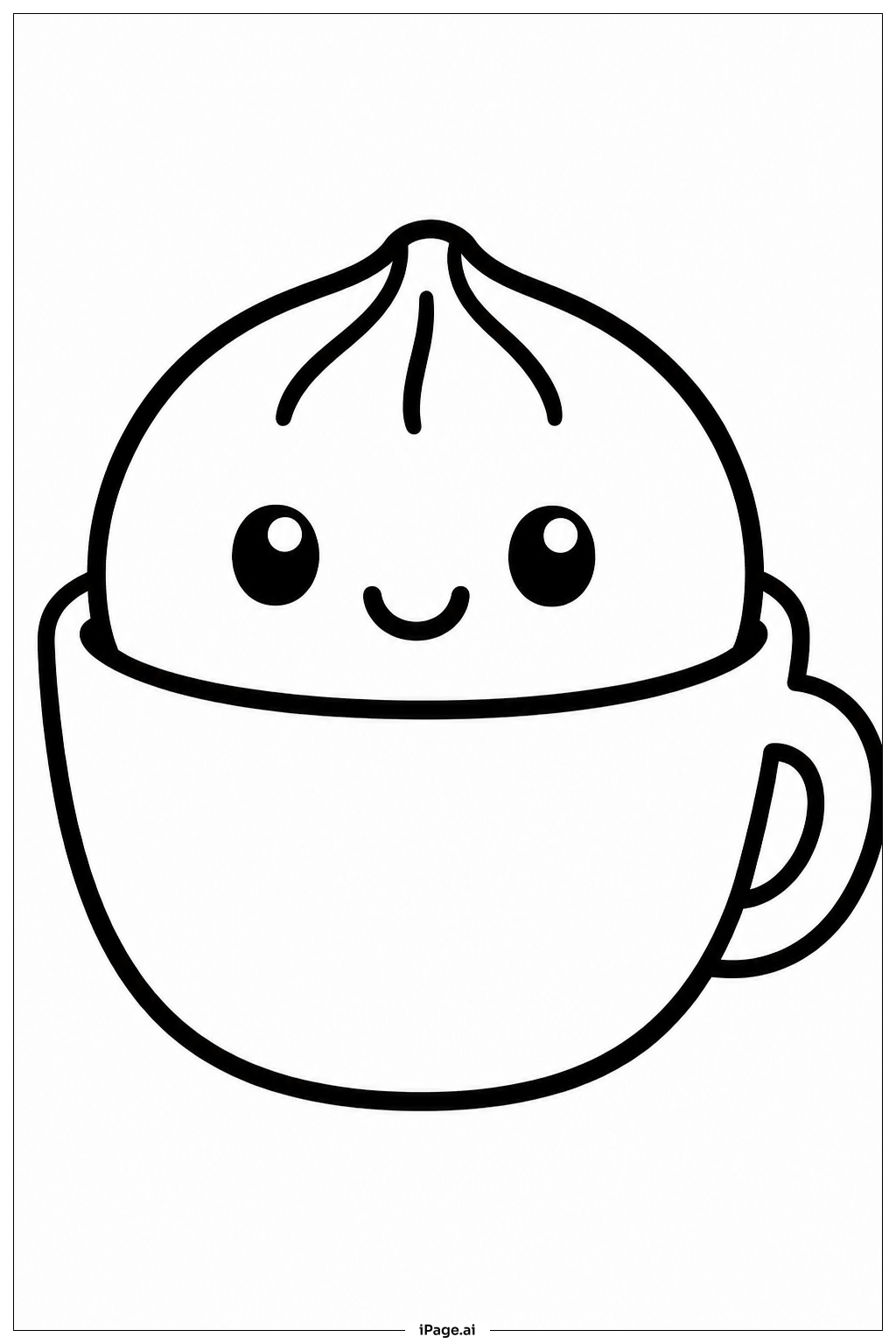
Coloring tips: How to color Dumpling In Cup coloring page well?
Start with the dumpling itself. Use a warm, creamy white or soft ivory for the dough to keep it looking fresh and delicious. Add a light golden-yellow or pale tan to the pleated folds to give them depth and dimension. For the dumpling's face, use soft pink for the cheeks, black or dark brown for the eyes, and a cheerful red or pink for the smile. The teacup is a great place to get creative — try pastel blue, mint green, lavender, or sunny yellow for a fun and friendly look. You can add polka dots, stripes, or floral patterns to the cup using contrasting colors. Use a slightly darker shade of the cup's base color for the handle to make it stand out. A soft beige or warm gray works well for any shadows or shading around the cup's rim and base.
Coloring challenges: Which parts are difficult to color and need attention for Dumpling In Cup coloring page?
• **Pleated Dumpling Folds:** The top of the dumpling features multiple small, overlapping folds of dough. These tight, closely spaced lines can be tricky to color neatly. Using a fine-tipped colored pencil or a thin marker will help you stay within each fold. Try using two shades of the same color — a lighter tone for the raised areas and a slightly darker tone for the creases — to create a realistic, three-dimensional effect.
• **Facial Details:** The dumpling's face includes small features like tiny eyes, rosy cheeks, and a little smile. These details are very small and require a steady hand and a sharp, fine-tipped tool. Take your time and use gentle, controlled strokes. A light touch works best here to avoid smudging or going outside the lines.
• **Cup Patterns and Decorations:** If the teacup has decorative patterns such as dots, swirls, or floral motifs, coloring each element individually without bleeding into neighboring areas can be challenging. Work slowly and use colors that contrast well with the cup's base color so the patterns stand out clearly.
• **Curved Surfaces and Shading:** Both the dumpling and the cup have rounded, curved shapes. Adding shading to these curves to make them look three-dimensional takes practice. Try coloring more lightly near the top where light would hit, and pressing slightly harder near the bottom or sides to create natural-looking shadows.
• **Small Spaces Between Elements:** The area where the dumpling sits inside the cup creates a narrow gap that can be difficult to color without accidentally going over the lines. Use a very fine tool for these tight spots and work patiently.
Benefits of coloring books: Advantages of drawing Dumpling In Cup coloring page
Coloring this fun Dumpling In Cup image offers a wonderful range of benefits for kids and beginners alike. The image's playful, food-themed design sparks imagination and makes the coloring experience feel like a creative adventure rather than a chore.
Working on the small pleated folds and tiny facial features helps children develop fine motor skills and hand-eye coordination. Carefully staying within the lines builds focus, patience, and attention to detail — skills that are useful in school and everyday life.
Choosing colors for the dumpling and the cup encourages creative thinking and self-expression. Kids get to make their own color choices, which builds confidence and a sense of ownership over their artwork.
The calming, repetitive motion of coloring also helps reduce stress and anxiety, making it a great quiet-time activity. Completing the image gives children a satisfying sense of accomplishment.
Finally, the cute food character theme can spark conversations about different cuisines and cultures, gently introducing children to the wider world in a fun and approachable way.