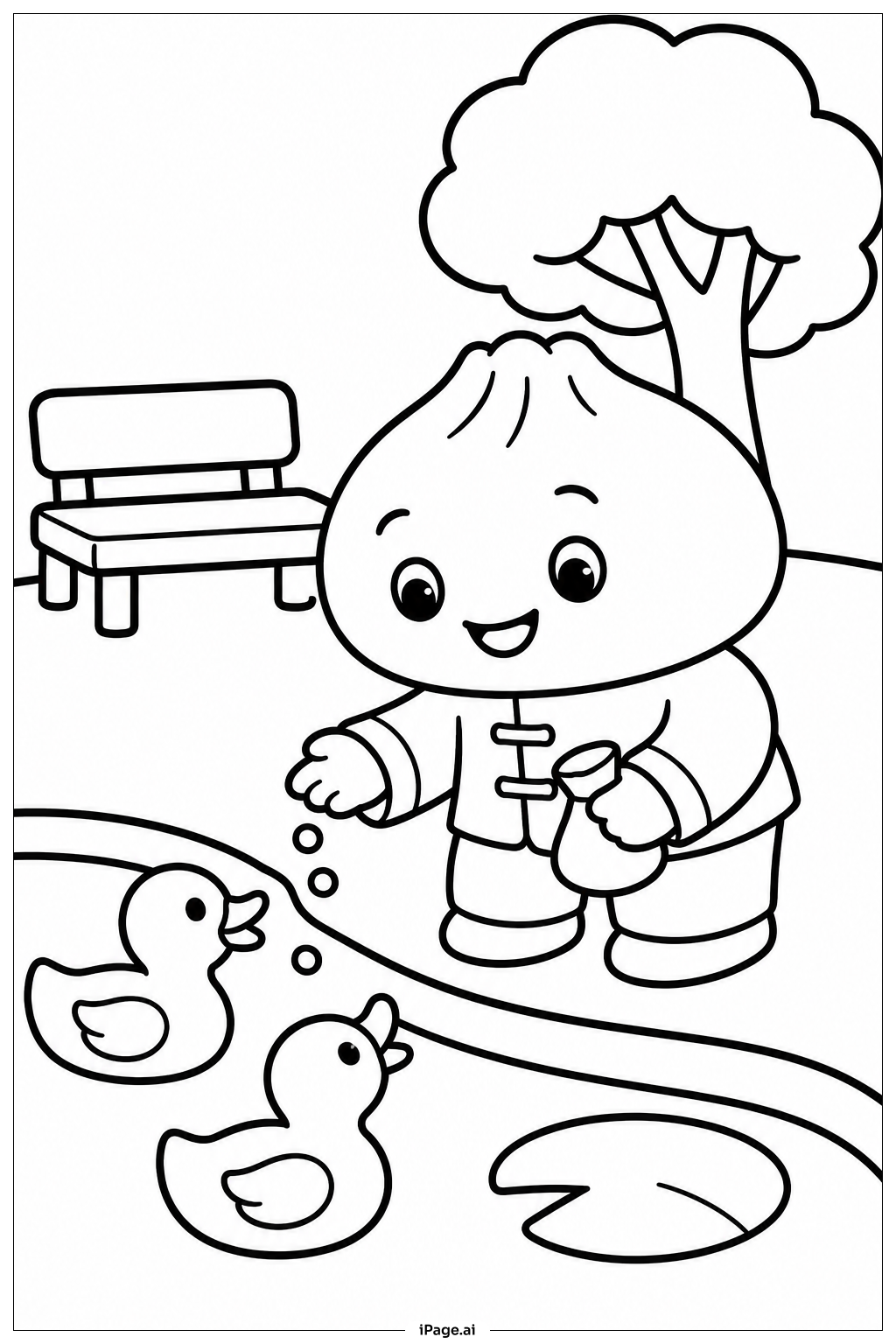
Coloring tips: How to color Dumpling At Pond coloring page well?
Start with Dumpling's body using a warm, soft color like light peach, cream, or pale yellow to make the character look friendly and cute. Use different shades of green for the grass, reeds, and lily pads to add depth. Color the pond with light blue and add darker blue or teal for the ripples and deeper water areas. Give the fish bright colors like orange, red, or yellow to make them pop. The frog looks great in classic green with a pale belly. Use soft sky blue for the background and white or light gray for the clouds. Dragonflies can be colored with shimmering blues and greens. Feel free to mix colors and experiment — there are no wrong choices here!
Coloring challenges: Which parts are difficult to color and need attention for Dumpling At Pond coloring page?
• **Dumpling's rounded shape:** Dumpling's smooth, curved body can be tricky to color evenly without streaks or uneven patches. Take your time and use light, gentle strokes to build up color gradually, especially around the edges where the shape curves.
• **Water and reflections:** Coloring the pond realistically requires blending multiple shades of blue and green. Capturing the look of ripples and light on water is a challenge, as you need to leave some areas lighter to suggest shine and movement without making it look flat.
• **Small details like dragonflies and fish:** These tiny elements have very little space to work with. Using a fine-tipped colored pencil or marker helps you stay within the lines and add detail without accidentally coloring over nearby areas.
• **Layering greens in nature elements:** The reeds, grass, and lily pads all use shades of green, but they should each look distinct. Mixing yellow-green for the grass, deeper green for the reeds, and blue-green for the lily pads helps separate them visually and adds a natural, lush feel to the scene.
• **Background balance:** Keeping the sky, clouds, and distant scenery light enough so that Dumpling and the pond remain the focal point takes careful planning. Using softer, less saturated colors in the background helps the main subject stand out without the scene feeling too busy.
Benefits of coloring books: Advantages of drawing Dumpling At Pond coloring page
Coloring this peaceful pond scene with Dumpling offers a wonderful mix of fun and learning. Choosing colors for water, plants, and animals helps kids explore how colors work together in nature. It builds focus and patience, especially when working on small details like the dragonflies and fish. The calming setting of a quiet pond naturally encourages a relaxed, mindful mood while coloring. For younger children, staying within the lines strengthens hand control and fine motor skills. Older kids can challenge themselves by blending colors and experimenting with light and shadow to make the water look real. Coloring also sparks creativity — there is no single right answer, so every child's version of Dumpling At Pond becomes their own unique artwork. It is a great screen-free activity that builds confidence and gives kids a satisfying sense of accomplishment when they finish.