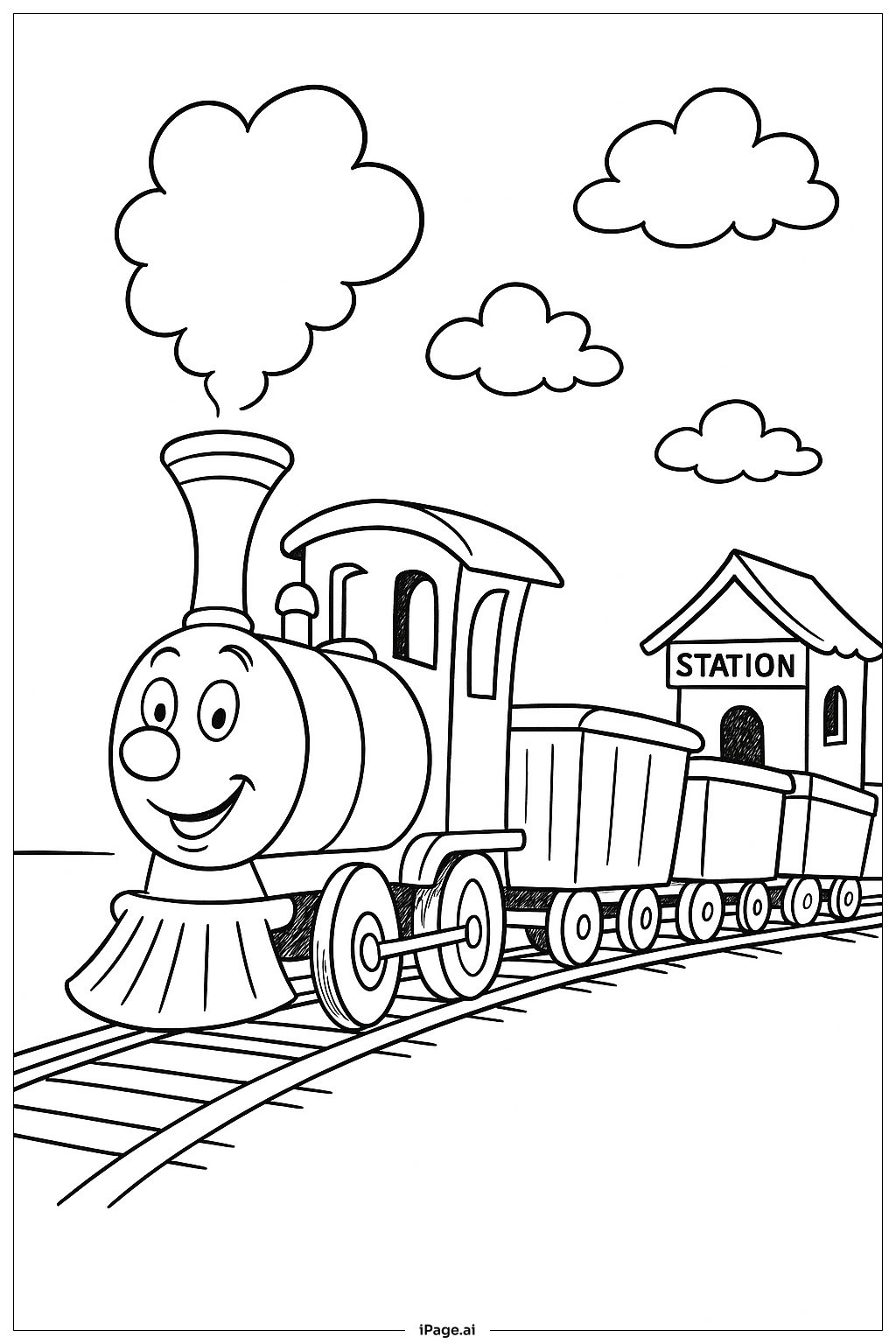
Coloring tips: How to color Dr. Seuss Train On Track coloring page well?
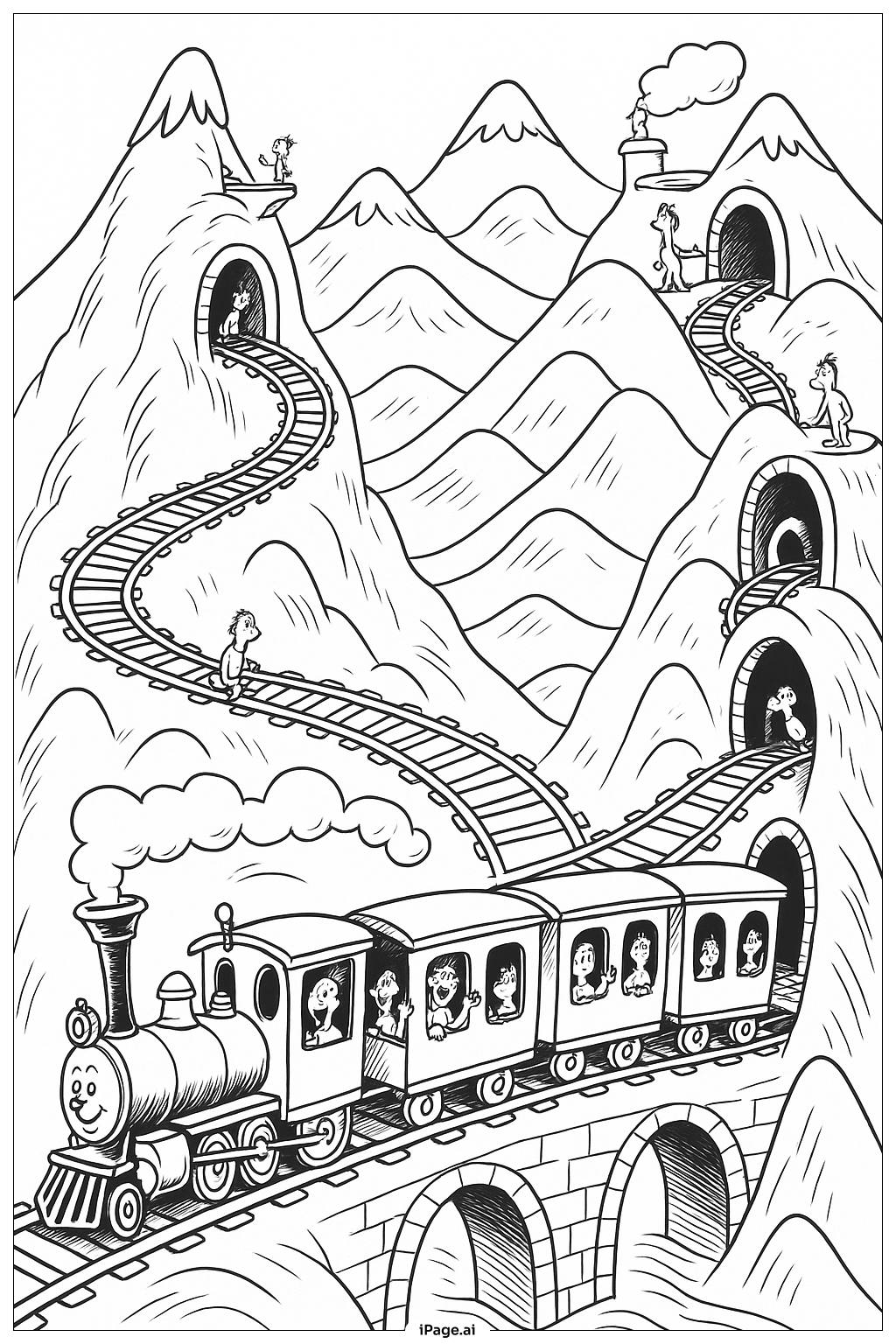
Start with the train engine and use bold, bright colors like red, orange, or royal blue to make it pop. The smokestack puffs can be colored in soft grays, whites, or even pastel purples to look fluffy and dreamy. Use contrasting colors for each train car — try yellow, green, and pink to give each one its own personality. The winding track can be done in warm browns or cool silvers. For the background, use light blues for the sky and bright greens for the hills to create a lively scene. The Seussian trees look great in unusual colors like teal, lime green, or magenta, since Dr. Seuss encourages imaginative, rule-free coloring. Use a darker shade of your base color to add shading along the edges of the train and trees. Let the characters on board be colorful and fun — no two need to match. This image is perfect for experimenting with bold color combos and creative choices.
Coloring challenges: Which parts are difficult to color and need attention for Dr. Seuss Train On Track coloring page?
• Curved and Looping Train Details: The Dr. Seuss train is full of swirls, bumps, and rounded edges that differ from realistic train designs. Staying inside these curvy outlines requires a steady hand. Younger colorists may find it tricky to follow the flowing lines without going outside them. Using a fine-tipped colored pencil or marker can help with precision in these areas.
• Smoke Swirls and Puffs: The smoke coming from the smokestack forms soft, overlapping spiral shapes. Blending colors smoothly within each swirl without making them look muddy can be challenging. It helps to use light, circular strokes and choose colors that transition gently into one another, such as white to light gray to lavender.
• Small Character Details: The tiny figures riding or waving from the train cars have small faces, hands, and clothing. These tiny areas are hard to color neatly, especially for younger children. Fine-tipped tools work best here, and it is okay to simplify or leave some small details lightly shaded rather than fully colored.
• Busy Background Elements: The Seussian landscape includes trees, hills, and decorative shapes that fill the background. With so many overlapping elements, it can be difficult to decide which colors go where without making the image feel too cluttered. Planning your color palette in advance and using lighter tones in the background can help the train stand out in the foreground.
• Maintaining a Consistent Color Theme: Because Dr. Seuss designs are so free and imaginative, there is no single "right" color choice. This freedom is exciting but can also feel overwhelming. Picking three to five main colors before starting and using them consistently throughout the image helps create a balanced and visually pleasing result.
Benefits of coloring books: Advantages of drawing Dr. Seuss Train On Track coloring page
Coloring this Dr. Seuss Train On Track page offers a wide range of wonderful benefits for kids and families alike. The whimsical, imaginative design invites colorists to think outside the box and experiment with bold, unexpected color choices, which helps build creative confidence and artistic expression from an early age.
Following the curvy, detailed outlines of the train and surrounding landscape is excellent practice for fine motor skills and hand-eye coordination. Children strengthen the small muscles in their hands as they carefully color within the playful shapes, which also supports handwriting development.
The focused nature of coloring encourages mindfulness and concentration. Sitting down to complete this page gives children a calm, screen-free activity that helps them practice patience and attention to detail.
Coloring scenes from beloved stories like Dr. Seuss also sparks imagination and storytelling. Kids may begin to create their own adventures for the characters on the train, boosting language skills and creative thinking.
Sharing and comparing finished pages with friends or family members opens the door to conversations about color, art, and personal choices. This social dimension of coloring helps build communication skills and self-expression.
Overall, this fun and friendly coloring page makes learning feel like play, which is exactly what Dr. Seuss always intended.