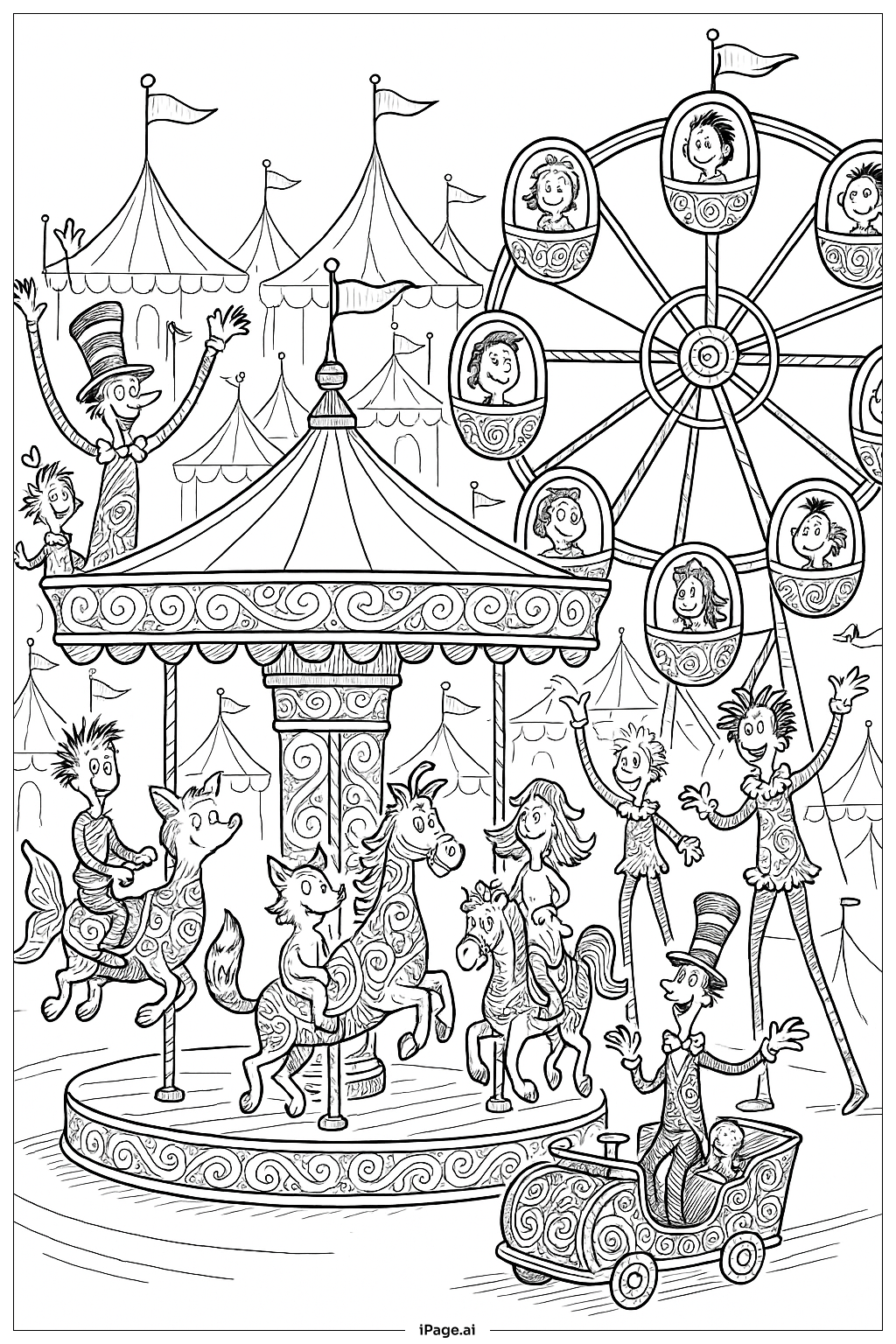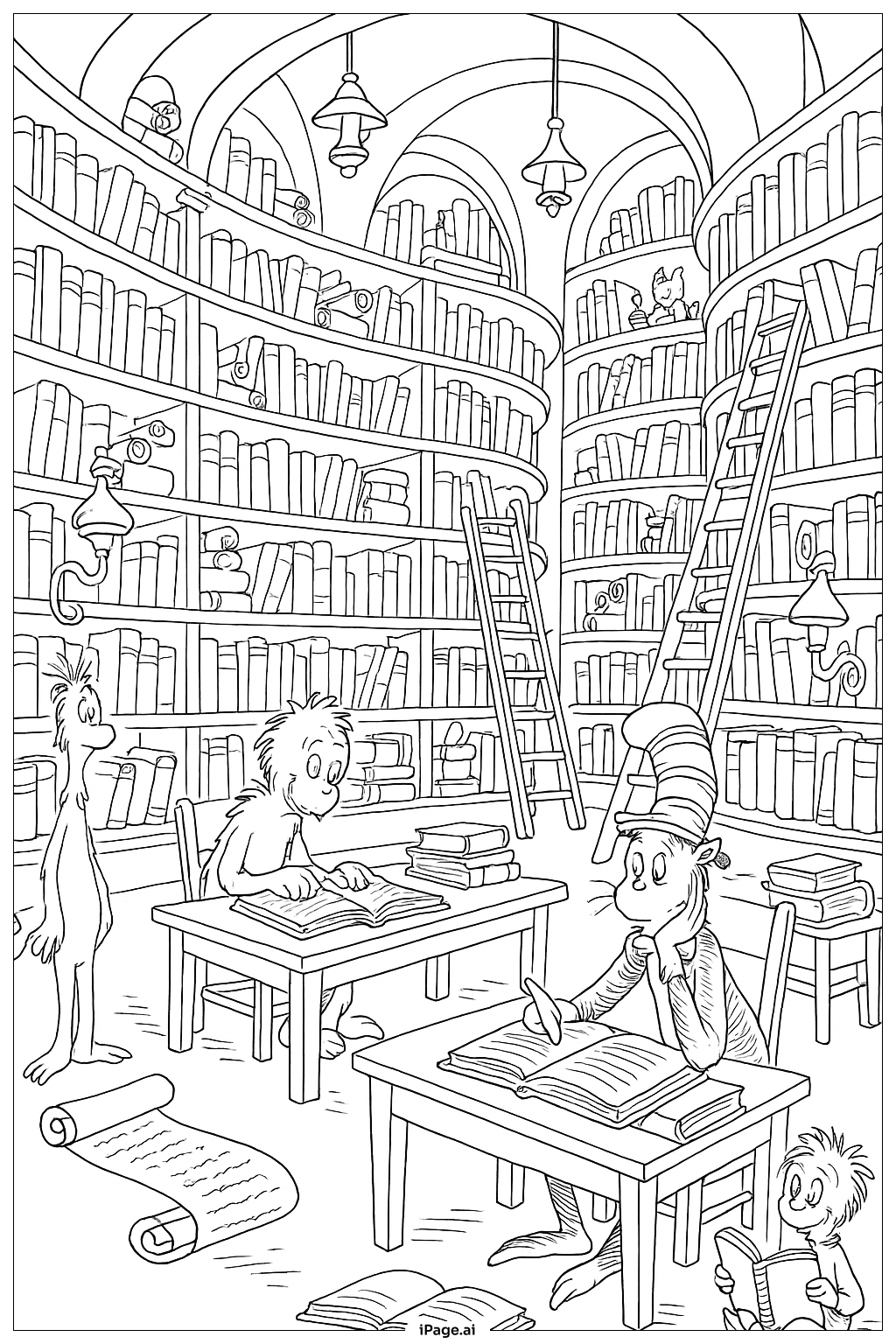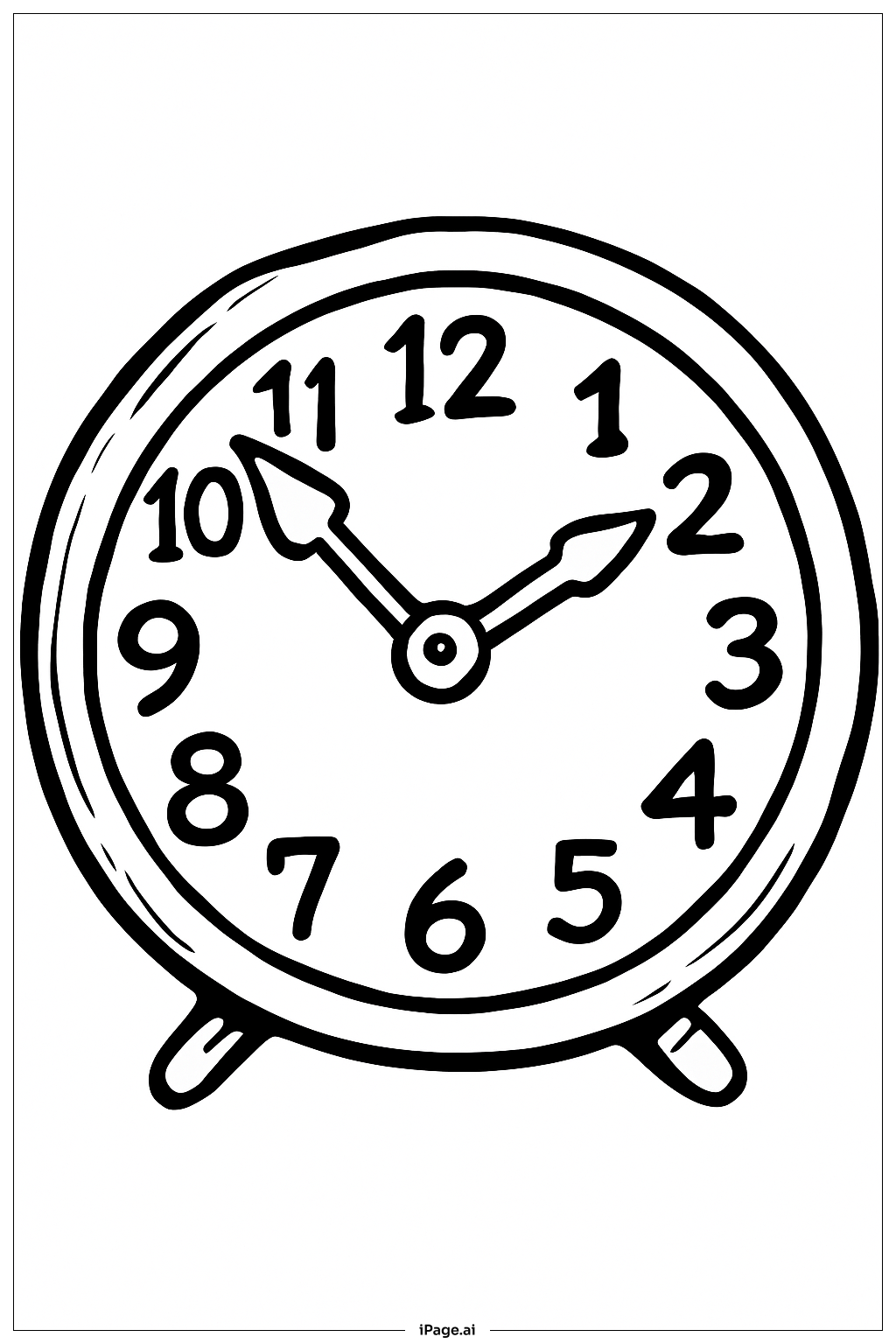
Coloring tips: How to color Dr. Seuss Little Clock coloring page well?
Start with the clock face — try a bright white or soft yellow to make the numbers stand out. Use bold, contrasting colors like red or blue for the clock hands so they pop. For the clock body and base, go wild with Dr. Seuss-inspired colors — think stripes of orange, purple, and green. The wobbly, curvy base looks great in warm tones like coral or gold. Use a lighter shade first, then layer a darker tone on top to add depth and dimension. For the background, pick a sky blue or a cheerful pastel to give the scene an airy, storybook feel. Don't be afraid to use unexpected color combinations — Dr. Seuss always encouraged creativity over rules. Gel pens or colored pencils work wonderfully for the fine details, while markers or crayons are great for filling in the larger areas quickly and boldly.
Coloring challenges: Which parts are difficult to color and need attention for Dr. Seuss Little Clock coloring page?
• Clock Face Details: The round clock face contains small numbers and thin clock hands arranged in a tight space. Staying inside these small areas without smudging or overlapping requires a fine-tipped tool and a steady hand. Young colorists may find it tricky to color each number separately without bleeding into the surrounding circle.
• Wobbly Curved Lines: Dr. Seuss's signature style features lots of wavy, irregular curves and bending shapes. Following these outlines cleanly with a brush or marker can be challenging, especially near tight bends and corners. Using a sharp colored pencil or a fine-liner can help keep colors contained within each curved section.
• Striped Patterns on the Body: If the clock body features stripes or layered decorative bands, keeping each stripe a different color without the colors mixing at the borders requires patience. Letting one stripe dry completely before moving to the next is an important step, especially when using markers or watercolors.
• Small Decorative Accents: The tiny swirls, dots, and quirky ornamental details scattered around the clock are very small. These areas are difficult to color neatly and may require a very fine-tipped pen or a well-sharpened pencil. Rushing through these details can make the finished piece look messy.
• Color Consistency Across the Base: The tall, towering base of the clock has multiple sections that need to look visually connected. Choosing a consistent color palette and applying even pressure throughout helps avoid patchy or uneven coverage, which is a common challenge for younger colorists working on larger shaped areas.
Benefits of coloring books: Advantages of drawing Dr. Seuss Little Clock coloring page
Coloring this Dr. Seuss Little Clock page is a wonderful activity packed with fun and learning. Here are some great reasons to pick up those crayons and get started.
First, it helps build fine motor skills. Carefully coloring inside the curvy lines and small details strengthens hand-eye coordination and pencil control, which is especially important for young children.
Second, it sparks imagination and creativity. The playful, Seussian design encourages kids to think outside the box and experiment with unusual, bold color combinations — just like Dr. Seuss himself would.
Third, it introduces early learning concepts. The clock face with its numbers and hands gives children a gentle, fun way to become familiar with telling time while they color.
Fourth, it builds focus and patience. Completing a detailed coloring page teaches children to slow down, concentrate, and take pride in finishing a task.
Fifth, it provides a calming, screen-free activity. Sitting quietly and coloring is a great way to wind down, reduce stress, and enjoy a peaceful creative moment — for both kids and adults.
Finally, it connects children to beloved literature. Engaging with Dr. Seuss imagery nurtures a love of storytelling and the magical worlds found in books, encouraging a lifelong appreciation for reading and creativity.