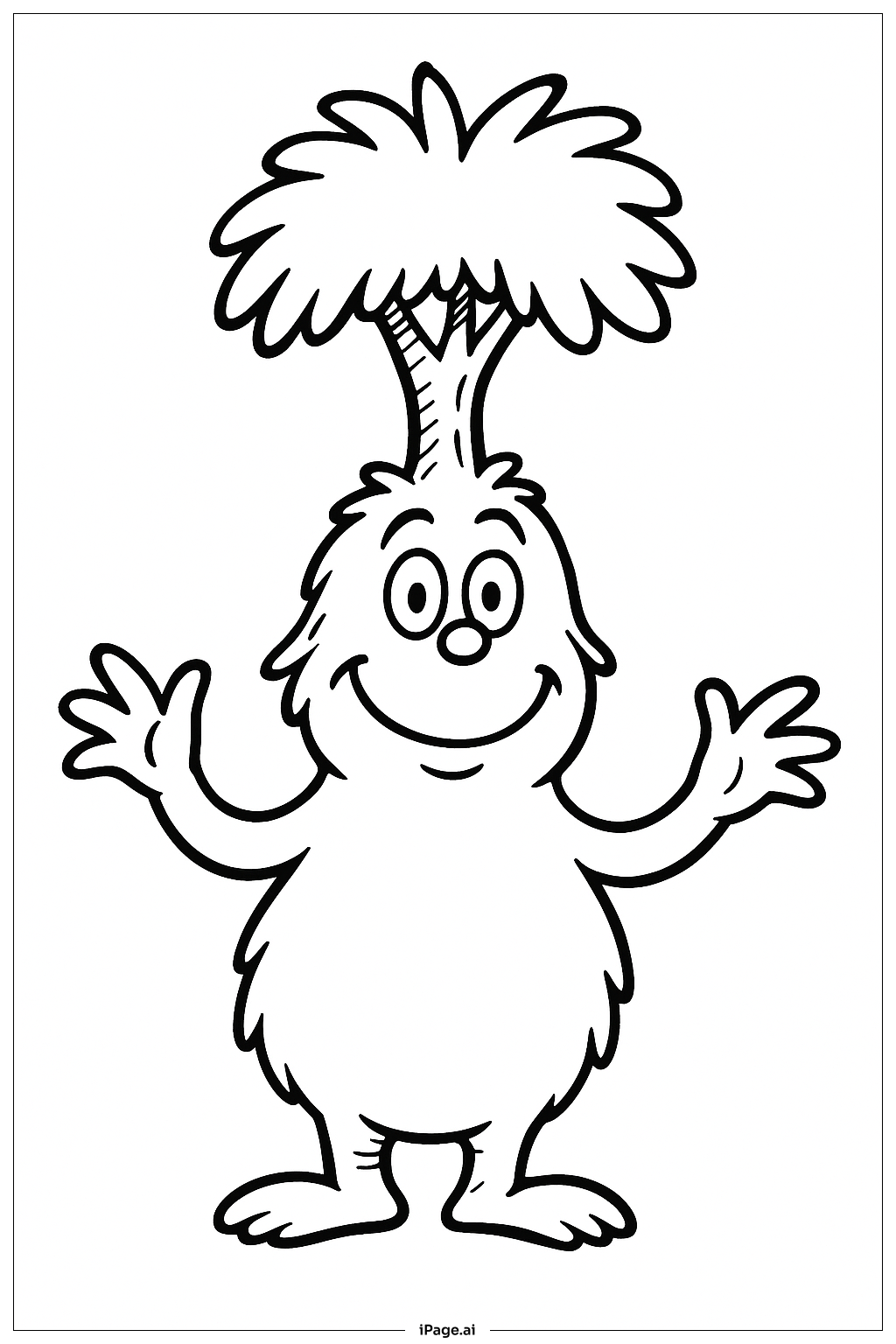
Coloring tips: How to color Dr Seuss Friendly Tree Creature coloring page well?
Start with the tree bark using various shades of brown, mixing lighter tans and deeper chocolate tones to create dimension. Add touches of gray or green to suggest moss growing on the trunk. Color the leafy hair tufts in bright greens, yellows, or even fantastical colors like purple or pink to capture that signature Dr Seuss magic. The large eyes can be colored bright blue or green with black pupils, leaving white highlights for sparkle. Add rosy pink or peach to the cheeks for extra friendliness. Consider using earthy oranges and reds in the bark crevices to suggest autumn warmth. The background could feature soft blues or sunset colors. Use colored pencils for detailed bark texture or markers for bold, vibrant foliage. Experiment with unexpected color combinations to embrace the whimsical Dr Seuss spirit.
Coloring challenges: Which parts are difficult to color and need attention for Dr Seuss Friendly Tree Creature coloring page?
• Bark Texture Details: The intricate swirls and patterns in the tree bark require careful attention and patience. Young colorists may find it challenging to maintain consistent shading within the curved lines and grooves. Using different pressure levels with colored pencils can help create realistic wood grain, but this technique takes practice to master without making the texture look muddy or inconsistent.
• Branch and Limb Complexity: The twisting branches that serve as arms contain multiple overlapping elements and varying thicknesses. It can be difficult to distinguish where one branch ends and another begins, especially where they intersect. Choosing complementary shades to differentiate these areas while maintaining a cohesive color scheme requires planning and color theory knowledge.
• Facial Feature Precision: The large expressive eyes and smile need steady hands for coloring within the lines. The eyes especially require careful work to keep the pupils centered and the highlights crisp. Young children may struggle with the fine motor control needed for these smaller detailed areas without colors bleeding into adjacent sections.
• Maintaining Visual Balance: With so many different elements including trunk, branches, leaves, face, and roots, it is challenging to create a harmonious color palette that does not overwhelm the viewer. Deciding which areas should be bold focal points versus subtle supporting details requires artistic judgment that develops with experience.
Benefits of coloring books: Advantages of drawing Dr Seuss Friendly Tree Creature coloring page
Coloring this friendly tree creature offers wonderful developmental benefits for children. The intricate bark patterns help improve fine motor skills and hand-eye coordination as kids carefully navigate the detailed lines. The varying sizes of spaces, from large trunk areas to tiny leaf sections, allow children to practice different coloring techniques and pressure control. This Dr Seuss-inspired character encourages creativity and imagination, letting kids experiment with realistic or fantastical color choices without fear of being wrong. The friendly facial expression creates an emotional connection that makes the coloring experience joyful and engaging. Working on the complex branch structures builds focus and concentration while teaching patience through detailed work. The nature theme provides opportunities to discuss trees, forests, and environmental appreciation. Successfully completing this moderately challenging page builds confidence and gives children a sense of accomplishment they can proudly display.