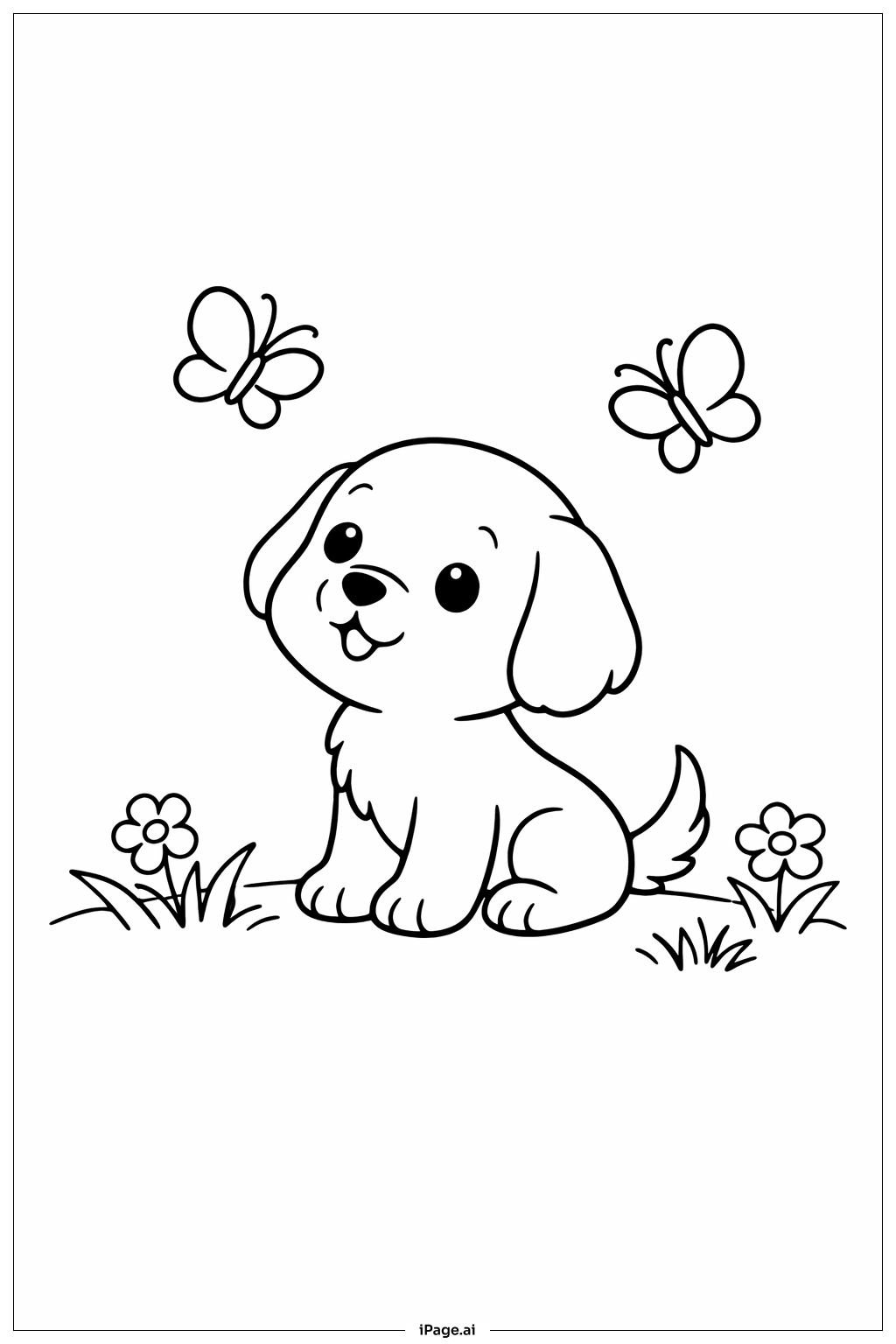
Coloring tips: How to color Puppy With Butterflies coloring page well?
Start with the puppy's fur. Light golden yellow or warm tan works well for a classic look. You can also try soft brown or creamy white for a different breed feel. Add gentle shading on the belly, ears, and legs to give the fur some depth.
For the butterflies, this is your chance to go bold! Use bright colors like orange, yellow, purple, and blue to make them pop. Each butterfly can be a different color to keep things lively and fun.
Color the flowers in soft pinks, lavenders, and whites. Use light green for the stems and grass to keep the garden feel fresh.
For the puppy's eyes, try a warm brown with a small white highlight dot — it brings the face to life right away.
Younger colorists can keep things simple with flat, bright colors. Older kids can try blending or layering colored pencils to add texture to the fur and delicate gradients on the butterfly wings. Either way, let your creativity lead!
Coloring challenges: Which parts are difficult to color and need attention for Puppy With Butterflies coloring page?
• Puppy Fur Texture: The puppy's body is covered in soft, fluffy fur that requires careful attention. Capturing a natural fur look means coloring in short, curved strokes that follow the direction of the fur. Simply filling in the shape with one flat color can make the pup look stiff. Layering two or three shades — a base tone, a slightly darker shade for shadows, and a lighter tone for highlights — will make the fur feel soft and three-dimensional.
• Butterfly Wing Patterns: Butterfly wings often have detailed vein lines, spots, and symmetrical patterns inside them. Staying within these tiny sections without smudging neighboring areas can be tricky, especially with markers or thick crayons. Using fine-tipped colored pencils or thin markers gives you the most control here. It also helps to color one wing fully before moving to the other.
• Small Facial Features: The puppy's face has small but important details — the eyes, nose, and mouth. These tiny areas are easy to overcolor or accidentally smear. A light touch is key. For the eyes, use a darker ring around the iris and leave a tiny white spot for the light reflection. This small detail makes a big difference in bringing the face to life.
• Overlapping Elements: In some areas, butterfly wings, flower petals, and puppy fur overlap. Deciding which element sits in front and coloring it slightly darker or with more contrast helps separate the layers visually. Without this, the image can look flat and the individual elements blend together in a confusing way.
Benefits of coloring books: Advantages of drawing Puppy With Butterflies coloring page
Coloring this sweet puppy and butterfly scene offers a wonderful range of benefits for kids of all ages.
For younger children, it builds essential fine motor skills. Holding a crayon, staying inside the lines, and making careful strokes all strengthen the small muscles in the hands and fingers — skills that also support early writing development.
The image naturally encourages creativity. Choosing colors for the butterfly wings, the puppy's fur, and the garden flowers invites kids to make their own artistic decisions. There are no wrong answers, and that freedom builds confidence.
Focusing on a detailed scene like this also supports concentration and patience. Children learn to slow down, pay attention to small areas, and work through a task from start to finish — habits that carry over into school and everyday life.
The peaceful subject matter — a playful puppy surrounded by gentle butterflies — has a naturally calming effect. Coloring it can help children unwind after a busy day, reduce feelings of stress, and enter a relaxed, focused state.
Finally, completing the page gives kids a real sense of pride and accomplishment. It is a finished piece of art they created themselves, which is a wonderful boost to self-esteem and a great reminder that creativity is something everyone can enjoy.