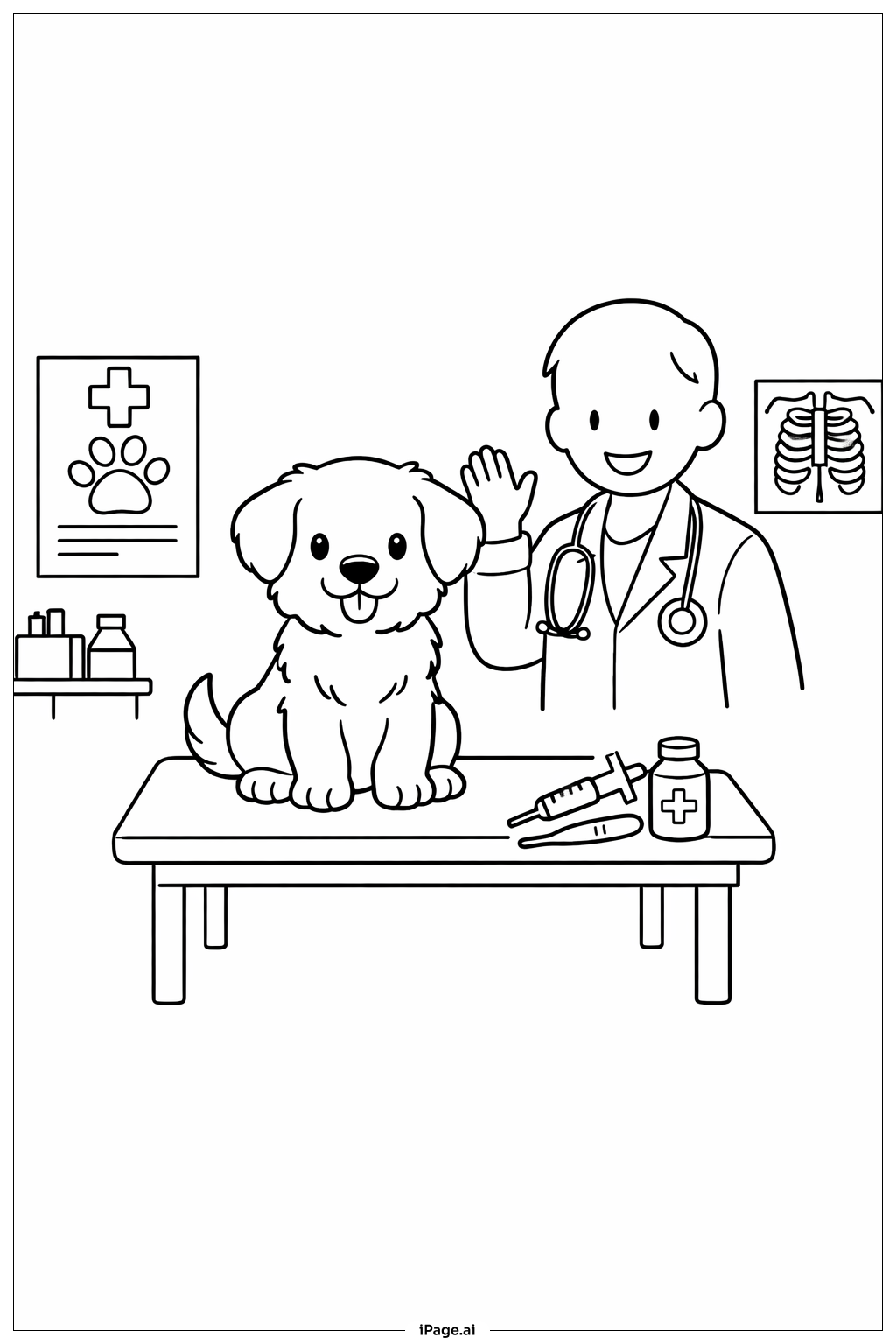
Coloring tips: How to color Puppy Visiting Vet coloring page well?
Start with the puppy's fur. Golden or light brown shades work beautifully for a warm, fluffy look. You can also try gray, black, or spotted patterns to make your puppy unique. Use pink for the puppy's nose, tongue, and inner ears.
For the veterinarian, color the lab coat white or light blue. Add skin tones to the face and hands, and choose any hair color you like. The stethoscope looks great in silver or dark gray.
Use soft greens or blues for the clinic walls to create a calm, clean feeling. Color the medicine bottles in bright reds, yellows, and greens to make the shelves pop. The examination table can be white or light gray.
The pet owner's clothing is a fun place to be creative. Try bright, cheerful colors like orange, purple, or teal. Add warm skin tones and a friendly smile.
Use a bright yellow or white for the overhead lamp to show it is glowing. Take your time with small details like the dog anatomy chart on the wall — even simple splashes of color there make the whole scene come alive.
Coloring challenges: Which parts are difficult to color and need attention for Puppy Visiting Vet coloring page?
• Puppy Fur Texture: The puppy's fur has many short, overlapping lines that create a fluffy, soft texture. Staying inside all these tiny lines can be tricky, especially around the ears, paws, and tail. Younger colorists may find it easier to use a single base color first, then add darker shades along the edges to suggest depth and fluffiness without needing to follow every single line perfectly.
• Stethoscope Details: The stethoscope is a small, curved object with thin tubes and a round chest piece. Its narrow shape makes it hard to color neatly with regular crayons or thick markers. Fine-tipped colored pencils or thin markers work best here. Try using silver or dark gray to keep it looking realistic and medical.
• Facial Expressions: Both the puppy and the veterinarian have detailed facial features, including eyes, eyebrows, noses, and mouths. These small areas require careful, precise coloring to bring out emotion without smudging across the lines. Use light, gentle strokes and take your time. A sharp pencil tip is very helpful for these tiny details.
• Background Complexity: The clinic background includes shelves, bottles, a wall chart, and a lamp, all layered behind the main figures. Coloring this area without accidentally overlapping onto the characters takes patience. It helps to color the background details first before moving to the foreground figures.
• Overlapping Figures: The veterinarian's hand and stethoscope overlap with the puppy's body, creating a zone where two different color areas meet closely. Keeping these sections cleanly separated requires steady hands and careful attention to boundaries. Using a light pencil outline before applying color can help guide your work in these overlapping spots.
Benefits of coloring books: Advantages of drawing Puppy Visiting Vet coloring page
Coloring this Puppy Visiting Vet scene offers a wonderful mix of fun, learning, and emotional growth for children of all ages.
First, it helps children feel more comfortable about veterinary visits. Seeing a puppy being cared for in a gentle, friendly setting can ease any worries kids might have about taking their own pets to the vet. It opens the door to great conversations about animal health and responsibility.
Second, coloring builds important fine motor skills. Filling in small areas like the stethoscope, the puppy's features, and the background details requires steady hands and careful control, which strengthens the muscles used for writing.
Third, this scene sparks creativity. Children get to choose their own colors for the puppy's fur, the vet's clothing, and the clinic environment. There are no wrong choices, and every finished page is totally unique.
Fourth, it encourages empathy and kindness. The caring relationship shown between the vet, the owner, and the puppy teaches children to value compassion toward animals.
Finally, coloring is a calming, focused activity that helps reduce stress and improve concentration. Sitting quietly and working through a detailed image builds patience and attention to detail — skills that are useful in school and everyday life.