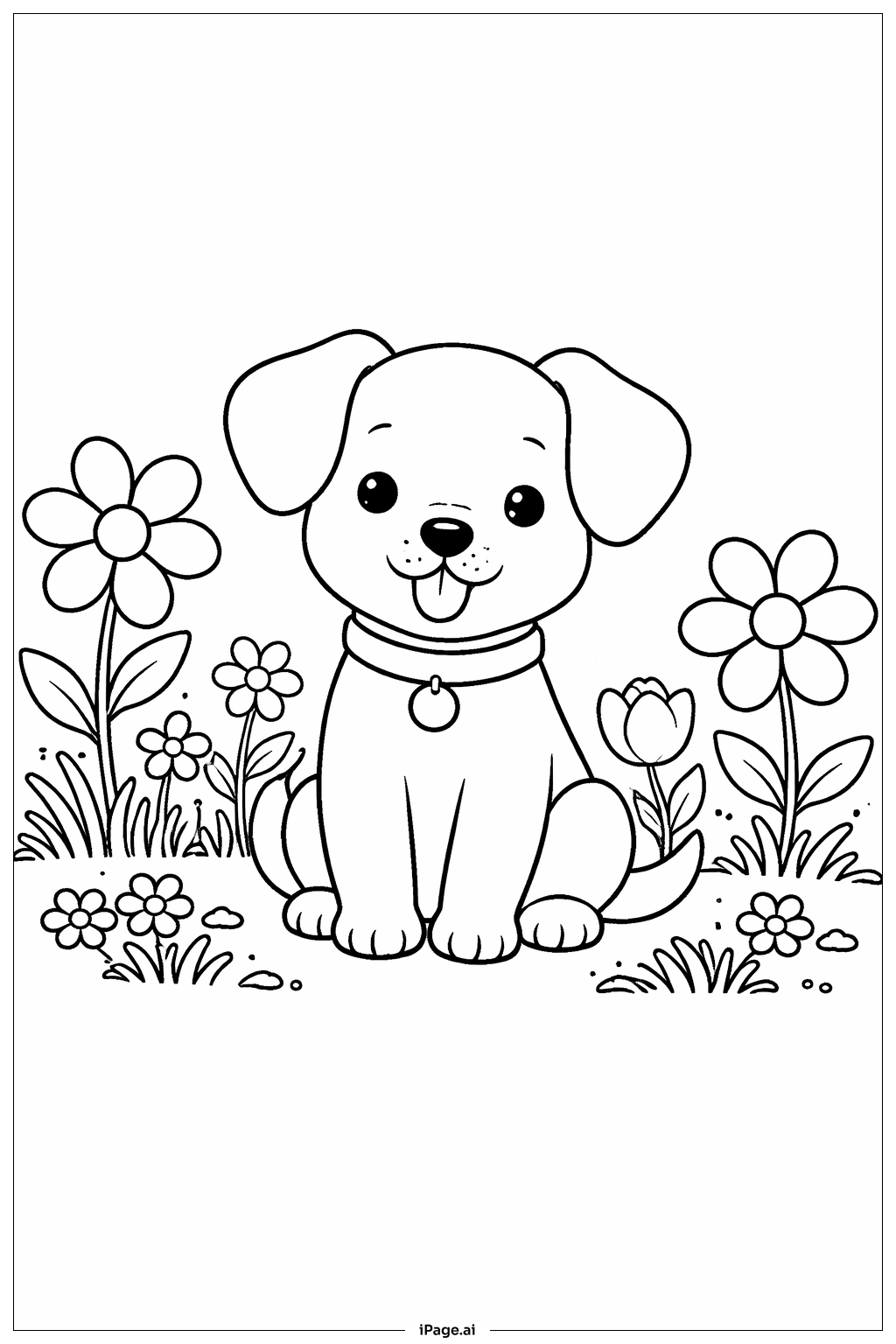
Coloring tips: How to color Puppy In Flower Garden coloring page well?
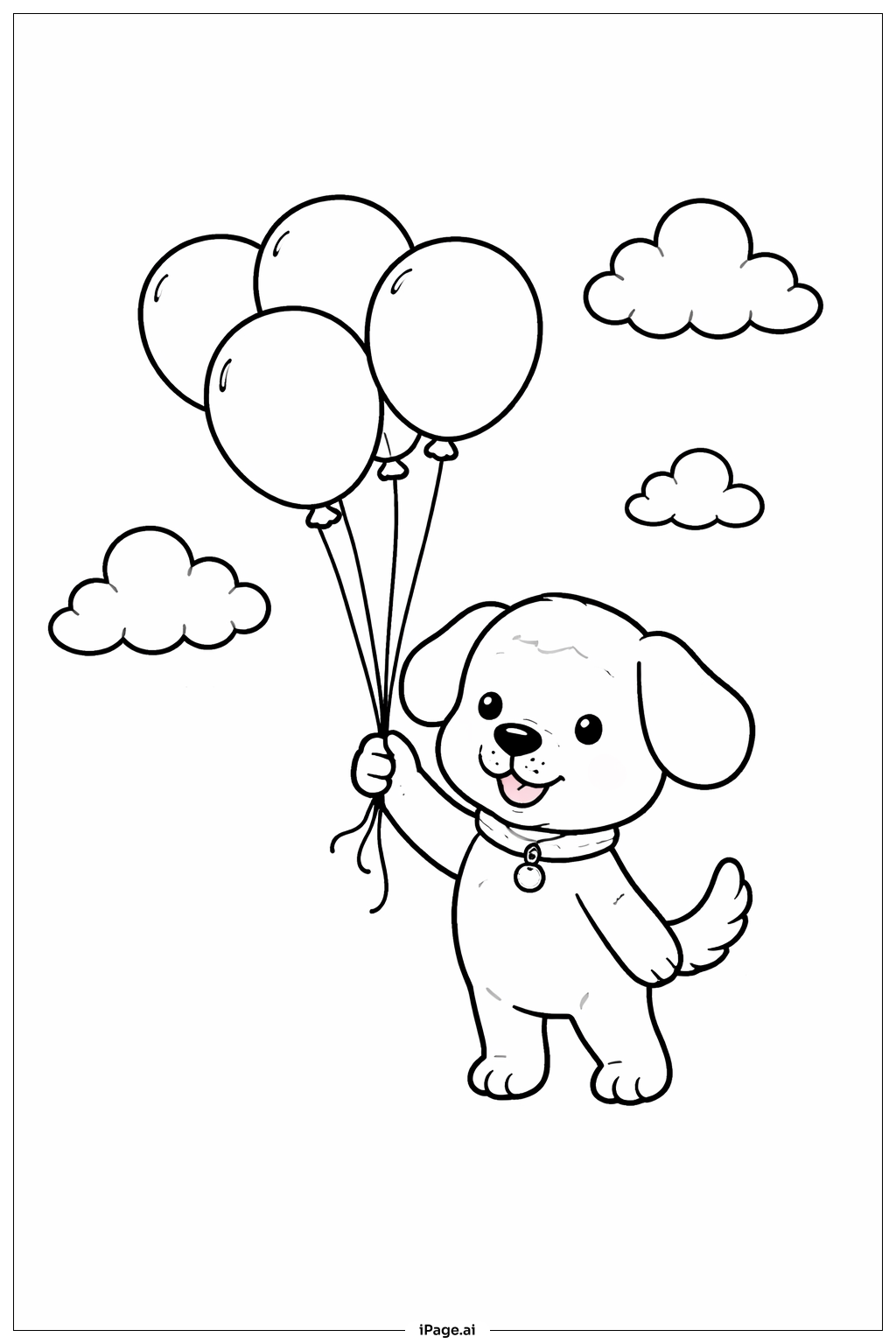
Use bright and cheerful colors to make the scene lively. Color the puppy in soft browns, tans, or even white to give it a natural look. You can make the collar red, blue, or green to add a splash of fun. For the flowers, use a mix of reds, yellows, pinks, and purples to create a colorful garden. The grass should be green, but feel free to use different shades to show light and shadow. Don't forget to color the sky above in blue or leave it white for a sunny day. Use small brush strokes or colored pencils for the puppy's details, and bigger strokes or crayons for the flowers and background.
Coloring challenges: Which parts are difficult to color and need attention for Puppy In Flower Garden coloring page?
1. The puppy's face has small details like eyes, nose, mouth, and whiskers, which need careful coloring to keep the cute expression clear.
2. The flowers vary in size and shape, so choosing different colors without mixing them up can be a bit tricky.
3. The grass and leaves have small lines that might be hard for younger kids to color inside without crossing the lines.
4. Coloring the puppy's collar and tag requires precision to keep the round shape neat.
5. Balancing bright colors in the flowers and soft colors on the puppy can be challenging to make sure the puppy stands out but the garden looks colorful too.
Benefits of coloring books: Advantages of drawing Puppy In Flower Garden coloring page
Coloring this picture helps kids improve their hand-eye coordination and fine motor skills. It encourages creativity as they decide which colors to use for the puppy and flowers. Coloring different sizes of flowers and the puppy teaches focus and patience. It also helps children learn about colors and how to combine them to create a pretty scene. Most of all, coloring this happy puppy in the flower garden can bring joy and relaxation, making the coloring time fun and calming.