Coloring tips: How to color Divine Mercy Candle Altar coloring page well?
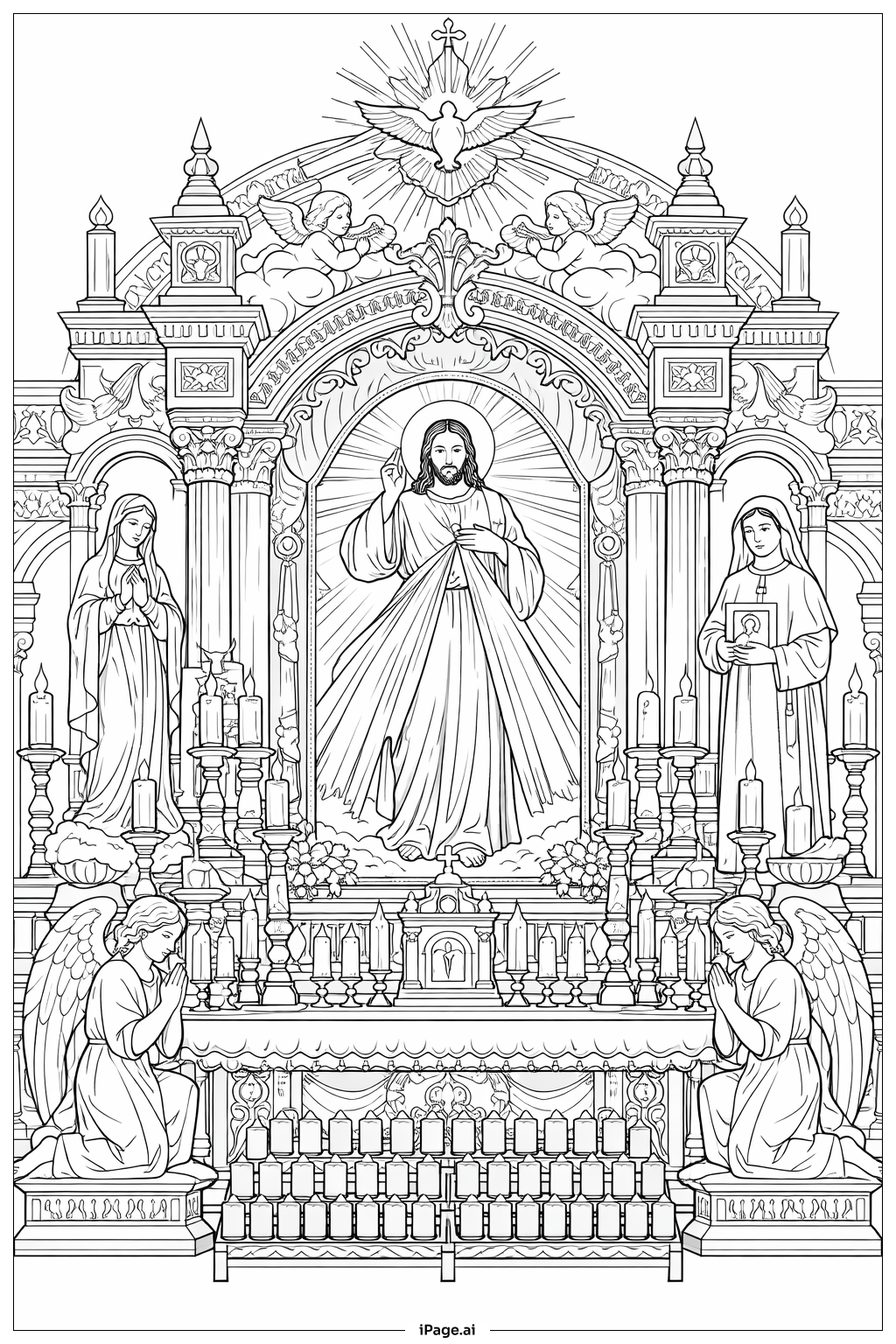
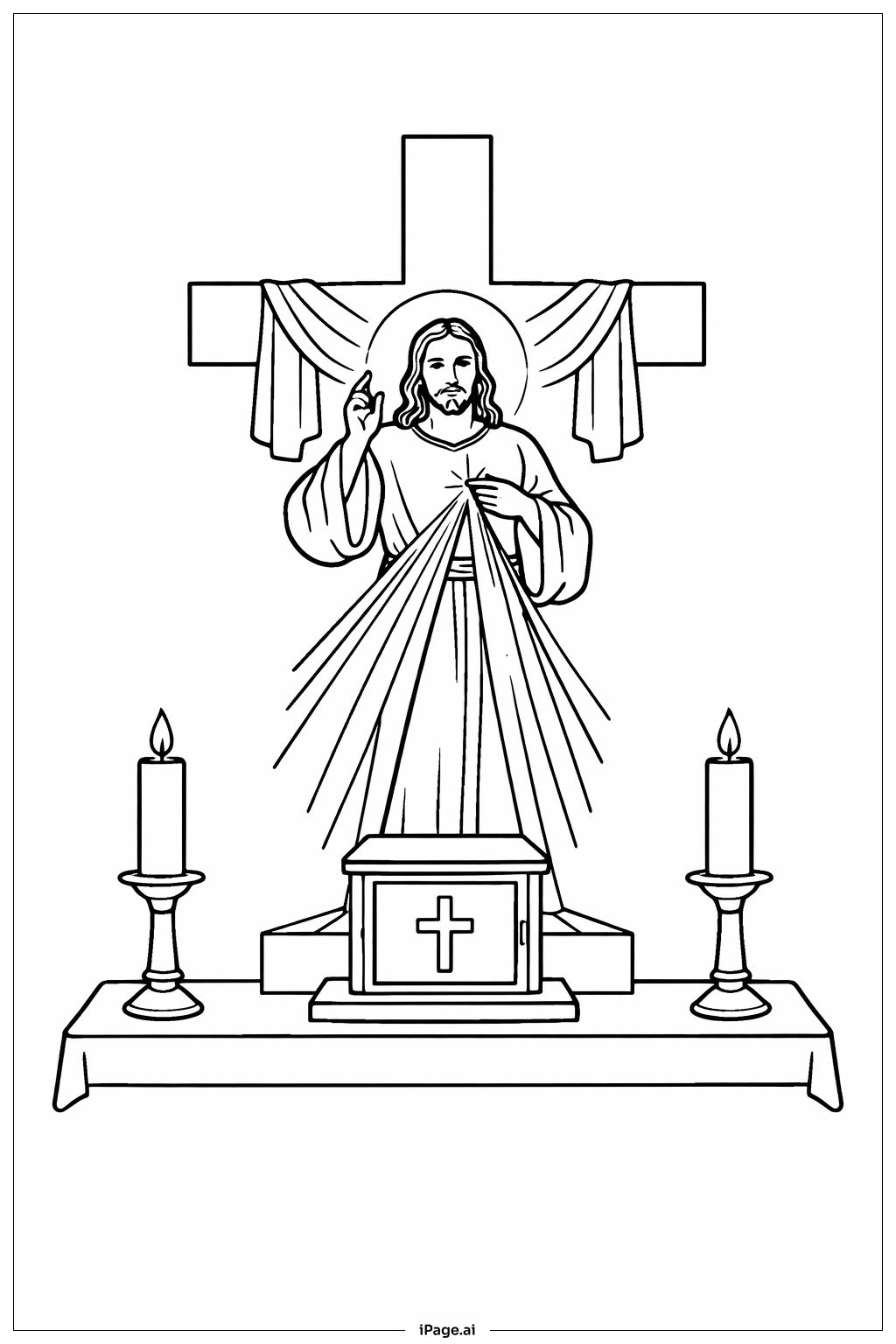
Begin with the candles using warm yellows and soft oranges for the flames, transitioning to cream or white for the candle bodies. The divine rays can be colored with gentle golden yellows or light blues to represent heavenly light. For the floral arrangements, use traditional rose colors like deep reds, soft pinks, or pure whites, with green leaves in various shades from olive to emerald. The altar cloth works beautifully in white, cream, or soft purple, which holds special meaning in religious settings. Consider adding subtle shading with light gray or beige to create dimension on the fabric folds. The frame around the central image can be gold, bronze, or wooden brown tones to add elegance and importance to the sacred imagery.
Coloring challenges: Which parts are difficult to color and need attention for Divine Mercy Candle Altar coloring page?
• Candle Flame Details: The flames require careful attention to create a realistic glow effect. Blending warm yellows at the center with oranges and reds at the edges can be challenging. Young colorists may find it tricky to keep the flame shapes smooth and natural-looking while maintaining the light source consistency across multiple candles.
• Divine Light Rays: The radiating beams of light emanating from the central image need gradual color transitions to appear luminous and ethereal. Creating the illusion of light spreading outward requires understanding of color gradation, starting bright at the source and fading gently. This technique demands patience and a light touch with coloring tools.
• Fabric Folds and Draping: The altar cloth features flowing fabric with multiple folds and shadows that create depth. Identifying where shadows fall and highlights appear requires spatial awareness. Younger artists may struggle with choosing appropriate darker and lighter shades to make the cloth look three-dimensional rather than flat.
• Floral Complexity: The rose arrangements contain layered petals with intricate details and overlapping leaves. Each petal needs individual attention to show depth and texture. Coordinating multiple flower colors while maintaining visual harmony across the entire arrangement presents a moderate challenge for less experienced colorists.
• Overall Composition Balance: Maintaining color harmony across candles, flowers, fabric, and sacred imagery requires planning. Ensuring no single element overwhelms the others while creating a cohesive, peaceful atmosphere demands thoughtful color selection and restraint throughout the entire coloring process.
Benefits of coloring books: Advantages of drawing Divine Mercy Candle Altar coloring page
Coloring this Divine Mercy altar scene offers wonderful benefits for children and families. It encourages patience and focus as they work through the detailed elements, helping develop fine motor skills and hand-eye coordination. The sacred theme provides an opportunity for quiet reflection and spiritual connection, making it perfect for peaceful family time or individual meditation. Working with the symmetrical design helps children understand balance and composition. The variety of elements, from smooth candles to detailed flowers, allows practice with different coloring techniques. Choosing harmonious colors teaches artistic decision-making and planning. This image also serves as a gentle introduction to religious art and symbolism, fostering cultural and spiritual awareness. Completing such a meaningful scene builds confidence and provides a sense of accomplishment that can be displayed or shared with others in the faith community.