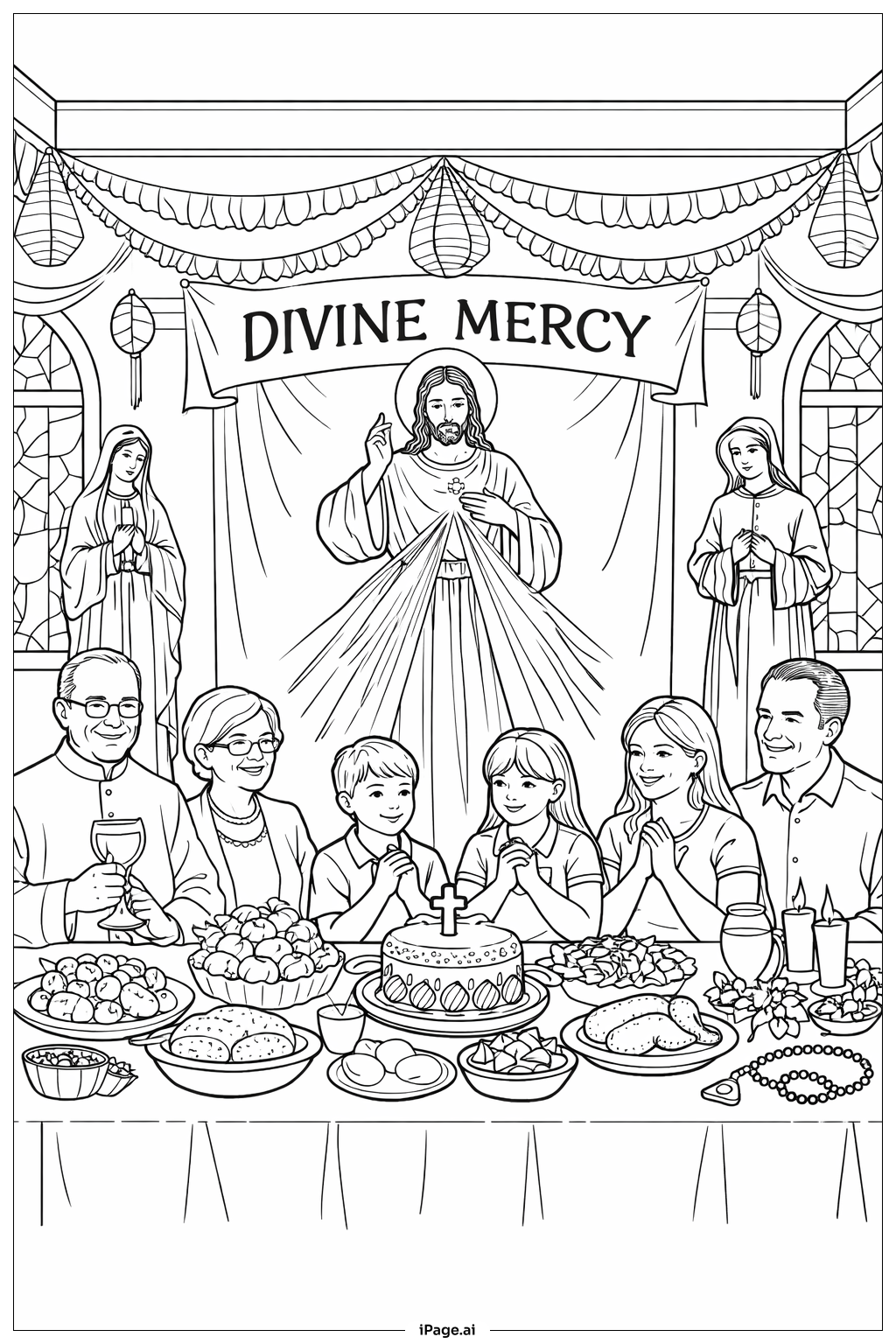
Coloring tips: How to color Divine Mercy Feast Celebration coloring page well?
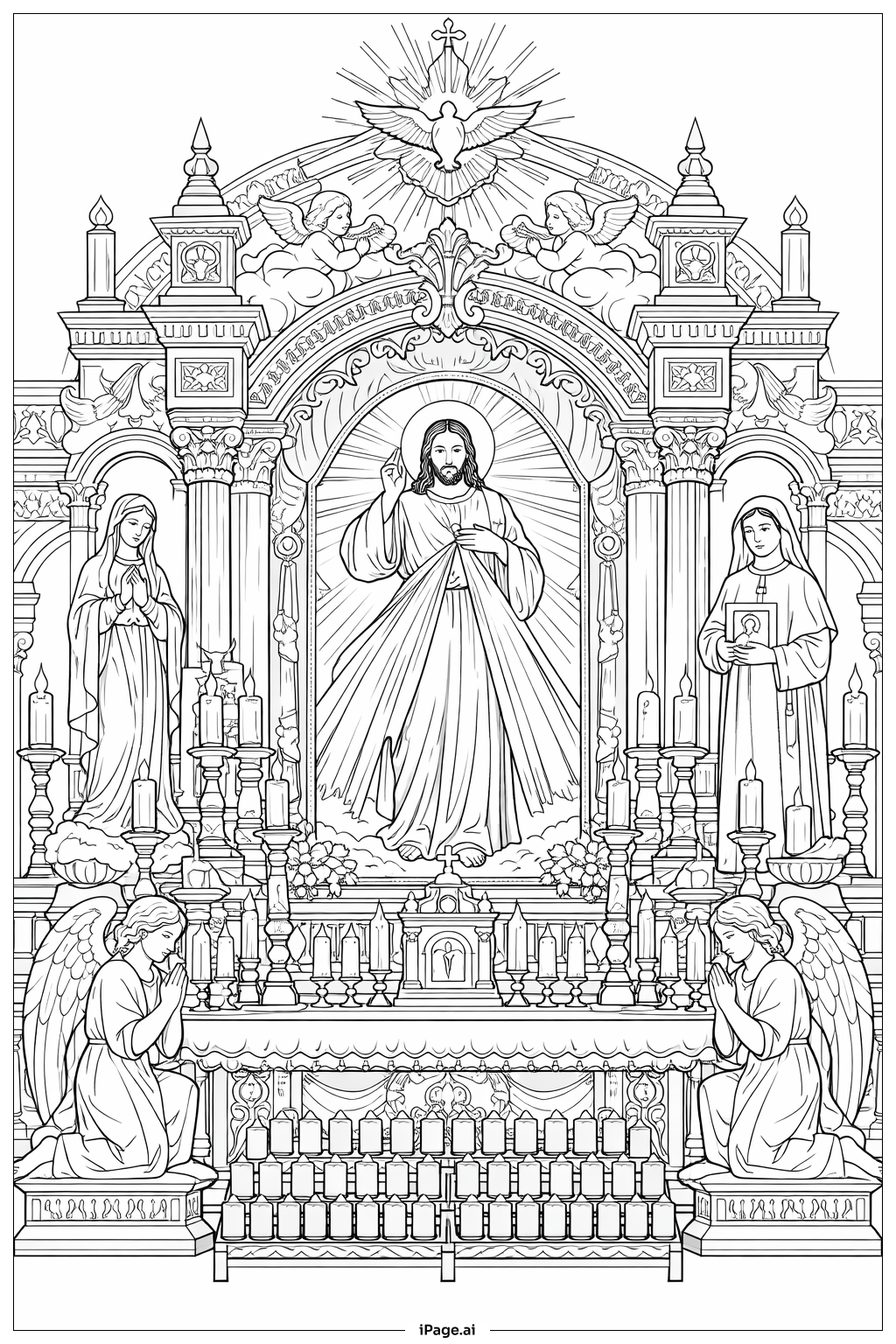
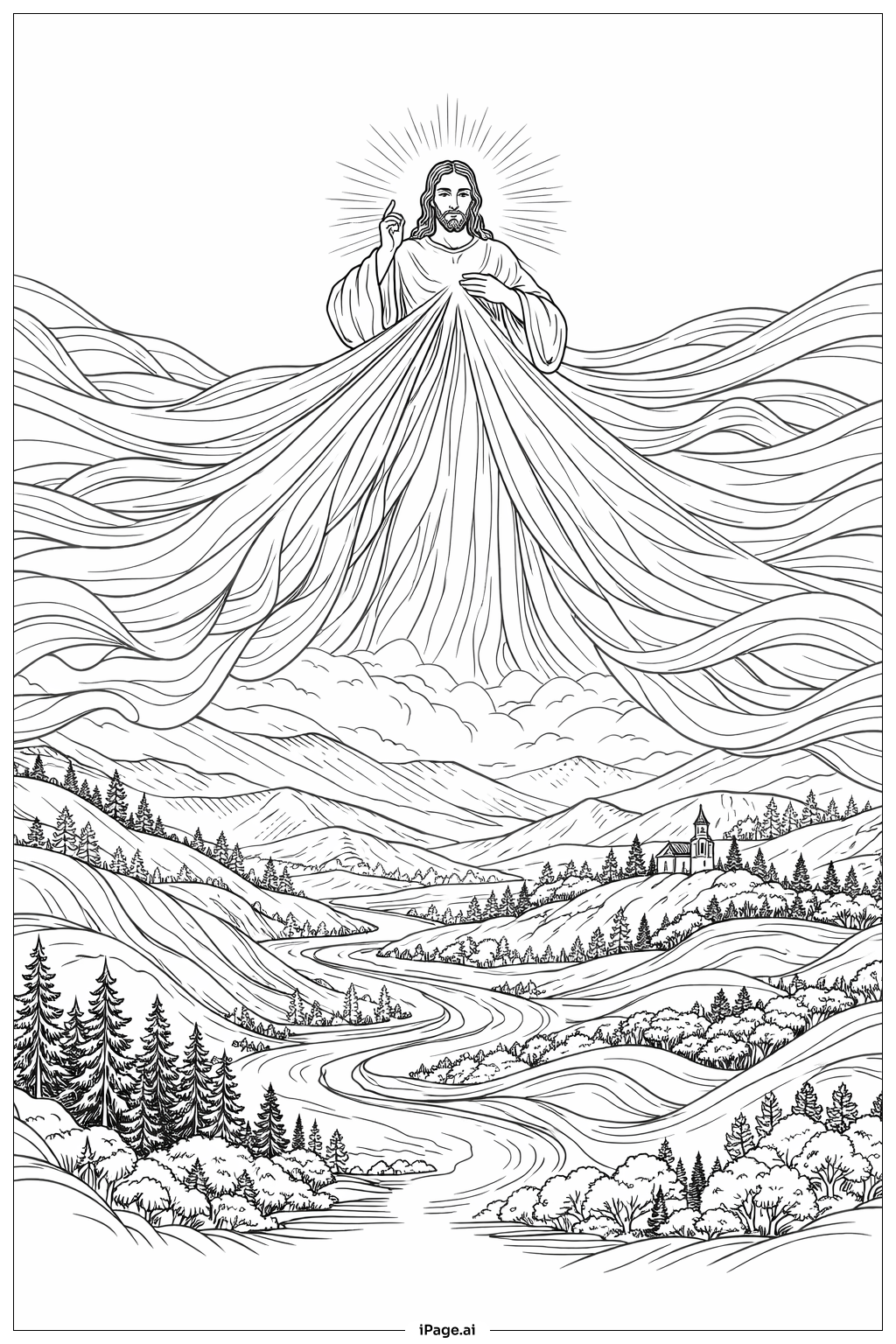
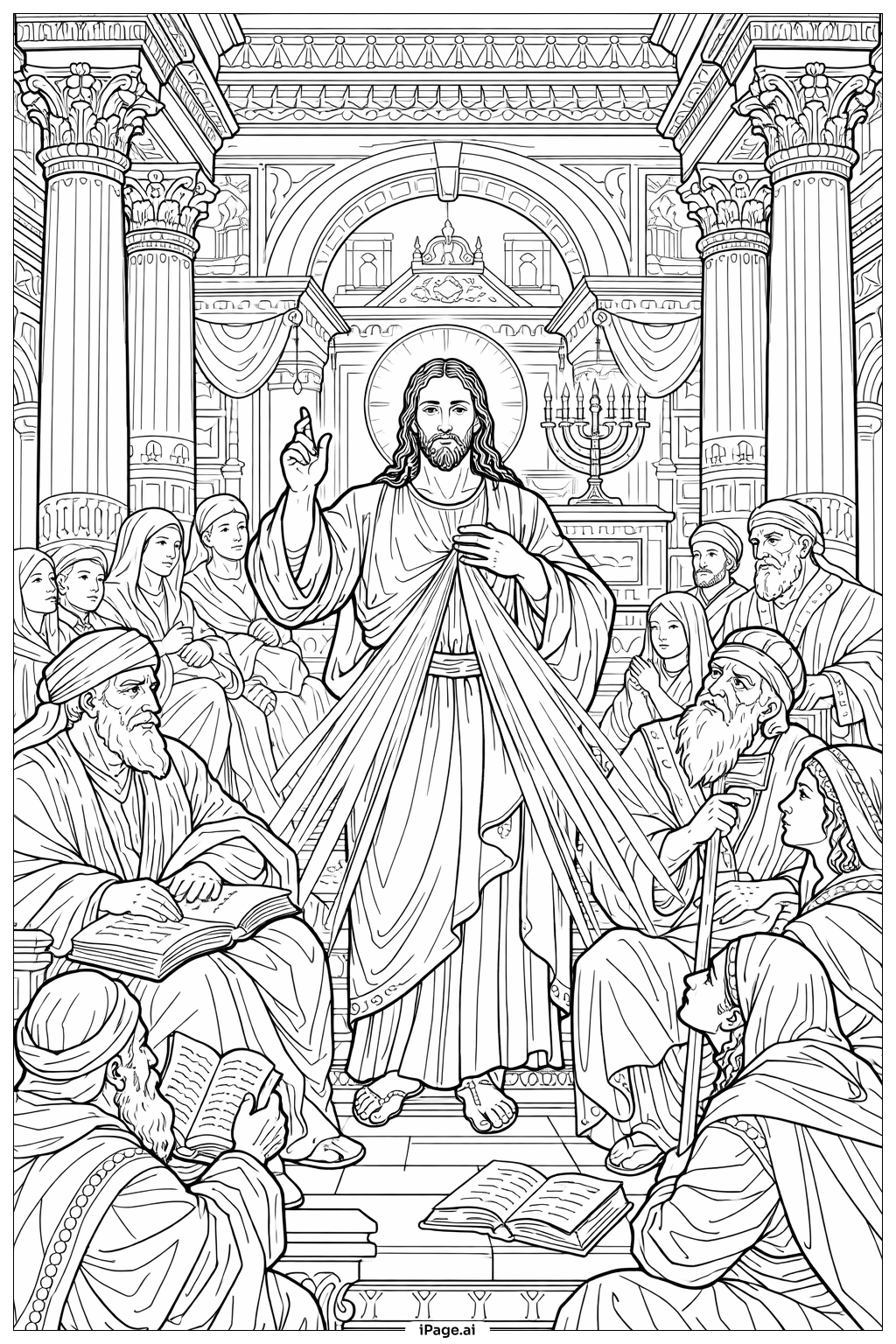
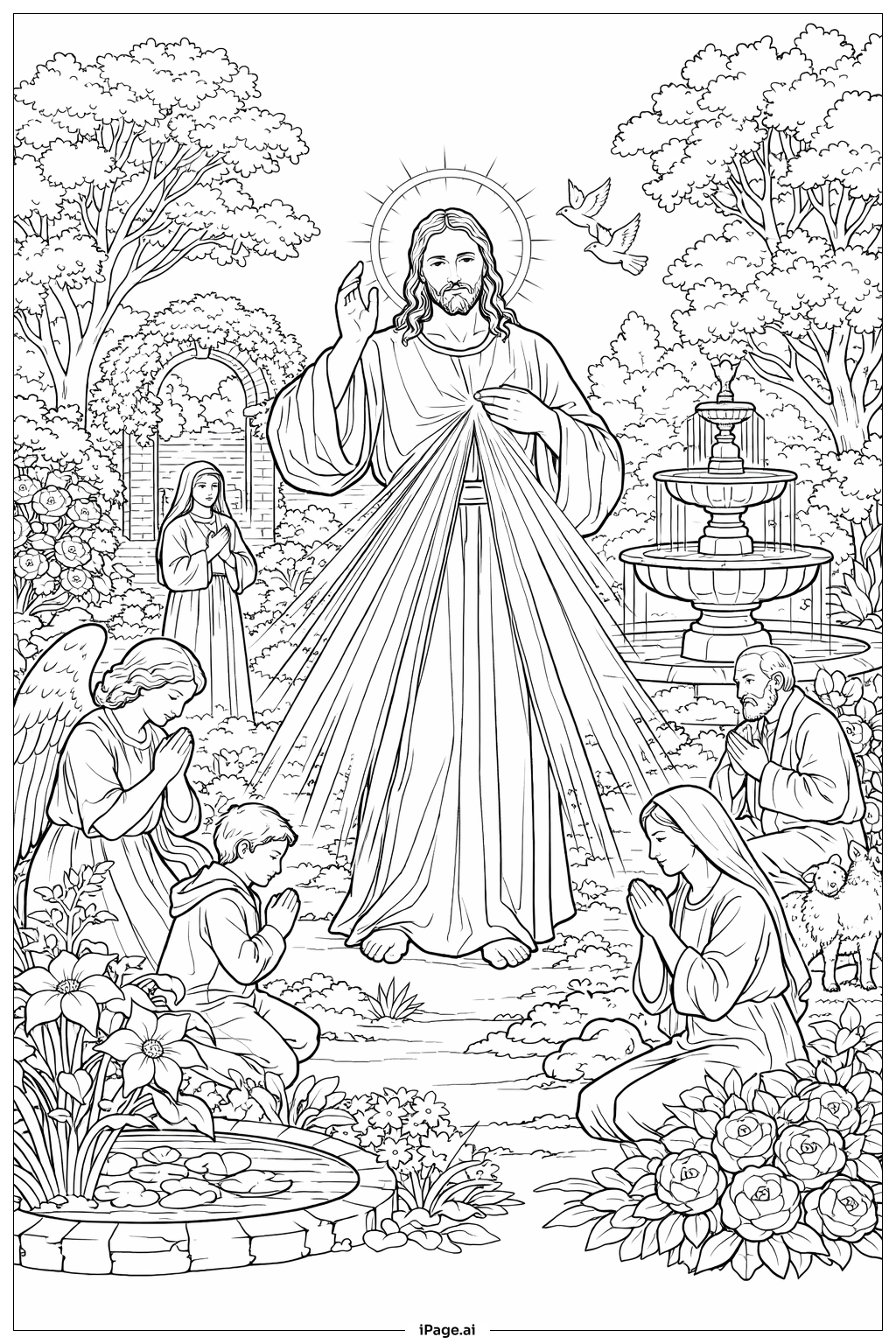
Start with Jesus's robes using soft whites, creams, and light blues to create a heavenly appearance. The two rays emanating from His heart should be colored red and pale blue, symbolizing blood and water. Use golden yellow for the halo and light beams to represent divine radiance. The Sacred Heart can be colored in warm reds and pinks. For the decorative frame, consider rich golds, bronze, or copper tones to give it an ornate, sacred feel. Angels can be shaded with gentle skin tones and their wings in whites or iridescent colors. Flowers should be vibrant with reds, whites, and yellows. The dove can remain white with hints of gray for dimension. Use deep purple or burgundy for candles to reflect penitential devotion. Background areas can be filled with soft sky blues or gentle lavender to create a peaceful, spiritual atmosphere.
Coloring challenges: Which parts are difficult to color and need attention for Divine Mercy Feast Celebration coloring page?
• Intricate Decorative Details: The baroque-style ornamental frame contains numerous small scrolls, flourishes, and curved elements that require careful coloring within tight spaces. These delicate patterns demand precision and patience to avoid crossing lines and to maintain the elegant symmetry of the design.
• Shading the Robes and Fabric: Jesus's flowing garments have multiple folds and layers that need subtle shading techniques to create depth and dimension. Young colorists may find it challenging to blend colors smoothly to show where fabric drapes and shadows fall, requiring an understanding of light sources and gradual color transitions.
• Light Ray Effects: The beams radiating from Christ's heart need special attention to create a glowing, luminous effect. Achieving the right balance between bold color at the source and gradual fading toward the edges requires blending skills and possibly layering lighter colors over darker ones to simulate divine light.
• Multiple Focal Points: This image contains several areas competing for attention including the central figure of Jesus, surrounding angels, floral arrangements, and architectural elements. Balancing color intensity across these elements while maintaining Jesus as the primary focus requires thoughtful color planning and restraint to avoid visual chaos.
• Small Facial Features: The faces of Jesus, angels, and cherubs contain delicate features like eyes, nose, and mouth that are relatively small. Coloring these accurately without smudging or going outside the lines can be particularly challenging for younger children and requires steady hand control and fine motor skills.
Benefits of coloring books: Advantages of drawing Divine Mercy Feast Celebration coloring page
Coloring this Divine Mercy image offers wonderful spiritual and developmental benefits. It provides a peaceful, meditative activity that helps children and adults connect with their faith while practicing mindfulness. The act of carefully coloring religious imagery can become a form of prayer and contemplation, deepening understanding of Divine Mercy's message of God's love and forgiveness. This complex design improves fine motor skills, hand-eye coordination, and concentration as colorists work through intricate details. It teaches patience and perseverance when completing challenging sections. The image also encourages learning about religious symbolism, such as the meaning of the red and blue rays, the Sacred Heart, and other Catholic iconography. For families, this can become a shared devotional activity that opens conversations about faith. The creative process of choosing colors and bringing the image to life builds confidence and provides a sense of accomplishment, while the finished piece can serve as a beautiful reminder of God's mercy to display or gift to others.