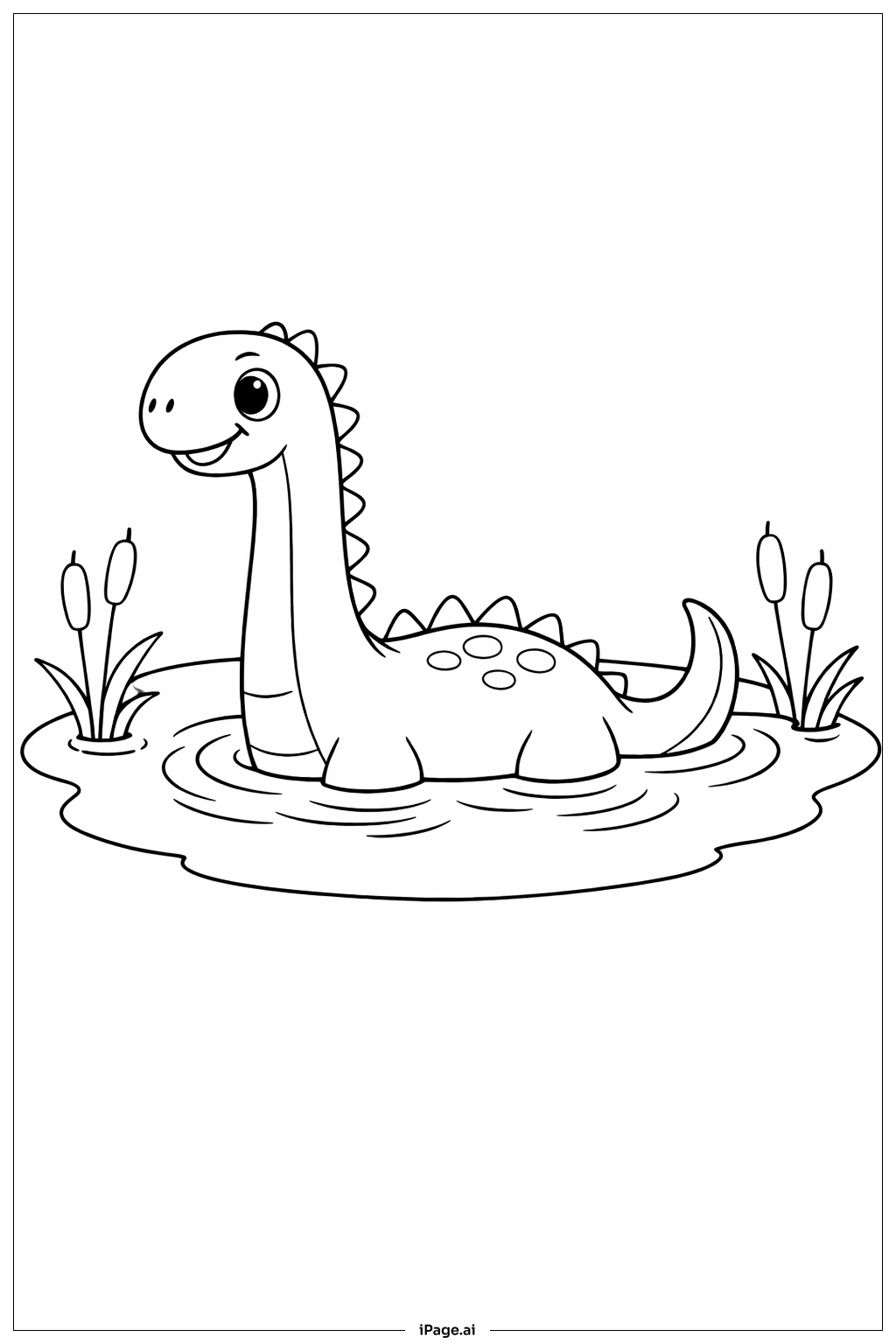
Coloring tips: How to color Dinosaur In Pond coloring page well?
Use bright and fun colors to make the dinosaur stand out. You can try green or blue for the dinosaur's body and add different shades for the spikes and spots. For the water, use blue or turquoise tones and add some areas with lighter blue to show the ripples. The cattail plants can be colored green for the leaves and brown for the cattail heads. You can also color the background with light colors to keep the focus on the dinosaur and the pond.
Coloring challenges: Which parts are difficult to color and need attention for Dinosaur In Pond coloring page?
1. Small Details: The spots and spikes on the dinosaur are small and may require careful coloring to stay within the lines. 2. Water Ripples: Coloring the water with ripples can be tricky because you need to show flow and movement while keeping it simple. 3. Plant Shapes: The cattail plants have thin leaves and oval tops, which might be hard to color neatly. 4. Color Blending: Making the water look natural may need blending different shades of blue for a smooth effect. 5. Consistent Color Choice: It can be difficult to pick colors that look good together for the dinosaur, water, and plants.
Benefits of coloring books: Advantages of drawing Dinosaur In Pond coloring page
Coloring this picture helps improve focus and fine motor skills because of its different shapes and details. It encourages kids to explore colors and learn how to combine them nicely. Coloring the dinosaur and pond also promotes creativity and imagination by allowing children to choose their own colors and make the scene come alive. This activity can be calming and fun, helping to reduce stress while building confidence in coloring skills.