Coloring tips: How to color Dinosaur In Garden coloring page well?
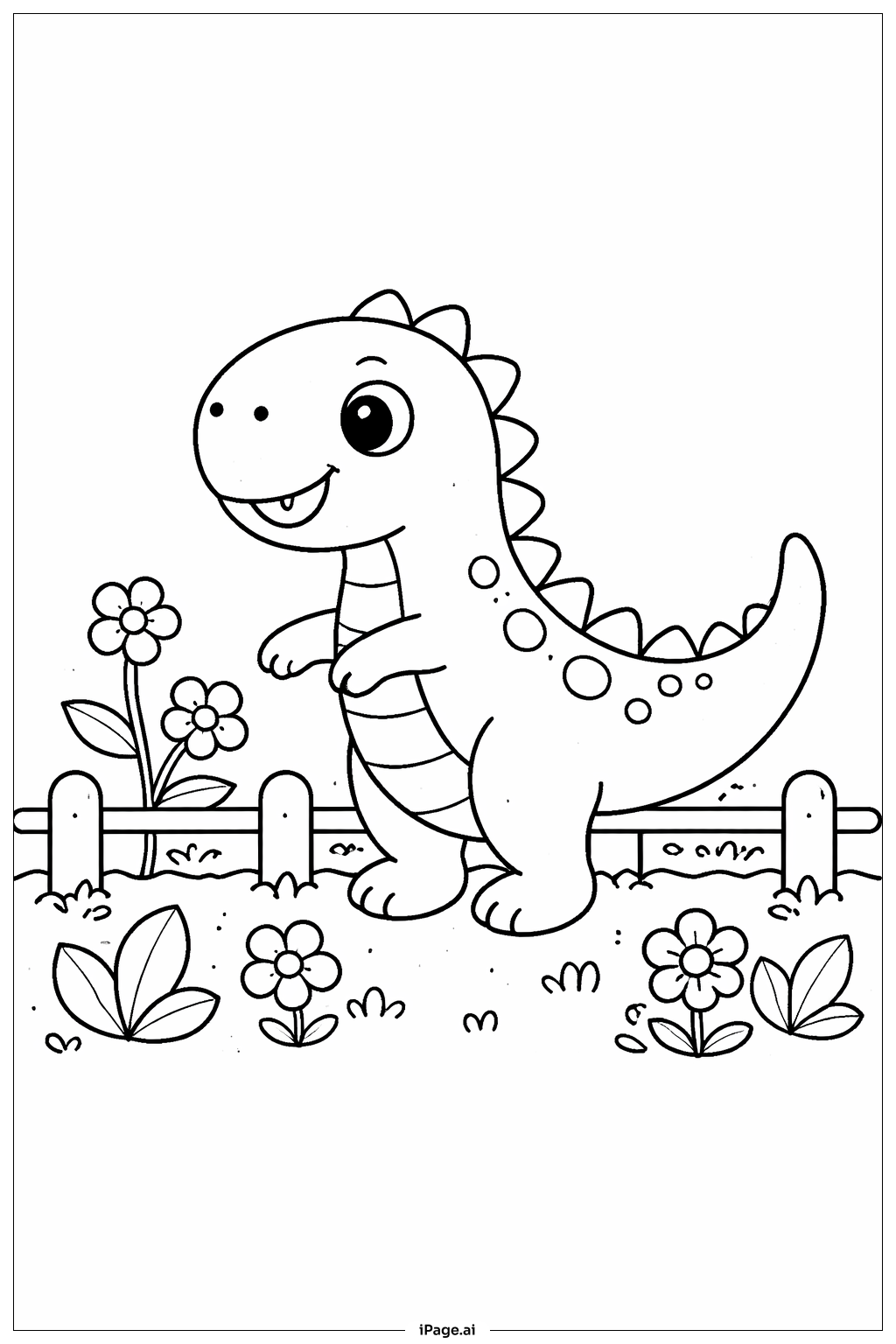
For the dinosaur, use bright colors like green or blue for the body to make it lively. You can color the plates on its back in a different shade, like orange or yellow. The spots on its body can be colored darker for more detail. For the flowers, use a mix of red, pink, yellow, and purple for the petals, and green for the leaves and grass. Color the fence in light brown or beige. Feel free to add a blue sky in the background to complete the picture. Use crayons or markers for bold colors, and colored pencils for shading and blending.
Coloring challenges: Which parts are difficult to color and need attention for Dinosaur In Garden coloring page?
1. Coloring the small spots and stripes on the dinosaur can be tricky because they are small and need careful coloring to stay inside the lines.
2. The petals of the flowers are close together, so it might be hard to color each petal a different color without overlapping.
3. The fence has many thin parts that require precision to avoid coloring outside the lines.
4. Choosing colors that look good together, like for the dinosaur, flowers, and background, can be a little difficult.
5. Shading the dinosaur to show its round shape needs practice with blending colors smoothly.
Benefits of coloring books: Advantages of drawing Dinosaur In Garden coloring page
Coloring this picture helps children improve their hand-eye coordination by practicing staying inside the lines. It encourages creativity when choosing colors for the dinosaur and garden. Coloring also improves focus and patience. The simple yet detailed parts allow kids to practice fine motor skills. Finally, it brings joy and relaxation, making learning fun.



