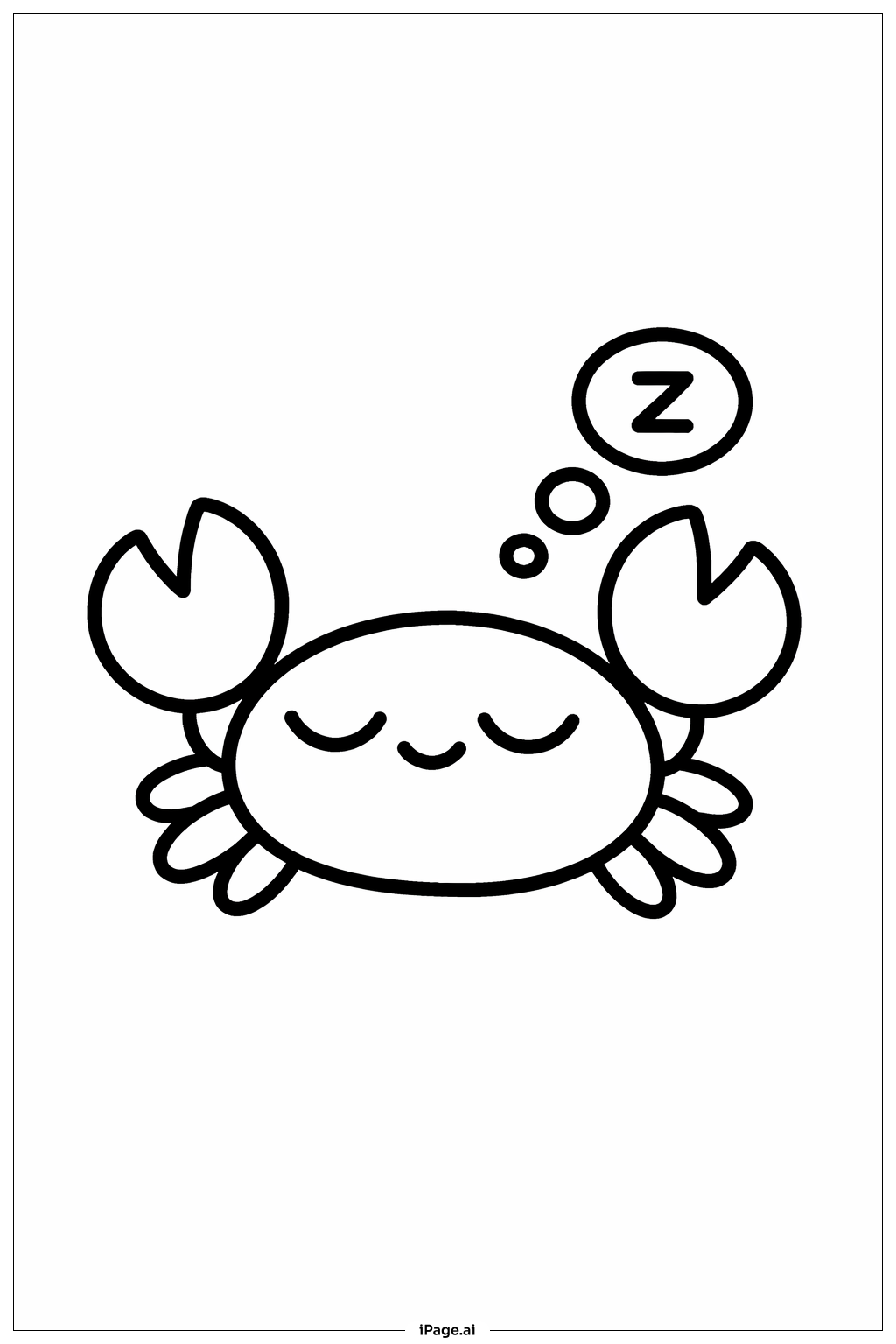
Coloring tips: How to color Sleeping Crab coloring page well?
Use bright and cheerful colors to make the crab come alive. You can try red, orange, or pink for the crab’s body and claws. The legs can be a lighter shade of the same color or a different color like yellow or light blue. Color the thought bubble with soft blue or gray to show it is floating above the crab. For the background, light colors like light green or turquoise can create a nice ocean feel. Use crayons or colored pencils to fill in carefully inside the lines to keep the picture neat.
Coloring challenges: Which parts are difficult to color and need attention for Sleeping Crab coloring page?
1. Coloring inside the small legs can be tricky because they are tiny and closely positioned. Take your time to color carefully.\n2. The claws have sharp edges and points where the color needs to stay inside the lines, which requires good control.\n3. The thought bubble's round shape may be a bit difficult to fill evenly, so try gentle strokes with your coloring tools.\n4. Avoid coloring over the 'Z' letter inside the bubble to keep it clear and easy to read.\n5. Choosing colors that contrast well will help the crab stand out, so planning your colors before you start can be helpful.
Benefits of coloring books: Advantages of drawing Sleeping Crab coloring page
Coloring this sleeping crab helps improve focus and attention to small details, especially while coloring the claws and legs. It encourages creativity as children get to choose different colors for the crab and the background. The simple and cute design provides a calming and enjoyable coloring experience. Coloring also helps develop hand-eye coordination and fine motor skills by practicing staying within the lines. Overall, it is a fun way for kids to relax and express themselves artistically.