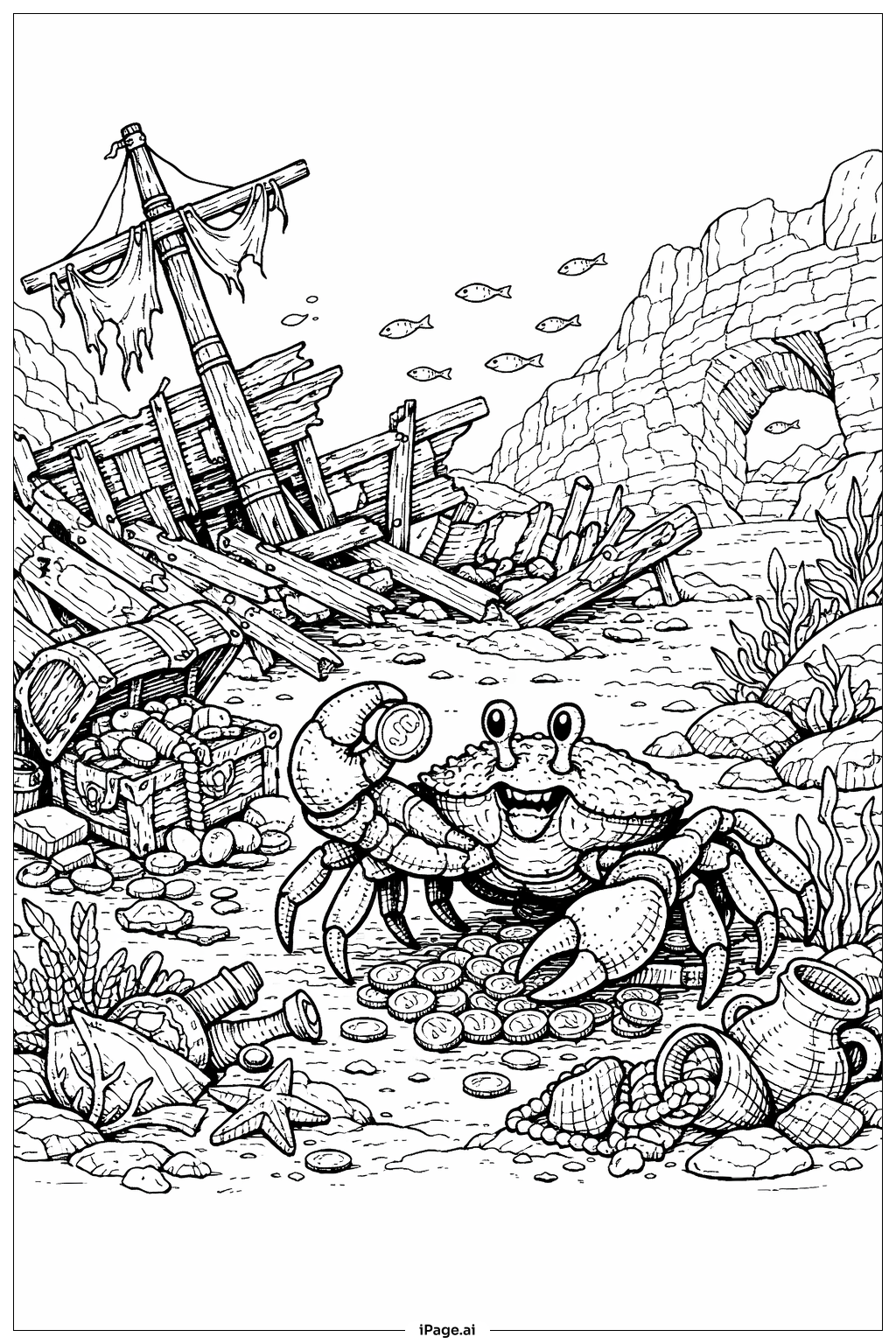
Coloring tips: How to color Crab Explorer Shipwreck coloring page well?
Start with the crab using bright orange or red for the shell, adding darker shades along the edges for dimension. Color the claws with a gradient from light to dark. For the shipwreck, use various shades of brown and gray to show aged, weathered wood. Add green moss or algae effects to suggest years underwater. Make the treasure chests rich golden brown with bright yellow coins and multicolored gems in blues, reds, and greens. Color the seaweed in different green tones, from lime to deep forest green. Use purple, pink, and orange for the coral. Keep the bubbles light blue or leave them white. The ocean floor can be sandy beige or tan with darker brown patches for depth.
Coloring challenges: Which parts are difficult to color and need attention for Crab Explorer Shipwreck coloring page?
• Crab Shell Texture: The rounded shell of the crab requires smooth color transitions to create a three-dimensional appearance. Children may find it challenging to blend colors effectively to show the curved surface, especially when adding highlights and shadows to make the shell look realistic and rounded rather than flat.
• Shipwreck Details: The sunken ship contains many intricate elements including wooden planks, portholes, the ship's wheel with multiple spokes, and weathered textures. Coloring within these small spaces while maintaining consistency requires patience and fine motor control, particularly when trying to show the aged, deteriorated condition of the wood.
• Treasure Chest Contents: The overflowing coins and jewels present a challenge in creating visual variety. Each coin and gem should look distinct, requiring careful color selection and the ability to work in tight, overlapping spaces. Younger children might struggle to differentiate between individual pieces of treasure.
• Underwater Plant Life: The seaweed and coral require varied shading techniques to appear natural and flowing. Creating the sense of movement in the seaweed and the organic, branching patterns of coral demands understanding of how to use color intensity and directional strokes effectively.
• Background Elements and Depth: Creating an underwater atmosphere with proper depth perception is advanced. The challenge lies in using lighter colors for distant elements and darker tones for foreground objects, plus adding subtle blue tones throughout to maintain the underwater setting's consistency.
Benefits of coloring books: Advantages of drawing Crab Explorer Shipwreck coloring page
Coloring this underwater adventure scene helps children develop fine motor skills and hand-eye coordination through the varied details of the crab, shipwreck, and treasure elements. The composition encourages creative color choices, allowing kids to imagine their own vibrant underwater world. Working with the different textures—from smooth crab shells to rough wooden planks and flowing seaweed—teaches children about contrast and shading techniques. The maritime theme sparks curiosity about ocean life and underwater exploration, combining artistic activity with educational value. Completing this detailed page builds patience, focus, and confidence as children see their colored masterpiece come to life. The variety of elements keeps young artists engaged for extended periods, promoting concentration and a sense of accomplishment.