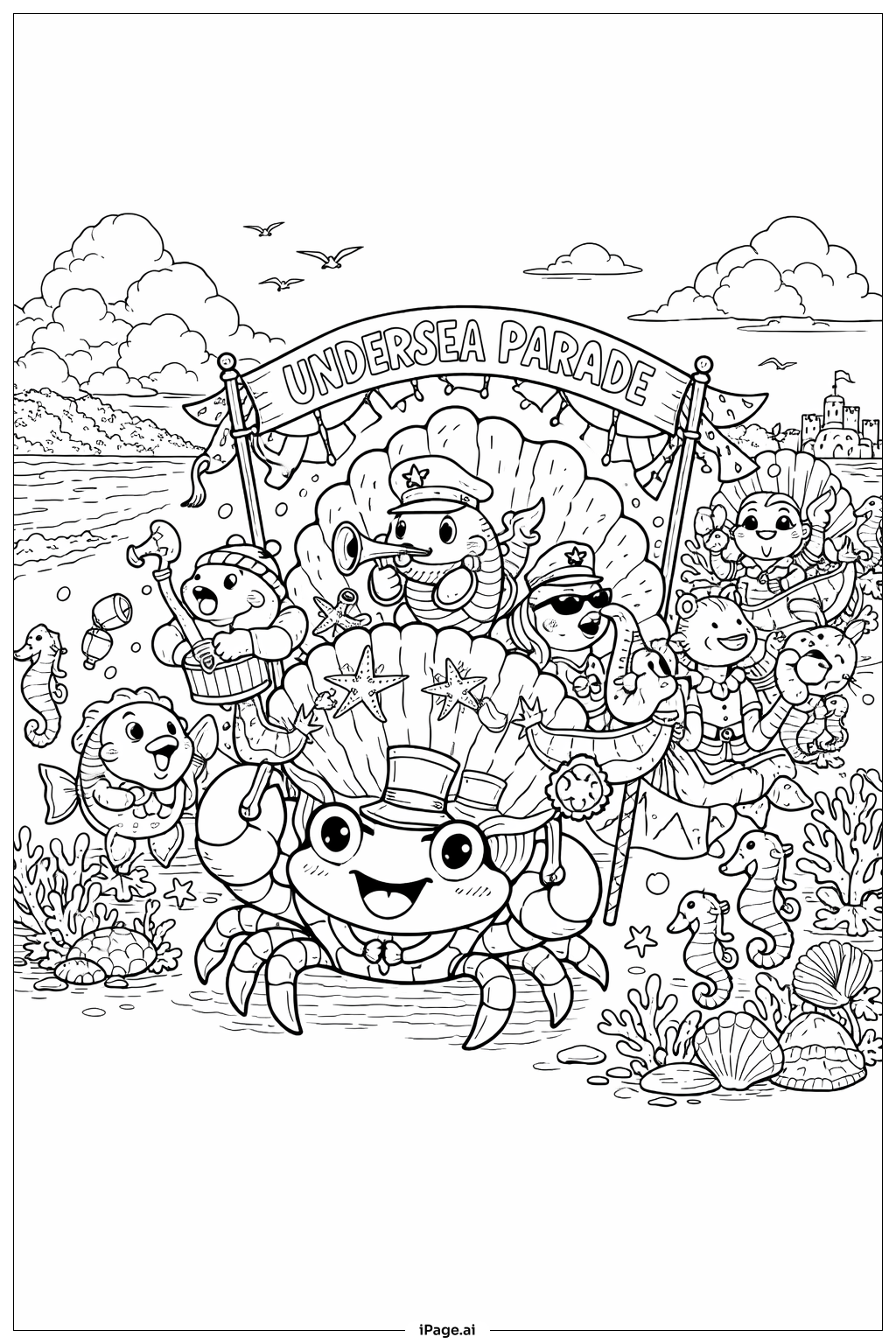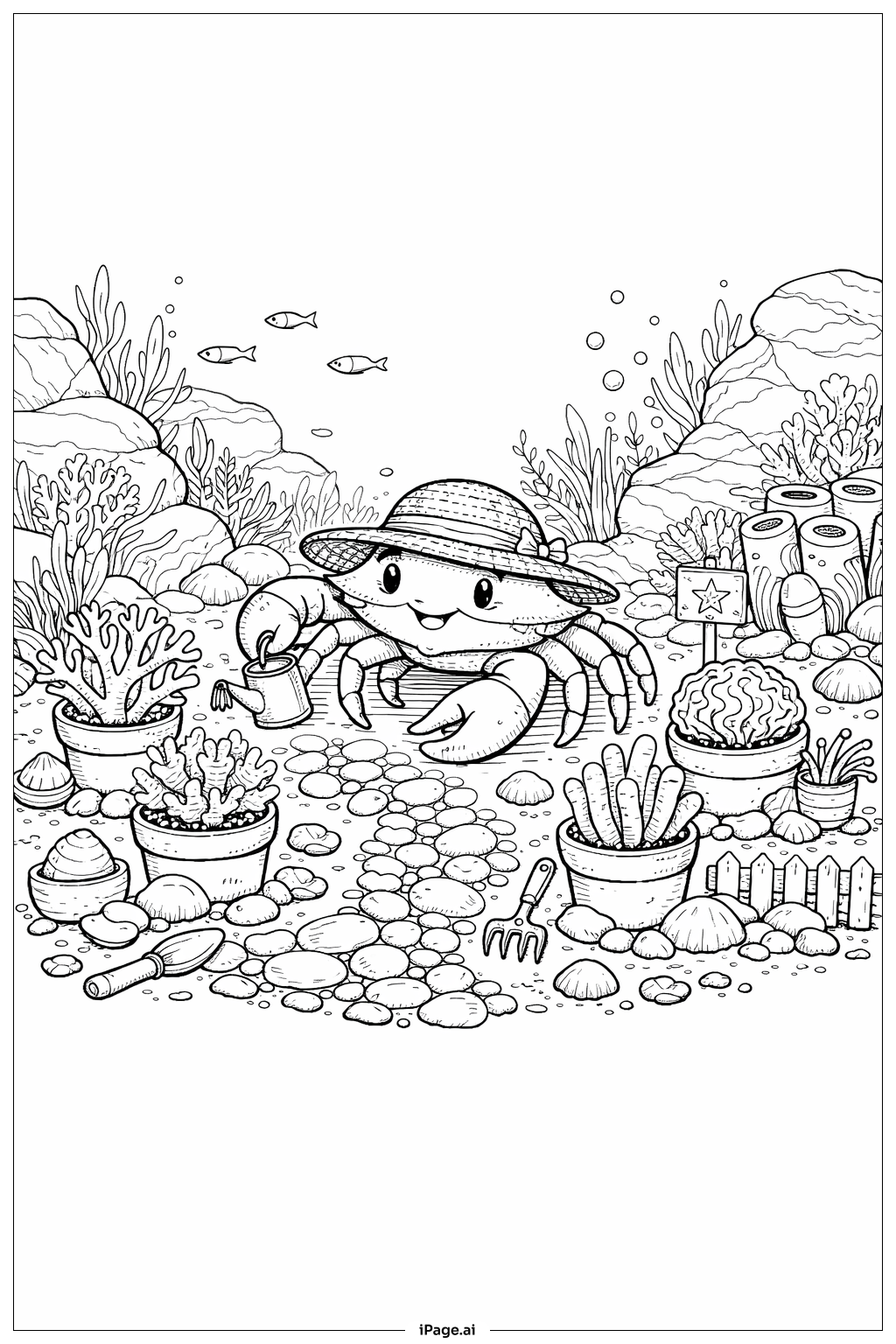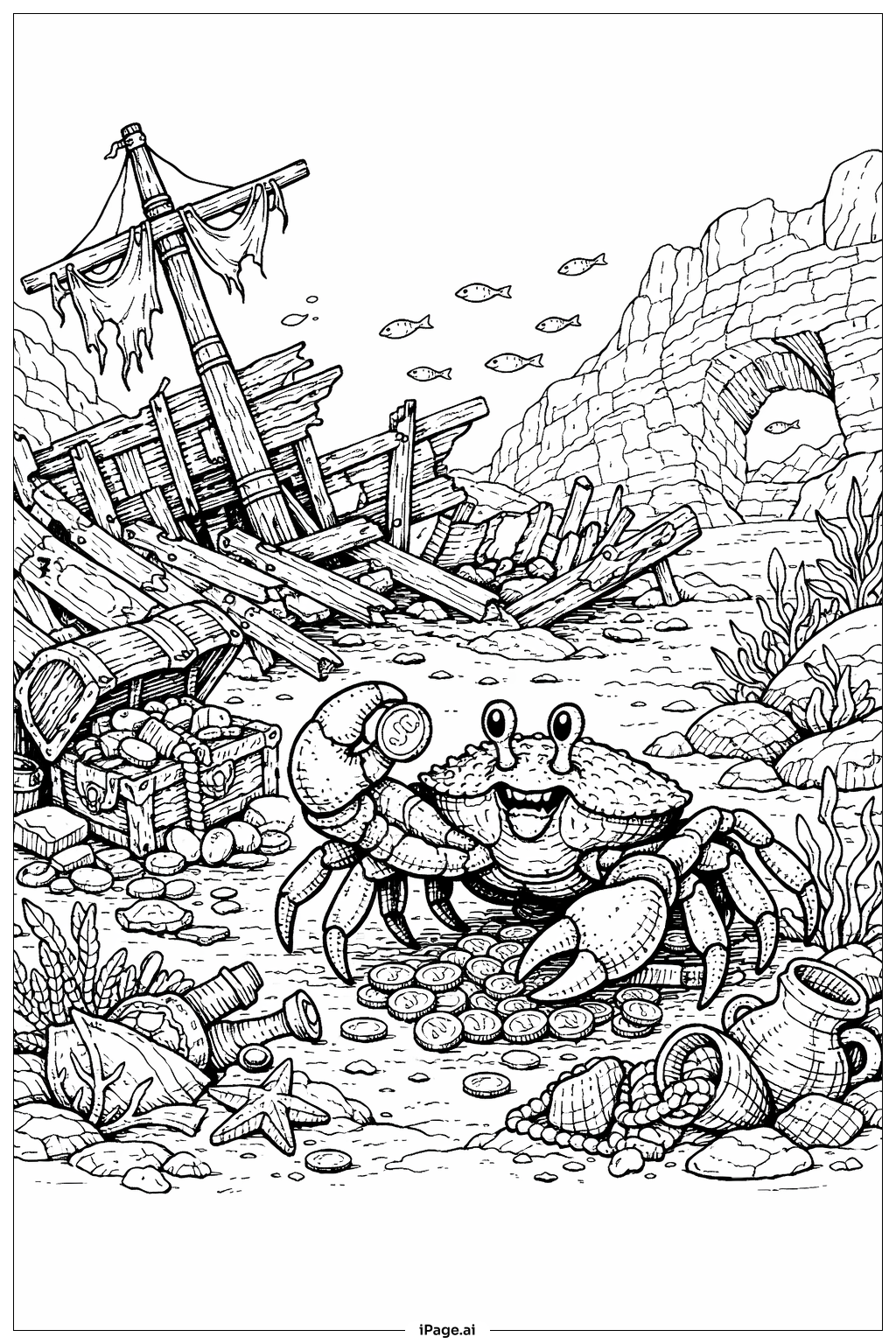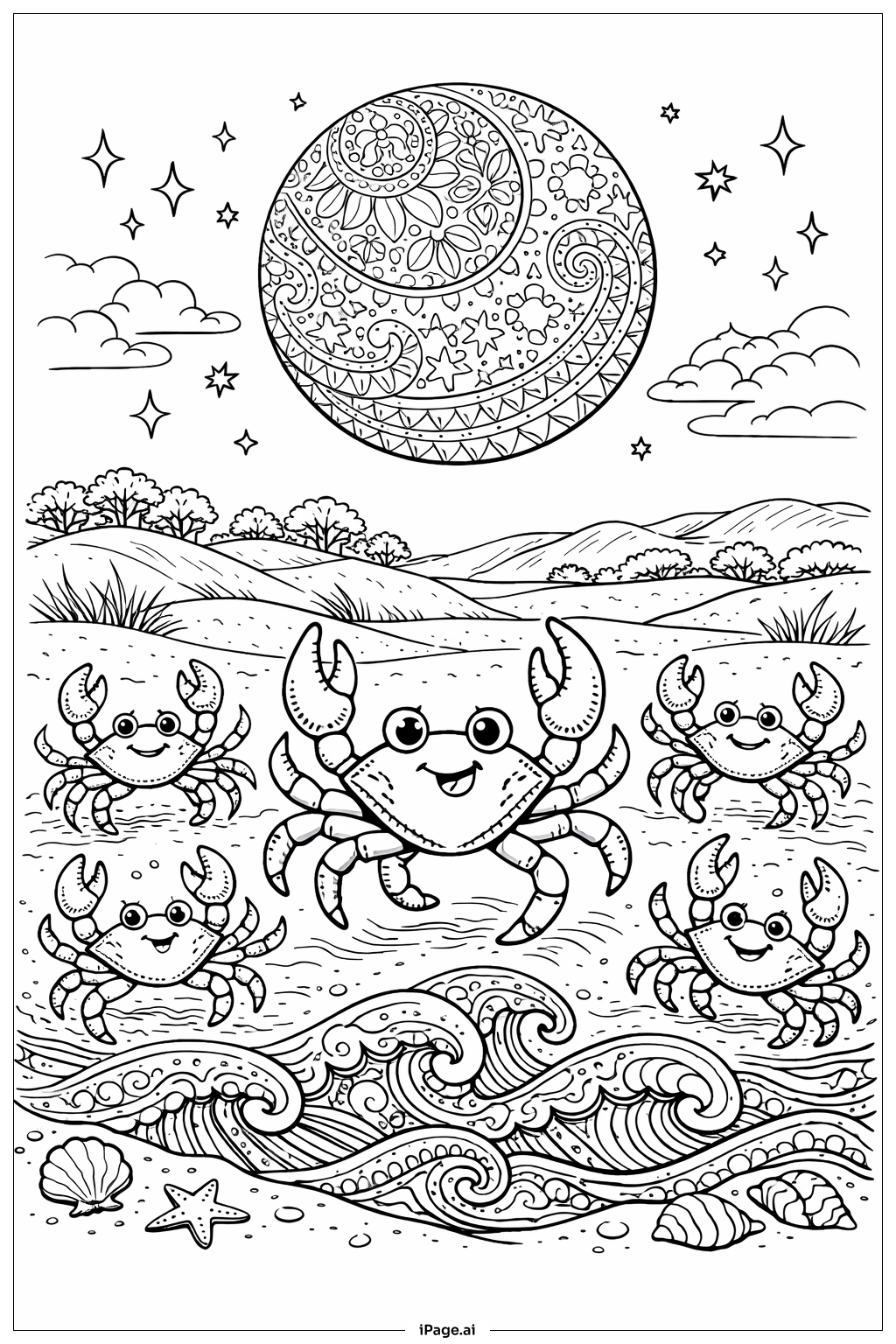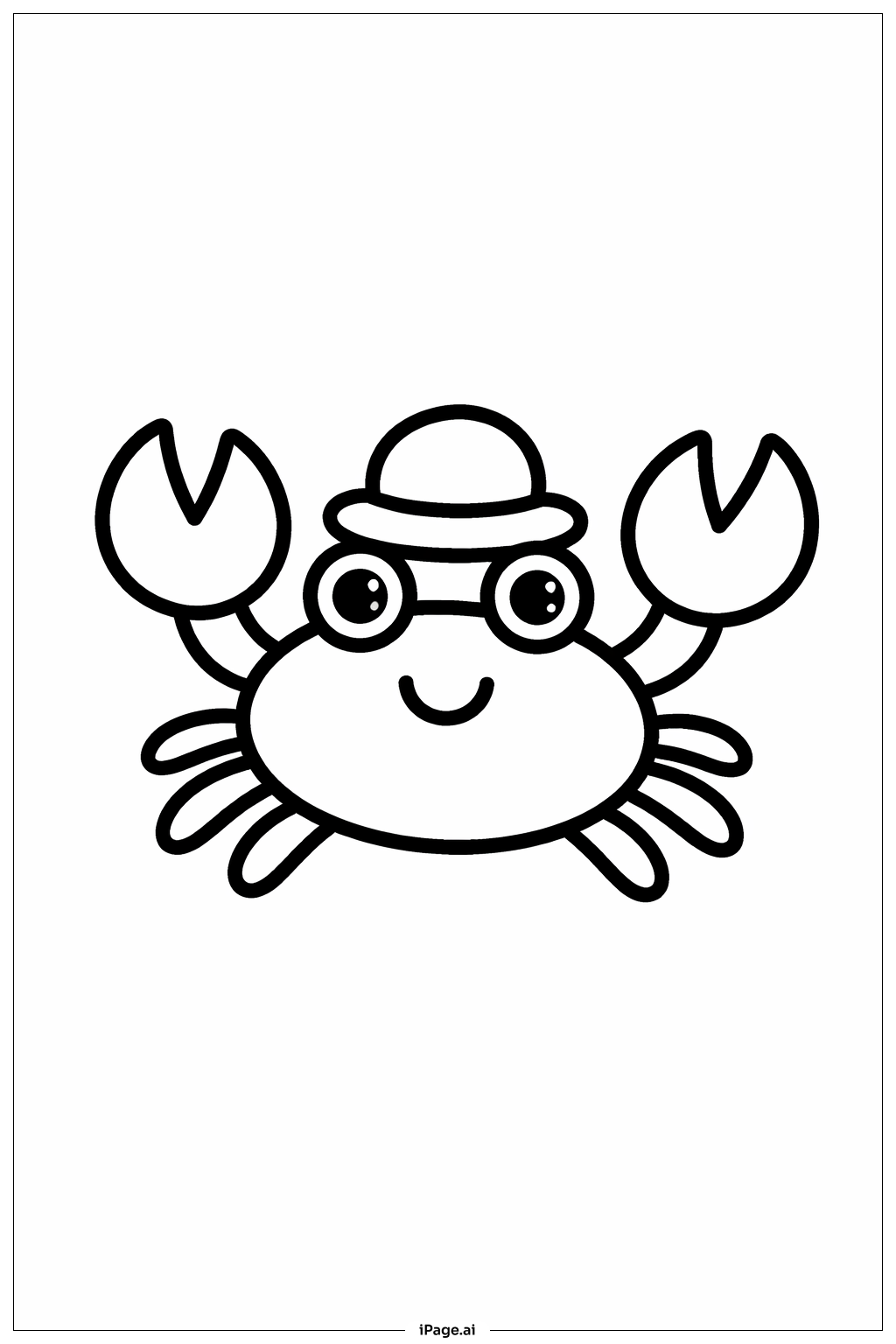
Coloring tips: How to color Crab Wearing Hat coloring page well?
Start with the crab's body. Bright orange or deep red are classic crab colors, but feel free to get creative with coral pink or even purple for a fantasy look. Use a slightly darker shade on the edges of the shell and claws to add depth and make the crab look three-dimensional. For the hat, try a bold color like navy blue, sunny yellow, or rich burgundy to make it pop against the crab's body. Add a stripe or a ribbon band in a contrasting color for extra fun. The eyes can be colored white with dark pupils to bring the crab's friendly expression to life. For the background, soft ocean blues and teals work beautifully. Light aqua near the crab and deeper blue toward the edges gives a sense of underwater depth. Color the bubbles in pale blue or leave them white for a sparkling effect. Don't be afraid to mix and blend colors to make this little crab truly your own!
Coloring challenges: Which parts are difficult to color and need attention for Crab Wearing Hat coloring page?
• Shell Texture Details: The crab's shell is covered in small bumps and ridged lines that create a complex surface. Staying inside these tiny sections while switching between light and dark shades requires a steady hand and patience. Using a fine-tipped coloring tool helps keep each bump neatly colored without bleeding into the next.
• Claw Shading and Depth: The large front claws have curved, layered shapes that need careful shading to look round and realistic. Applying a darker tone along the inner edges and a lighter tone toward the top creates a three-dimensional effect. This blending technique can be tricky, especially for younger colorists who are still learning how to transition between shades smoothly.
• Hat Details and Proportions: The hat sitting on the crab's head has a brim, a body, and possibly a decorative band. Each section should be colored distinctly to show its shape and separate it from the crab's head. Getting the colors to feel balanced — neither too bold nor too faint — while keeping the hat looking like a separate object takes careful color selection.
• Eye Expression Accuracy: The crab's eyes sit on stalks and carry most of its personality. Coloring them too darkly or unevenly can flatten the expression and make the crab look less lively. Keeping highlights — small white spots — in the pupils adds sparkle and life to the face.
• Background Ocean Elements: The waves, bubbles, and water lines in the background need to be colored in a way that feels cohesive but does not overpower the crab. Balancing the intensity of the background blues against the crab's vibrant body color requires thoughtful color choices to keep the crab as the clear focal point.
Benefits of coloring books: Advantages of drawing Crab Wearing Hat coloring page
Coloring this fun image of a Crab Wearing Hat offers a wide range of benefits for kids and anyone who picks up a crayon or marker. First, it builds fine motor skills. Carefully coloring inside the crab's small shell details and the hat's narrow sections trains hand-eye coordination and strengthens the small muscles used in writing. Second, it sparks creativity. Choosing colors for a crab in a hat is an open-ended activity with no wrong answers, which encourages imaginative thinking and self-expression. Kids can make a realistic orange crab or invent a rainbow-colored one — both are equally wonderful. Third, it supports focus and patience. Working through the various sections of the image, from the textured shell to the bubbly background, helps children practice sitting with a task and seeing it through to the end. Fourth, it introduces basic art concepts like shading and contrast in a relaxed, playful way. Finally, the whimsical, lighthearted subject matter — a crab wearing a hat — brings joy and humor to the activity, making the whole experience feel like play rather than work. It is a great way to unwind and have fun.