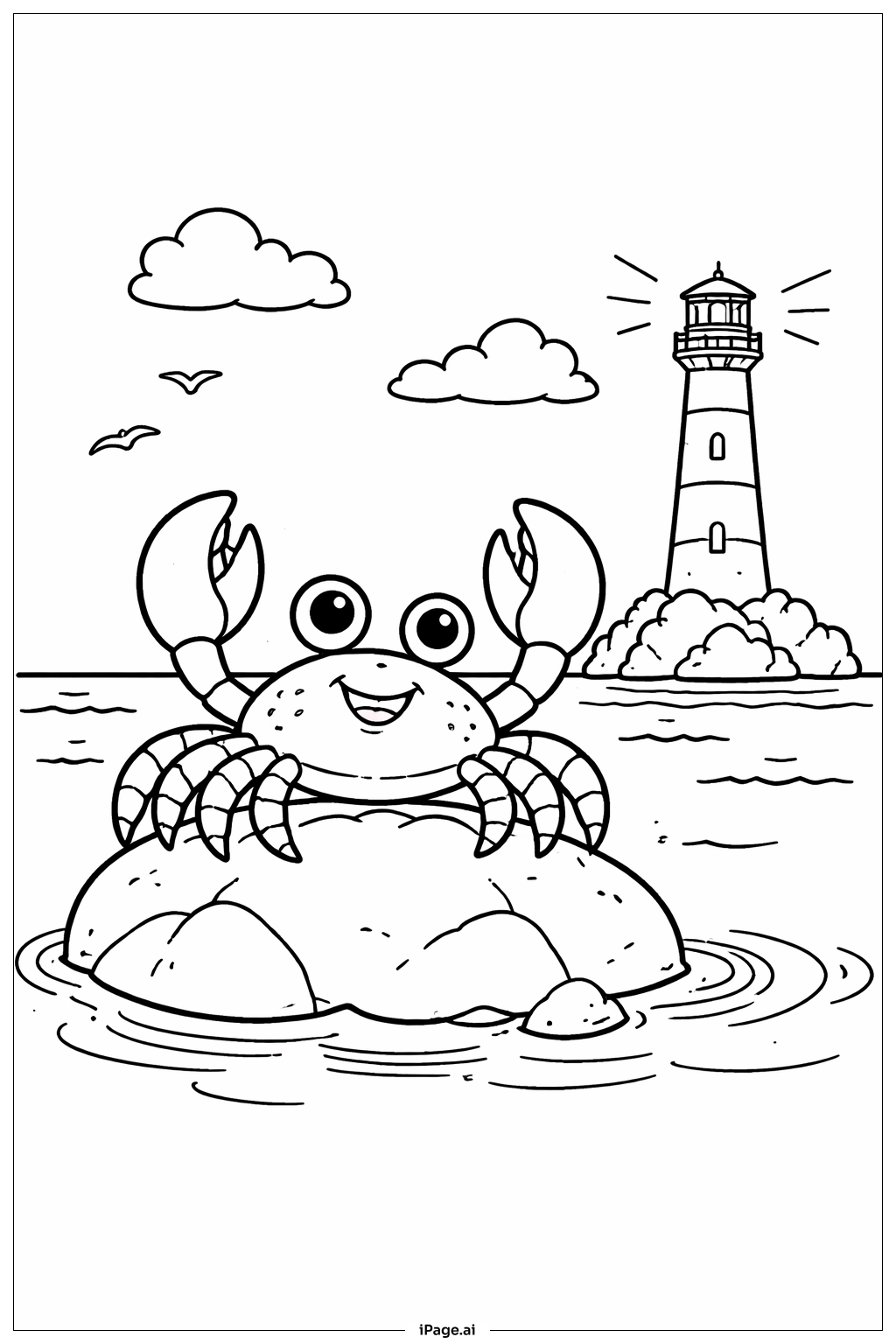
Coloring tips: How to color Crab Near Lighthouse coloring page well?
Start by coloring the lighthouse first. Use bold red and white stripes on the tower to make it pop. Add a warm yellow or orange glow inside the lamp room at the top. For the crab, go with a classic bright orange or deep red. Shade the edges of the shell slightly darker to give it a rounded, three-dimensional look. The claws can be a slightly lighter shade than the body. Color the rocky ground in shades of gray and brown. Add some greenish tones to suggest moss or algae on the rocks. For the ocean water, use light blue and soft teal. The sky looks great in pale blue with white or light lavender clouds. Kids can also get creative and try a sunset scene using pink, orange, and purple for the sky and water. There is no single right way to color this image, so have fun and make it your own.
Coloring challenges: Which parts are difficult to color and need attention for Crab Near Lighthouse coloring page?
• Crab Shell Texture: The crab's shell has many small segments and ridged textures. Staying within each section while keeping consistent color shading can be tricky, especially for younger colorists. Take your time filling in one segment at a time to keep everything neat and defined.
• Lighthouse Stripes: The diagonal or horizontal stripes on the lighthouse tower require a steady hand and careful color switching. Keeping clean, straight lines between the red and white sections is one of the harder parts of this image. Using a ruler as a guide along the edge can help beginners stay on track.
• Small Decorative Details: The railing around the lighthouse lamp room and the small rocks and shells near the shoreline are quite tiny. These areas require a sharp pencil or a fine-tipped marker to color accurately without going outside the lines or blending colors together unintentionally.
• Claw Definition: The crab's claws have overlapping joints and curved surfaces. Coloring these areas with subtle shading to show depth and dimension takes some practice. Using a slightly darker tone along the inner edges helps each claw section stand out clearly.
• Water and Rock Blending: The transition area where the ocean meets the rocky shore calls for smooth color blending. Creating a natural-looking gradient from light blue water to gray-brown rocks without making the boundary look too harsh can be challenging, particularly when working with crayons or colored pencils.
Benefits of coloring books: Advantages of drawing Crab Near Lighthouse coloring page
Coloring this Crab Near Lighthouse scene offers a wonderful range of benefits for kids and young artists. Working on the detailed crab shell and lighthouse stripes helps build fine motor skills and strengthens hand-eye coordination. These are important skills that support writing and other precise tasks in everyday life.
The image also encourages creative thinking. Choosing colors for the ocean, sky, and rocks lets kids experiment with color combinations and develop their own artistic style. There is no single correct answer, which builds confidence and self-expression.
Focusing on a detailed scene like this helps children practice patience and concentration. Completing the image gives a real sense of accomplishment and pride in their work.
Learning about coastal environments through a fun, visual activity also sparks curiosity about nature. Kids may become more interested in sea creatures, lighthouses, and ocean life after spending time with this scene.
Finally, coloring is a calming and screen-free activity. It helps reduce stress and anxiety, making it a great quiet-time option for children of all ages. Whether coloring alone or with friends and family, this image creates an enjoyable and rewarding experience for everyone who picks up a crayon or colored pencil.