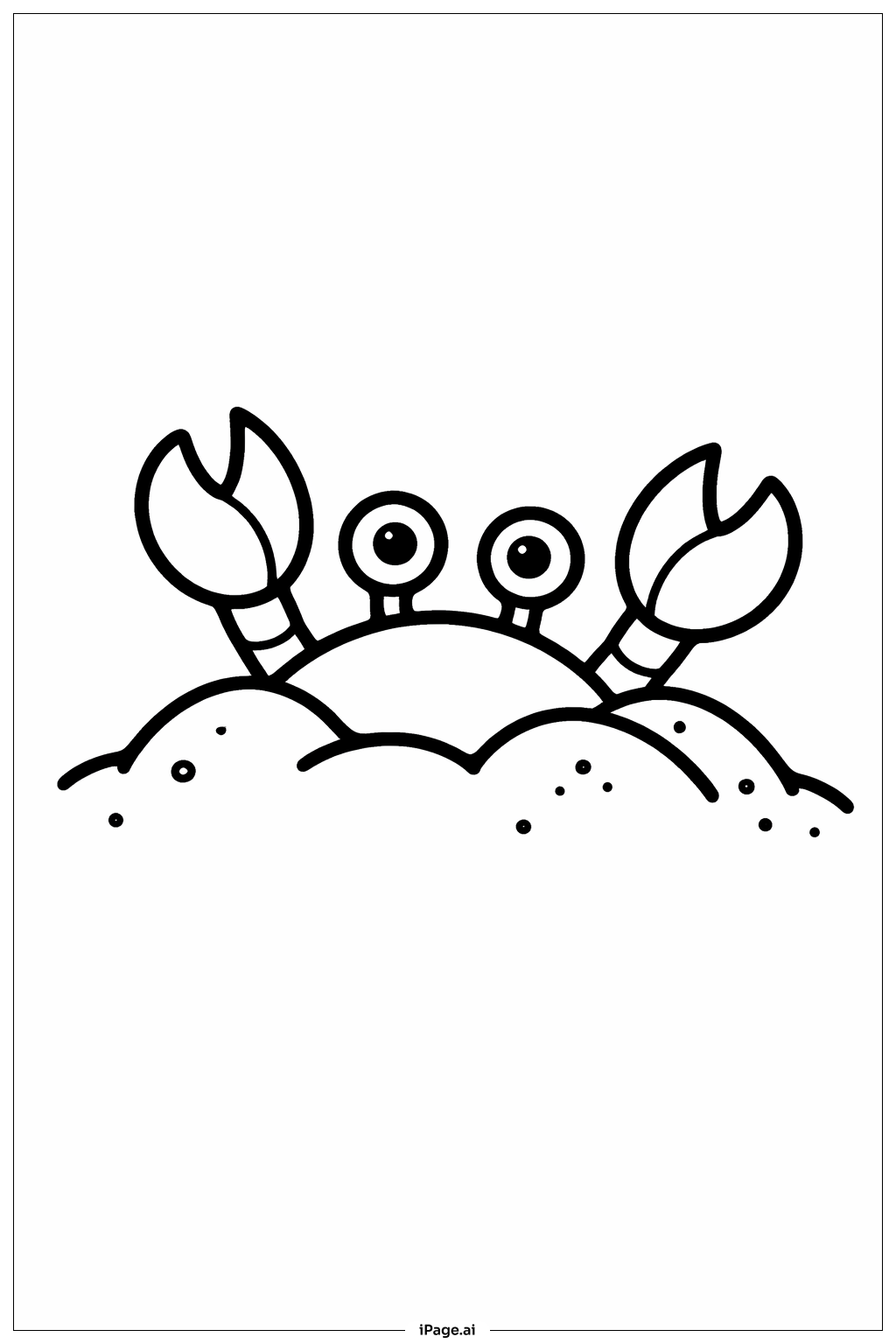
Coloring tips: How to color Crab In Sand coloring page well?
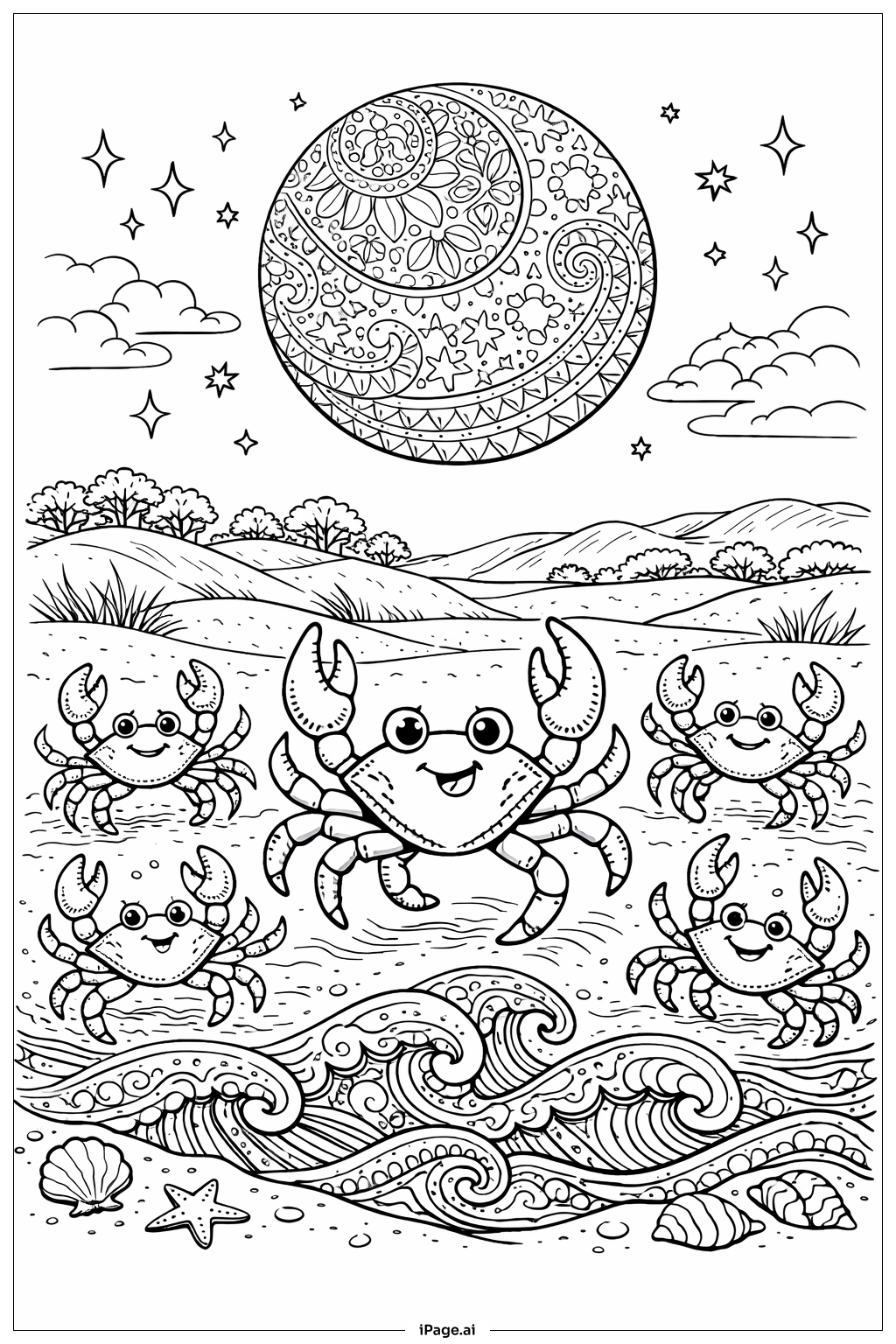
Start with the crab's body and claws. Crabs are often bright orange, red, or reddish-brown, but feel free to use any color you like. You could even make it purple or blue for a fun, creative twist. Use a darker shade of the same color to add depth to the shell's bumpy texture and the edges of the claws. For the eyes, try a dark color like black or dark brown to make them pop. The sandy ground can be colored in warm shades like tan, beige, or golden yellow. Add a little white or light gray to the small pebbles and shells to make them stand out. If you want to make the scene feel like a sunny beach, use soft, warm tones throughout. Take your time on the small details, like the lines in the sand and the tiny segments on the crab's legs. These little touches will make your finished picture really special.
Coloring challenges: Which parts are difficult to color and need attention for Crab In Sand coloring page?
• Crab Shell Texture: The top of the crab's body has a bumpy, segmented surface with many small curves and ridges. Staying within these small areas while keeping a consistent color can be tricky. Using a thin-tipped coloring tool like a colored pencil or fine marker will help you stay neat and add shading along the edges to bring out the texture.
• Claw and Leg Details: The claws and legs have multiple joints and narrow sections that connect to the body. These thin lines make it easy to accidentally color outside the intended area. Work slowly from the tips of the claws inward, and use a pointed tool to fill in the narrow joints without overlapping.
• Eye Stalks: The two small eye stalks are delicate and thin. The round eyes at the top are very small, making precise coloring a real challenge. A fine-point marker or a very sharp colored pencil is the best choice for these tiny features. Coloring the eyes with a solid dark color first will help them stand out clearly.
• Sand Grain Details: The sandy background is filled with many tiny dots, pebbles, and ripple lines. Deciding how much detail to color can be overwhelming. You can choose to lightly shade the whole sand area in one warm tone and then add small darker dots on top to suggest individual grains without coloring each one separately.
• Balancing the Overall Colors: Making sure the crab stands out clearly from the sandy background takes some planning. Choose colors that contrast well, such as a bold orange or red crab against a soft tan or beige sand, so the main subject always draws the eye first.
Benefits of coloring books: Advantages of drawing Crab In Sand coloring page
Coloring this crab in the sand image offers a wonderful range of benefits for kids and beginners alike. Working through the crab's textured shell and detailed claws helps build fine motor skills and hand-eye coordination. Carefully guiding a pencil or marker through the small sections trains the hand muscles in a fun and natural way.
The image also encourages creativity. Choosing colors for the crab, the sand, and the tiny shells lets young artists make their own decisions and feel proud of a unique finished piece. There is no wrong answer, which builds confidence and a healthy sense of self-expression.
Focusing on the many small details in the picture, like the sand ripples and the eye stalks, helps children practice concentration and patience. These are skills that carry over into school and everyday tasks.
The beach theme also sparks curiosity about the natural world. Kids may start asking questions about real crabs, where they live, what they eat, and how they move. This makes coloring a quiet gateway to learning about marine life and nature.
Finally, the calm, repetitive action of coloring is a great way to relax and unwind. It gives children a screen-free activity that feels rewarding from start to finish.