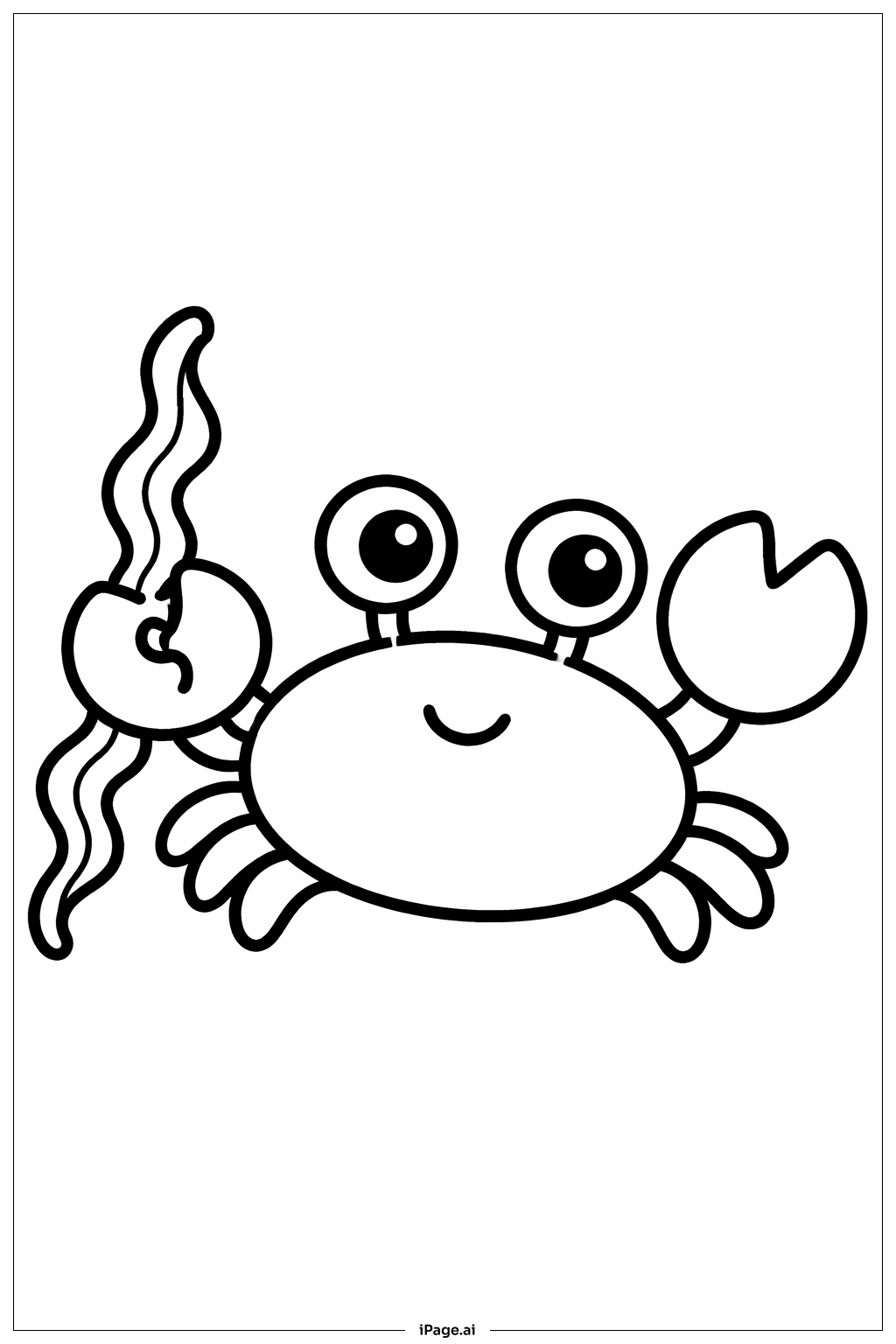
Coloring tips: How to color Crab Eating Seaweed coloring page well?
For coloring the crab, use bright and warm colors like red, orange, or yellow. These colors make the crab look lively and cheerful. The eyes can be colored black with a white highlight to make them look shiny. For the seaweed, green shades such as dark green, olive, or lime green work well. You can add lighter or darker tones to the seaweed to give it more depth. The background can be left white or colored in light blue to suggest water. Simple color choices will help the crab stand out and make the picture vibrant and fun.
Coloring challenges: Which parts are difficult to color and need attention for Crab Eating Seaweed coloring page?
1. Coloring the crab's claws evenly can be hard because they have large, curved shapes that need consistent shading. 2. The two big eyes need careful coloring to make them look round and shiny without spilling over. 3. The wavy seaweed has thin, flowing lines that require attention to keep colors inside the lines. 4. Balancing colors to make the crab and seaweed look natural together might be tricky. Choosing colors that complement each other helps the picture look balanced. 5. Avoid coloring over small spaces between the crab’s legs and body to keep the drawing clean.
Benefits of coloring books: Advantages of drawing Crab Eating Seaweed coloring page
Coloring this crab image helps children practice fine motor skills by staying inside the lines, especially around the curls of the seaweed and the crab’s eyes. It encourages creativity as kids choose colors and shades. Coloring the seaweed provides an opportunity to explore different green hues. Also, coloring a happy crab can make the activity enjoyable and boost mood. This picture introduces young artists to marine life, sparking interest in nature while developing concentration and hand-eye coordination.