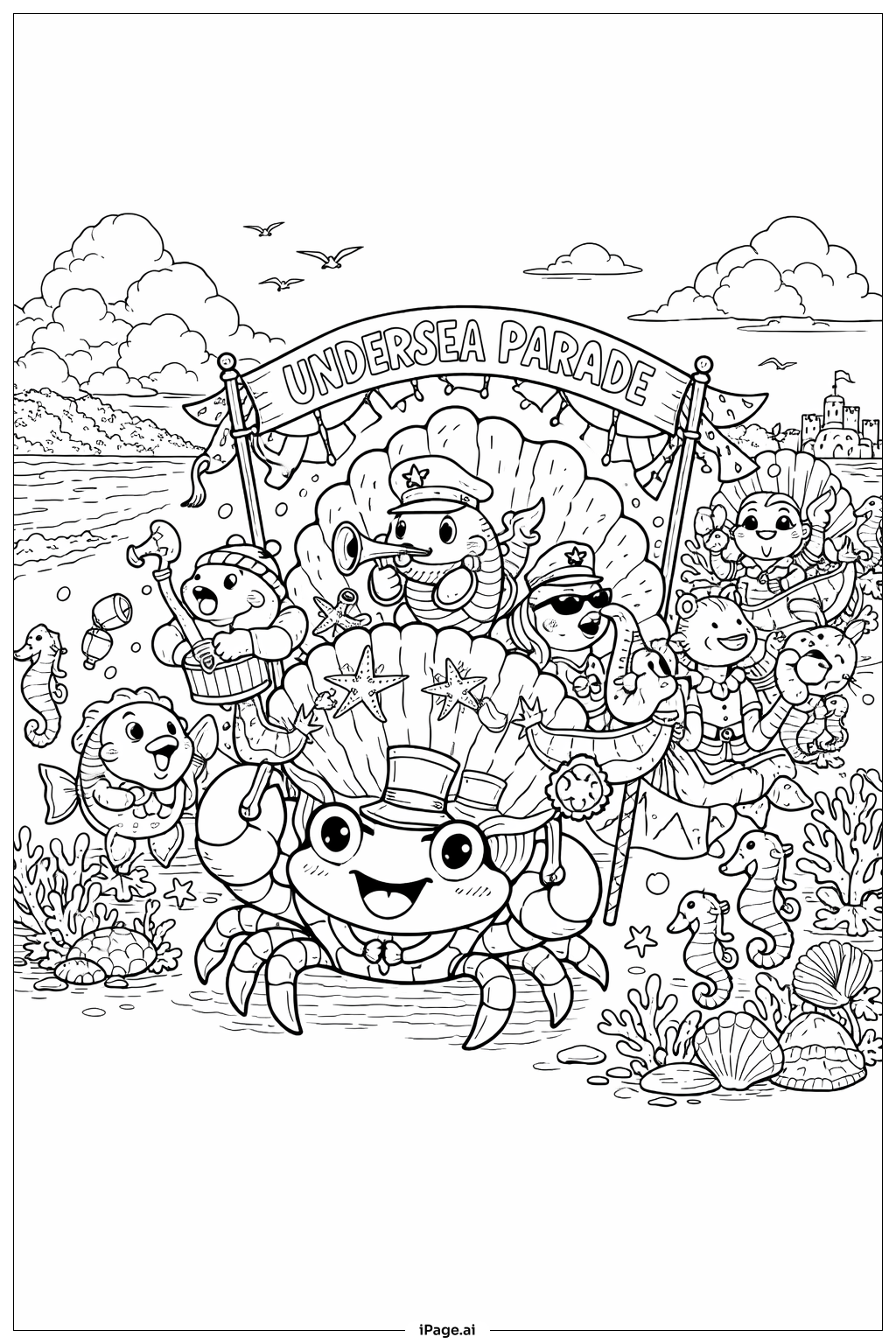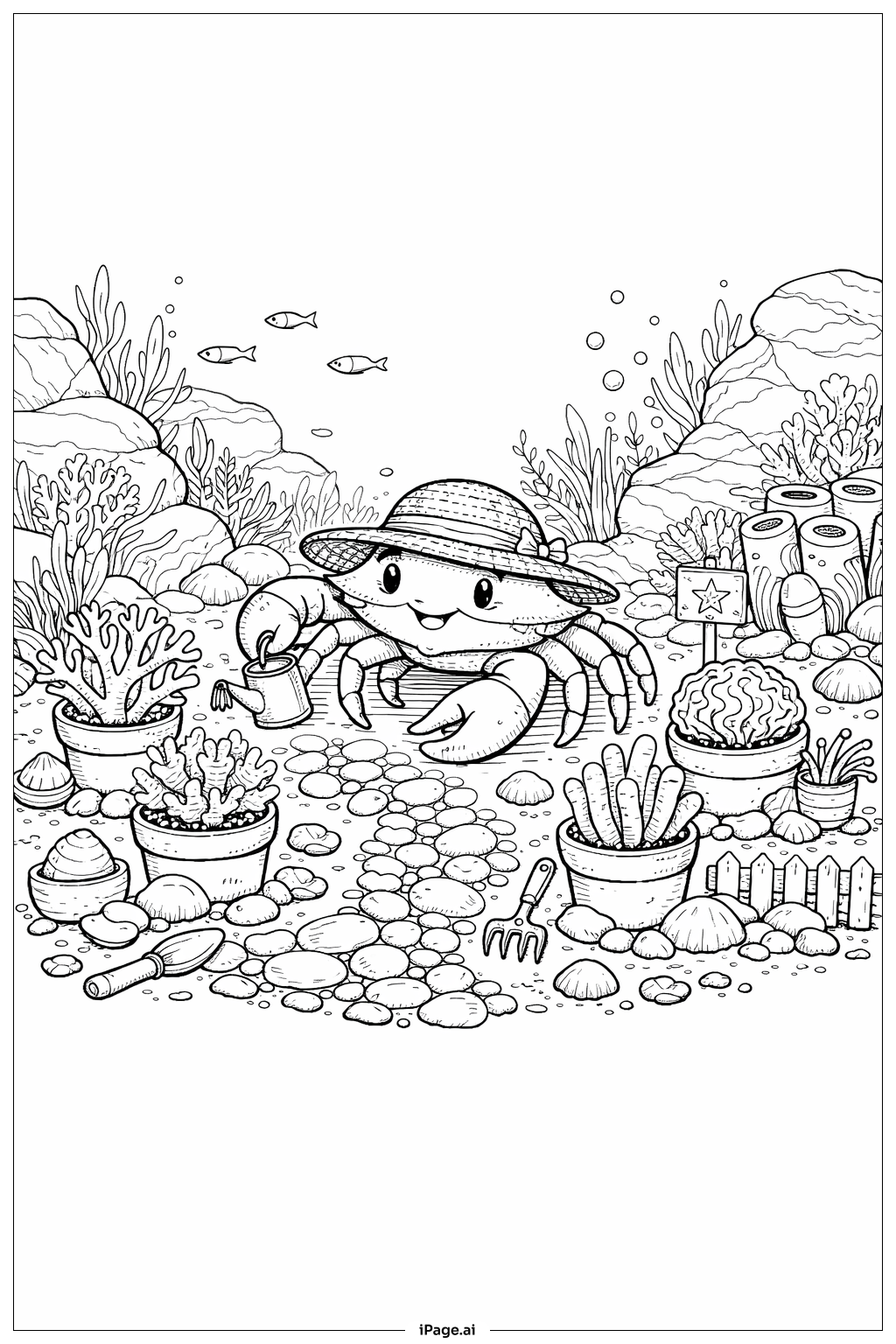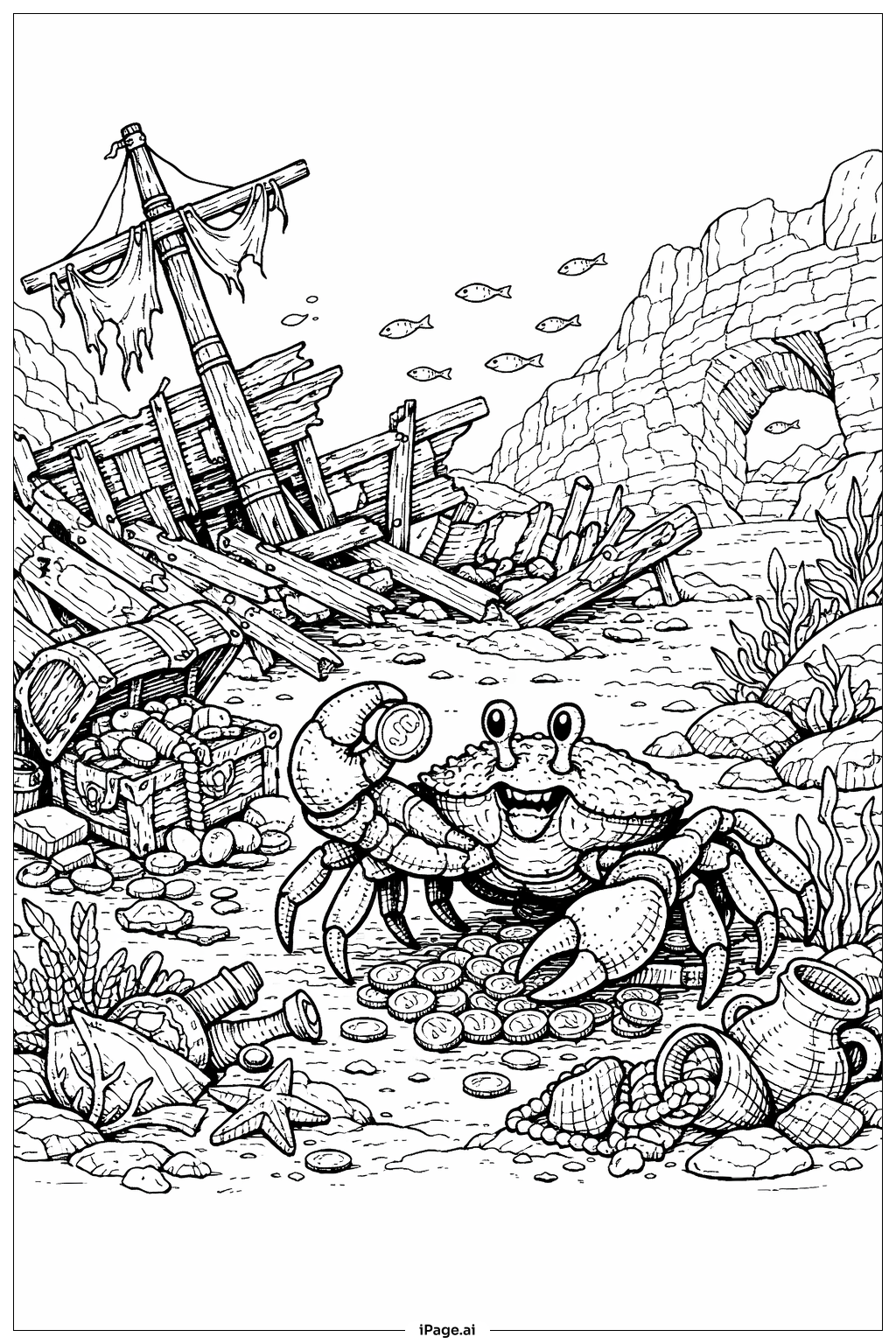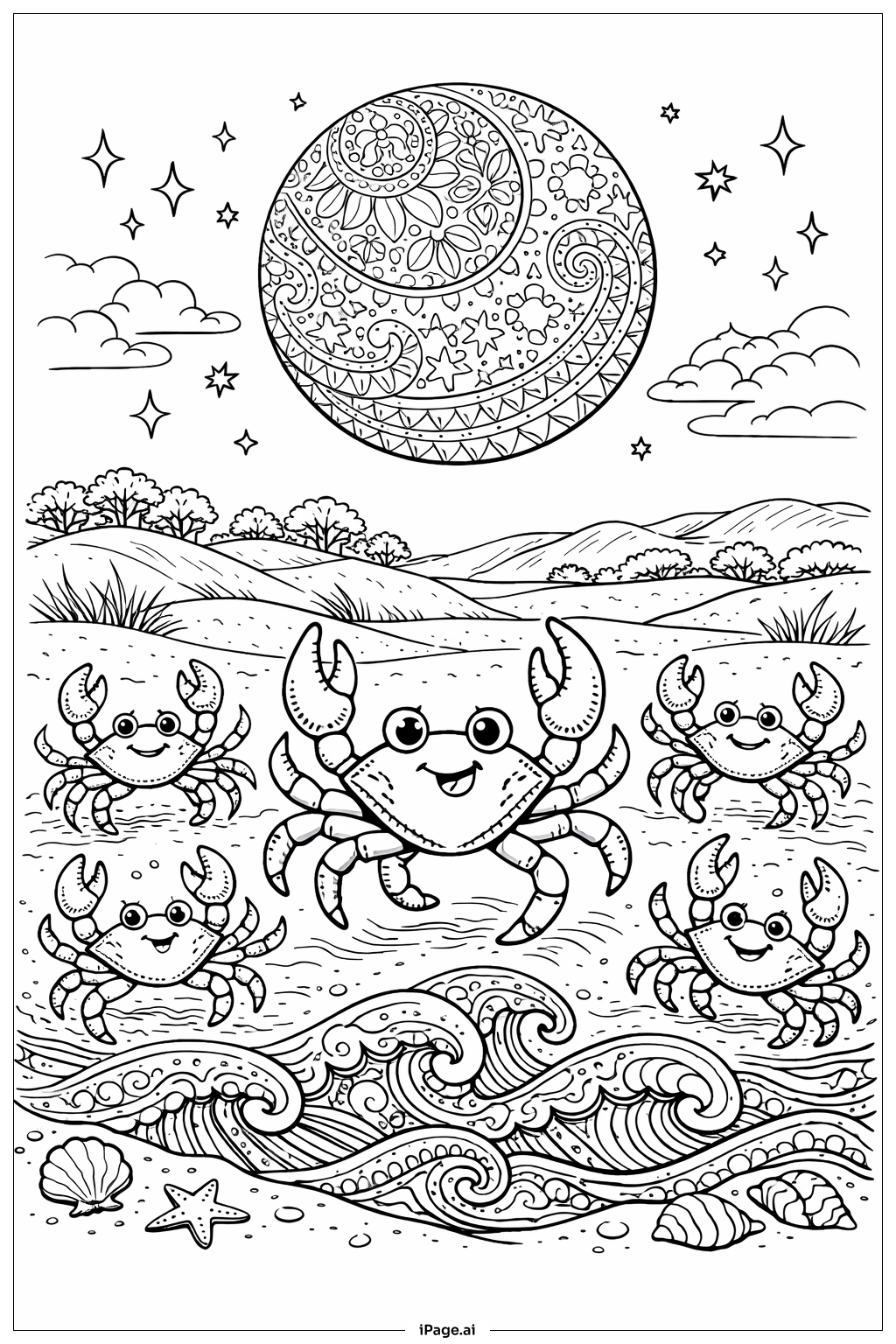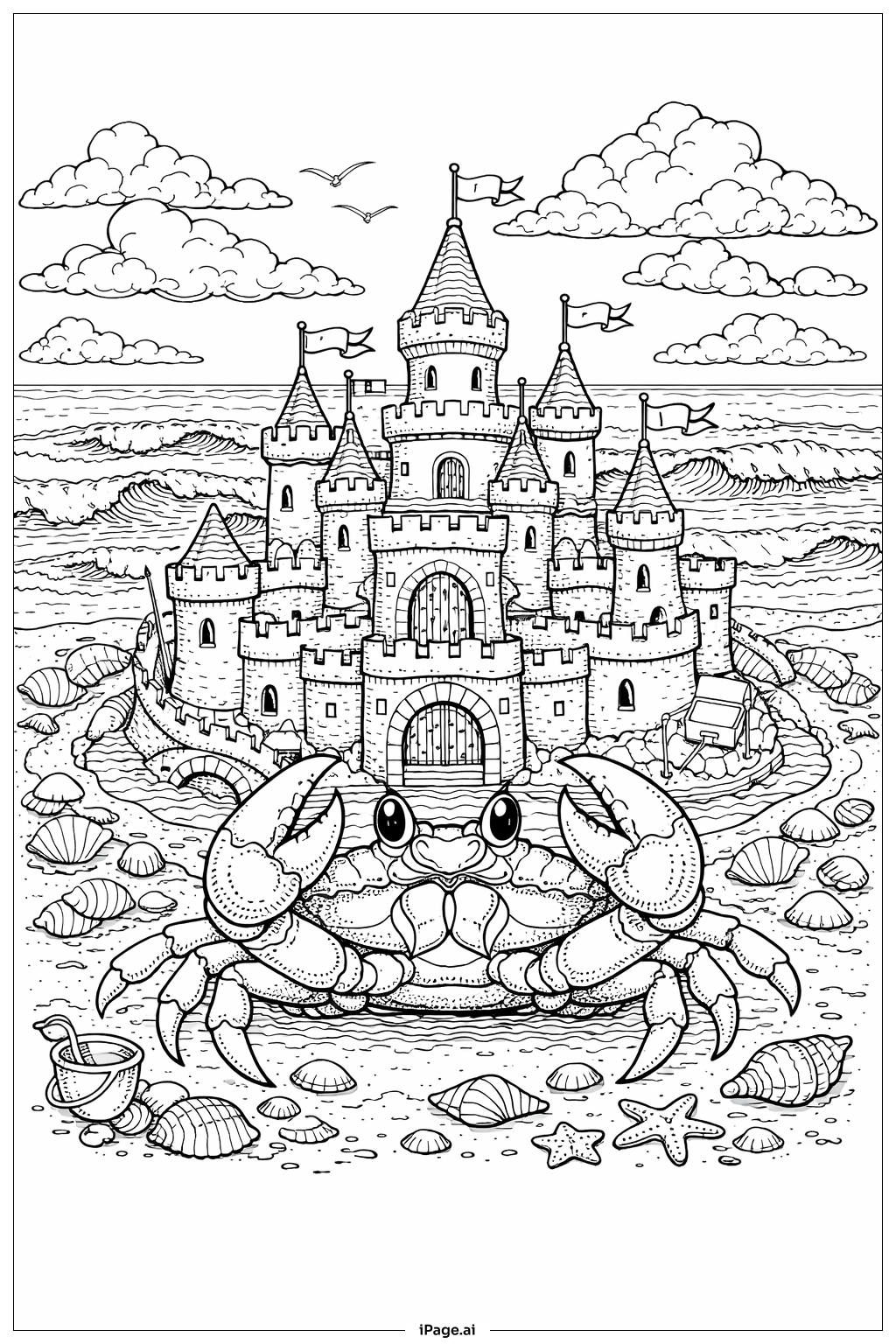
Coloring tips: How to color Crab Castle Fortress coloring page well?
Start with the crab's body using warm orange or red tones, which are natural crab colors. The castle towers and walls can be colored in classic stone gray or sandy beige to look like real fortress walls. Add variety by using darker brown or gray for the brick texture details. Color the flags in bright, cheerful colors like red, blue, or yellow to make them stand out. The crab's eyes can be black with white highlights for a lively expression. Use light blue or turquoise for any water elements surrounding the fortress. The tower roofs look wonderful in deep blue, purple, or traditional red. Add shadows with darker shades of your base colors to create depth, especially under the towers and around the doorways. The ocean floor can be golden yellow or tan to represent sand.
Coloring challenges: Which parts are difficult to color and need attention for Crab Castle Fortress coloring page?
• Intricate Castle Architecture: The multiple towers, turrets, and crenellated walls require careful attention to keep colors within the lines. Each architectural element has fine details like brick patterns, windows, and doorways that need precise coloring. Young children may find it challenging to color the small window spaces and narrow tower sections without crossing boundaries.
• Layered Structural Elements: The castle fortress has many overlapping parts where the towers connect to the main shell and where walls intersect. Distinguishing between these layers and deciding which colors to use for each section requires planning. Children need to understand spatial relationships to avoid confusion about which part is in front or behind.
• Texture and Pattern Details: The brick textures on the castle walls, the scales or segments on the crab's shell, and the rippled sand on the ocean floor all present pattern-filling challenges. Maintaining consistent coloring within these repetitive patterns takes patience and steady hand control, especially for younger colorists.
• Small Decorative Elements: The flags, windows, doorways, and ornamental details on the towers are quite small. Coloring these tiny spaces accurately requires fine motor skills and concentration. Using thin coloring tools like colored pencils or fine-tip markers works better than thick crayons for these delicate areas.
• Color Coordination Planning: With so many different elements, deciding on a harmonious color scheme can be challenging. Balancing the warm crab colors with cool castle stone tones while making flags and details pop requires thoughtful color selection and planning before starting.
Benefits of coloring books: Advantages of drawing Crab Castle Fortress coloring page
Coloring this Crab Castle Fortress helps children develop fine motor skills and hand-eye coordination through the detailed architectural elements. The intricate patterns and small spaces improve concentration and patience. This imaginative design encourages creative thinking as children decide how to bring this fantasy underwater castle to life with their color choices. Working with the various textures and architectural details enhances spatial awareness and understanding of how different parts connect together. The combination of a familiar sea creature with castle architecture introduces children to both marine life and medieval structures, making learning fun. Completing this detailed coloring page builds confidence and provides a sense of accomplishment. The repetitive patterns offer a calming, meditative activity that helps reduce stress. Children learn color theory by experimenting with complementary and contrasting colors across the different fortress elements.