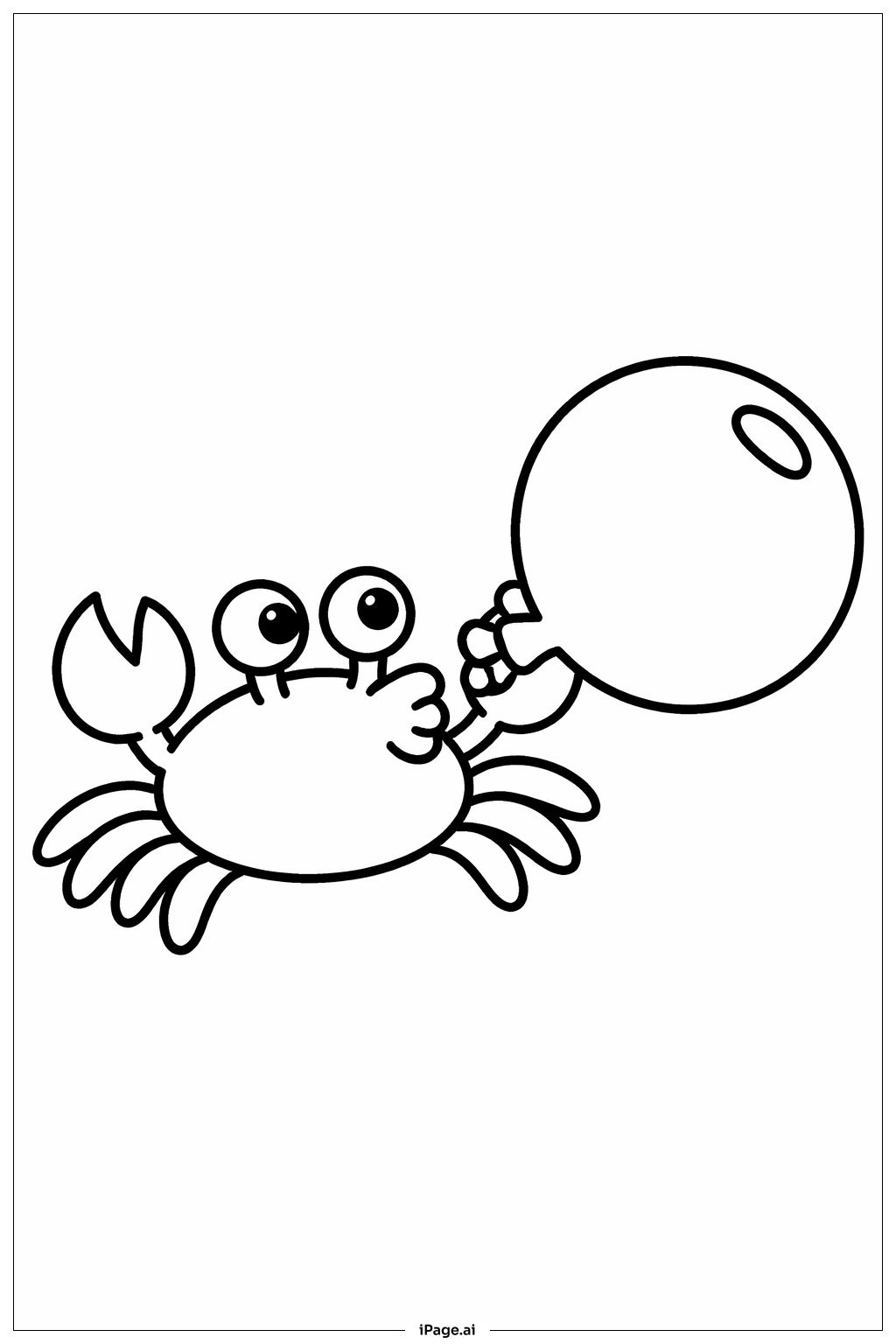
Coloring tips: How to color Crab Blowing Bubble coloring page well?
Start with the crab's body. Crabs are often red or orange, but feel free to try bright pink, deep coral, or even a fun purple for a creative twist. Use a darker shade of the same color to add depth to the shell patterns on its back. For the claws, try a slightly lighter tone to make them stand out. Color the eyes with black pupils and leave a small white dot for a shiny effect. The bubble wand can be yellow or gold. For the bubbles, use light blue or lavender with a white highlight to make them look transparent and glossy. The smaller floating bubbles can be tinted with soft rainbow colors — pale pink, light green, and sky blue — to make the scene feel magical. For the background, sandy yellow works great for a beach feel, or use soft teal and aqua tones to suggest an underwater world. Keep the overall palette bright and cheerful to match the crab's happy expression.
Coloring challenges: Which parts are difficult to color and need attention for Crab Blowing Bubble coloring page?
• Shell Texture Details: The crab's back features small raised patterns and ridges that create a textured shell surface. Staying within these tiny shapes requires a fine-tipped coloring tool. Using two close shades of the same color — one lighter and one darker — can help each section stand out without making the shell look flat or messy.
• Transparent Bubble Effect: Bubbles are tricky because they are see-through in real life. To make the large bubble look glossy and round, you need to blend colors carefully. Leave a small area near the top uncolored or very lightly shaded to create a highlight. The edges of the bubble should be slightly darker than the center to give it a curved, three-dimensional look.
• Small Floating Bubbles: The smaller bubbles scattered around the scene are quite tiny. Filling them with soft color without going outside the lines takes patience and a sharp pencil or thin marker. Each small bubble also benefits from a tiny white highlight to keep the airy, floating feel consistent with the large bubble.
• Expressive Face Details: The crab's large eyes and smile carry the whole mood of the image. The eyes have multiple layers — outer circle, inner iris, pupil, and highlight dot. Coloring each layer carefully without smudging into the next one is important to keep the expression looking lively and cute.
• Background Balance: Whether you choose a beach or underwater setting for the background, the colors must stay soft enough not to overpower the crab. Using light, gentle tones for the background ensures the main character stays the visual focus of the page.
Benefits of coloring books: Advantages of drawing Crab Blowing Bubble coloring page
Coloring this fun crab image offers a wide range of benefits for kids and beginners alike. The playful scene encourages children to use their imagination when choosing colors, helping build creative thinking from an early age. Working through the shell patterns and small bubbles trains fine motor skills, as children practice controlling their coloring tools with care and precision. This kind of focused, detailed work also strengthens hand-eye coordination over time. The process of deciding which colors go where — the crab's body, the glowing bubbles, the background — encourages early problem-solving and decision-making skills. Because the image is cheerful and lighthearted, children naturally feel relaxed while working on it, making coloring a calming and stress-free activity. Completing the page gives kids a strong sense of accomplishment and pride in their work, which builds confidence. For older children, the challenge of creating a realistic bubble effect or blending shell shading introduces basic art concepts in a fun, low-pressure way. Overall, this coloring page combines creativity, focus, and joy into one simple and rewarding activity.