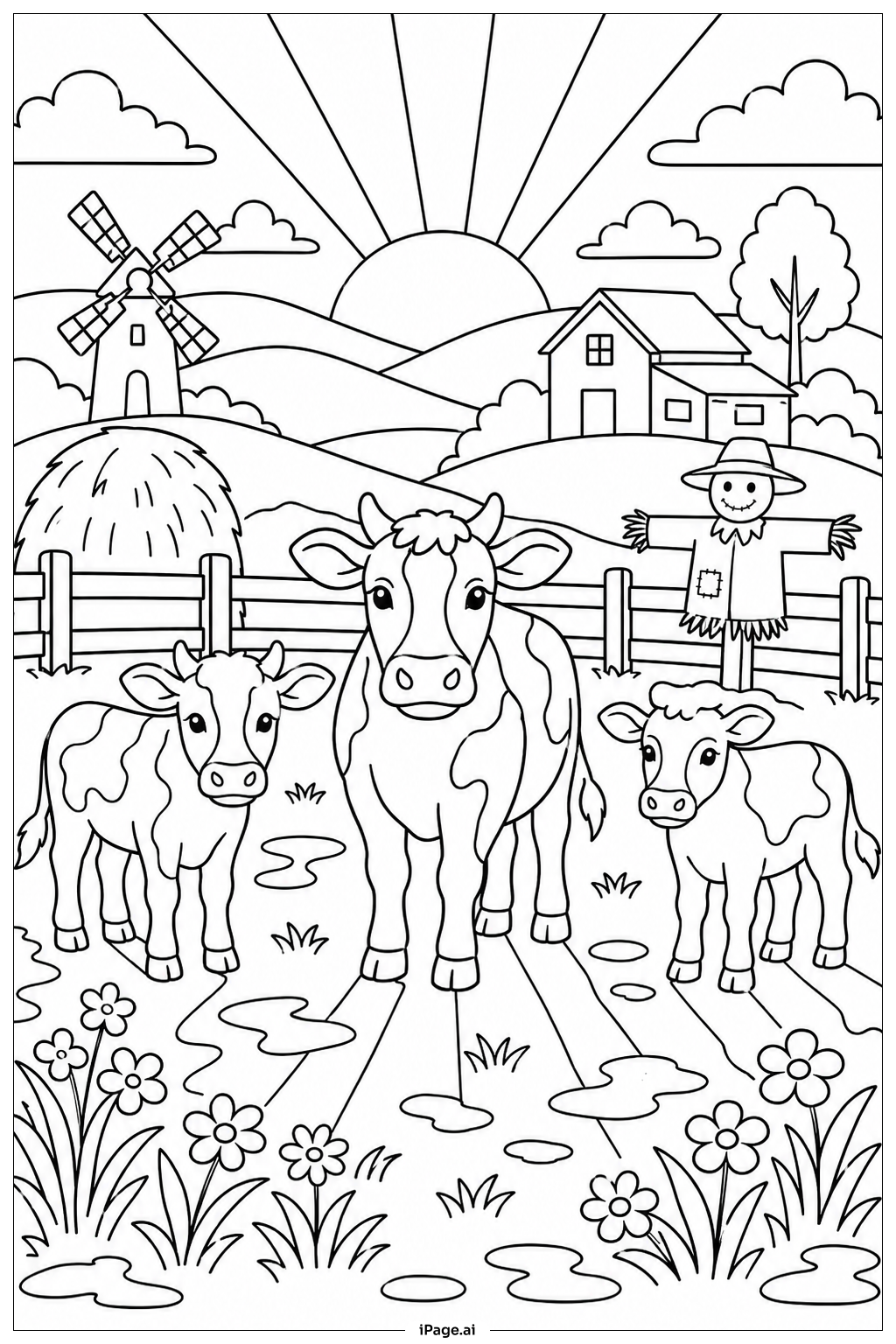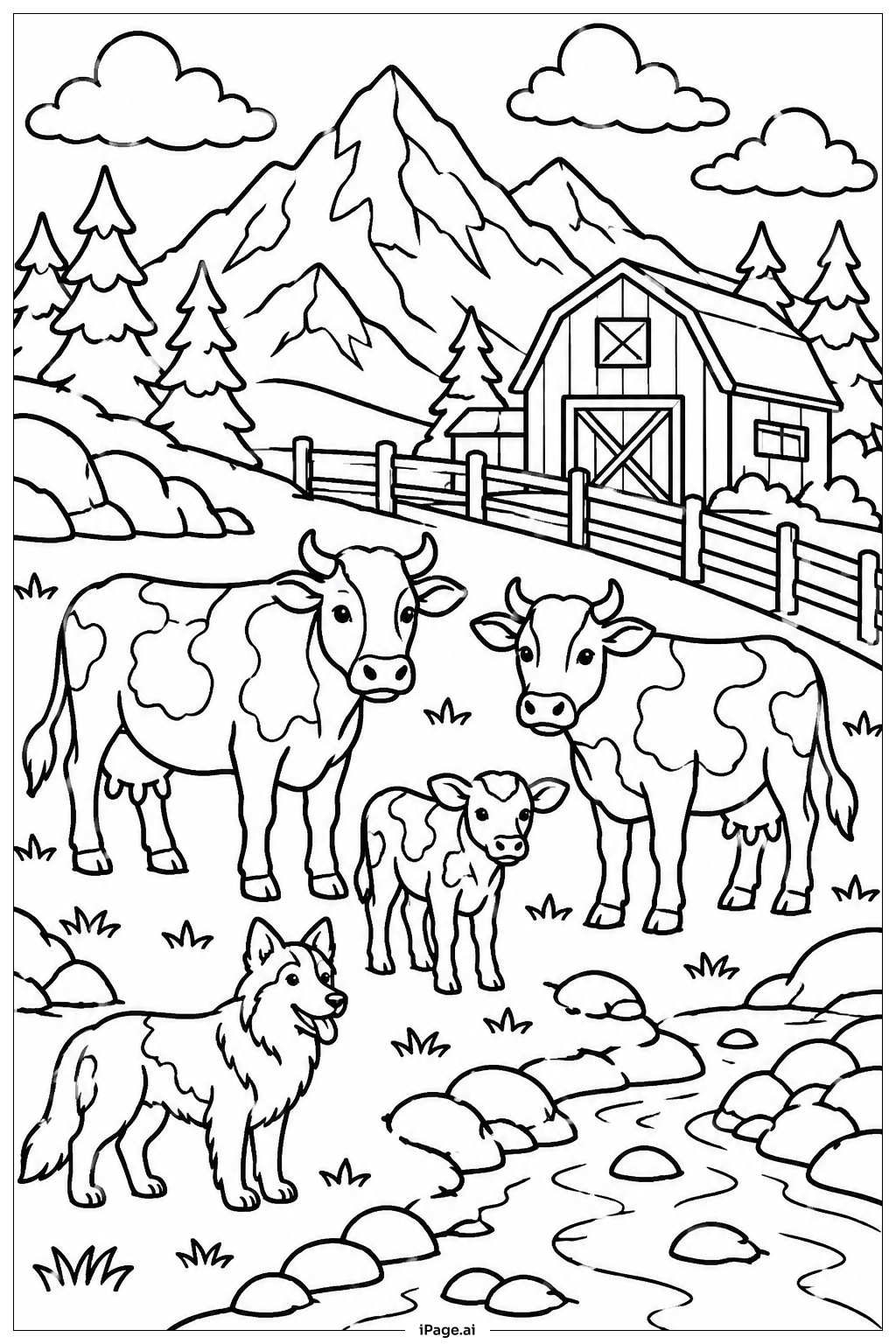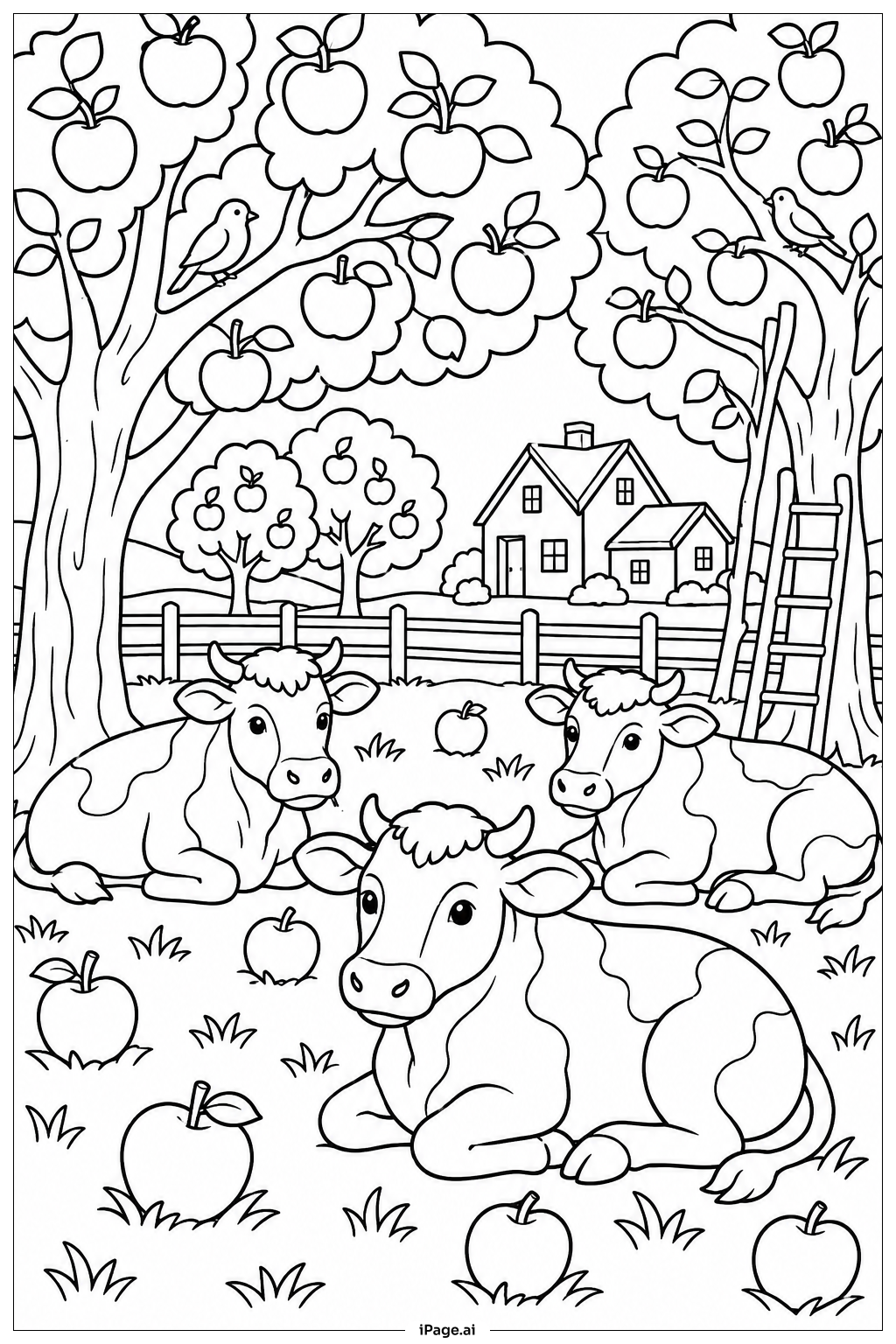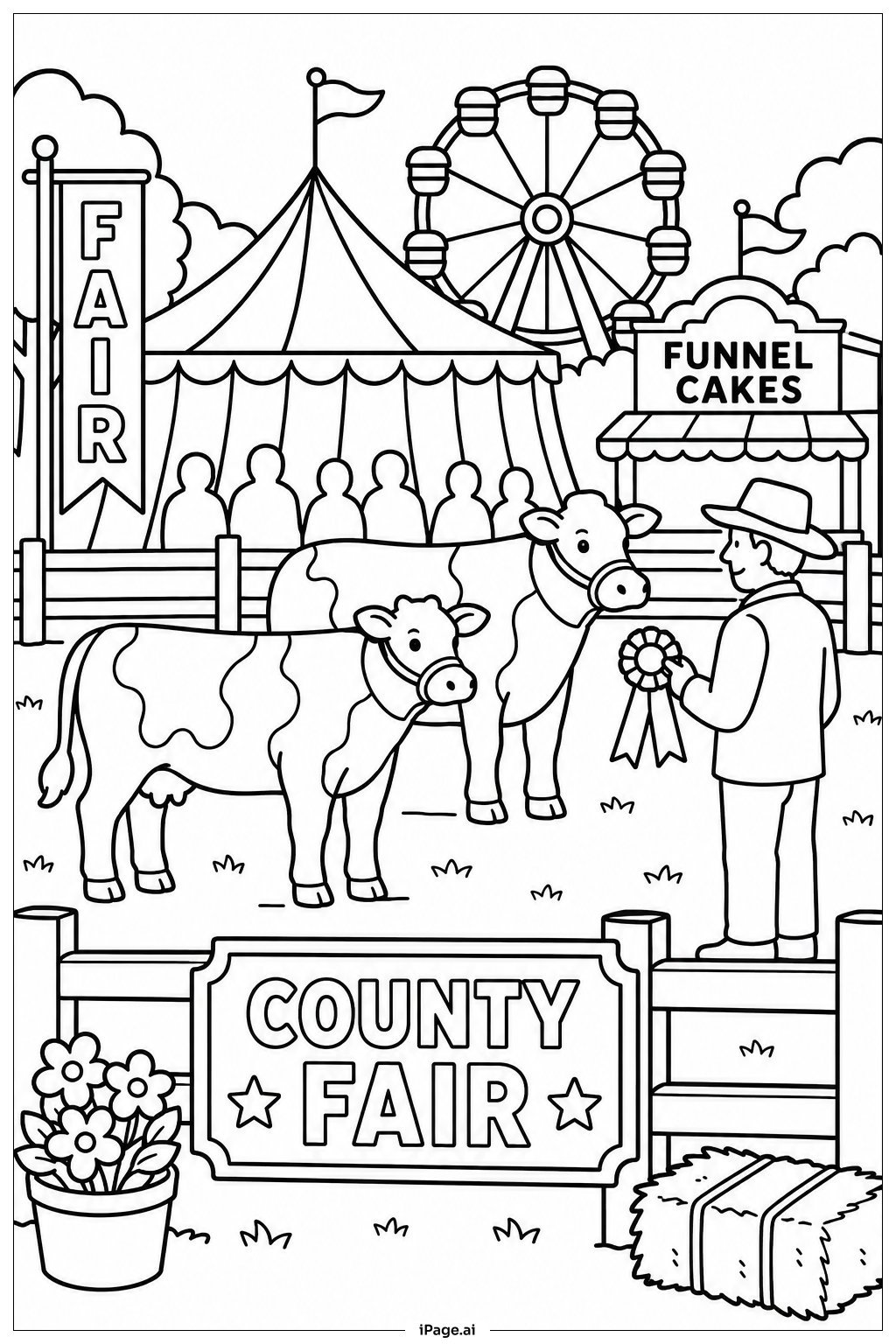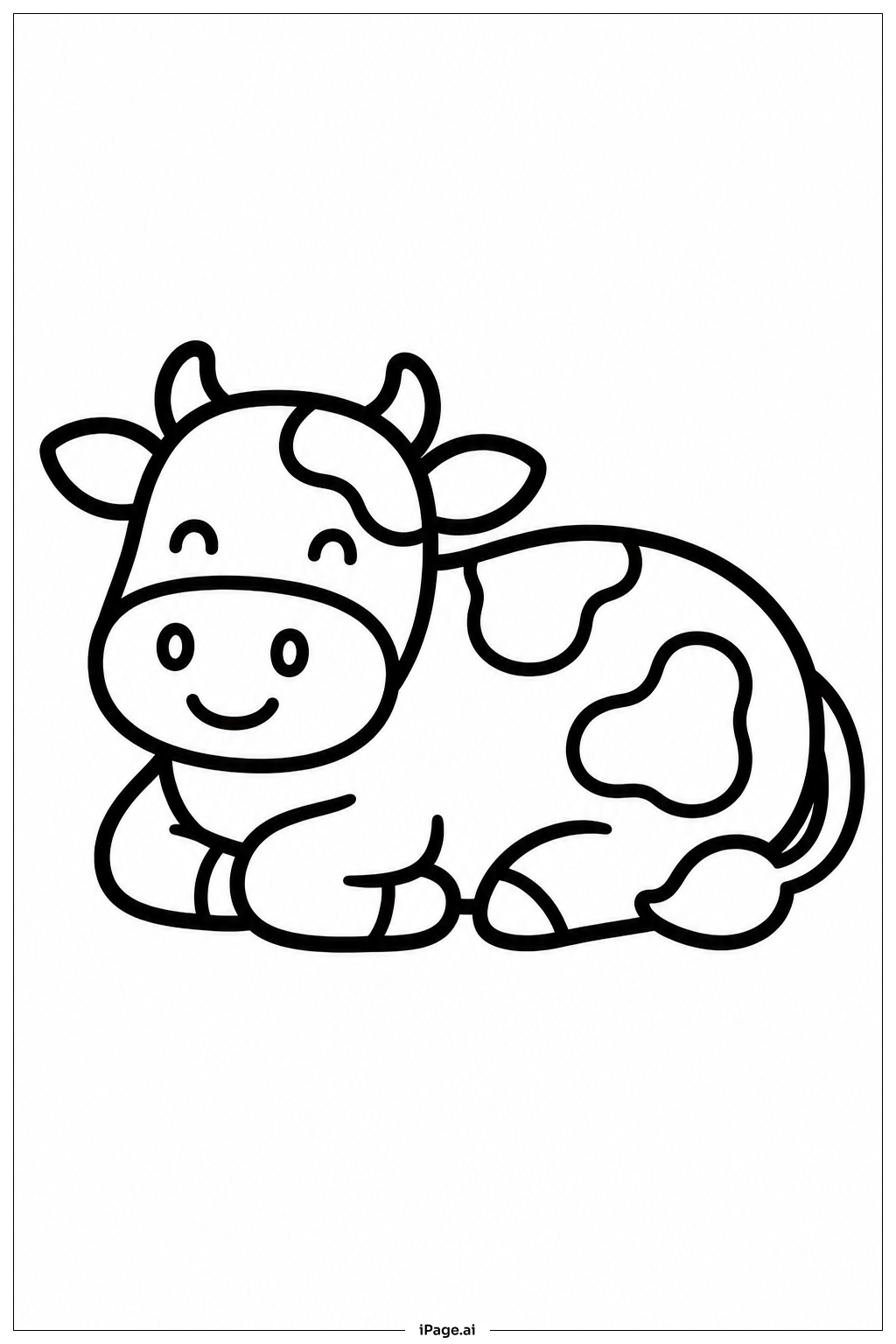
Coloring tips: How to color Cow Lying Down coloring page well?
Start with the cow's body using a light brown or tan color. You can add patches of white or dark brown to give it a classic Holstein or dairy cow look. Use a soft pink for the nose, inner ears, and belly area. Color the hooves with a dark gray or brown. The horns can be done in a creamy off-white or light yellow. For the eyes, use dark brown with a small white highlight to make them look bright and alive. The tail tip can be colored a slightly darker shade than the body. If you want to add a background, soft greens for grass and light blue for the sky will make the scene feel warm and cheerful. Keep the colors gentle and natural to match the cow's calm, peaceful mood.
Coloring challenges: Which parts are difficult to color and need attention for Cow Lying Down coloring page?
• Body Shading and Depth: The cow's large, rounded body can be tricky to color evenly. Without shading, it may look flat. Try using a slightly darker version of your base color along the edges and underside of the belly to create a sense of roundness and three-dimensional form.
• Skin Folds and Texture: The soft folds around the cow's neck, legs, and chest require careful attention. These areas need subtle color variation, slightly darker tones in the creases and lighter tones on the raised parts, to look realistic and avoid appearing like a flat shape.
• Small Facial Features: The cow's face includes small details like the eyes, nostrils, and inner ears. These areas are close together and require a fine-tipped colored pencil or marker. Coloring the eyes neatly with a dark outline and a light reflection dot takes patience and a steady hand.
• Leg and Hoof Placement: Because the cow is lying down, the legs are tucked under the body and partially hidden. Distinguishing the legs from the belly using subtle color shifts is challenging. Using a slightly different shade for the lower legs and dark brown or gray for the hooves helps define each part clearly.
• Coat Pattern Consistency: If you choose to add spots or a two-tone coat pattern, keeping the patches looking natural and balanced across the whole body can be difficult. Plan the patch shapes lightly in pencil first before committing to color, so they flow naturally with the body's curves.
Benefits of coloring books: Advantages of drawing Cow Lying Down coloring page
Coloring this peaceful cow lying down offers many wonderful benefits for kids and beginners alike. Because the cow has a large, open body with plenty of space, it is easy to fill in with broad strokes, which helps build confidence for younger colorists. At the same time, the smaller details like the face, folds, and hooves offer a gentle challenge that encourages focus and patience. Working through those details helps improve fine motor skills and hand control. Choosing colors for the coat, nose, and background also sparks creativity and imagination. Kids get to decide whether their cow is a classic black-and-white Holstein or something more colorful and unique, making the activity feel personal and fun. The calm, restful pose of the cow creates a soothing scene to work on, which can help reduce stress and encourage mindfulness. Spending quiet time with a coloring page like this is a great way for children to practice concentration. It also connects young colorists to the natural world by introducing them to farm animals in a gentle, engaging way. Overall, this page combines learning, creativity, and relaxation in one simple and enjoyable activity.