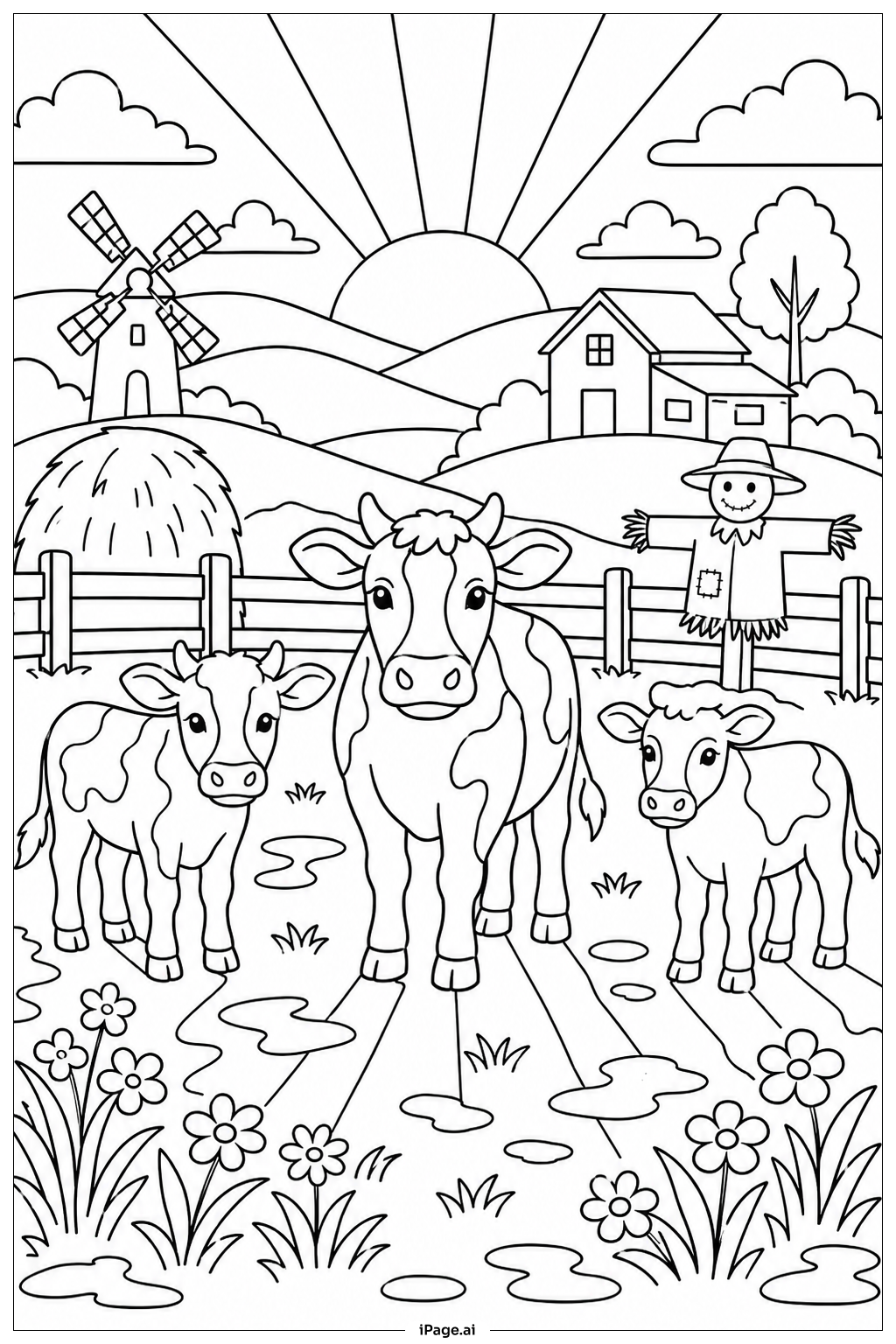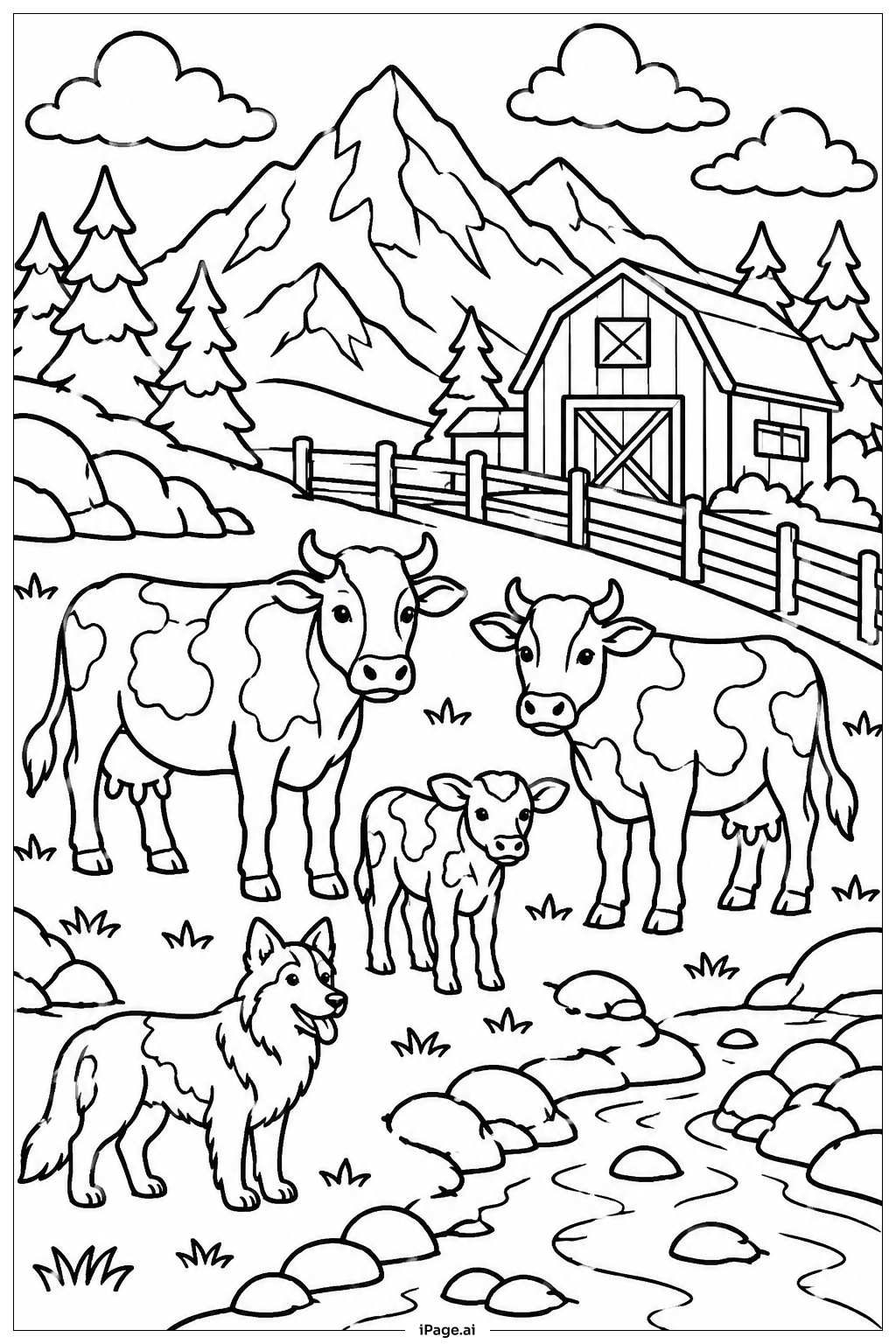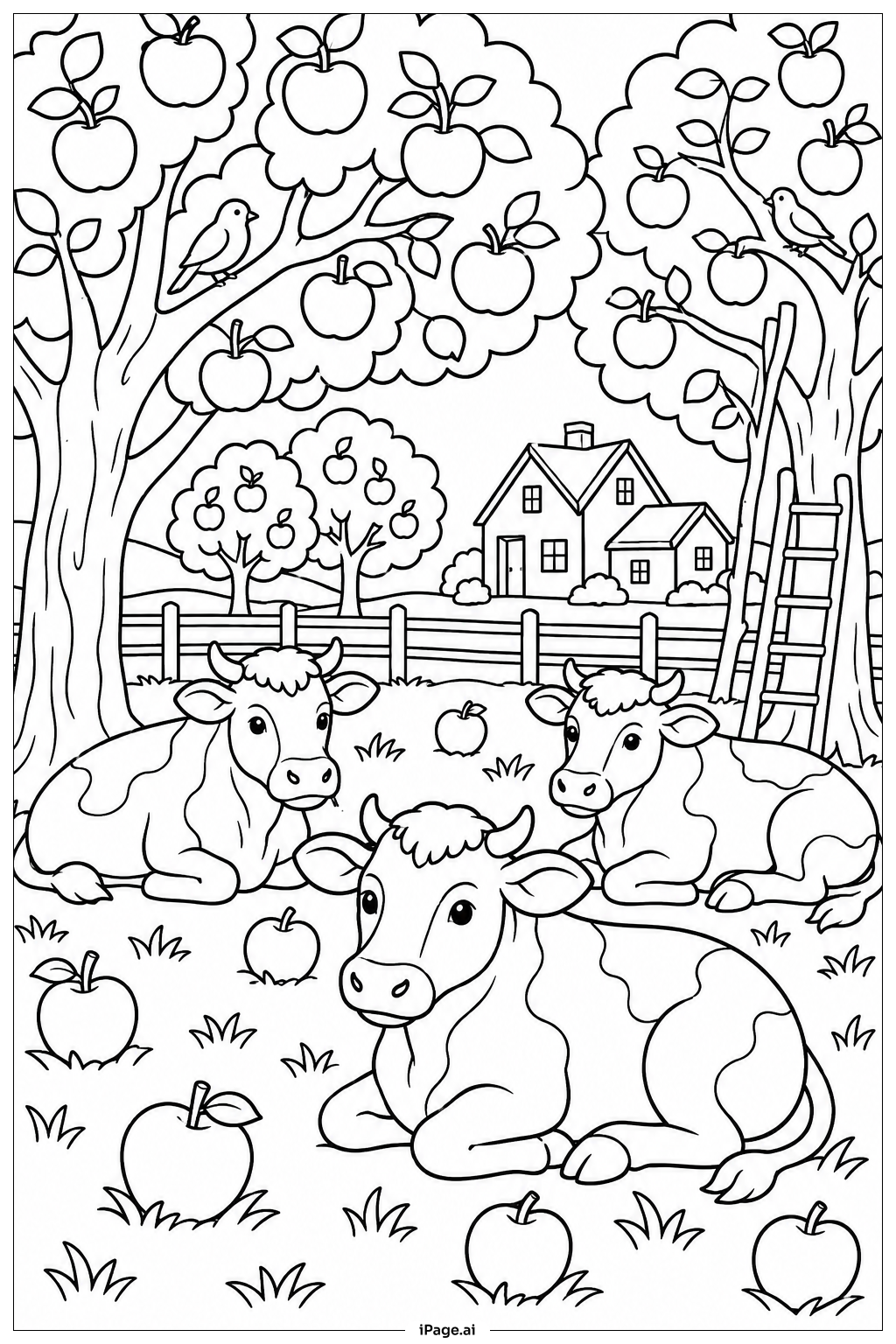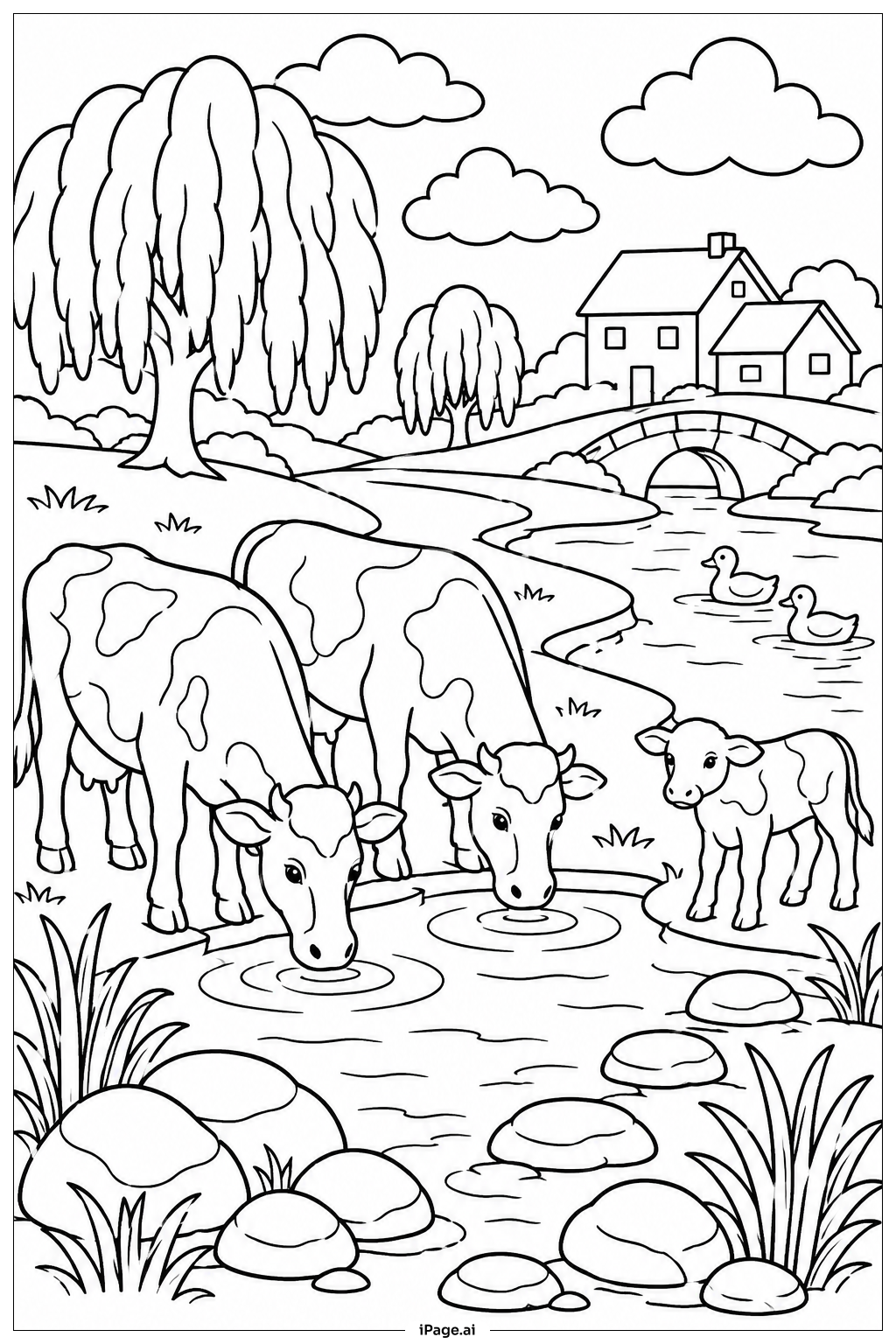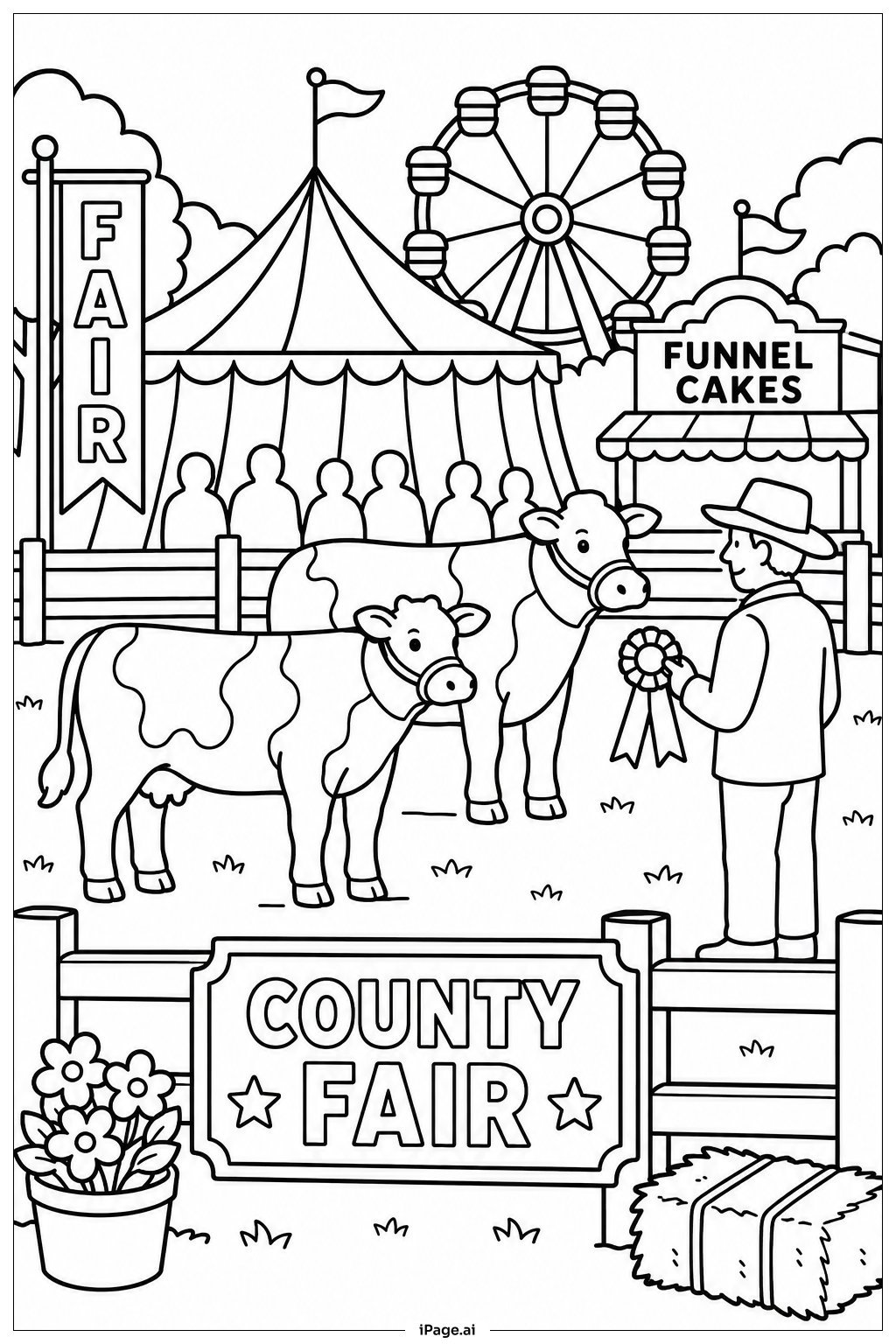
Coloring tips: How to color Cow Fair With Barn coloring page well?
Consider using traditional colors for the cows such as shades of brown, black, and white spots to make them look natural. You can color the barn with warm red tones and white trims to give a classic farm feeling. The fence could be light brown or beige. For the grass, use different green shades to add depth and life to the scene. To make the sky stand out, a soft blue with white clouds will add balance and contrast. Encourage blending different colors gently to let children practice smooth shading. Bright colors for farm tools or decorations can create small pops of interest in the artwork.
Coloring challenges: Which parts are difficult to color and need attention for Cow Fair With Barn coloring page?
• Cow Patterns: The spots on cows may require careful coloring to keep neat edges between black, white, and brown areas. It takes patience to avoid coloring outside these patterns.
• Barn Wooden Texture: Reproducing wood grain on the barn roof and walls can be tricky, as it needs subtle lines and shading to look realistic but not overly complicated for young children.
• Fence Lines: The fence has multiple vertical and horizontal lines that need steady hand control to color within narrow areas.
• Overlapping Elements: Some cows and objects overlap or partially hide others, which can confuse which parts to color first to maintain clean layers.
• Small Details: Tiny elements like farm tools or grass blades need precision and could be challenging for younger children to color without smudging.
Benefits of coloring books: Advantages of drawing Cow Fair With Barn coloring page
Coloring this Cow Fair With Barn page helps children improve their fine motor skills by practicing control over small areas and details. It encourages attention to detail as they differentiate sections like cow patterns or barn textures. The scene also promotes creativity by allowing kids to experiment with natural and imaginative color choices. Working with overlapping objects teaches children spatial understanding and planning. Overall, this coloring experience enhances patience, concentration, and artistic confidence, making it a fun and educational activity for kids ages 4 to 16.