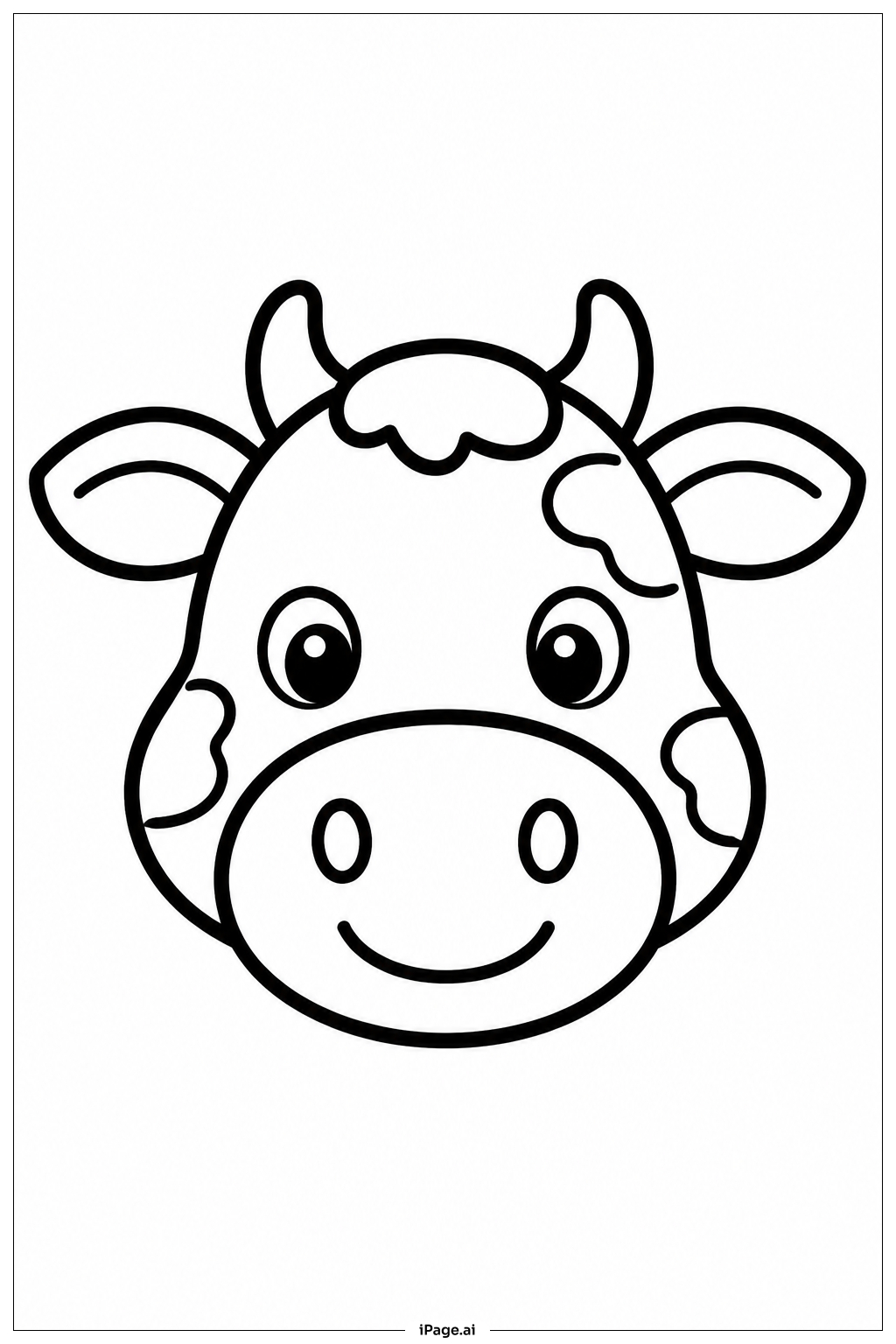
Coloring tips: How to color Cow Face Closeup coloring page well?
For this cow face closeup, start with the main body color using various shades of brown, black, white, or classic Holstein patterns of black and white patches. The snout area typically appears pink or light brown, so soft peachy tones work beautifully there. For the eyes, use deep brown or black for the pupils, adding white highlights to create a lifelike sparkle. The inner ears can be colored with lighter pink shades to show depth. Consider using gray tones for shading around the facial contours to add dimension. Blend different shades of your chosen base color to create realistic fur texture, using lighter strokes on raised areas like the forehead and darker tones in recessed areas around the eyes and under the chin. Adding subtle cream or tan highlights along the edges can make the cow appear more three-dimensional and bring warmth to your finished artwork.
Coloring challenges: Which parts are difficult to color and need attention for Cow Face Closeup coloring page?
• Eye Detail and Expression: The eyes are crucial for capturing the cow's gentle personality. Achieving the right balance of light and shadow in the pupils and surrounding areas requires careful color layering. Colorists need to create depth while maintaining the soft, kind expression that makes this closeup appealing. Adding highlights without making them look artificial can be challenging.
• Snout Texture and Shading: The cow's snout area presents unique challenges with its bumpy, textured surface and distinct nostrils. Creating realistic moisture appearance around the nose while showing the subtle variations in skin tone requires careful blending. The transition from the darker nose to lighter surrounding areas needs smooth gradation to avoid harsh lines.
• Fur Direction and Depth: Although this is a coloring page, suggesting fur texture through color variation is important for realism. Colorists must consider natural fur growth patterns, using lighter and darker shades strategically to create dimension. The challenge lies in making the face look rounded and three-dimensional rather than flat, especially around the cheeks and forehead.
• Ear Shading and Interior Detail: The ears require attention to both outer and inner surfaces. Creating the illusion of the ear's curve and showing the difference between the fuzzy outer surface and smoother inner ear demands careful color choices and shading techniques. Balancing these elements while keeping them proportional to the face adds complexity to the coloring process.
Benefits of coloring books: Advantages of drawing Cow Face Closeup coloring page
Coloring this cow face closeup offers wonderful benefits for children and adults alike. It helps develop fine motor skills and hand-eye coordination through detailed work on facial features like eyes, nostrils, and ears. The focus required promotes mindfulness and relaxation, providing a calming activity that reduces stress and anxiety. Young colorists learn about animal anatomy and farm animals while practicing color recognition and mixing techniques. The closeup perspective teaches observation skills as children notice details they might otherwise miss about how animals look. Working on the various textures from smooth snout to fuzzy ears encourages creative problem-solving in color selection and application. This page also builds patience and concentration as colorists work to complete each section carefully. The friendly, approachable subject matter makes it an enjoyable experience that can spark interest in nature and animals, while the finished artwork provides a sense of accomplishment and pride.