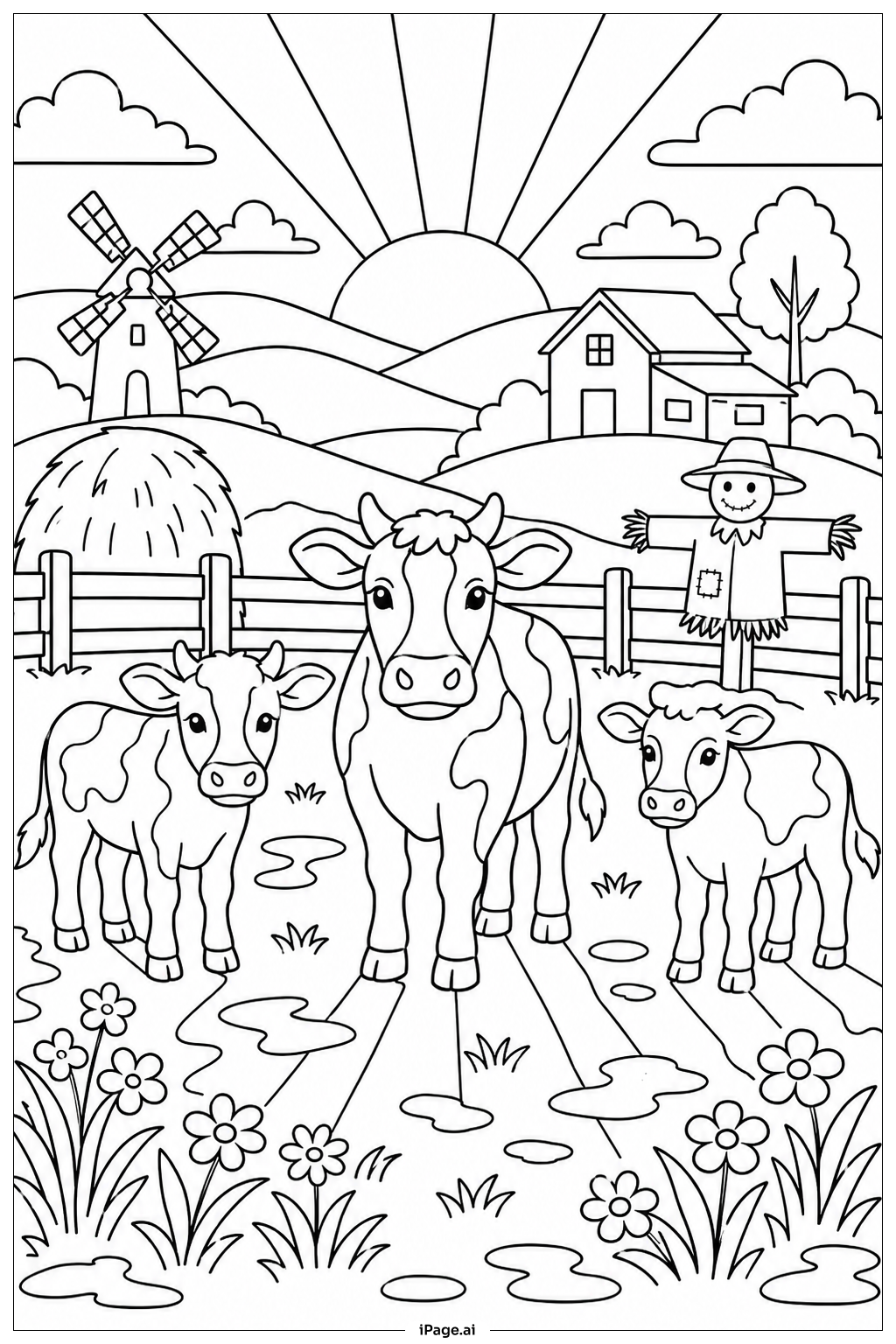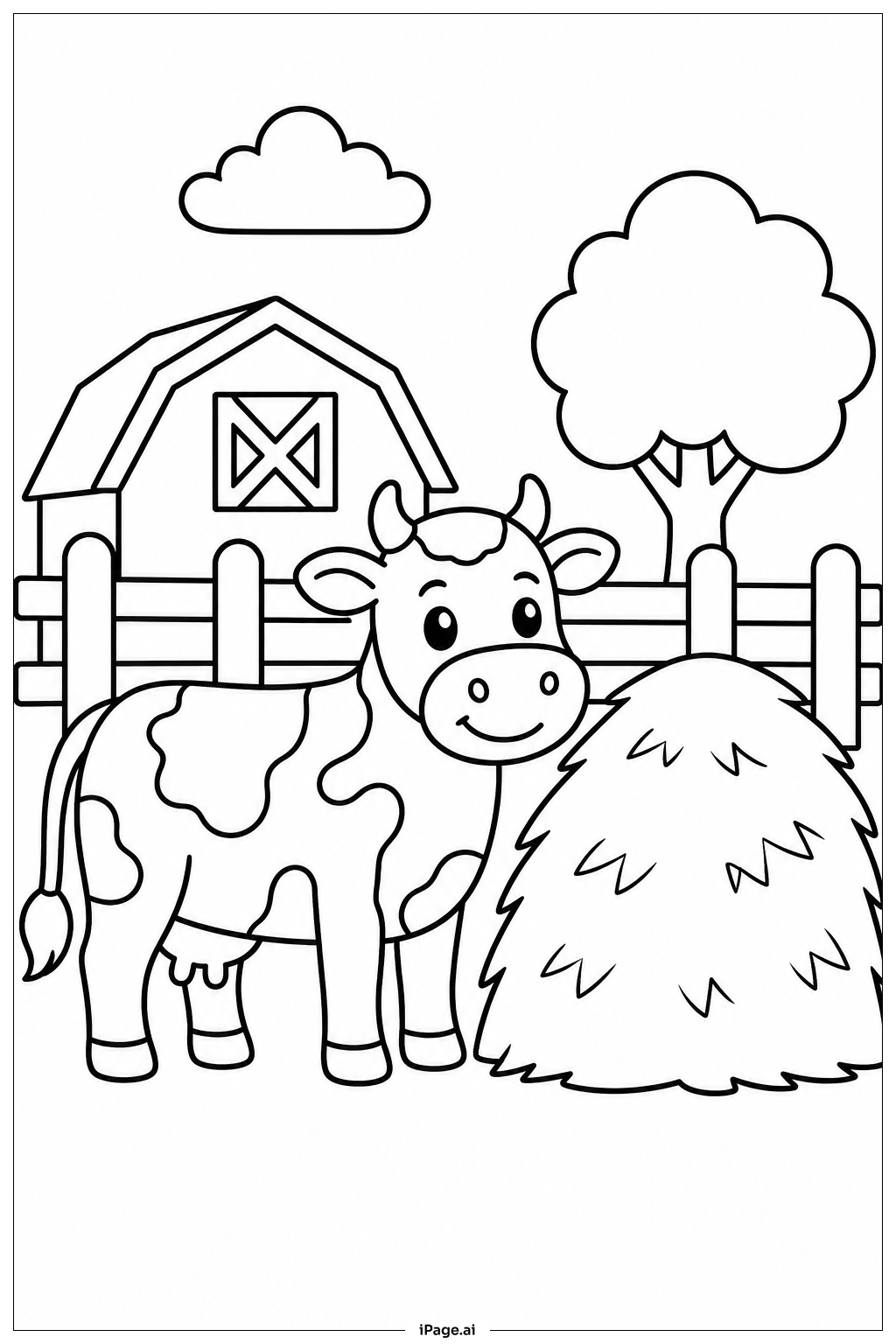
Coloring tips: How to color Cow Beside Haystack coloring page well?
Start with the cow's body using a light brown or tan shade for a classic dairy cow look. Add large black or dark brown spots across the body for a traditional Holstein pattern. Use a soft pink for the nose, inner ears, and udder area. The eyes can be dark brown with a small white highlight to bring them to life. Color the hooves in dark gray or black. For the haystack, use warm golden yellow as the base, then add streaks of light orange and pale tan to show depth and texture in the straw. The ground can be colored in earthy brown with patches of green grass. Add a light blue sky in the background if space allows. Encourage kids to mix shades and layer colors to make the scene feel warm and sunny, like a real farm on a bright afternoon.
Coloring challenges: Which parts are difficult to color and need attention for Cow Beside Haystack coloring page?
• Cow's Coat Pattern: Placing spots on the cow's body in a natural, balanced way can be tricky. The spots should vary in size and shape, not look too uniform or too random. Kids may need to plan where to put the dark patches before coloring to avoid a crowded or messy look.
• Haystack Texture: The haystack is made up of many layered strands of straw, and capturing that rough, bundled texture takes patience. Using multiple shades of yellow, gold, and tan in short, directional strokes can help show depth. Coloring it all in one flat tone can make it look dull and flat.
• Small Facial Features: The cow's face has several small details close together, including the eyes, nostrils, and mouth. Staying inside the lines in this area requires a fine-tipped pencil or marker. A slip of the hand can easily blend features together, losing the friendly expression of the cow.
• Ground and Grass Balance: The ground area beneath the cow and haystack has patches of grass mixed with bare earth. Deciding where the green grass ends and the brown soil begins takes some thought. Coloring these two areas with enough contrast helps the scene feel grounded and realistic without looking too busy.
• Shading and Depth: This image has several curved surfaces, like the cow's round belly and the dome of the haystack. Adding simple shading by pressing harder on one side and lighter on the other can give the image a three-dimensional feel, but this technique can be challenging for younger colorists who are just starting out.
Benefits of coloring books: Advantages of drawing Cow Beside Haystack coloring page
Coloring this cow and haystack farm scene brings a range of great benefits for kids of all ages. Working through the different parts of the image helps children build focus and concentration as they carefully stay within each section's lines. Choosing colors for the cow's spots, the golden haystack, and the green ground encourages creative thinking and lets kids make the image their own. Fine motor skills get a real workout here, especially when coloring the smaller details on the cow's face and the fine strands of the haystack. These movements strengthen hand muscles and improve the pencil control that kids need for writing. The farm setting also has a gentle educational side, helping younger children learn about farm animals and rural life in a fun, hands-on way. Completing the full scene gives kids a real sense of accomplishment and pride in their work. The calm, repetitive motion of coloring is also naturally relaxing, making it a great quiet-time activity that helps reduce stress and anxiety. Overall, this image is a wonderful mix of fun, learning, and creativity.