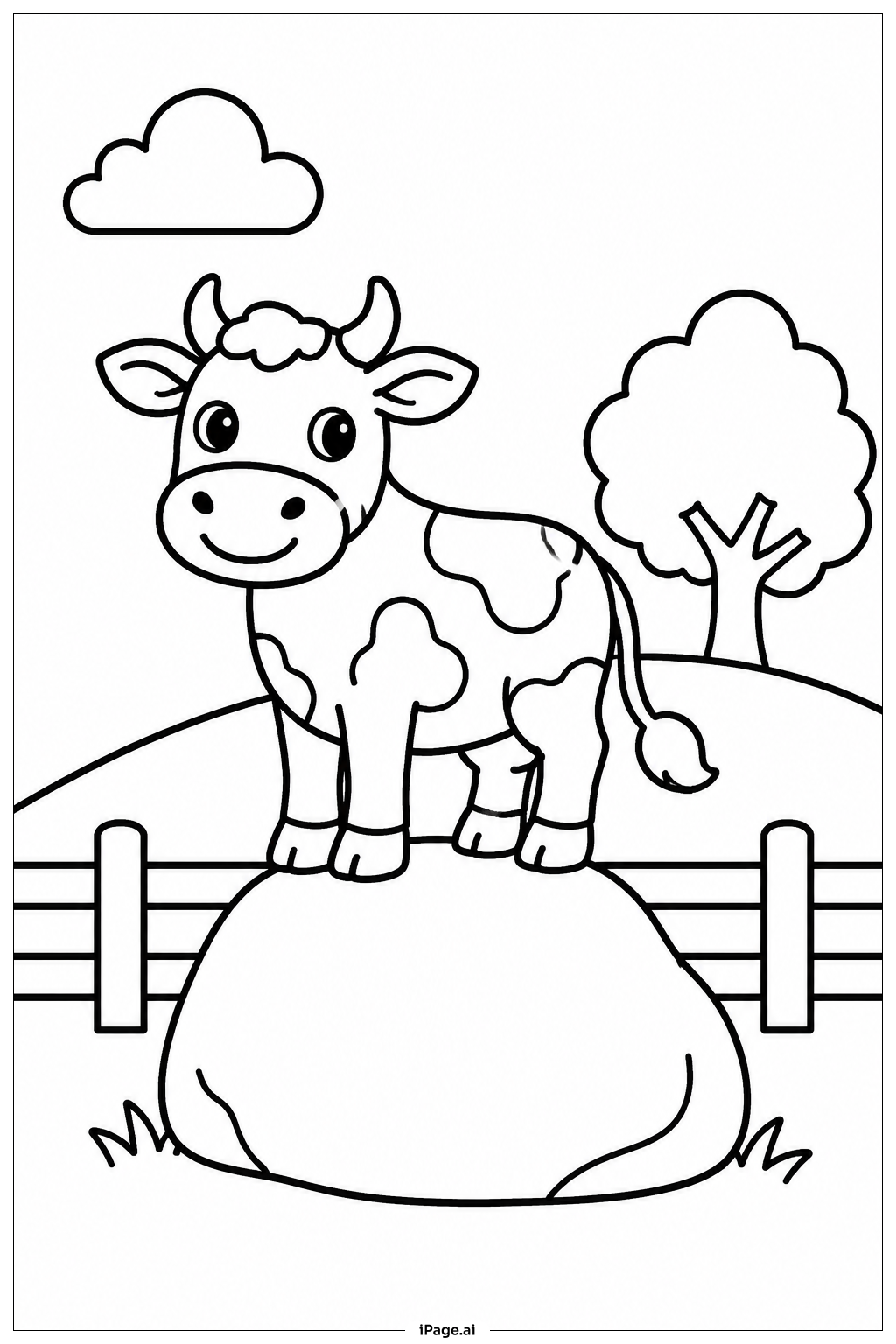
Coloring tips: How to color Cow Balancing On Rock coloring page well?
For this image, you can use classic Cow colors like white and brown or black patches to make the Cow look realistic. Try shading the spots differently to show texture. The rock can be colored with various grays and browns to bring out its rough surface. Adding some greens around the rock will make the grassy area appear lively. You can use lighter colors on the Cow’s face and belly for contrast. Feel free to use blues or purples in the background to create a serene sky. Play with shadows under the Cow and on the rock edges to give the picture depth and a three-dimensional feel.
Coloring challenges: Which parts are difficult to color and need attention for Cow Balancing On Rock coloring page?
• Detailed Rock Texture: The rock’s uneven surface has many cracks and bumps that require careful coloring to show its rugged look without making it too dark.
• Balancing Position: Capturing the Cow's stability on the rock might be tricky because you want to keep the legs clearly placed and avoid smudging edges.
• Spot Patterns: Coloring the Cow’s spots neatly while showing natural variations in size and shape can be challenging, especially for younger children.
• Shading and Depth: Adding shadows below the Cow and along the rock needs attention to detail to make the image look realistic and not flat.
• Limited Background Details: The simpler background means the main focus is on the Cow and rock, so colors here need to be chosen carefully to support, not distract from, the main elements.
Benefits of coloring books: Advantages of drawing Cow Balancing On Rock coloring page
Coloring this image helps develop fine motor skills as children practice coloring inside the lines on the Cow and rock textures. It encourages focus and patience because of the detailed spots and rock cracks. Choosing colors allows for creativity while learning about natural colors found in animals and landscapes. The image also promotes observation skills by noticing the Cow’s balancing pose and thinking about how shadows change with light. Overall, it’s a calming and educational activity that combines nature appreciation with artistic expression suitable for children aged 4 to 16.