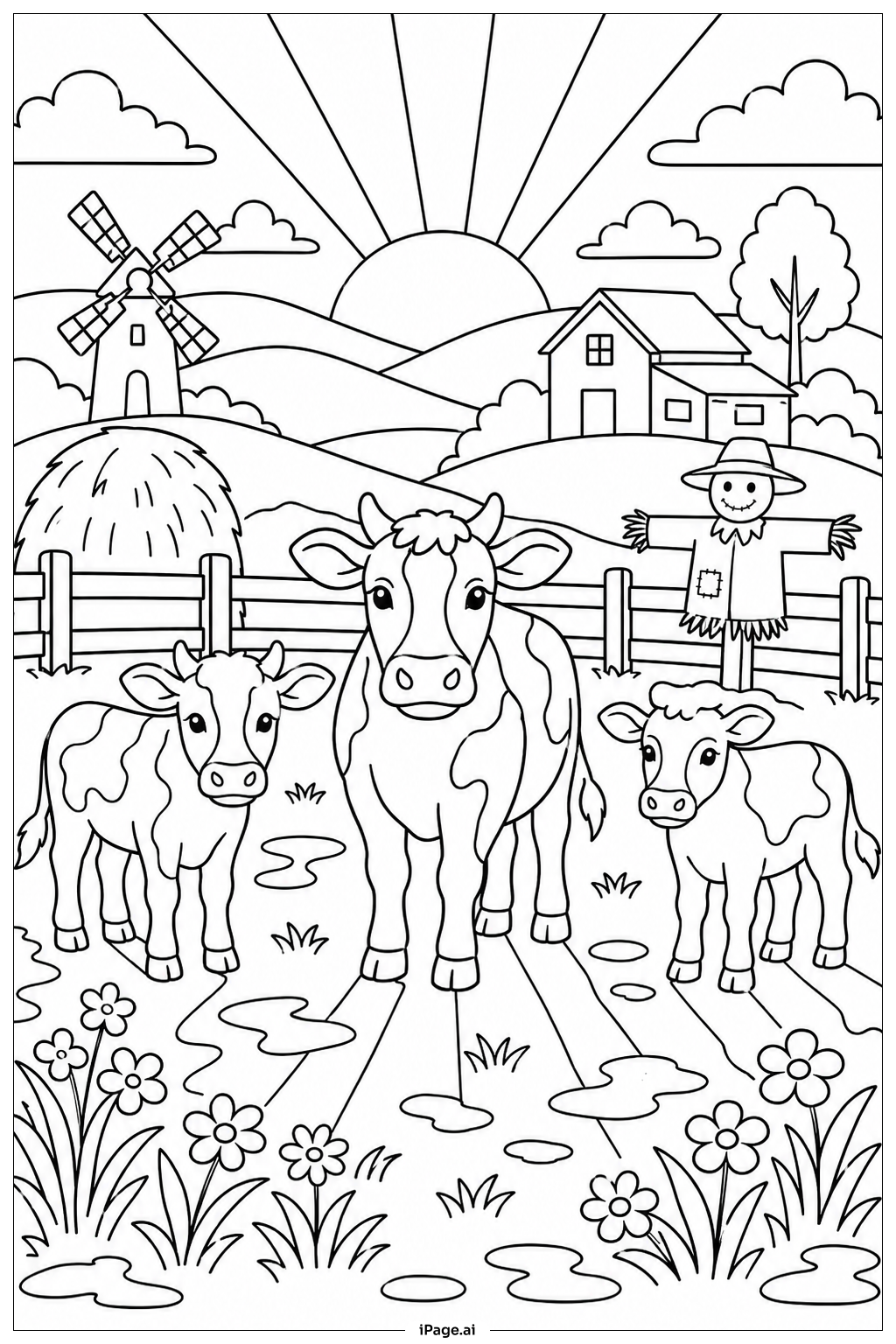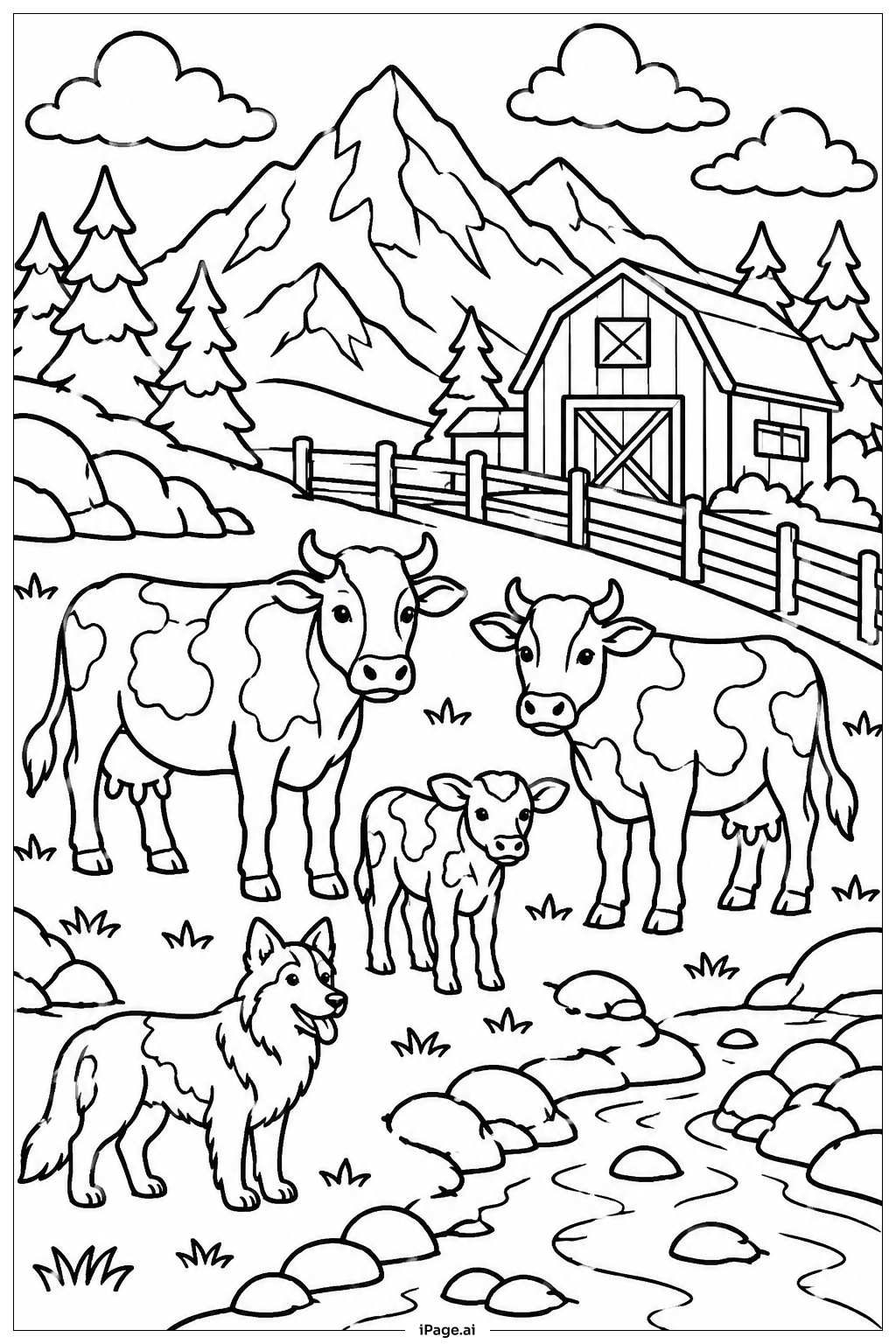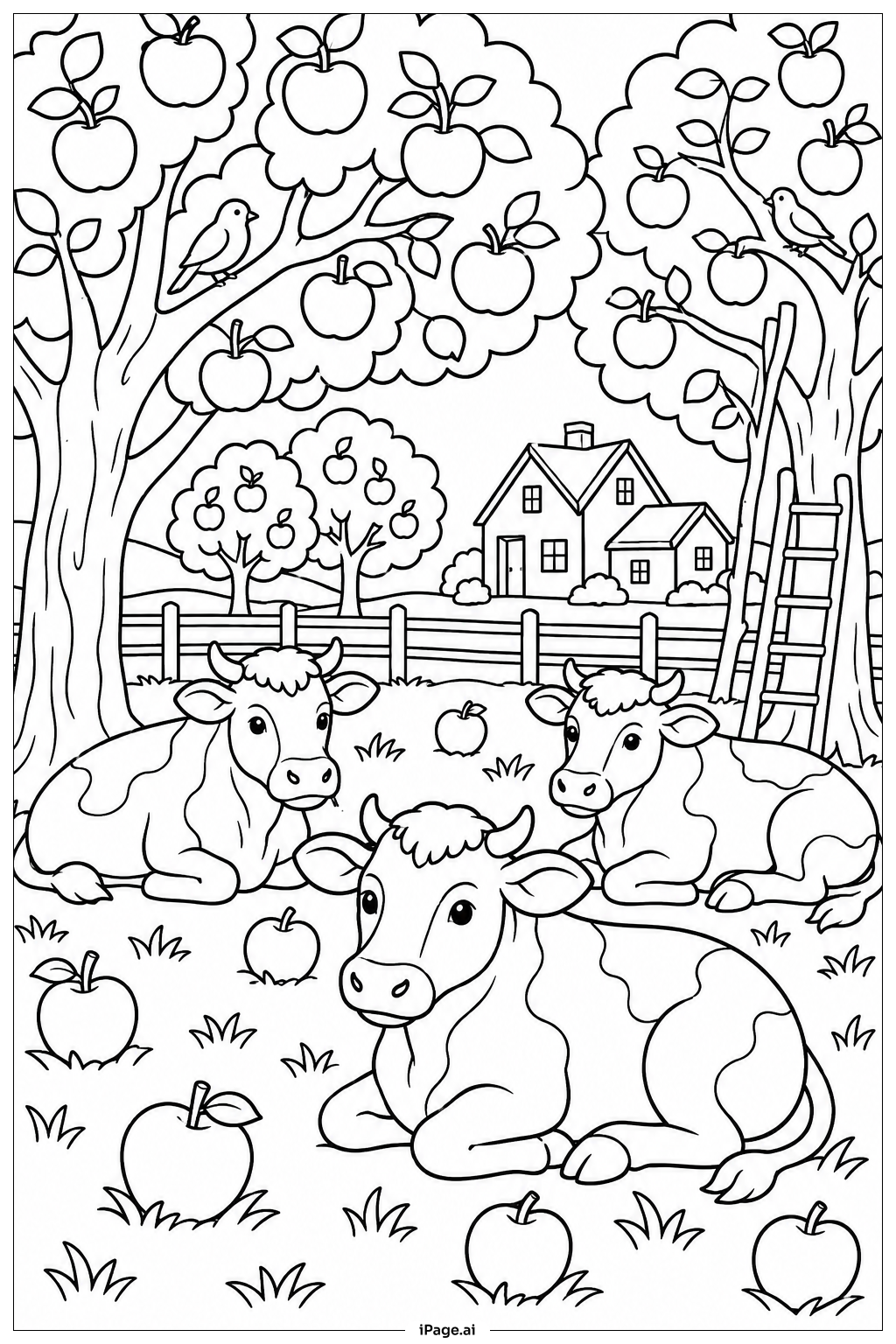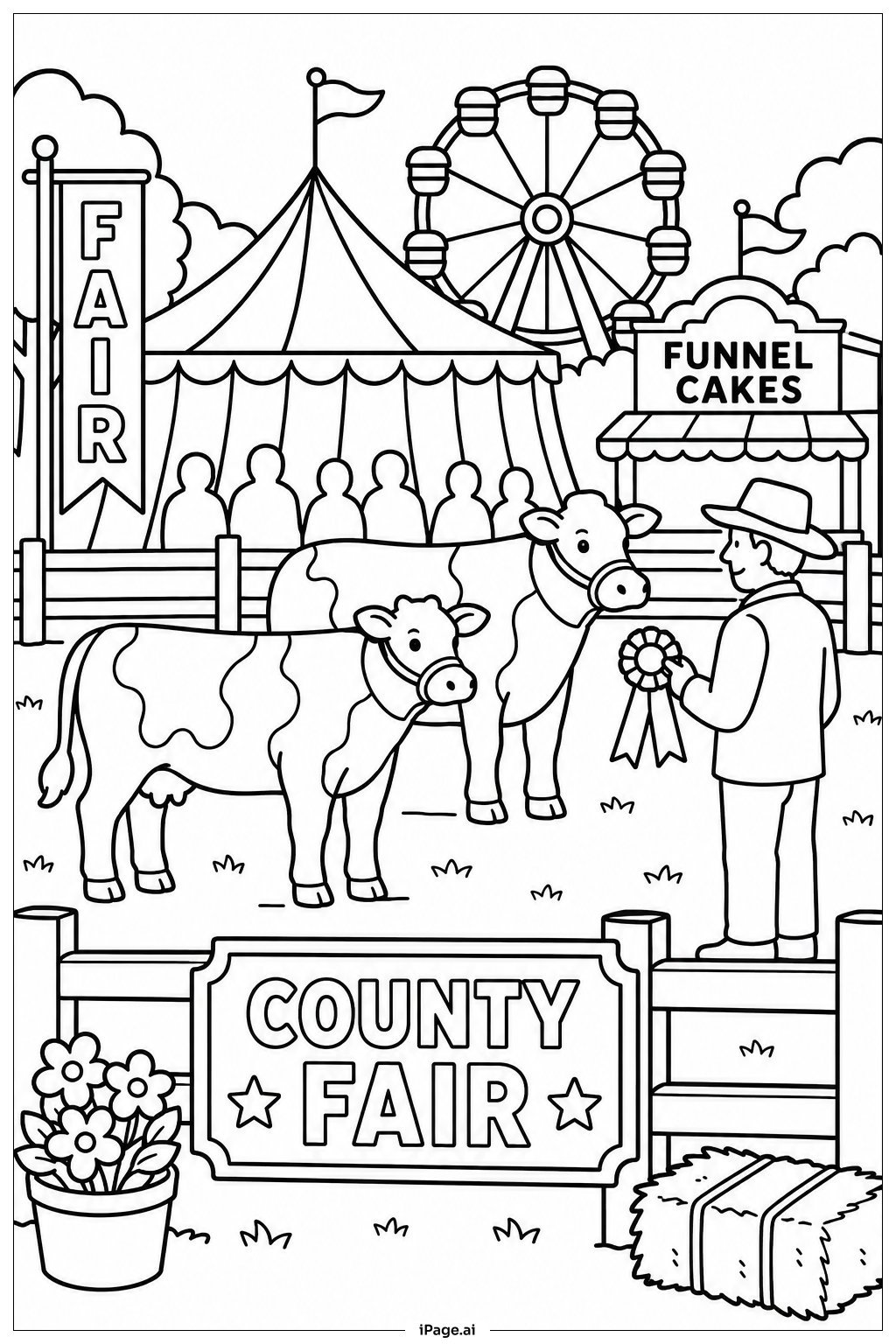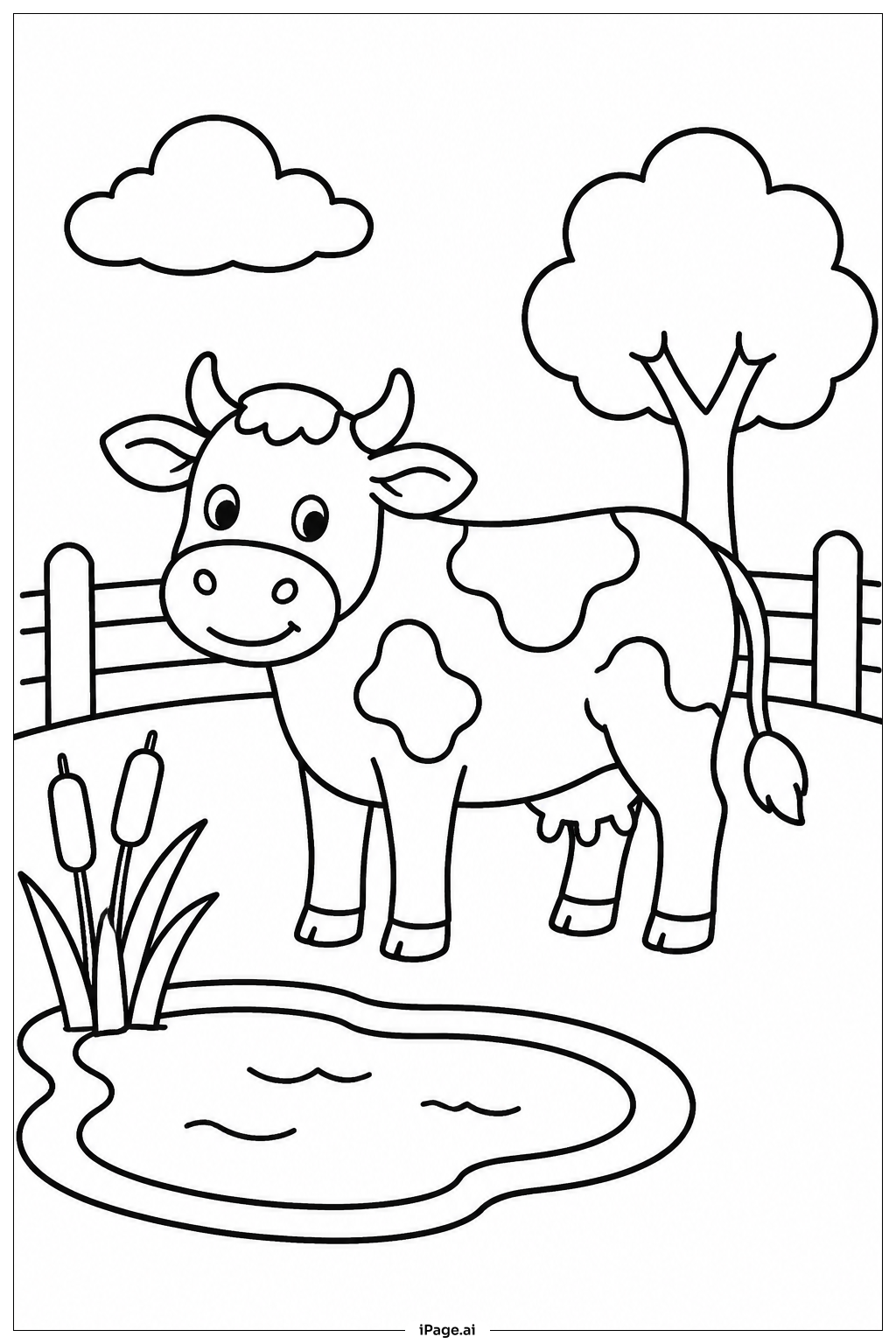
Coloring tips: How to color Cow At Pond coloring page well?
Start with the cow's body using warm shades like light brown, tan, or creamy white. Add darker brown or black patches to give the cow personality and texture. Use a soft pink for the muzzle, ears, and udder area. For the pond, try light blue or aqua tones, and add gentle strokes of darker blue to show ripples and depth. Color the lily pads in soft green and add a pop of yellow or white for any flowers. Use various shades of green for the grass, reeds, and cattails — mix light and dark green to create depth. The background trees can be filled with deep green or olive tones. Add a light blue or pale yellow to the sky peeking through. For the frog, use bright green with darker spots. The dragonflies can be colored with bright blues, purples, or greens to add energy to the scene. Take your time layering colors to make the pond scene feel lush and alive.
Coloring challenges: Which parts are difficult to color and need attention for Cow At Pond coloring page?
• Cow Body Texture and Patches: One of the trickiest parts of this image is coloring the cow's body in a way that looks natural. The patches of color need to blend smoothly at the edges without looking too harsh. Kids should practice using light pressure first and gradually building up darker tones for a realistic look.
• Water Reflections on the Pond: Coloring water to look realistic is always a challenge. The pond surface needs a mix of light and slightly darker blues to suggest depth and movement. Adding gentle horizontal strokes helps create the illusion of ripples. Avoiding a flat, solid blue is key to making the water feel alive.
• Fine Plant Details Along the Bank: The reeds, cattails, and grasses along the water's edge are made up of thin, closely spaced lines. Staying within these narrow shapes without going over the outlines requires careful control and a sharp pencil or thin marker. Younger colorists may find this section especially tricky.
• Layering Greens in the Background: The trees and bushes in the background need multiple shades of green to avoid looking flat. Blending light green, mid green, and dark green creates a sense of depth and natural variety. This layering technique takes patience and practice to get right.
• Small Details Like the Frog and Dragonflies: The small creatures in the scene — the frog and the dragonflies — are tiny and detailed. Filling them in with bright, accurate colors without smudging or going outside the lines is a careful task that challenges fine motor skills and steady hand control.
Benefits of coloring books: Advantages of drawing Cow At Pond coloring page
Coloring this Cow At Pond scene offers a wide range of benefits for children and young colorists. The peaceful farm and nature setting encourages a sense of calm and relaxation, making it a great activity after a busy school day. Focusing on a quiet, gentle scene like this helps reduce stress and promotes mindfulness.
Working on the details of the cow, the pond, and the surrounding plants builds fine motor skills and hand-eye coordination. Children practice controlling their coloring tools, staying inside lines, and making small, precise movements that support their overall development.
The image also sparks creativity. There is no single right way to color this scene, so kids are free to experiment with colors, mix shades, and make the image their own. Choosing colors for the water, the grass, and the cow encourages imaginative thinking and artistic confidence.
Learning about nature is another bonus. Kids naturally start asking questions about cows, ponds, frogs, dragonflies, and water plants as they color. This connects the activity to early science learning in a fun, hands-on way.
Finally, completing a detailed coloring page gives children a real sense of pride and accomplishment. It teaches patience and the value of seeing a project through from start to finish, building focus and perseverance that carry into other areas of learning and life.