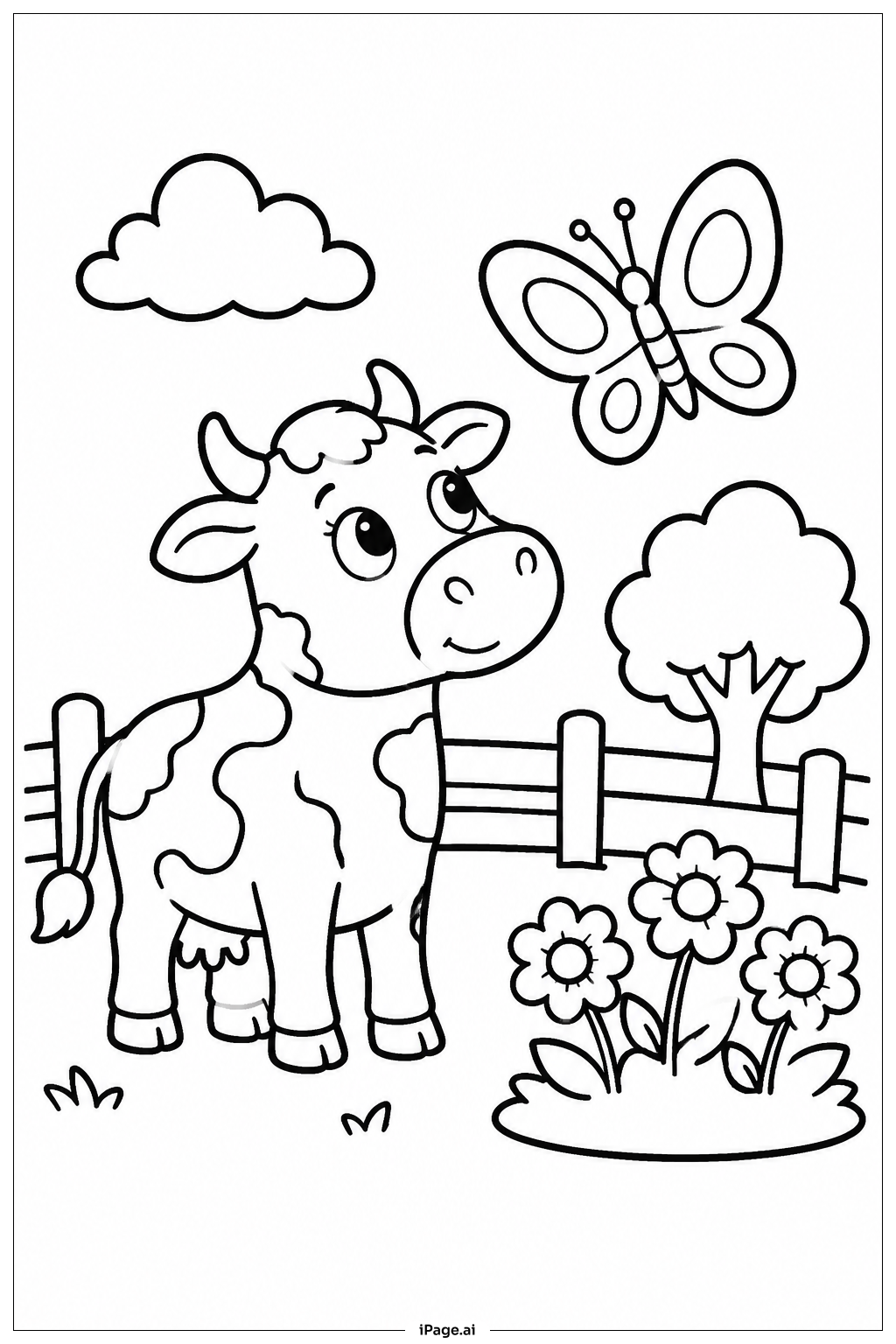
Coloring tips: How to color Cow And Butterfly coloring page well?
Start with the cow's body using a warm white or soft cream tone as the base. Use a medium brown or black for the classic spots, and keep the spots varied in shape and size to make them look natural. Color the horns in a light tan or pale yellow, and give the ears a soft pink on the inside. For the butterfly, use bright, cheerful colors like orange, yellow, or purple to make its wings pop against the cow. Add contrasting shades within the wing patterns to bring out the details. Use two or three shades of green for the grass to create a sense of depth, and color the small flowers in soft pinks, yellows, or reds. Keep the cow's eyes dark brown with a tiny white highlight to make them look lively. Let kids experiment freely with color choices — there are no wrong answers here, and bold combinations can look just as wonderful as realistic ones.
Coloring challenges: Which parts are difficult to color and need attention for Cow And Butterfly coloring page?
• Butterfly Wing Patterns: The butterfly's wings feature small, intricate swirls and symmetrical designs. Staying inside these tiny sections requires a steady hand and a fine-tipped coloring tool. Young children may find it tricky to keep colors from blending into neighboring areas. Using colored pencils or fine-tip markers will help achieve cleaner results.
• Cow Spot Placement: The irregular patchwork spots on the cow's body vary in shape and size. Deciding which spots get which color while keeping the overall look balanced can be a fun but real challenge. It helps to lightly plan color zones before filling them in, especially if using markers that are hard to correct.
• Layering Grass and Ground Details: The tufts of grass and small flowers in the background may overlap with the cow's legs and lower body. Carefully coloring around these overlapping edges without smudging requires patience and control. Younger colorists can use a blunter tool and work slowly near these areas.
• Facial Features and Expression: The cow's large eyes, soft nose, and small muzzle sit close together on a round face. These elements need careful attention to shading and color contrast so each feature stays distinct. A light pink for the nose and a gentle brown around the eyes can help define the face without overcomplicating it.
• Balancing Bold and Soft Colors: The bright butterfly sits right on the cow's gentle face, which creates a contrast challenge. Making the butterfly vivid enough to stand out while keeping the cow's tones soft and warm takes some color planning. Testing color combinations on a spare sheet first can make the final result much more satisfying.
Benefits of coloring books: Advantages of drawing Cow And Butterfly coloring page
Coloring this cow and butterfly scene offers a wonderful range of benefits for children of all ages. The image blends a large, simple animal figure with smaller detailed elements, making it accessible for beginners while still engaging for more experienced young colorists.
For younger children, filling in the cow's broad body areas helps build hand-eye coordination and strengthens the fine motor skills needed for writing. The act of choosing colors encourages creative thinking and builds confidence in self-expression.
The butterfly's wing patterns introduce children to the concept of symmetry in a playful, hands-on way. Trying to mirror colors across both wings sharpens focus and attention to detail, skills that carry over into school tasks and everyday learning.
Spending quiet time coloring also has a calming effect. It helps children slow down, breathe steadily, and stay present — a gentle, screen-free way to relax and reset after a busy day.
The nature theme — a friendly farm animal meeting a delicate butterfly — can also spark curiosity about the natural world. It opens up easy, fun conversations about animals, insects, farm life, and the simple wonders of the outdoors. Overall, this page turns creative play into a meaningful, enriching experience for Boys and Girls alike.