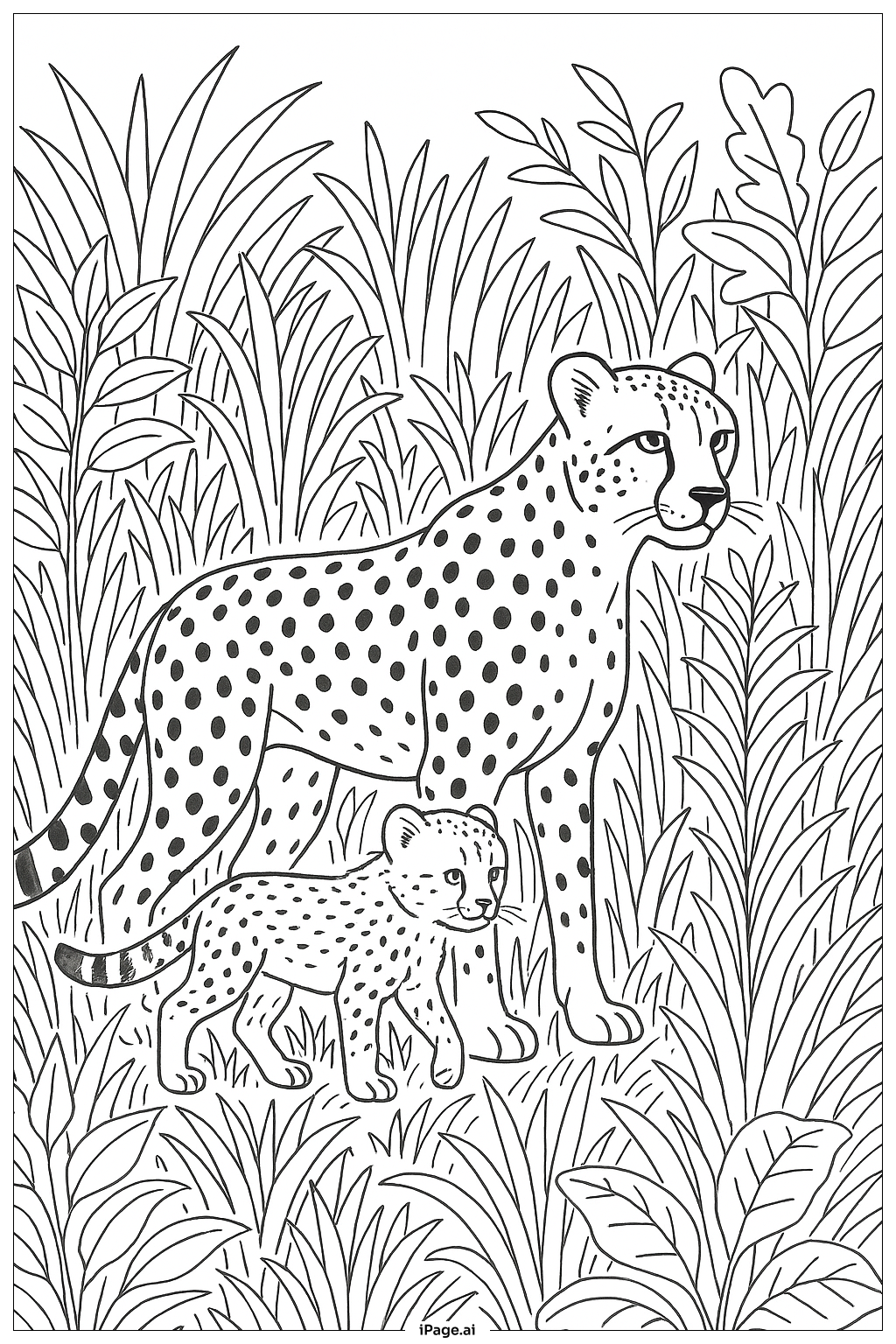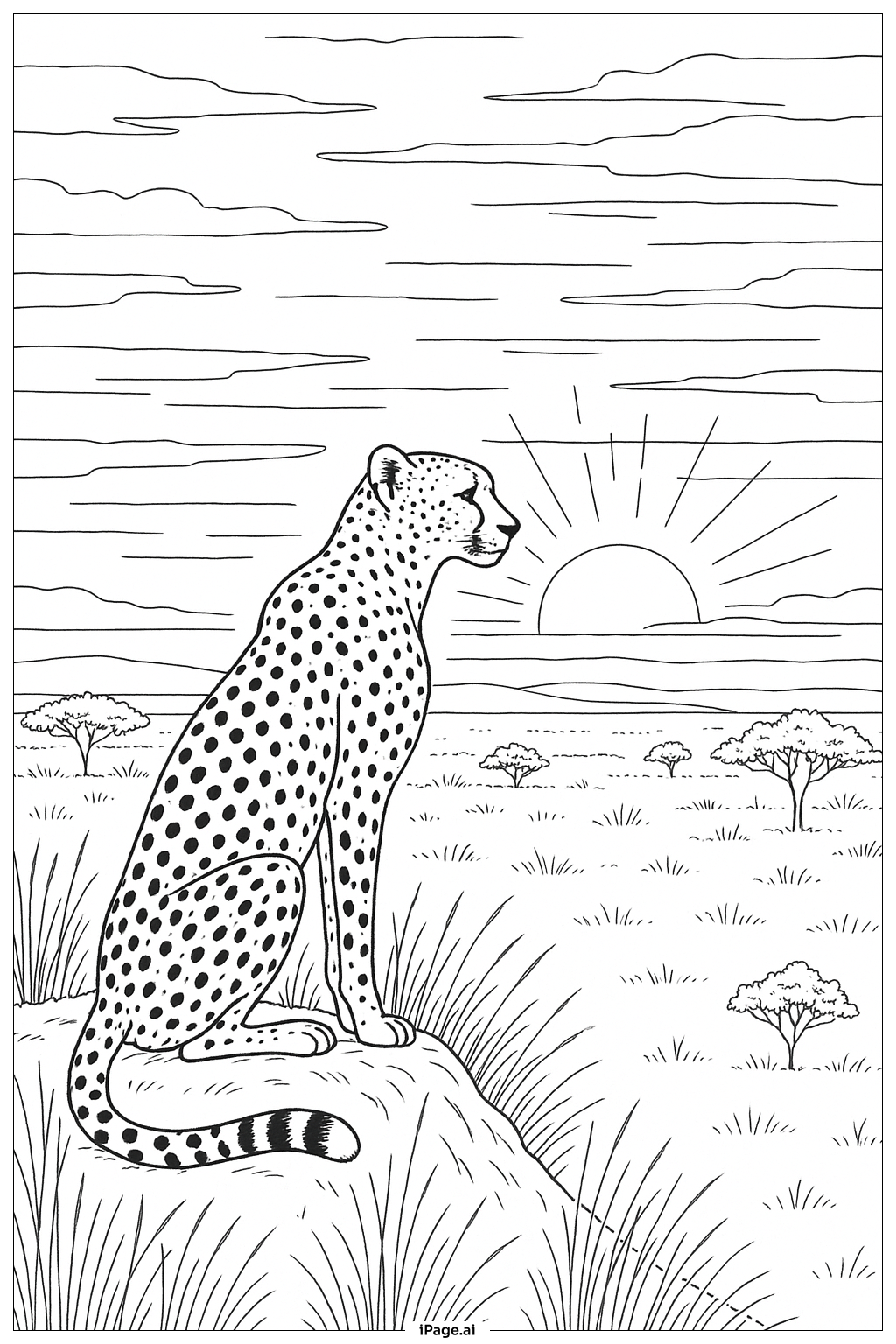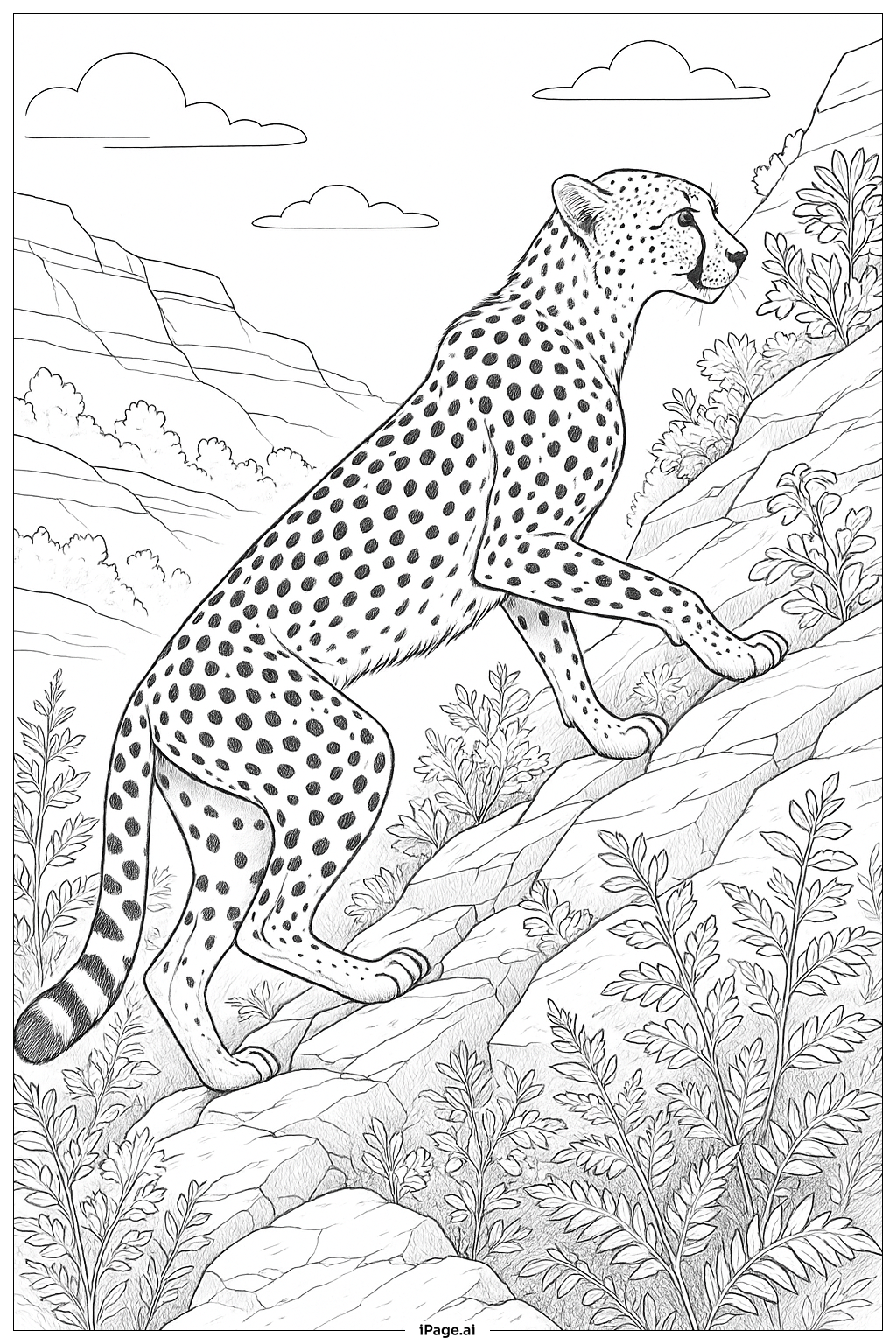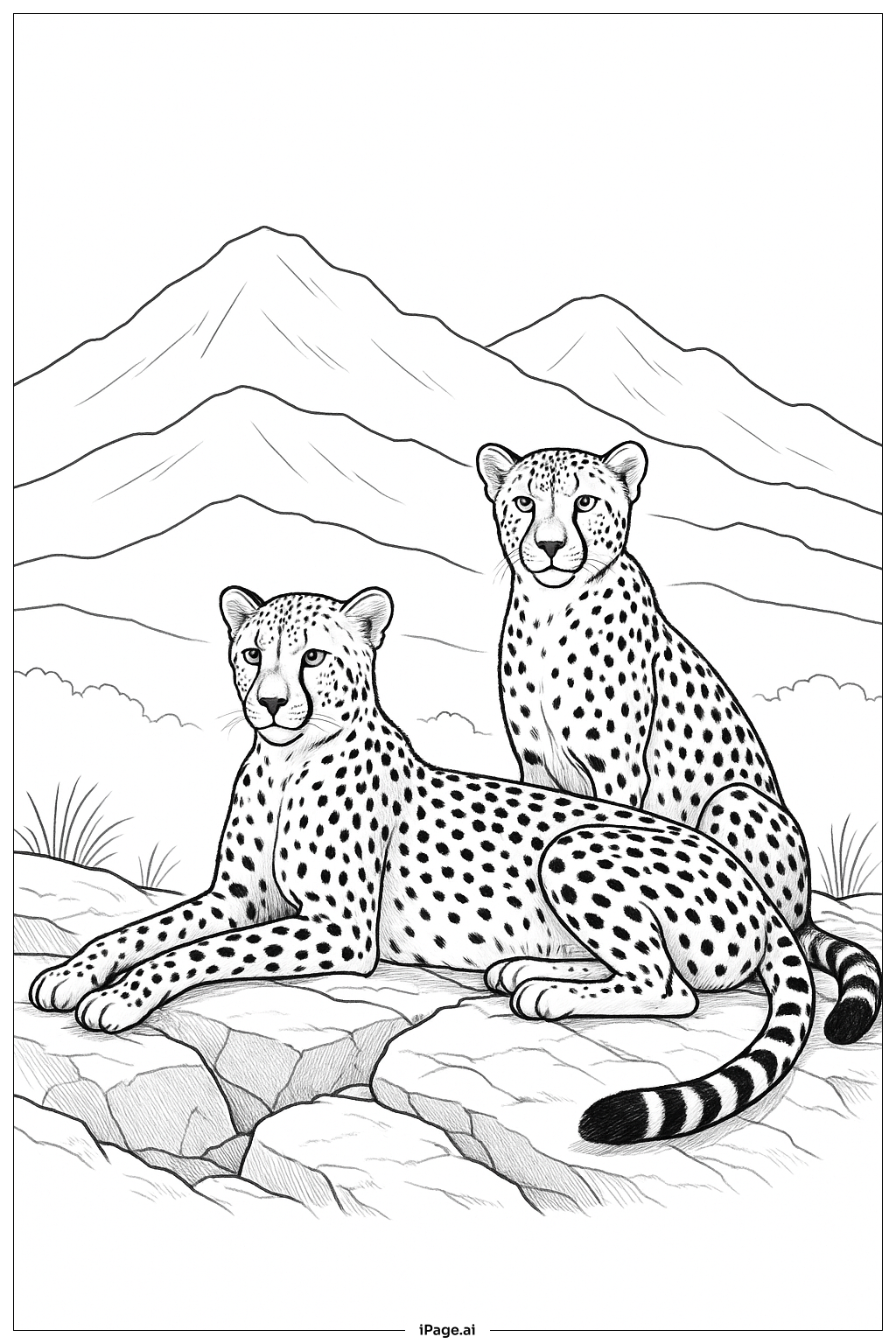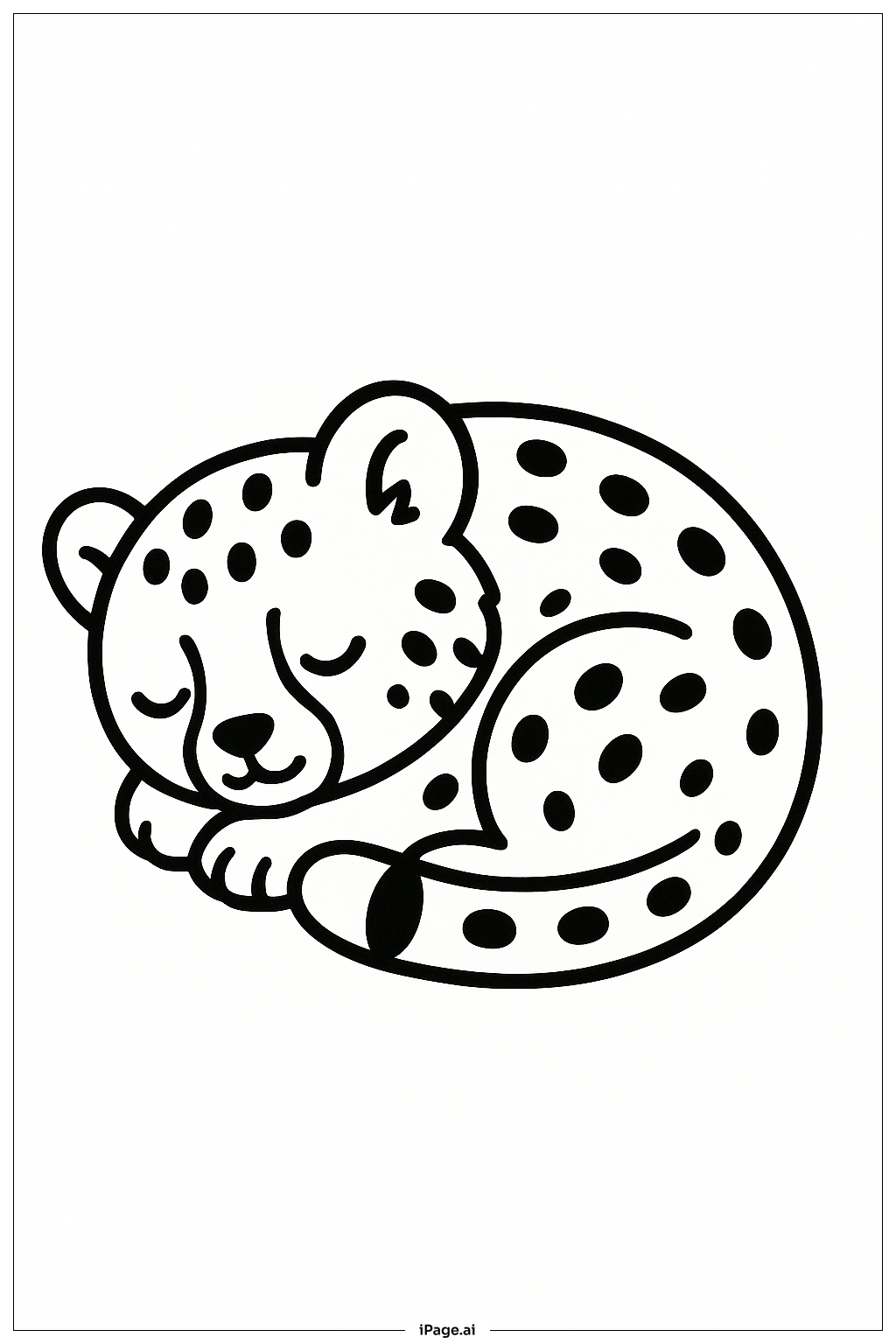
Coloring tips: How to color Sleeping Cheetah Cub coloring page well?
Start with the base coat of the cheetah cub using warm golden yellow or soft tan colors. For the spots, use black or dark brown, taking care to make each spot unique in size and shape, as real cheetahs have. The distinctive tear lines on the face should be colored in dark brown or black. Consider using a slightly lighter cream or off-white color for the belly, chest, and inner legs to create natural depth. The nose can be shaded with pink or light brown tones. Add subtle orange or amber tints around the edges of the spots to create dimension. You might use light gray or beige for gentle shading in the curved areas of the body to show the sleeping pose. The ears can have darker brown on the backs and lighter tones inside.
Coloring challenges: Which parts are difficult to color and need attention for Sleeping Cheetah Cub coloring page?
• Spot Pattern Complexity: The cheetah cub's coat features dozens of individual spots that need to be colored carefully. Each spot should be filled in completely while maintaining clean edges and avoiding bleeding into the base coat color. The spots vary in size across different body parts, requiring attention to detail and patience. Young colorists may find it challenging to keep each spot separate and distinct, especially in areas where spots are close together.
• Curved Body Contours: The sleeping position creates multiple curved surfaces and rounded forms that require skillful shading to appear three-dimensional. Coloring the body so it looks naturally curled rather than flat demands an understanding of where to apply lighter and darker tones. The overlapping areas where the tail wraps around the body and where legs tuck under present particular challenges for creating depth.
• Facial Detail Precision: The cub's face includes small, delicate features such as the tear lines, closed eyes, nose, and mouth that require precise coloring with fine motor control. The tear lines must be colored carefully to follow their curved path without going outside the lines. Young children may struggle with the steady hand control needed for these tiny facial details.
• Color Blending and Shading: Creating a realistic golden-tan base coat that transitions smoothly from lighter belly areas to darker back regions requires color blending skills. Adding shadows in the recessed areas of the sleeping pose, such as under the head and where the body curves, needs thoughtful color layering to achieve a natural appearance.
Benefits of coloring books: Advantages of drawing Sleeping Cheetah Cub coloring page
Coloring this Sleeping Cheetah Cub page offers wonderful developmental benefits for children. It significantly improves fine motor skills and hand-eye coordination through the careful coloring of numerous small spots and delicate facial features. The repetitive action of filling in each individual spot builds patience, focus, and attention to detail. This activity teaches children about wildlife and animal patterns, fostering an appreciation for nature and endangered species. The calming subject of a sleeping animal can have a soothing, meditative effect on young colorists, promoting relaxation and stress relief. Working with the warm color palette of yellows, tans, and browns encourages color recognition and experimentation with shading techniques. Completing this detailed image builds self-confidence and a sense of accomplishment, especially for children who persist through the challenging spotted pattern.