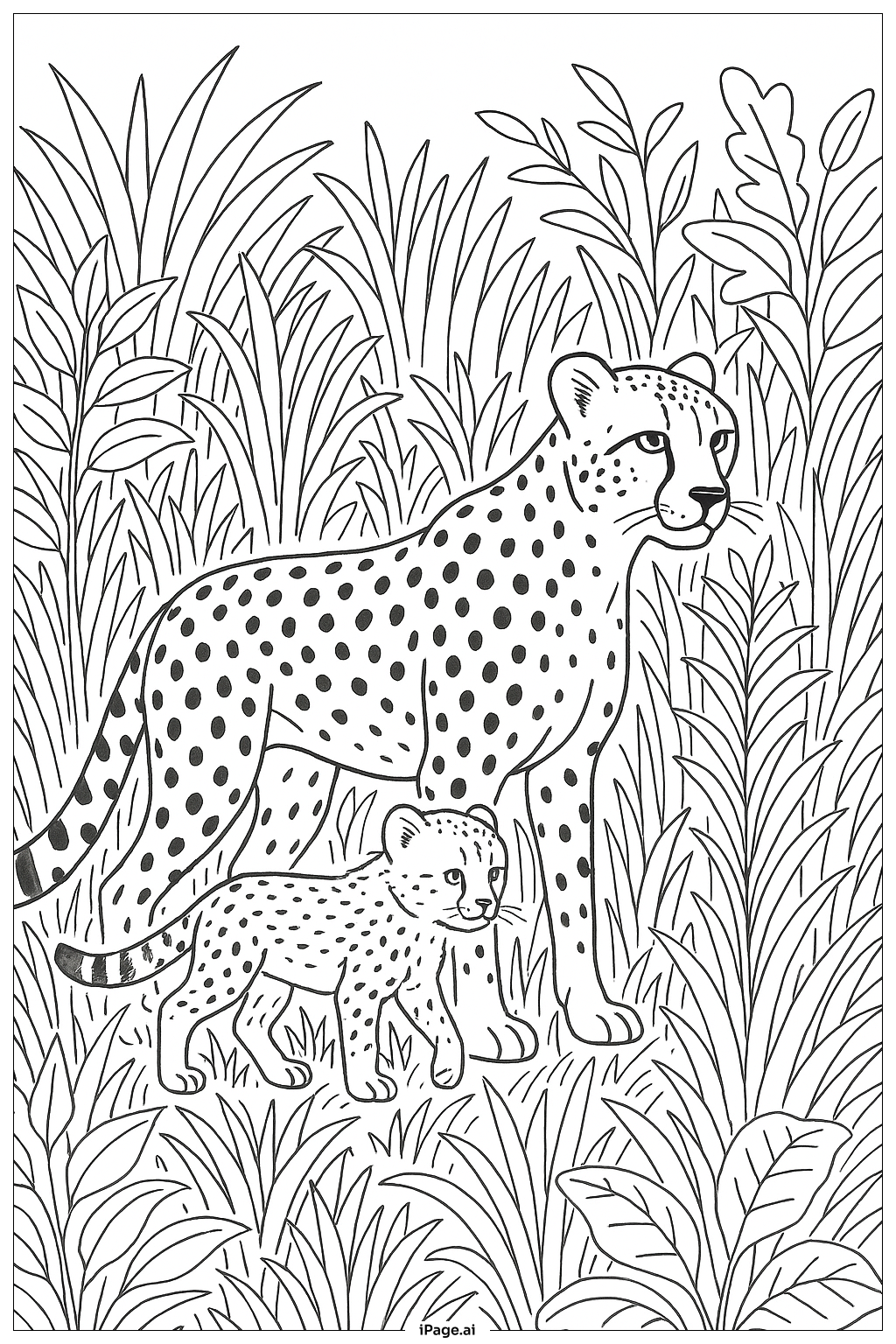
Coloring tips: How to color Cheetah And Cub In Dense Grassland coloring page well?
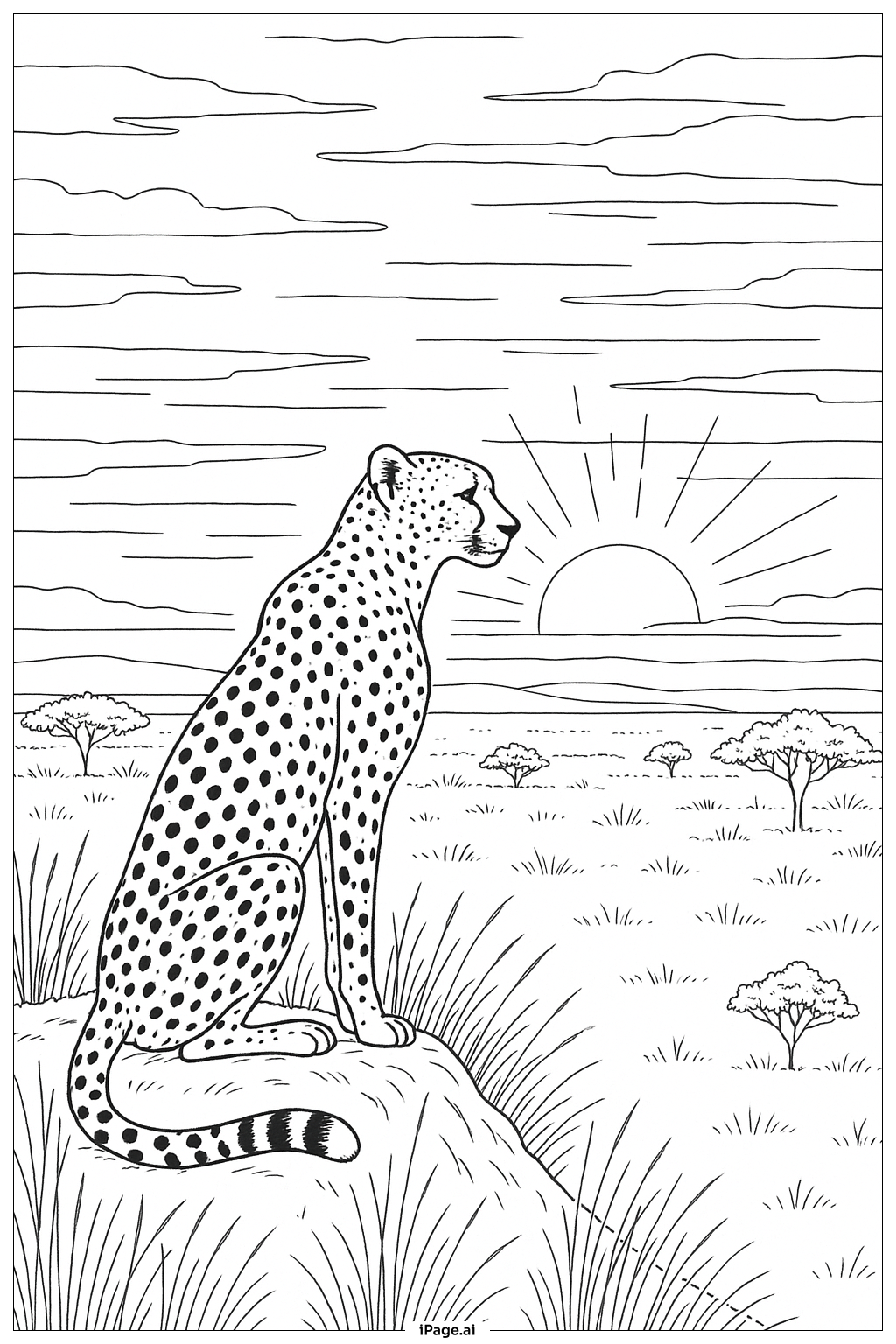
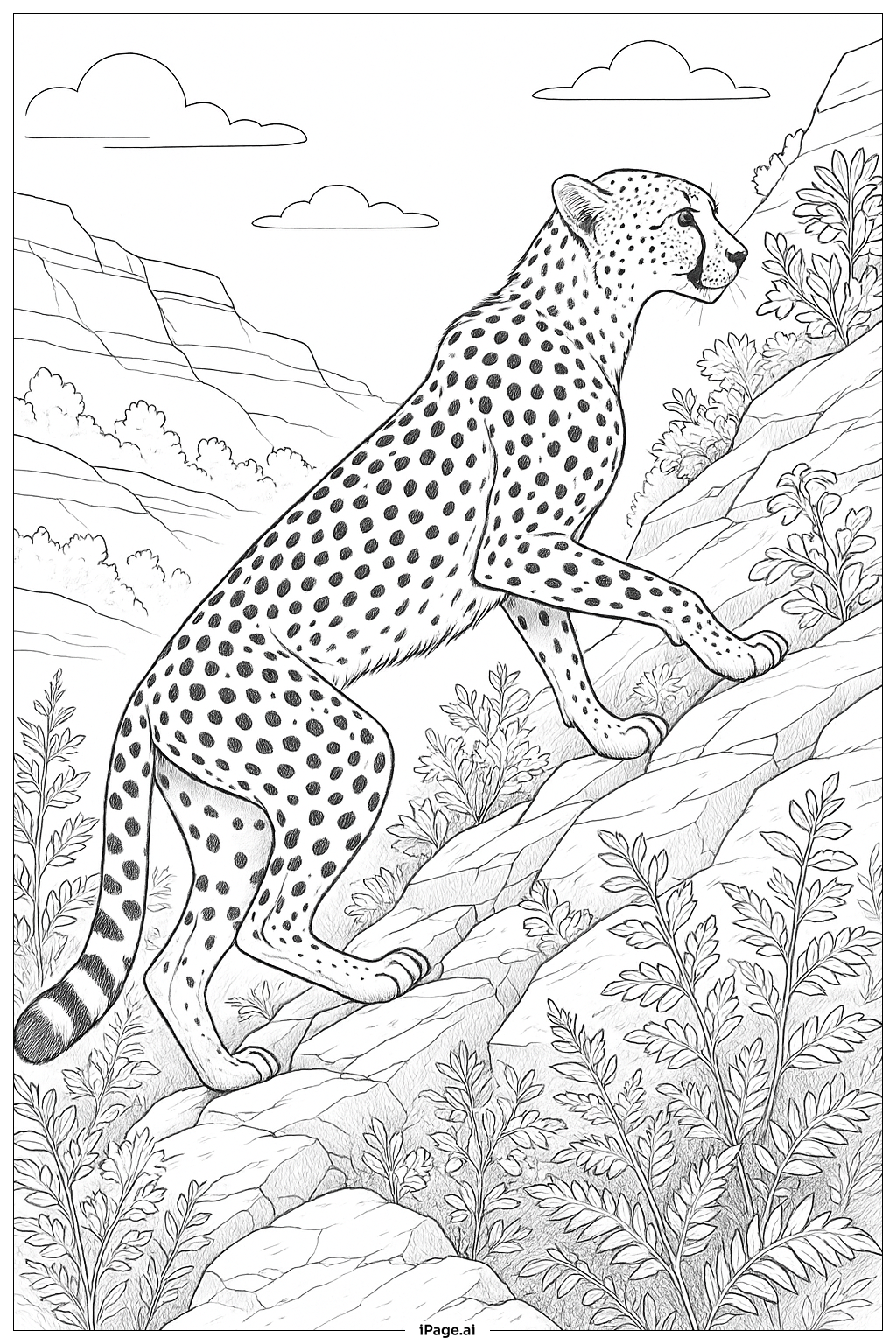
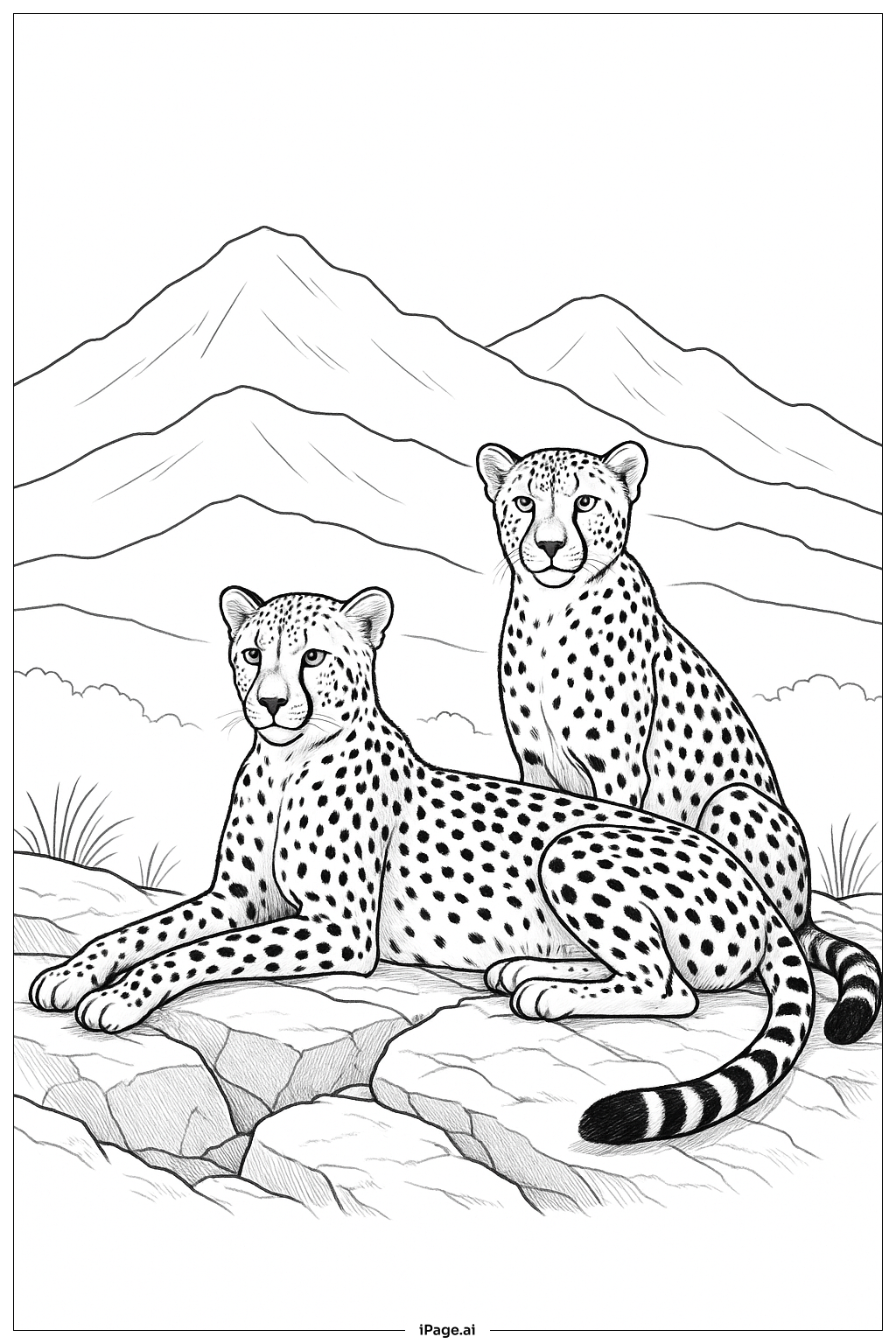
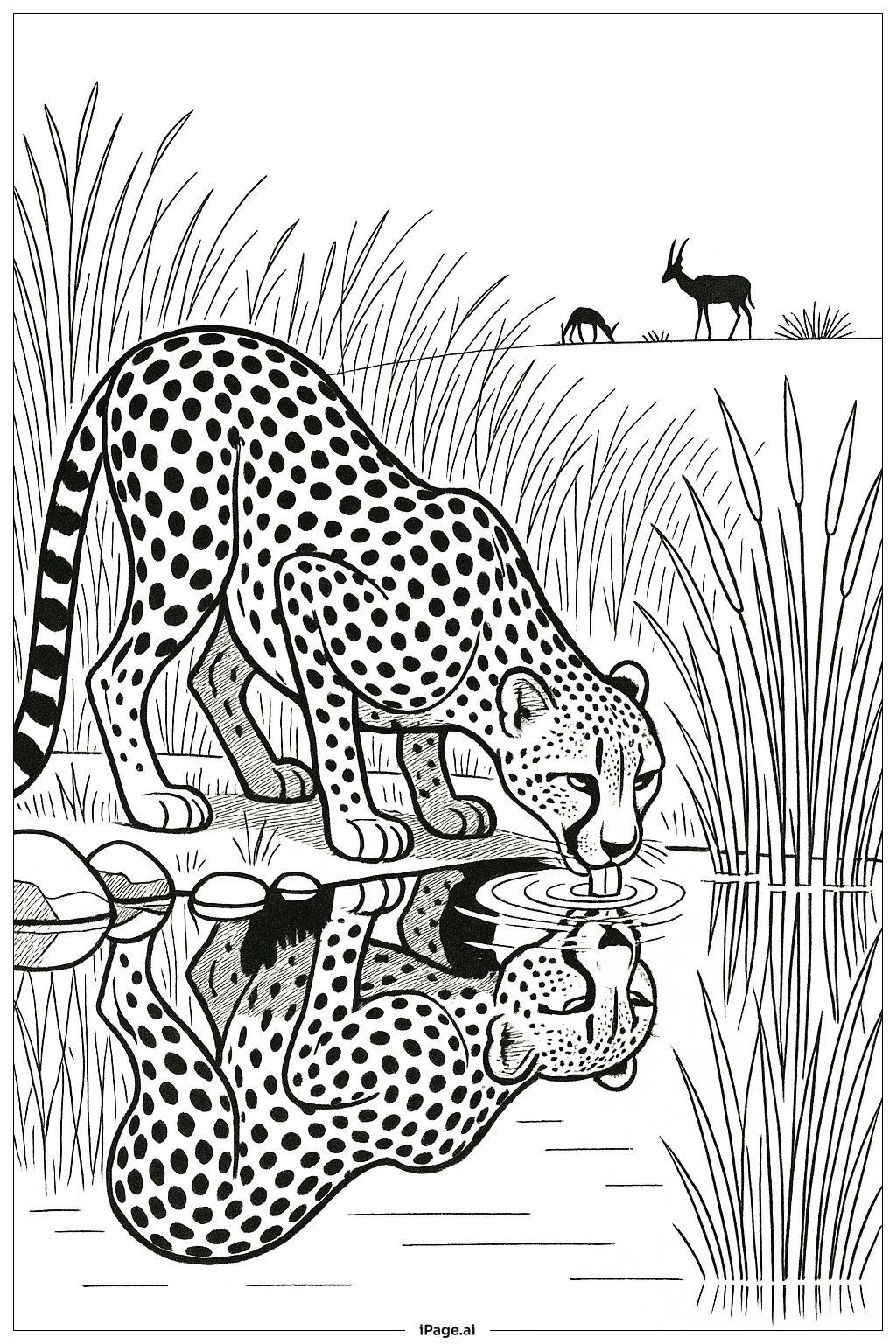
Start with the cheetahs' base coat. Use a warm golden yellow or tawny tan for both the adult and the cub. Then add solid black spots across their bodies. Make the adult's spots slightly larger and bolder than the cub's, since young cheetahs have smaller, softer markings. Use a creamy white or pale beige for their belly areas. Color the iconic black tear marks running from the inner corners of their eyes down to the mouth. For the grassland, use a mix of yellows, light greens, and olive tones to show tall, dry savanna grass. Add darker green shades deeper in the background to give the scene depth. Use light brown for any visible ground or soil patches. Feel free to use bright greens for any fresh-looking leaves or plants. Keep the background slightly lighter than the cheetahs so they stand out clearly.
Coloring challenges: Which parts are difficult to color and need attention for Cheetah And Cub In Dense Grassland coloring page?
• Cheetah Spot Patterns: One of the trickiest parts is coloring the black spots on both cheetahs without making them look too heavy or uneven. The adult has larger, well-defined spots spread across its entire body, while the cub has smaller and more scattered ones. You need to leave enough golden base color showing between the spots so the coat looks natural and realistic.
• Facial Details and Tear Marks: The cheetah's face has very specific markings, especially the black lines running from the eyes to the mouth. These tear marks are narrow and must be colored carefully to stay within the lines. The eyes also need attention, as a warm amber or golden-brown color works best to bring them to life.
• Differentiating Adult and Cub: Showing the size and age difference between the two animals through color alone can be challenging. The adult should appear more defined and saturated in color, while the cub can look slightly lighter and softer to reflect its youth and smaller frame.
• Dense Grass Layers: The surrounding grassland is made up of many overlapping blades of grass at different heights. Coloring each blade individually takes patience. Using multiple shades of yellow, green, and brown helps create a sense of depth and makes the scene feel more three-dimensional.
• Blending Background and Foreground: Keeping the cheetahs visually separated from the busy grass background requires careful color choices. Using slightly darker or more saturated tones for the cheetahs and lighter, cooler tones for the background helps prevent the animals from blending into the scenery.
Benefits of coloring books: Advantages of drawing Cheetah And Cub In Dense Grassland coloring page
Coloring this image of a cheetah and her cub in the grassland offers a wonderful mix of fun and learning. For children, it builds fine motor skills as they carefully fill in the spots, facial markings, and blades of grass. Staying within detailed lines improves hand control and patience. Learning about the different colors of a cheetah's coat also sparks natural curiosity about wildlife and the African savanna. Kids get to explore how animals look in their real habitats, turning a creative activity into a gentle lesson about nature. The scene of a mother and cub together also opens conversations about family bonds in the animal kingdom. For older children and teens, the complexity of the spot patterns and layered grass background offers a satisfying artistic challenge that encourages focus and attention to detail. Choosing color combinations for the grassland environment also develops a sense of color harmony and composition. Overall, this page delivers a calm, engaging experience that nurtures creativity, builds concentration, and fosters a love for wildlife and the natural world in a relaxed and enjoyable way.