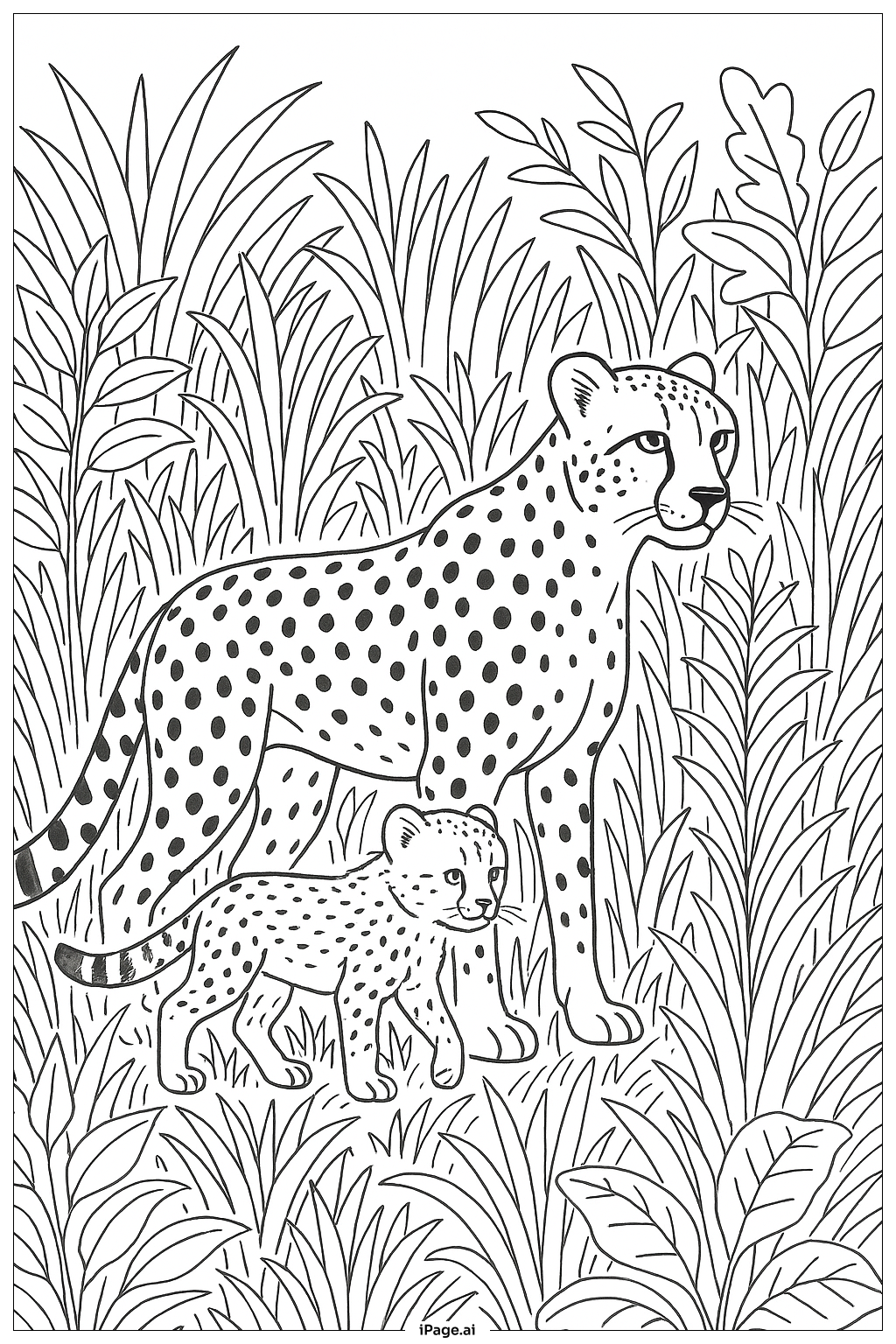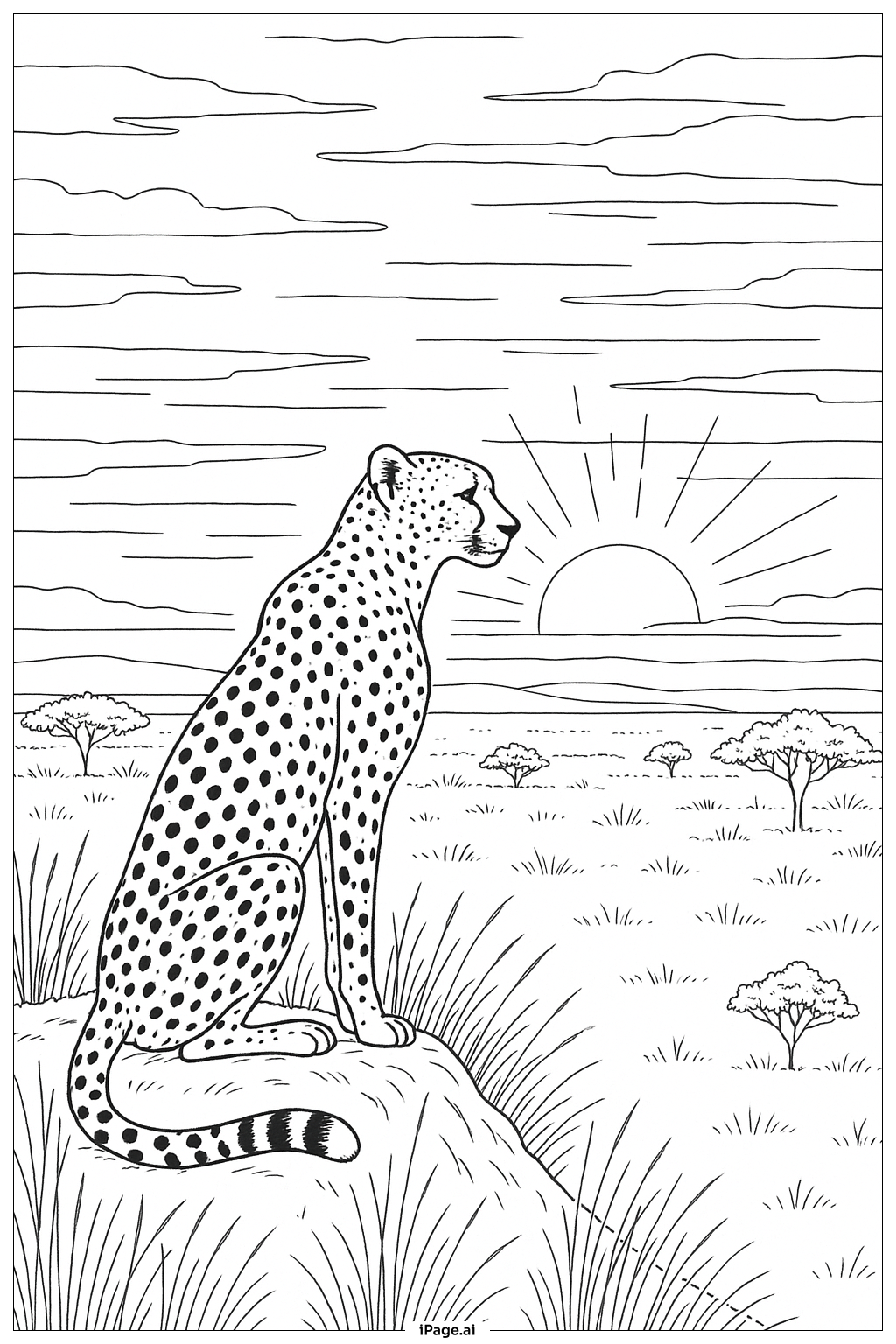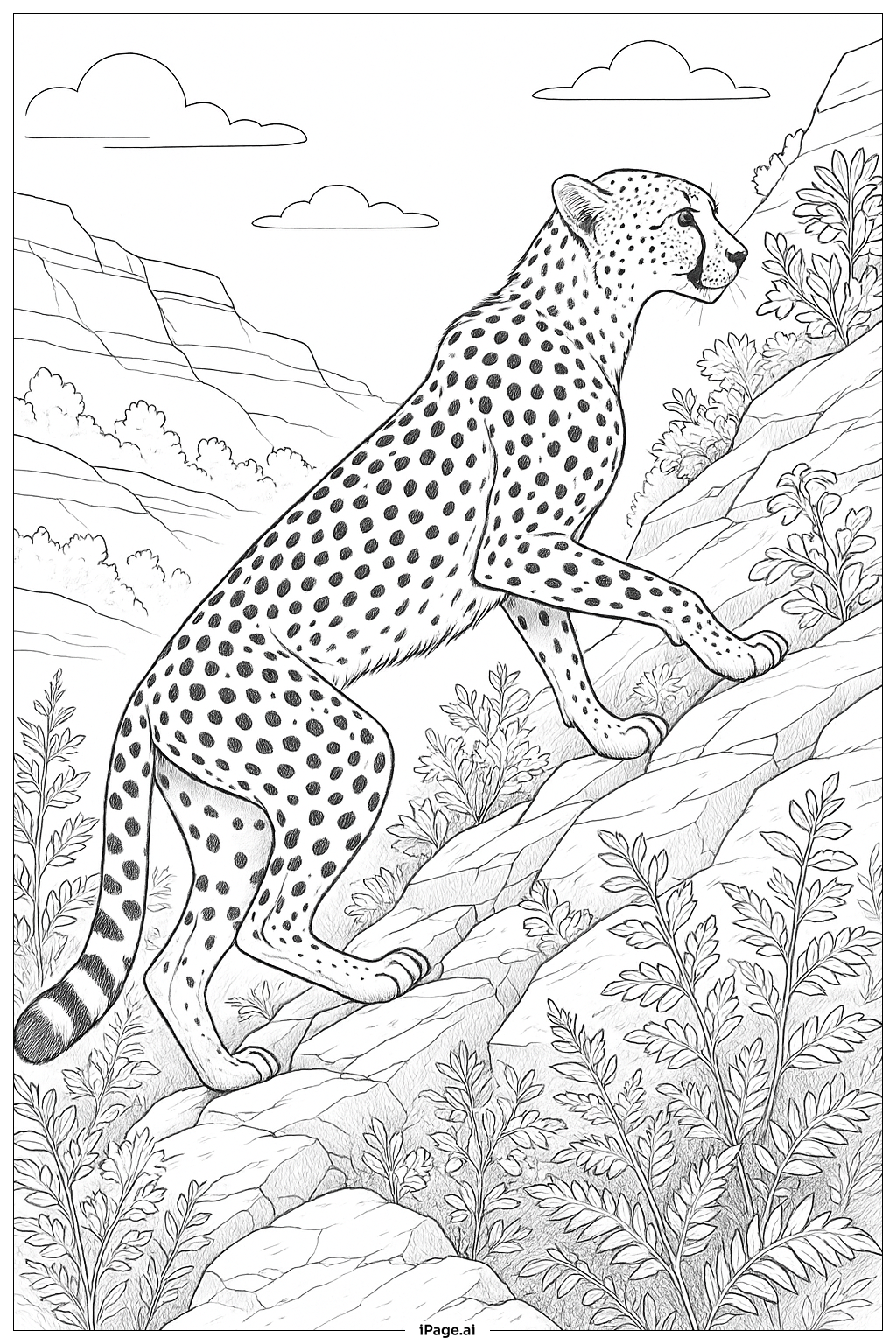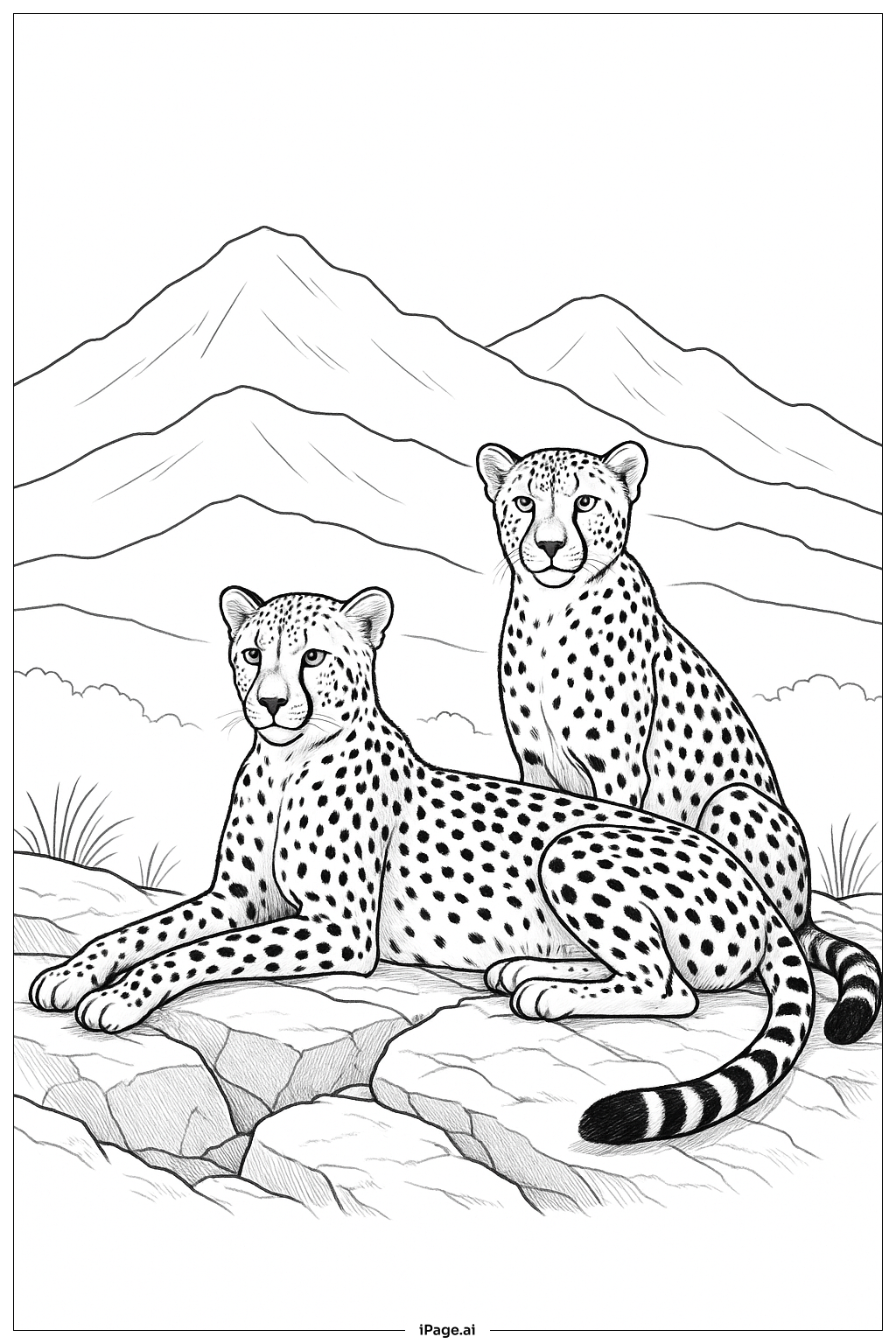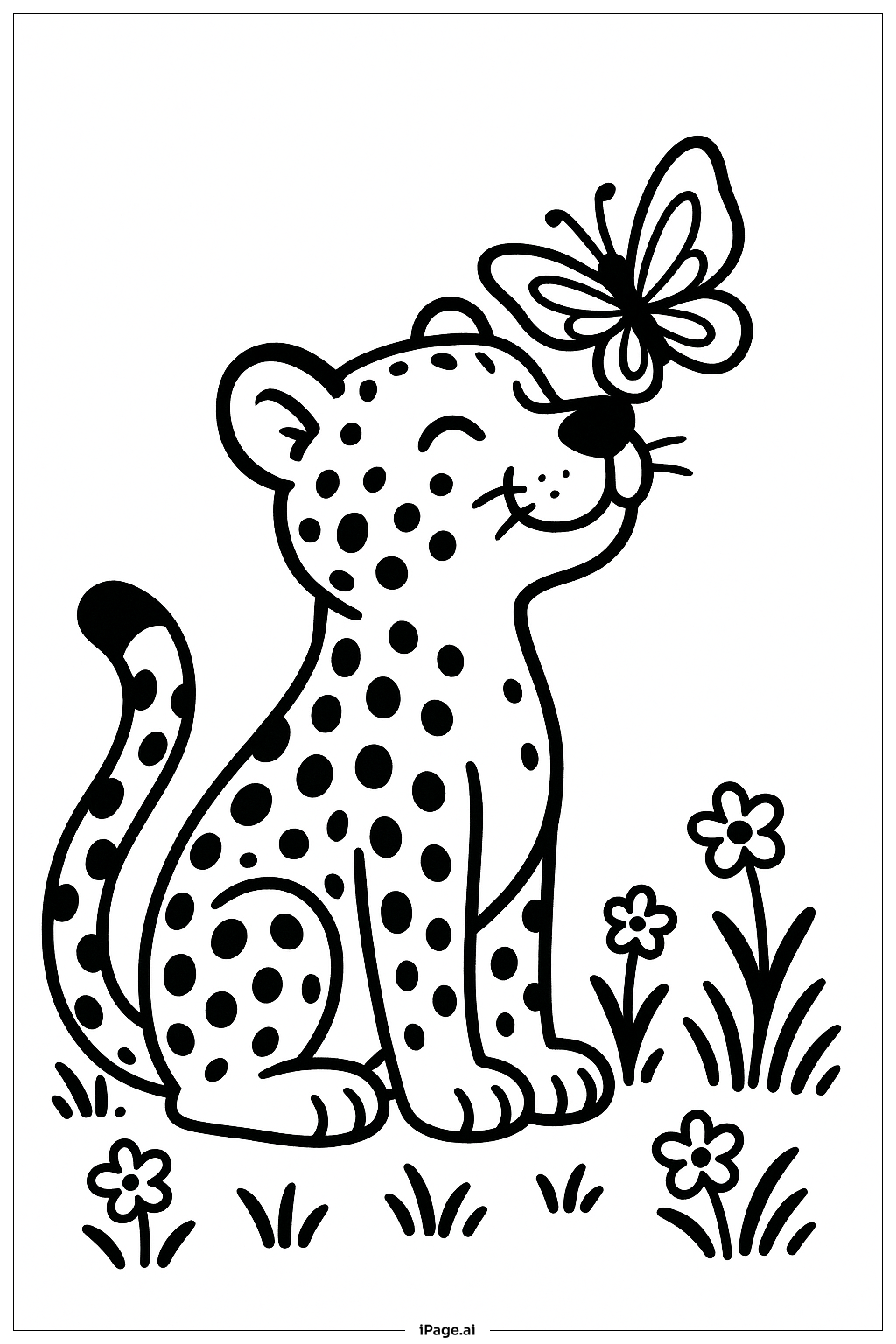
Coloring tips: How to color Cheetah With Butterfly coloring page well?
For the cheetah, use golden yellow or sandy tan as the base coat, then add distinctive black spots across the entire body. The face can feature lighter cream tones around the muzzle and under the eyes, with characteristic black tear marks running from the inner eyes down to the mouth. Color the eyes in shades of amber, gold, or green for a realistic look. The butterfly offers creative freedom—try vibrant oranges and blacks for a monarch butterfly effect, or experiment with blues, purples, and pinks for a more fantastical approach. Use soft greens for the grass and surrounding foliage, and add pops of color with wildflowers in yellows, purples, or reds. The background butterflies can be colored in complementary shades to create visual harmony throughout the scene.
Coloring challenges: Which parts are difficult to color and need attention for Cheetah With Butterfly coloring page?
• Spot Pattern Precision: The cheetah's coat features numerous spots of varying sizes that need to be colored individually while maintaining consistent spacing and shape. This requires patience and attention to detail, as irregular or rushed coloring can make the pattern look messy. Younger children may find it challenging to stay within the boundaries of each small spot, while older colorists will enjoy the meditative quality of this repetitive task.
• Fur Texture and Shading: Creating realistic depth in the cheetah's fur requires understanding how to layer colors and apply shading techniques. The body has curved surfaces that need darker tones in shadowed areas like under the legs, neck, and belly, while raised areas like the head, shoulders, and back should remain lighter. Blending these transitions smoothly without harsh lines takes practice and skill with colored pencils or markers.
• Butterfly Wing Details: The butterfly wings contain intricate patterns with small sections that demand precision coloring. The delicate nature of wing designs means staying within tiny borders while potentially creating symmetrical patterns on both wings. This fine motor skill challenge is excellent for developing hand-eye coordination but may frustrate those seeking quick completion.
• Multiple Focal Points: Balancing color choices between the dominant cheetah and the delicate butterfly requires thoughtful planning. The butterfly should stand out without clashing with the cheetah's coloring, while background elements need subtle tones that support rather than compete with the main subjects. This compositional challenge teaches color theory and visual hierarchy.
Benefits of coloring books: Advantages of drawing Cheetah With Butterfly coloring page
Coloring this image offers wonderful benefits for children and adults alike. The detailed spots provide excellent fine motor skill practice, strengthening hand control and precision that supports handwriting development. The scene promotes mindfulness and relaxation as colorists focus on the repetitive yet engaging task of filling each spot and pattern. This image teaches about wildlife and nature, sparking curiosity about cheetahs as the fastest land animals and the important role butterflies play in ecosystems. The contrast between the powerful predator and delicate insect encourages discussions about gentleness, patience, and respecting all creatures. The various elements at different scales—from tiny flower petals to the large cheetah body—accommodate different skill levels within one page, making it perfect for family coloring time where everyone can work on sections matching their ability.