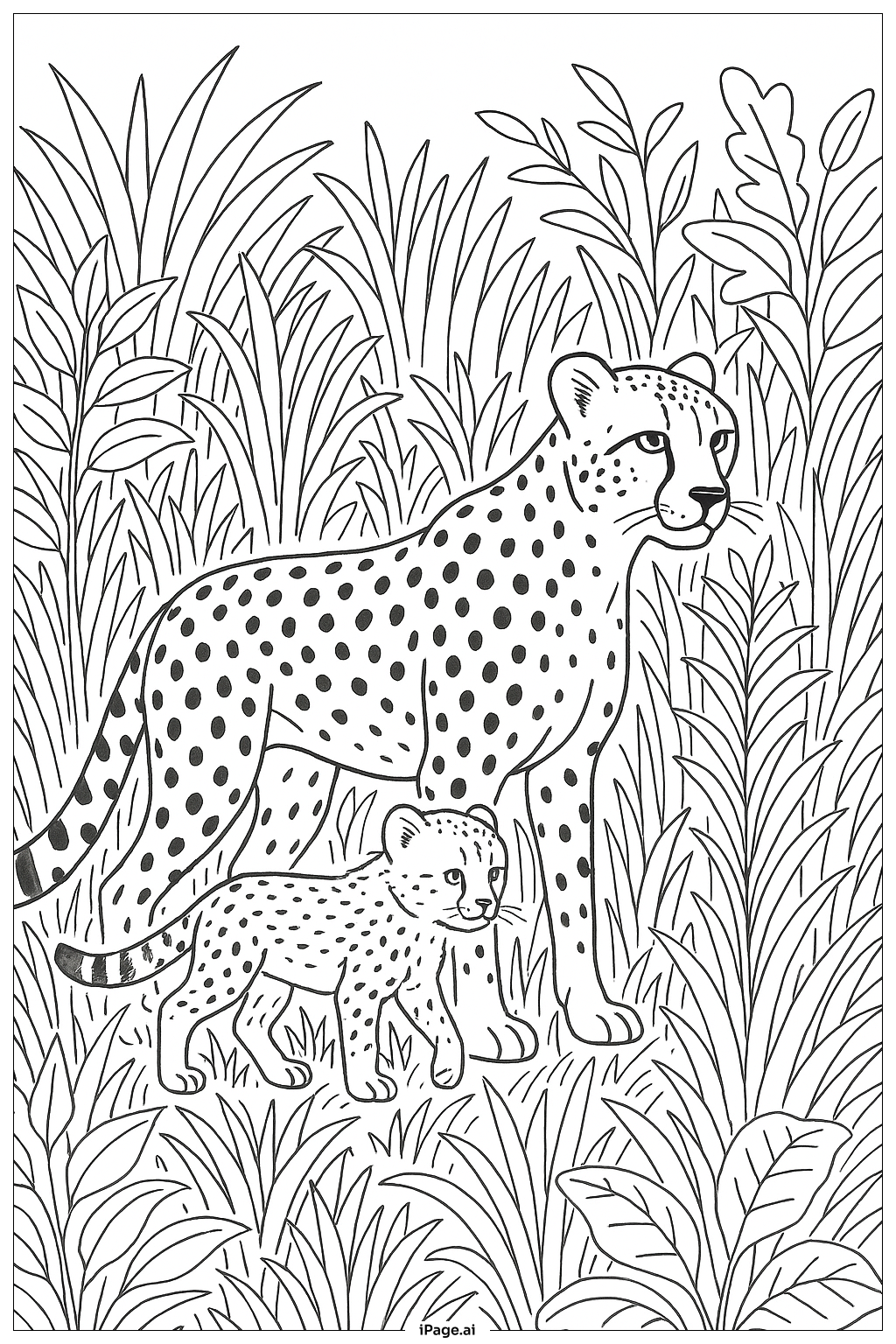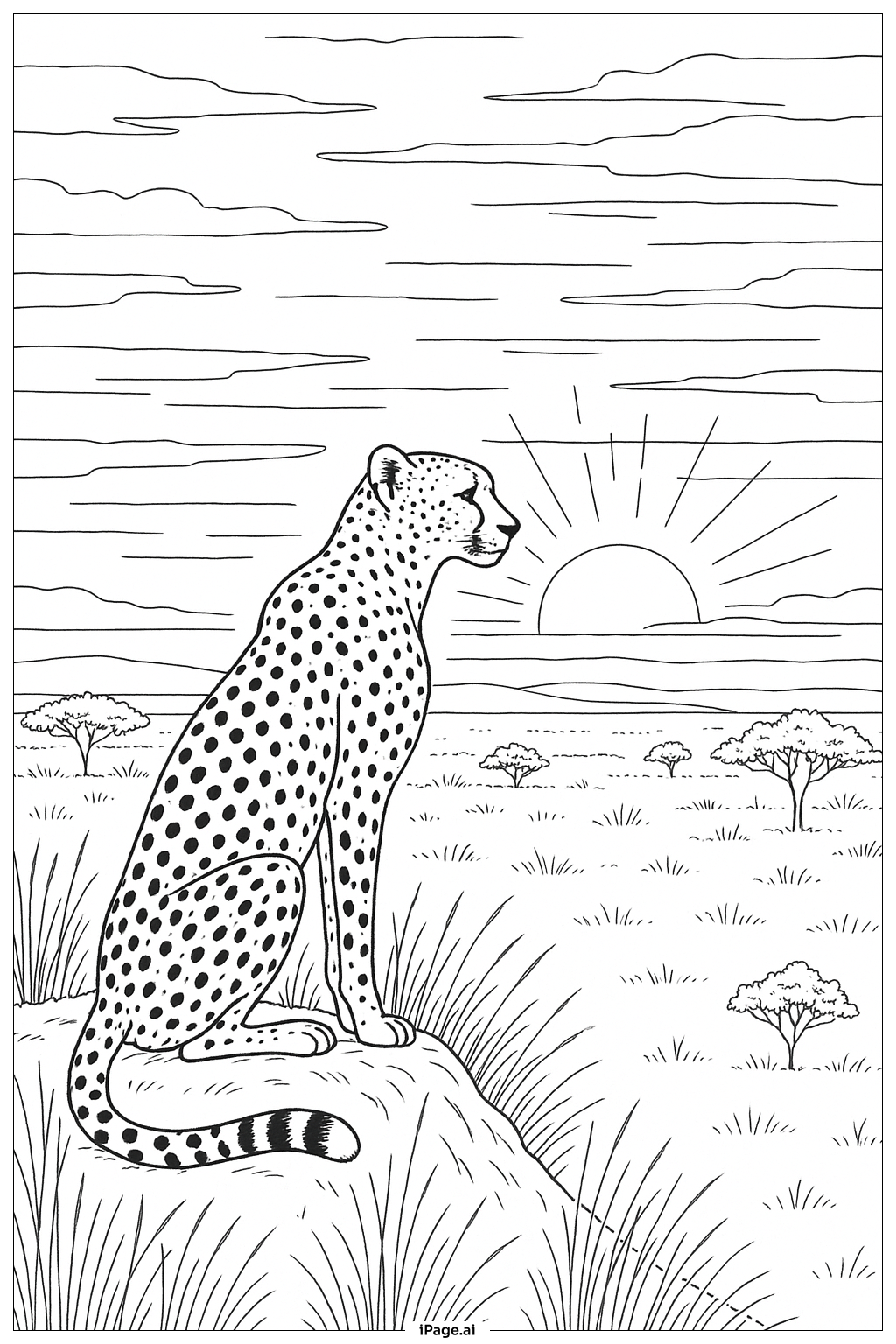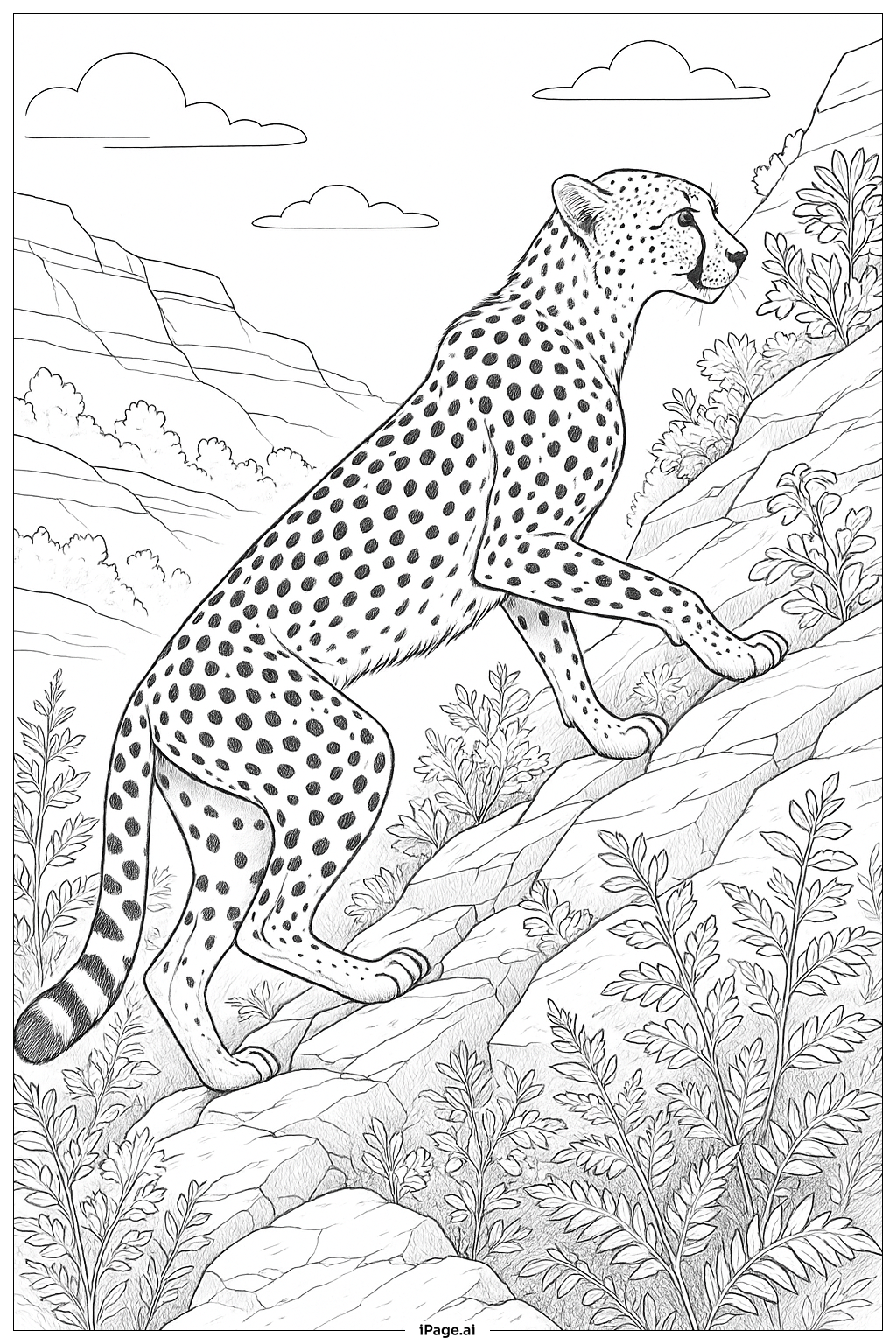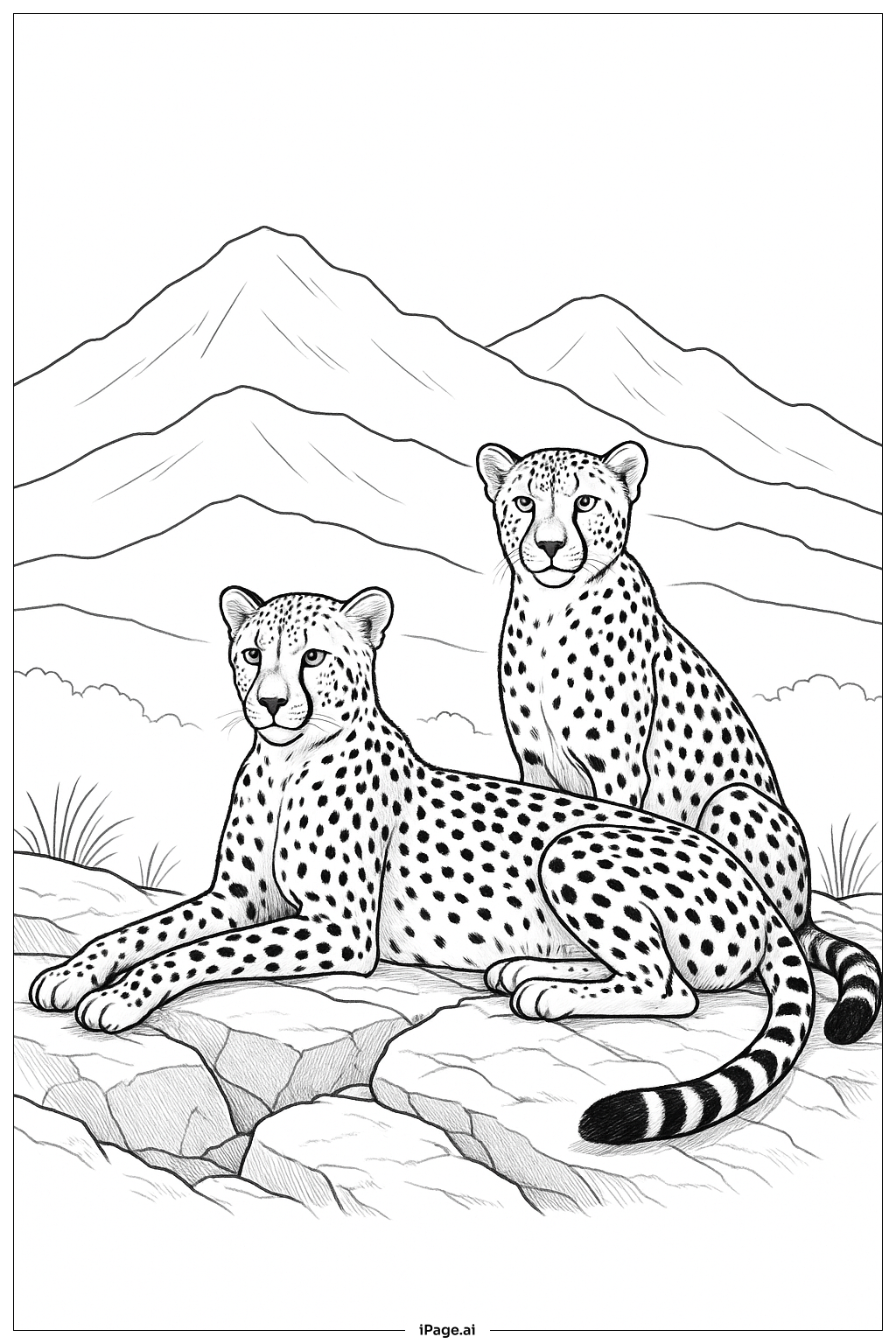
Coloring tips: How to color Cheetah Stretching coloring page well?
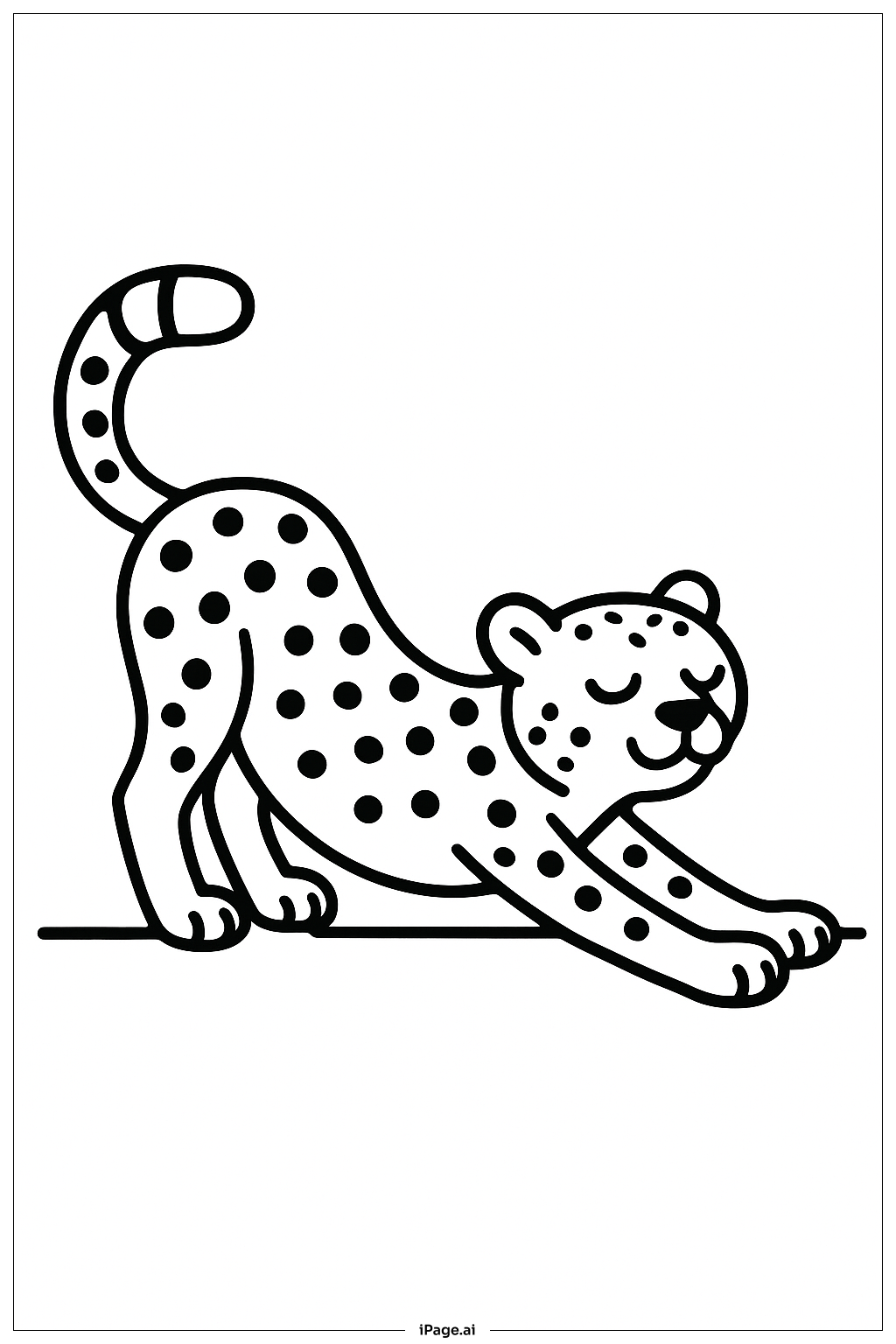
Use golden yellow or light orange for the cheetah’s fur color, as this matches the real animal’s coat. The spots should be colored black or dark brown to create contrast. The tail can have alternating stripes of dark color and golden yellow for variety. For the ground line, use green or brown shades to represent grass or soil. To add more life, children can color the background with a light blue sky or soft green bushes. Using crayons, colored pencils, or markers will work well to fill in different areas smoothly.
Coloring challenges: Which parts are difficult to color and need attention for Cheetah Stretching coloring page?
1. Coloring the many small spots can be tricky because they are close together and need careful filling to avoid coloring outside the lines. 2. The tail has stripes that require attention to detail when coloring alternating colors. 3. The front legs are extended and narrow, which may be hard for younger children to color neatly. 4. Keeping the calm expression on the cheetah’s face while coloring around the eyes and mouth lines needs careful hand control. 5. The cheetah’s body shape involves curves and bends that might be challenging to color evenly without leaving white spaces.
Benefits of coloring books: Advantages of drawing Cheetah Stretching coloring page
Coloring this cheetah stretching page helps children improve their fine motor skills because they must color small spots and detailed tail stripes. It also encourages attention to detail and patience. Children learn about the cheetah’s body and movements, building awareness of wildlife. This image provides a fun way to explore colors and practice staying inside the lines, boosting hand-eye coordination. Overall, it’s an enjoyable activity that combines creativity with learning about animals.