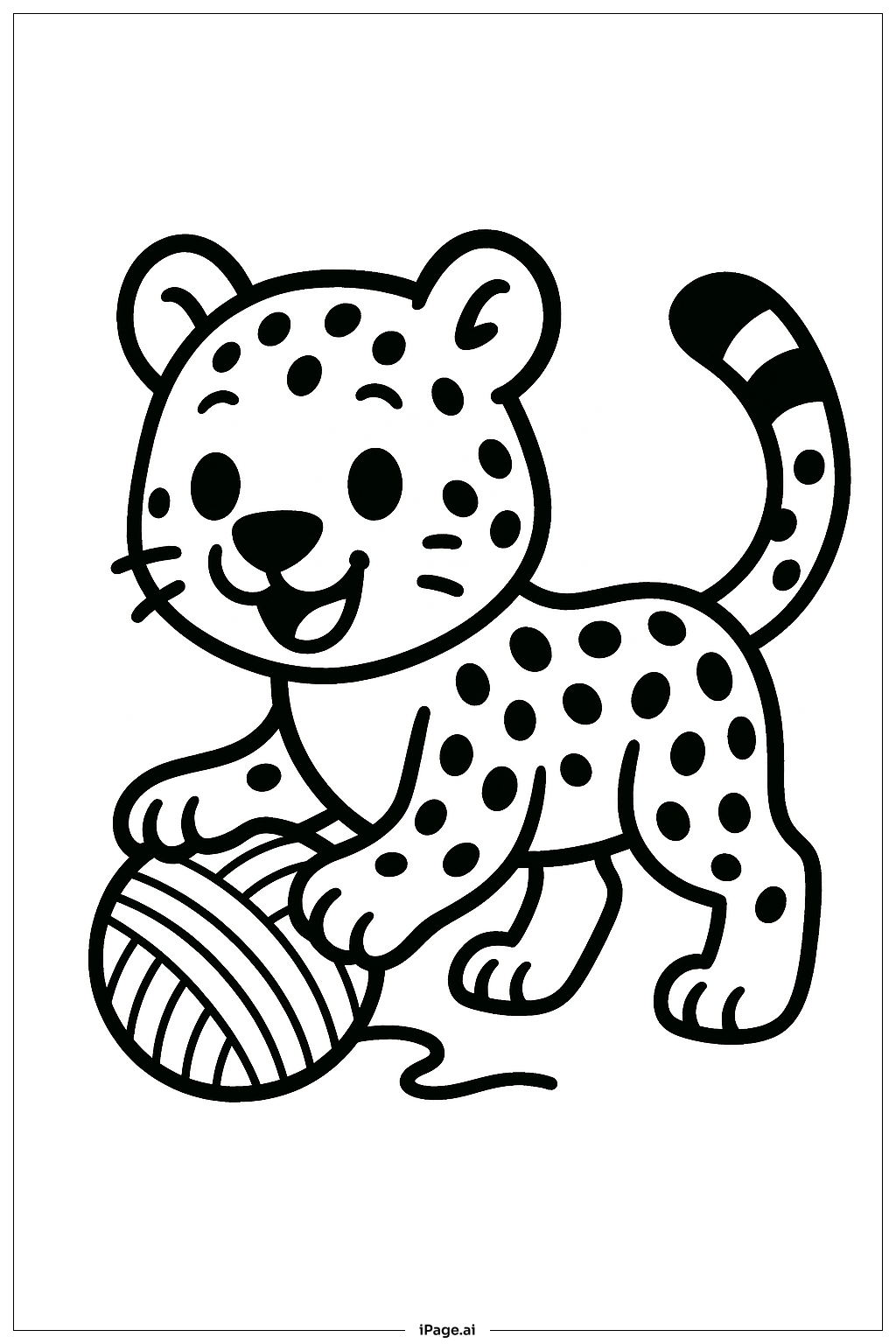
Coloring tips: How to color Cheetah Playing With Yarn coloring page well?
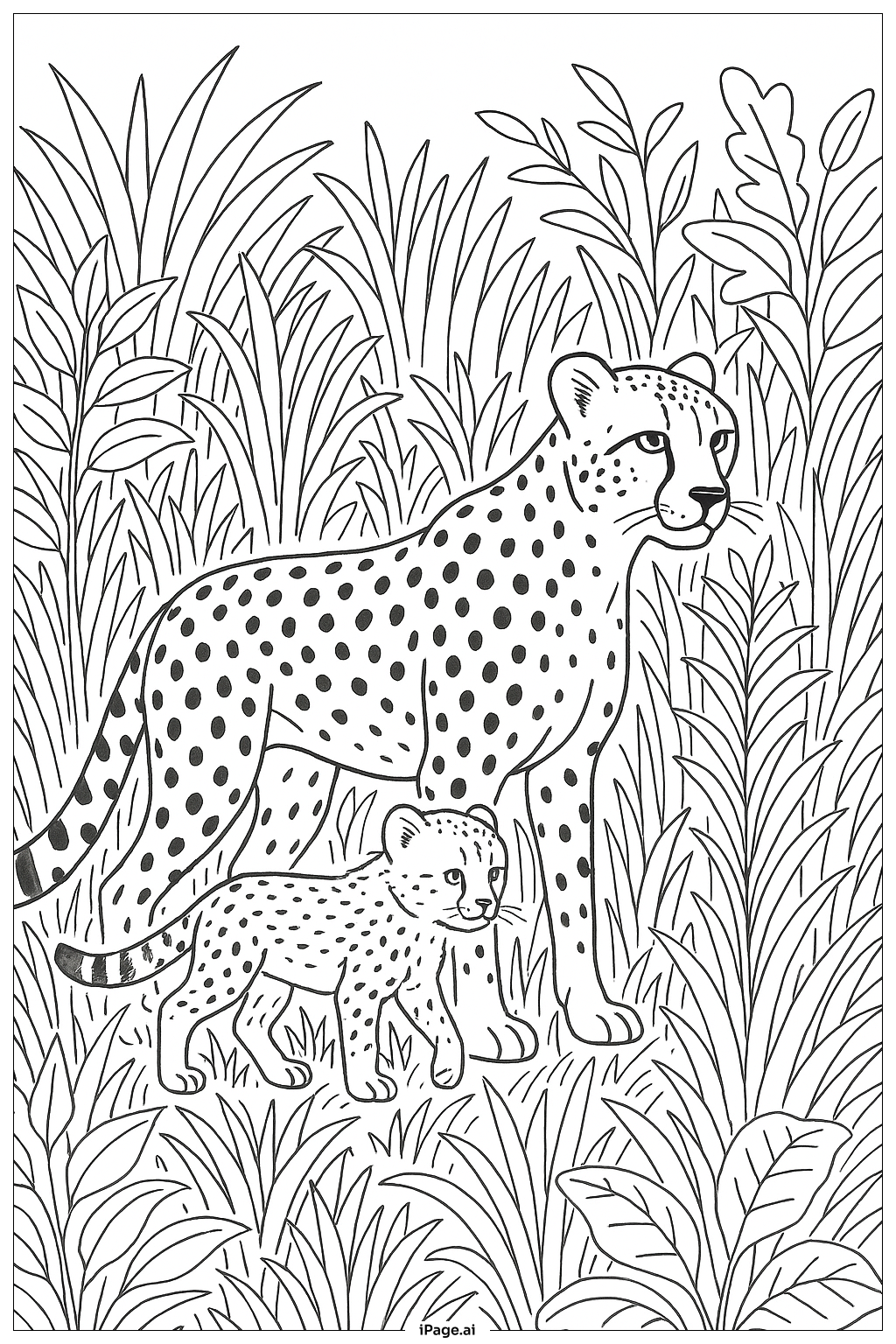
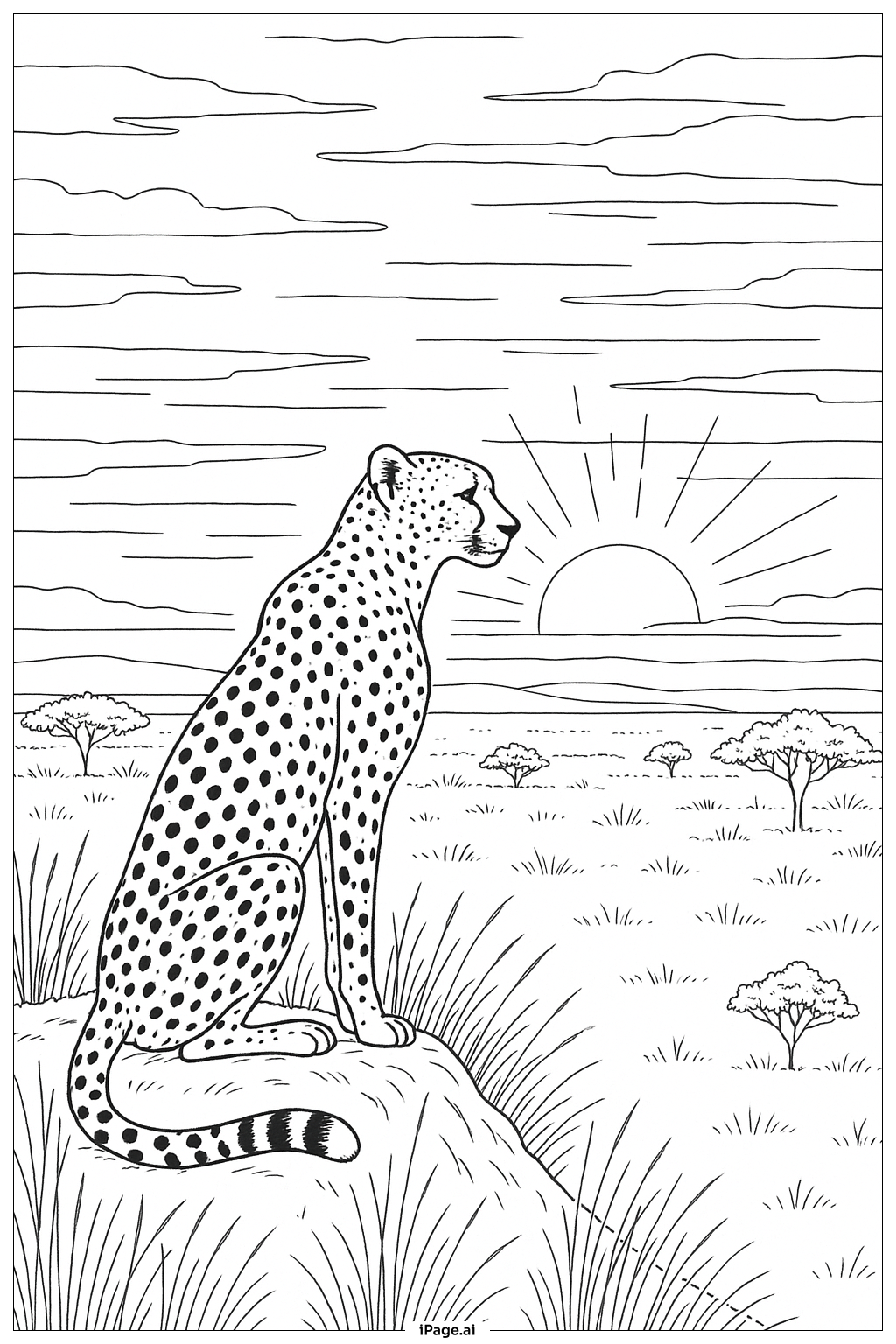
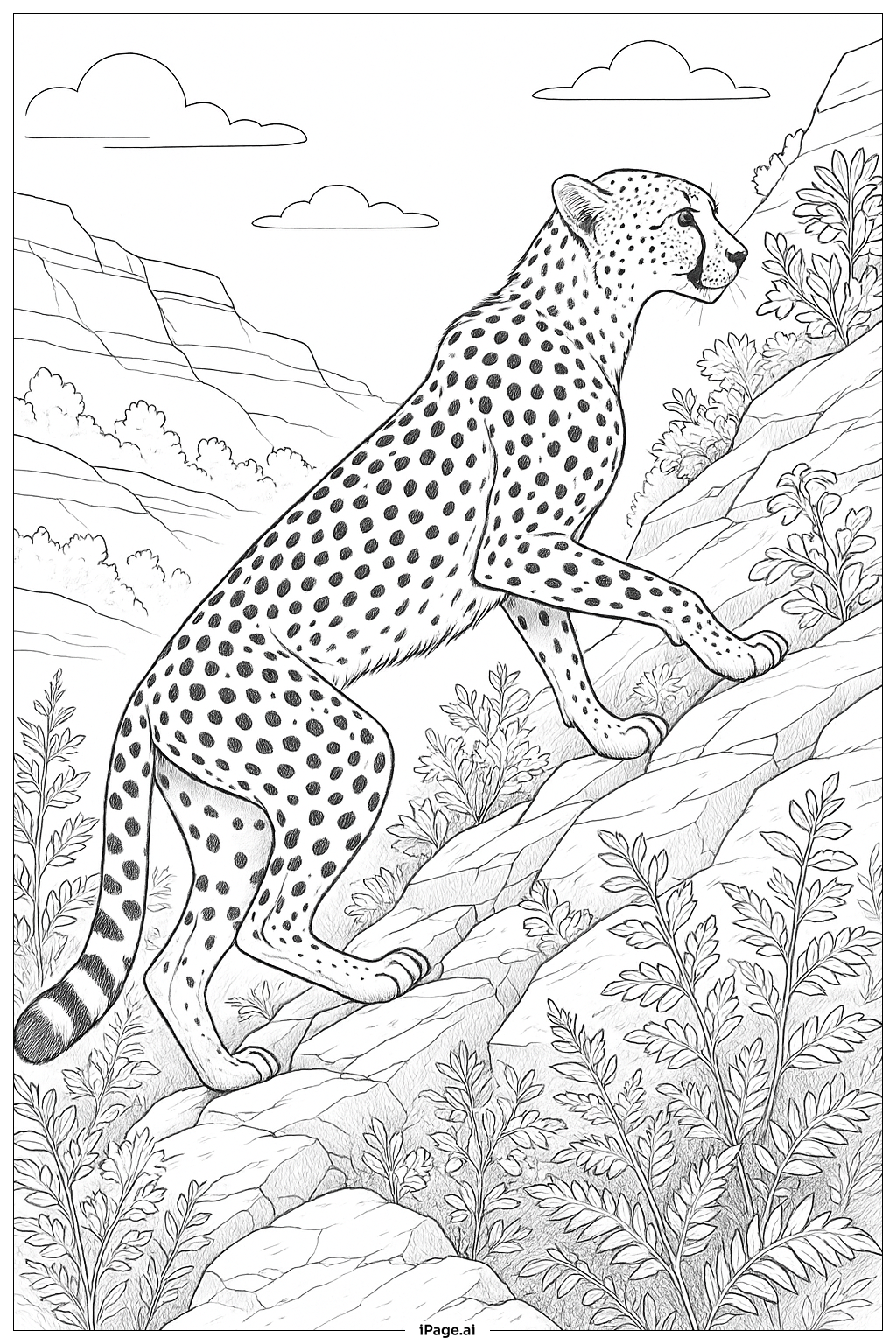
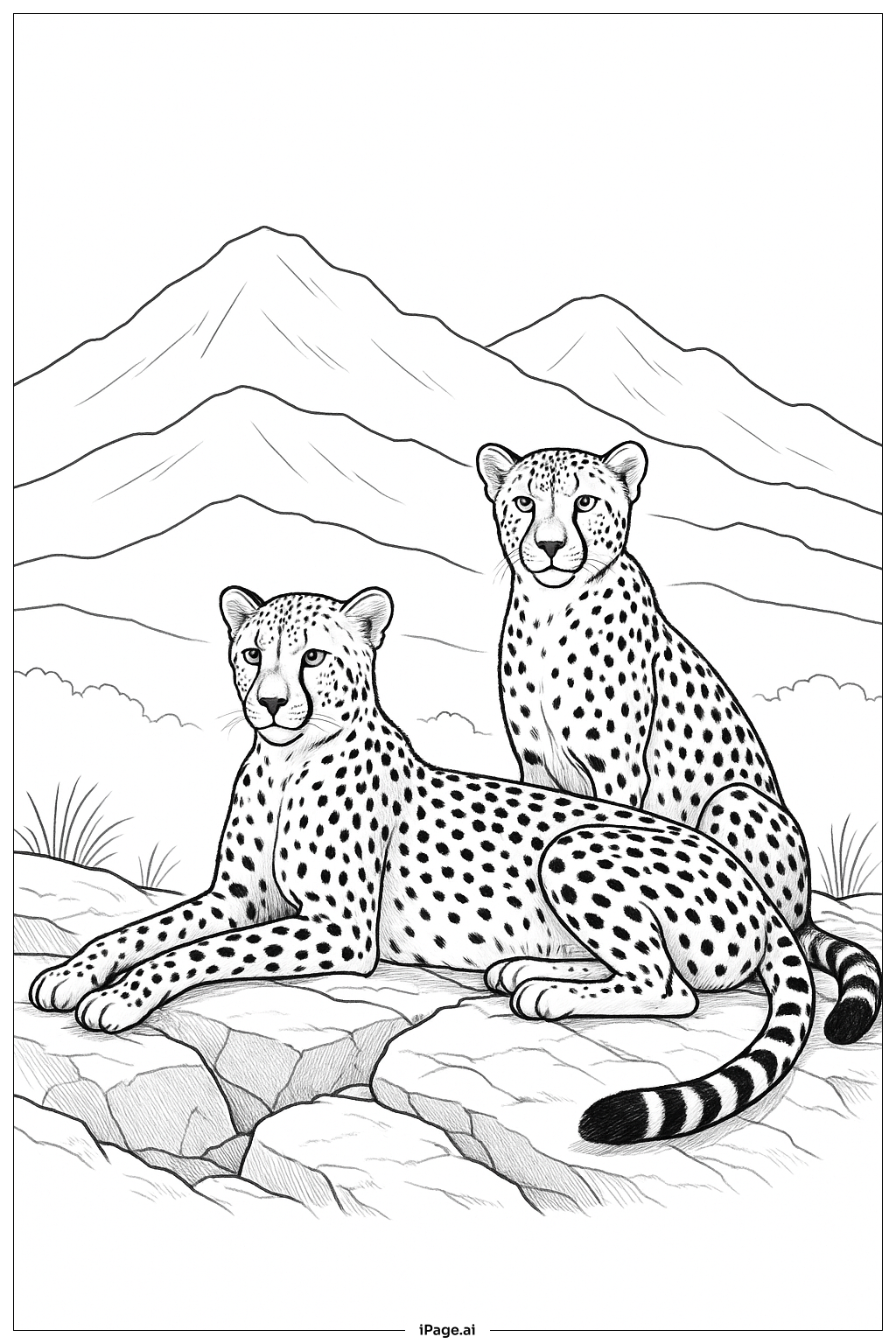
For the cheetah's coat, use a warm golden yellow or tan as the base color, then add black or dark brown spots throughout the body. The underbelly, chest, and inner legs should be lighter, using cream or white. Color the distinctive tear marks black, running from the inner corners of the eyes down to the mouth. The eyes can be amber, yellow, or golden brown. For the yarn ball, choose a bright, cheerful color like pink, blue, red, or purple to create nice contrast against the cheetah's natural tones. The loose yarn strands should match the ball. Consider adding subtle shading with darker yellows or light browns to give the cheetah dimension, especially around the legs, under the body, and along the tail. Keep the background simple or add a light wash of color to make the cheetah stand out.
Coloring challenges: Which parts are difficult to color and need attention for Cheetah Playing With Yarn coloring page?
• Spot Pattern Consistency: The cheetah's coat features dozens of individual spots that need to be colored uniformly. Each spot should be similar in color intensity and tone, which requires patience and a steady hand. Young children may find it challenging to color inside each small circular spot without going over the lines. The spots are distributed across the entire body, tail, and legs, making this a time-intensive detail that tests concentration and fine motor control.
• Maintaining Color Boundaries: This image has many distinct areas where different colors meet, such as where the spotted coat transitions to the cream-colored belly, around the facial features, and where the paws touch the yarn. Keeping colors within their designated areas without bleeding into adjacent sections requires careful control. The curved contours of the cheetah's body add complexity, as staying within lines along rounded surfaces is more difficult than straight edges.
• Yarn Texture and Dimension: The ball of yarn and loose strands present an opportunity to show texture and depth through coloring techniques. Creating the appearance of wrapped, overlapping yarn requires varying pressure or layering colors to suggest shadow and highlight. The strands that trail away from the ball should appear thinner and require precise coloring to maintain their delicate appearance without making them too thick or uneven.
• Facial Expression Details: The cheetah's face includes small but important features like the tear marks, eyes, nose, and mouth that contribute to its friendly expression. These elements are relatively small and close together, requiring precision and attention to detail. The tear marks are thin lines that need steady coloring, while the eyes need careful work to create depth and bring the character to life with appropriate highlights or pupil details.
Benefits of coloring books: Advantages of drawing Cheetah Playing With Yarn coloring page
Coloring this cheetah image offers wonderful developmental benefits for children. The numerous spots provide excellent practice for fine motor skills and hand-eye coordination, as each small circle requires careful control. This repetitive task also builds patience, focus, and the ability to complete detailed work over time. The playful subject matter sparks creativity and imagination, encouraging children to think about wildlife in fun, unexpected scenarios. Learning about cheetahs while coloring can inspire interest in animals, nature, and conservation. The variety of textures, from spotted fur to yarn strands, allows children to experiment with different coloring techniques and pressure levels. Completing such a detailed image builds confidence and provides a sense of accomplishment. The calming, focused nature of coloring also helps reduce stress and anxiety while improving concentration skills that benefit academic performance. This whimsical scene can also prompt storytelling and creative thinking about why a wild cheetah might be playing with yarn.